The Hidden Anxiety of Buying a Second-Hand Electric Car
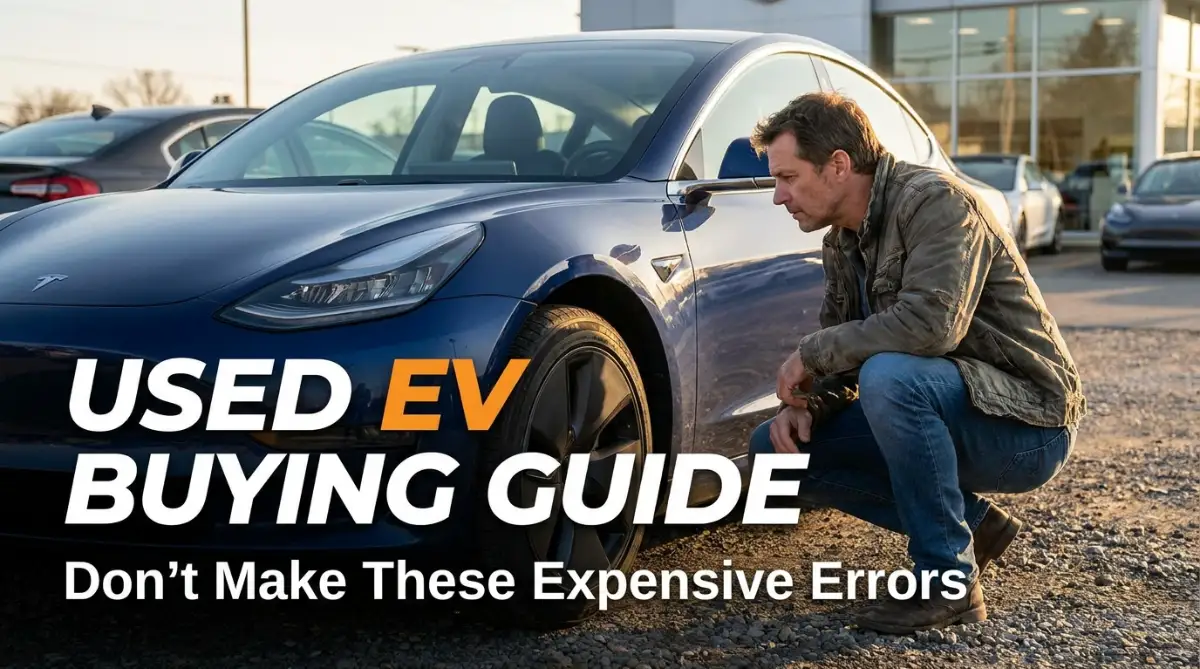
Did you know that replacing a dead battery in a used electric car can easily cost more than the actual price of the vehicle itself? That single, terrifying fact is enough to scare most regular buyers right back into the driver's seat of a dirty, expensive gas-guzzler. But it really does not have to be a guessing game. Let me walk you through exactly how I personally inspect pre-owned electric vehicles to dodge massive hidden repair bills and score a fantastic deal.

⚡ Quick Action Plan for Buying a Used EV
- Test the Actual Health: Never trust the dashboard range; always use an OBD2 scanner or get a mechanic to read the true battery State of Health (SOH).
- Check the Hardware: Physically inspect the charging port for melted plastic or burnt metal pins before taking a test drive.
- Look at the Tires: Electric cars are heavy and eat through tires quickly. Make sure the tread is safe so you do not have to buy a new set immediately.
- Call Your Insurance: Get a specific quote using the car's VIN to avoid a massive spike in your monthly bills.
Decoding the Pre-Owned Electric Car Puzzle
Navigating the used car market can feel like walking through a minefield, but knowing exactly where to look changes everything. Let us start by looking at the most expensive part of the vehicle so you know how to protect your wallet.
The Truth About Battery Degradation
The single most expensive component in any electric vehicle is the battery pack. Unlike a gas tank that always holds the same amount of fuel, an electric battery slowly loses its ability to hold a full charge over time.
Think about your smartphone. When you first bought it, the battery easily lasted all day long without needing a charger. A few years later, you might find yourself plugging it in by lunchtime just to keep it alive.
The exact same scientific process happens to the lithium-ion cells inside an electric car. This natural loss of capacity is called battery degradation. You need to know exactly how much capacity is left before you agree to buy the car.
If a car was originally advertised to drive 250 miles on a full charge, it might only drive 200 miles today. Never trust the estimated range number displayed on the dashboard while you are test driving. That number changes constantly based on how the last person drove the car, the outside temperature, and whether the heater was running.
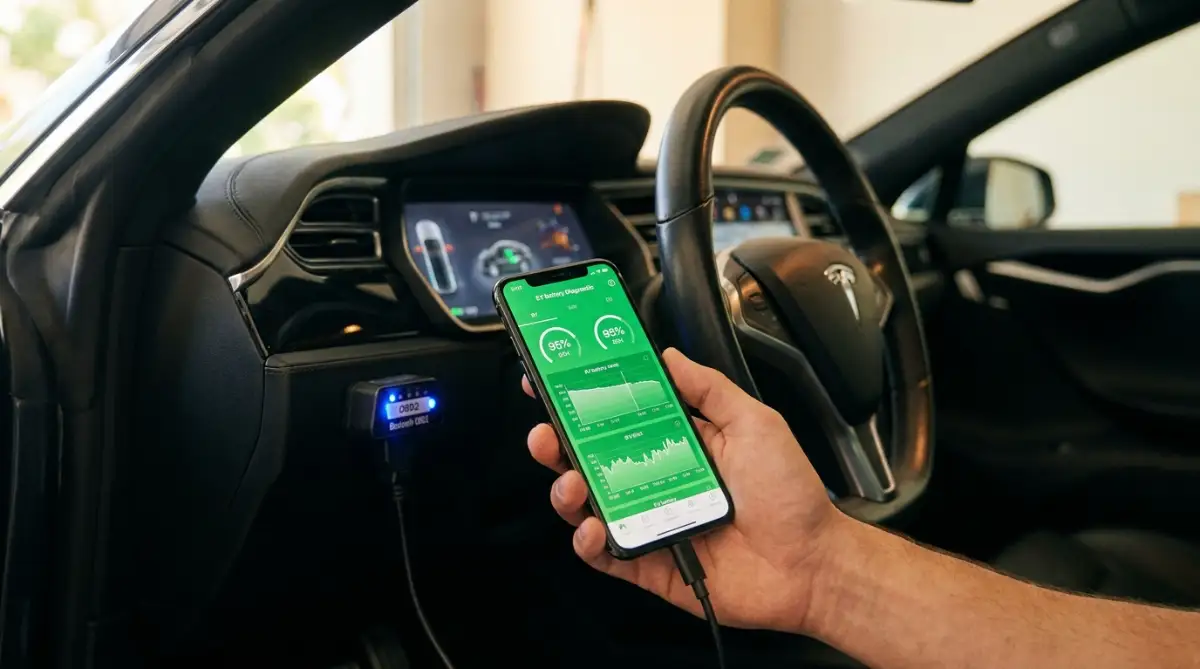
Instead, you need to check the exact State of Health (SOH) of the battery system. Some cars have specific screens deep in their menu settings that show the battery health as a simple percentage or a bar graph. If the car does not show this easily, you can ask a trusted mechanic to run a quick diagnostic test.
Realizing My Own Diagnostic Mistake
When I was inspecting my first used electric car, I almost ignored the dashboard menu because I felt too shy to ask the seller too many questions. My biggest realization was that demanding a proper diagnostic report, or using a simple OBD2 scanner yourself, can save you from a complete financial disaster. I bought a cheap bluetooth scanner online, connected it to my phone, and instantly saw that the car had lost twenty percent of its original battery life!
Checking the Charging History
How a battery was treated in the past heavily determines how long it will last in the future. Electric cars can be charged slowly at home, or very quickly at public charging stations.
While fast public chargers are incredibly convenient for long road trips, using them every single day pushes a lot of intense heat into the battery cells. Heat is the ultimate enemy of a lithium-ion battery. If the previous owner used this car as a taxi and exclusively used rapid chargers every afternoon, the battery might be heavily worn out on the inside.
Some advanced diagnostic tools can actually tell you how many times the car was fast-charged versus slow-charged. If you see a massive number of fast-charging sessions compared to slow home charging, you should probably walk away. You want a car that was gently charged overnight in a cool garage for the majority of its life. In fact, checking the federal guidelines on electric vehicle maintenance shows that avoiding extreme temperatures and rapid charging is the best way to keep a battery healthy over the years.
Before you ever sign a piece of paper, you need to know exactly how to read an electric car's battery report without getting scammed. Watch this eye-opening breakdown that shows you exactly where to look and what hidden warning signs to watch out for!
The Thermal Management Mystery
Not all electric cars are built with the same battery protection systems. Early generation electric cars often used simple air-cooling systems to keep the battery temperature stable.
Air cooling is very cheap to manufacture, but it does a terrible job of protecting the battery during extremely hot summers. Cars with air-cooled batteries often suffer from very rapid capacity loss if they are driven in hot climates for long periods.
On the other hand, modern electric vehicles usually feature active liquid-cooling systems. These systems pump cool liquid around the battery cells, keeping them at the perfect operating temperature just like a human body.
A liquid-cooled battery will almost always outlast an air-cooled battery by many years. You should always research the specific model you want to buy to see what kind of thermal management system it uses. If you live in a very hot area, avoiding air-cooled batteries is an absolute must for your long-term peace of mind.
Quick Comparison: Air-Cooled vs. Liquid-Cooled Batteries
Navigating the Warranty Maze
Warranties for electric vehicles work very differently than warranties for traditional gas cars. Most manufacturers provide a specific, separate warranty just for the high-voltage battery pack.
This special coverage usually lasts for eight years or one hundred thousand miles, depending on which comes first. However, the exact rules of this coverage can be very tricky to understand.
First, you must verify if the warranty naturally transfers to the second owner. Some older companies used to put strange clauses in their contracts that canceled the warranty if the car was sold privately. Today, most warranties follow the car, not the original owner, but you still need to call the manufacturer with the vehicle identification number to be totally sure.
Second, you need to understand what actually triggers a warranty replacement. A manufacturer will not give you a brand-new battery just because it lost a little bit of range.
Most contracts state that the battery must drop below seventy percent of its original capacity before they will step in to help. If the battery is sitting at seventy-two percent, you are stuck with the reduced range until it degrades further. Always ask the dealer for a printed copy of the active warranty status before you agree to buy anything.
The Heavy Truth About Tires and Suspension
Many buyers completely forget to look at the physical body and parts of an electric car because they are so focused on the battery. This is a very expensive mistake to make.
Electric cars are incredibly heavy compared to regular cars because of the massive battery packs hidden underneath the floor. This extra weight puts a tremendous amount of stress on the suspension system and the tires.
Furthermore, electric motors deliver instant power to the wheels the second you touch the pedal. This fast acceleration is incredibly fun to experience, but it literally shreds the rubber off the tires much faster than a slow gas engine would.
When you inspect a used electric car, you must look very closely at the tire tread depth. If the tires are completely bald, you will need to spend a large amount of money replacing them almost immediately. Before test driving, you should always check the tires against national tire safety standards to ensure you have enough safe tread depth to grip the road.
You should also listen carefully for any strange squeaks, clunks, or rattling sounds when driving over bumpy roads during your test drive. Since electric cars do not have a loud engine to cover up background noise, suspension problems are usually very easy to hear if you just roll down the windows and listen closely.
Beware of Outdated Technology
Buying a used electric car is very similar to buying a used laptop or smartphone. The physical hardware might look completely fine, but the software inside might be terribly outdated.
Older electric cars often lack the computing power to receive modern software updates. This means you might be stuck with a very slow, glitchy touchscreen that cannot connect to modern navigation apps.
Even worse, many early electric cars relied on older 3G cellular networks to connect to mobile phone apps. Since major telephone companies have shut down their 3G towers recently, these older cars have completely lost their remote connectivity.
If you buy one of these older models, you will not be able to use your phone to pre-heat the car in the winter or check your charging status remotely. Always test the main screen thoroughly, try to connect your phone, and ask if the car still receives over-the-air software updates from the manufacturer.
Heating Systems and Winter Range
If you live in an area that gets very cold during the winter, you need to pay close attention to how the car generates heat. Gas cars get free heat from the hot engine running under the hood.
Electric cars have to create their own heat using precious battery power. Many basic electric cars use a simple resistive heater, which works exactly like a cheap space heater you might plug into a wall at home.
These resistive heaters consume a massive amount of electricity. Turning on the heat in a car with this system can instantly drop your driving range by twenty to thirty percent.
Smarter, more advanced electric cars use a specialized heat pump system instead. If you want to know exactly how much range you can save during winter, understanding what a heat pump is in an electric vehicle will totally change the way you shop for your next car. A heat pump basically acts like a reverse air conditioner, pulling warm air from the outside environment and moving it into the cabin.
Heat pumps are incredibly efficient and will save you a huge amount of driving range during freezing winter months. When you are looking at different used models, specifically asking if the car is equipped with a heat pump can make a huge difference in your daily driving experience.
Understanding Charging Port Standards
You might think that every electric car can plug into any public charger, but the reality is quite different. There are several different shapes and sizes of charging ports used across the industry.
Many older electric vehicles from certain brands use a standard called CHAdeMO. While this was very popular a few years ago, the entire industry is currently abandoning it.
If you buy a car with a CHAdeMO port today, you might find it very difficult to locate a working public charger in the future. Most modern cars use the CCS standard or the specialized port created by the most famous electric car brand.
Beyond the Basics: Expert-Level Inspection Secrets
When you buy a used laptop, you do not just check if the screen turns on. You check the charging ports, the internal software, and how hot it gets when running. You need to apply this exact same logic to your upcoming car purchase.
Let us look at some highly advanced, yet completely practical ways to test a second-hand electric car before you hand over a single dollar.
The Tiny Battery That Causes Massive Headaches
Here is a wild secret that most dealerships will never tell you. Every single electric car on the road today still relies on an old-school, standard 12-volt battery hiding under the hood.
This tiny battery is responsible for running the door locks, the radio, the dashboard screens, and most importantly, the main computer. If this small battery dies, the entire car will completely shut down, even if your massive main driving battery is fully charged.
Many buyers test drive a used car, park it in their driveway, and wake up the next morning to a completely dead vehicle. They immediately panic, thinking they need a twenty-thousand dollar battery replacement.
In reality, they just need a simple fifty-dollar battery from the local auto parts store. When inspecting a used electric ride, ask the seller exactly when the 12-volt unit was last replaced. If it looks incredibly old or covered in blue corrosion, ask them to install a fresh one before you agree to buy the car.
Inspecting the Hidden Hardware Connections
The physical port where you plug the car in takes a massive amount of physical abuse over the years. People yank cables out quickly, drop heavy handles, and leave the port exposed to heavy rain and snow.
Take a very close look inside the charging port with your phone flashlight. You are looking for any dark burn marks, melted plastic, or severely bent metal pins.
If those metal pins are damaged, the car will completely refuse to accept electricity for safety reasons. Fixing a broken charging port often requires replacing the entire internal wiring harness, which can easily cost thousands of dollars in labor alone.
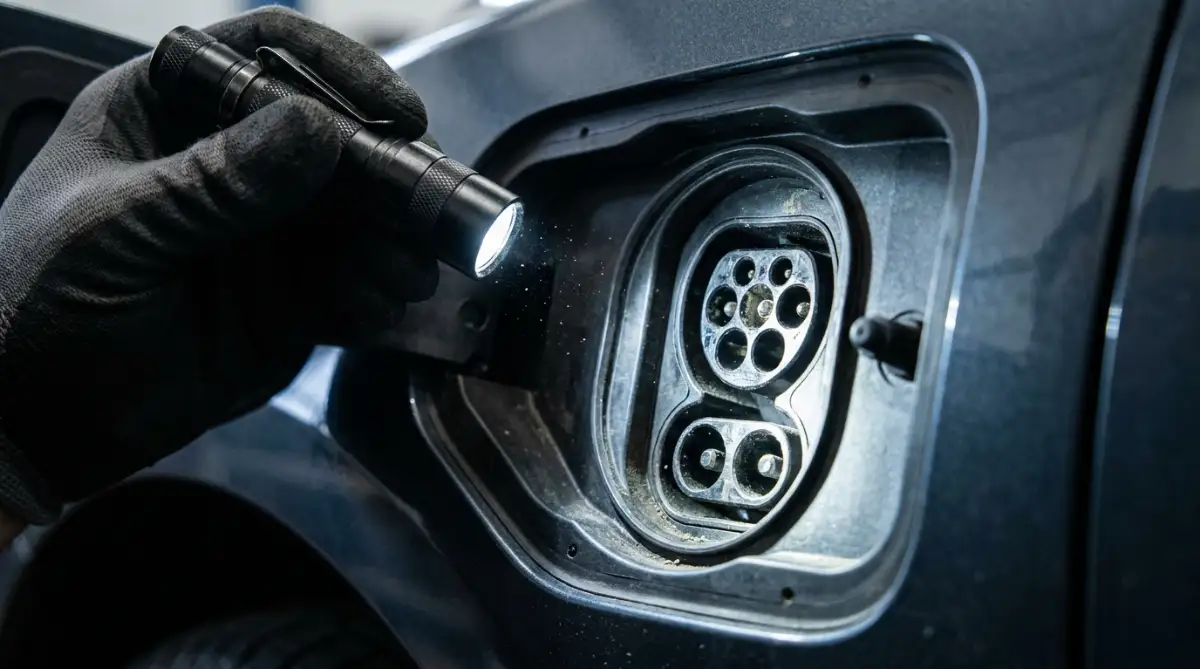
You should also physically test the connection yourself during the test drive. Drive the car to a local public station and see how smoothly the handle clicks into place. If you want to deeply understand the hardware behind this, learning what is DC fast charging will help you spot bad hardware instantly.
The Secret of Cell Voltage Balance
If you decide to hire a mechanic to run a diagnostic scanner, ask them to check the "cell voltage delta" on the main battery pack. A main battery is actually made up of hundreds or thousands of tiny individual battery cells packed tightly together.
For the car to run perfectly, all of these tiny cells need to hold roughly the exact same amount of voltage. If one small group of cells is severely weaker than the rest, the computer will artificially limit the entire battery pack to match that weak spot.
A healthy battery pack will show a very small difference in voltage between the strongest and weakest cells. If the mechanic sees a massive gap in these numbers, it means a section of the battery is actively failing and will cause major driving problems soon. Understanding basic EV battery kilowatt-hours and how these cells work together is a fantastic way to become a smarter, more confident buyer.
Myth vs. Reality: The 100% Charging Rule
- The Common Myth: You should always charge your electric car to 100% every single night so you have maximum range for the next day.
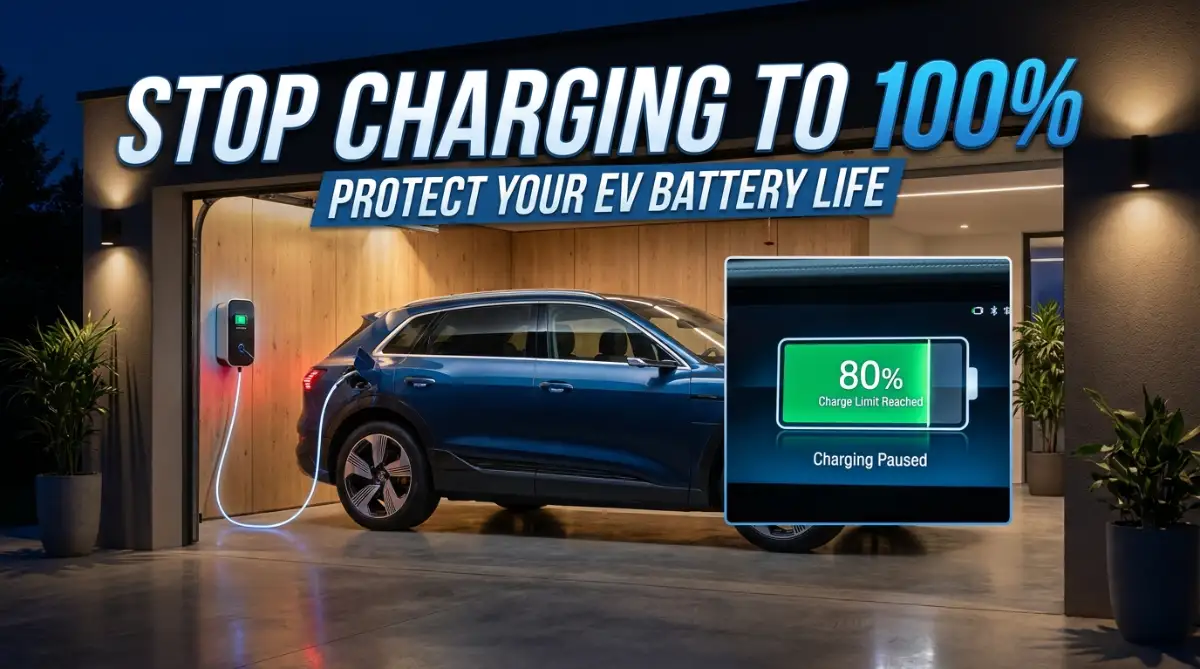
- The Actual Reality: Pushing a standard lithium-ion battery to 100% every single day actually speeds up the degradation process. I always tell my friends to set their daily charging limit to 80% for normal commutes. You should only push it to a full 100% right before you leave for a long road trip.
Preparing Your Home Base First
One of the smartest things you can do is prepare your own house before you even start shopping for the car. Buying an electric vehicle without having a reliable place to plug it in is a recipe for daily frustration.
You need to have an electrician check your home circuit breaker panel to see if it can handle a heavy electrical load. If your home is very old, you might need a very expensive electrical upgrade just to safely charge your new car overnight.
Getting these home installation quotes early will help you figure out your total actual budget. If you are totally lost on where to begin with this home setup, you must read this before installing your home wallbox charger to avoid serious fire hazards and wasted money.
Heartbreaking Traps That Will Drain Your Wallet
Over the years, I have listened to countless horror stories from buyers who skipped a basic step and ended up completely regretting their purchase. Making a mistake with a traditional gas car usually means replacing a cheap belt or a leaky hose.
But making a mistake with a giant electric battery can completely wipe out your savings in a single afternoon. Let us explore the absolute worst traps that unsuspecting buyers fall into, and exactly how you can dodge them completely.
The Insurance Shock Factor
People usually calculate their monthly car payment and their electricity savings, but they completely forget to call their insurance agent. This is a massive, incredibly common blind spot.
Electric cars are often much more expensive to repair after a minor accident because of the heavy, complex battery packs hiding underneath the floorboards. Because of this high repair risk, insurance companies frequently charge significantly higher monthly premiums for electric models.
Imagine finding a great deal on a used car, signing the bank papers, and then realizing your insurance bill just doubled. Always call your provider with the exact Vehicle Identification Number (VIN) to get a firm quote before buying. If you want to know exactly why these rates jump so high, exploring the hidden costs of EV vs gas auto insurance will open your eyes to the financial reality.
The Bald Tire Nightmare
I mentioned this briefly before, but the tire trap is so severe that it deserves a much deeper warning. The instant torque of an electric motor is incredibly fun, pushing you back in your seat the second you touch the pedal.
However, that aggressive pulling power literally shreds the rubber right off the wheels. A standard set of tires that might last fifty thousand miles on a small gas car might only survive twenty thousand miles on a heavy electric sedan.
Sellers know this perfectly well, and they will often try to sell the car right when the tires are on the edge of becoming completely bald and unsafe. Specialized electric vehicle tires are very expensive because they have special foam inside to reduce road noise. Make sure you fully understand why EV tires wear out so fast, so you can demand a massive discount if the tread is sitting dangerously low.
Buying the Wrong Plug Standard
Imagine buying a brand new smartphone, only to realize the charging port at the bottom does not fit any modern wall charger. This exact nightmare is happening to thousands of used car buyers right now.
The electric vehicle industry is currently going through a massive transition regarding the shape of the charging plugs. Older models might use completely outdated connectors that are slowly being removed from public charging stations across the country.
If you buy a car with an obsolete plug, you will be completely stranded during family road trips. To protect yourself from getting stuck on the highway, you absolutely must stop the confusion and learn about EV charging connectors so you buy a car that fits modern stations.
Forgetting Official Government Resources
Many buyers rely entirely on random social media comments or the car dealer to verify driving range and safety data. Dealers are trying to make a quick sale, and they will naturally exaggerate how far the car can drive on a cold winter day.
Instead of trusting the person selling you the car, you should always verify the original battery specs using trusted, official databases. For example, visiting the main data hub at FuelEconomy.gov allows you to see the exact original driving range and energy efficiency ratings verified by federal testing.
Comparing the official original range against what the dashboard currently shows is the ultimate way to catch a heavily degraded battery.
The Missing Software Magic
Modern cars are essentially smartphones on wheels, meaning they constantly need software patches to fix bugs and improve performance. When you buy a used electric ride, you must check if the manufacturer still supports that specific model with internet updates.
Some companies abandon their older models, leaving owners with glitchy navigation screens and broken mobile apps. A car that still receives regular updates will actually improve over time, adding new games, better battery management, and smarter safety features.
Ask the current owner to show you the last time the car downloaded a patch. If you buy a model that is still supported, you will quickly discover why your electric car keeps getting better after you buy it, making your daily commute much more enjoyable.
Ignoring the Suspension Warning Signs
Because electric vehicles do not have loud, vibrating engines, the cabin is usually whisper-quiet when driving down the road. This silence is wonderful, but it also exposes every single flaw in the heavy suspension system.
When a battery pack weighs over a thousand pounds, the shocks, struts, and control arms take a severe beating over potholes and rough city streets. If the previous owner drove aggressively over speed bumps, the suspension could be completely destroyed.
During your test drive, turn the radio completely off, roll the windows down a few inches, and drive over a rough road. If you hear squeaking, loud clunking, or feel the car bouncing heavily, you are looking at a repair bill that could easily hit a few thousand dollars.

Your Roadmap to a Stress-Free Electric Drive
Making the switch from dirty gasoline to clean electricity is an incredibly exciting journey that will completely change how you view driving. While the process of inspecting a pre-owned model might feel a bit intimidating at first, you now hold the exact knowledge needed to protect yourself.
By taking your time, demanding proper battery diagnostics, and checking the hidden hardware, you are putting yourself entirely in the driver's seat of this negotiation. You do not have to rely on slick salespeople or guessing games anymore.
You can walk onto any car lot, pull out your checklist, and confidently walk away from bad deals that would easily ruin your savings. Remember, the perfect used electric vehicle is out there waiting for you, and finding it is just a matter of patience and smart testing.
I know exactly how overwhelming this entire process can feel when you are standing there looking at the car. But I promise you, the moment you silently glide out of your driveway for the very first time without ever needing to visit a gas station again, all of this careful research will instantly feel worth it. Take a deep breath, trust the inspection steps we discussed today, and go find that amazing ride you have been dreaming about!
Smart Buyer Q&A: What Everyone Asks
Can I test the battery health myself without a mechanic?
Yes, you absolutely can do a basic check yourself. By purchasing a highly rated OBD2 bluetooth scanner and downloading a specialized battery app on your phone, you can read the internal battery data directly from the car's computer during your test drive.
Are older electric cars still worth buying today?
Older models can be fantastic deals for short daily commutes or running quick errands around town. However, you must be comfortable with shorter driving ranges and you should heavily prioritize finding a car that features a liquid-cooled battery system for better longevity.
What happens if the main driving battery dies completely?
If the high-voltage battery completely fails outside of the factory warranty period, you will have to pay out of pocket for a replacement pack or a refurbished module. This is exactly why getting a professional state-of-health diagnostic check is the most important step before buying.
Do used electric cars still qualify for tax credits?
In many cases, yes, buying a used electric vehicle can unlock significant financial incentives depending on your income and the price of the car. Always check the primary rules directly at the official IRS Clean Vehicle Hub to see exactly how much money you can legally claim.
How long do electric vehicle motors actually last?
Electric motors are incredibly simple machines with very few moving parts compared to a traditional gas engine. Because they do not require oil changes or complex timing belts, a well-built electric motor can easily outlast the physical body of the car itself.
Disclaimer: The information provided in this article is for educational and informational purposes only and does not constitute professional financial, mechanical, or legal advice. Always consult with a certified automotive technician or specialist before purchasing any pre-owned vehicle.