The Frustrating Reality of Old-School Car Maintenance
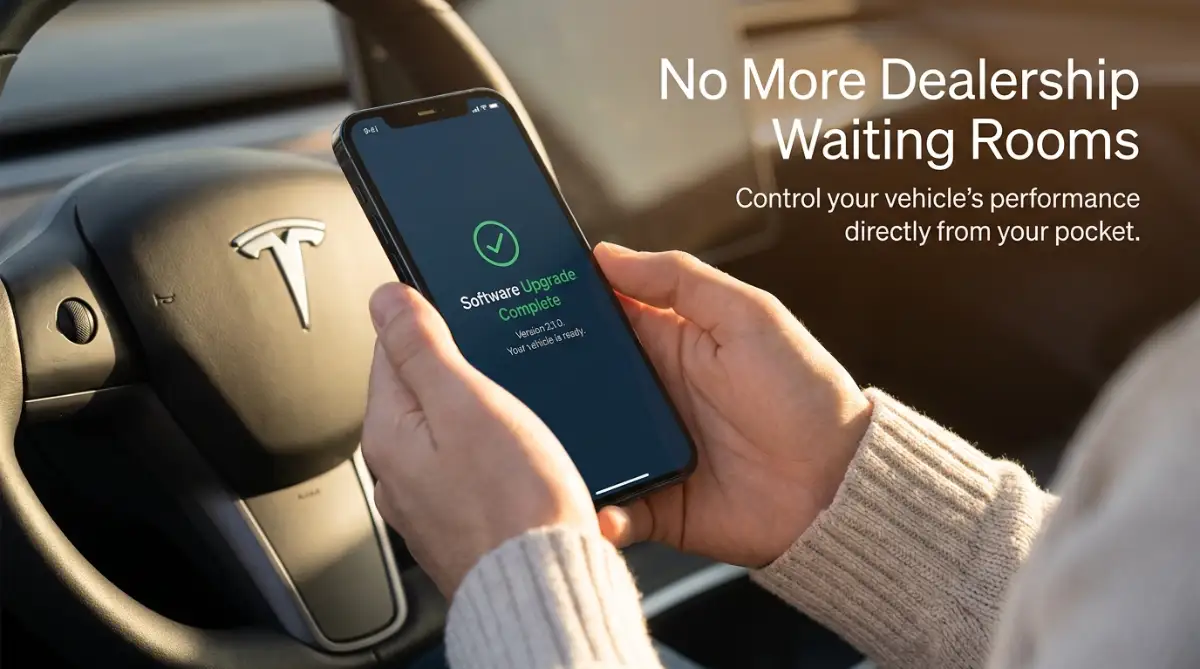
Did you know your car can literally fix its own brakes while you sleep? It sounds like sci-fi, but that is exactly what happened to my electric vehicle last Tuesday. No dealership waiting rooms, no stale coffee, and definitely no surprise mechanic bills. Over-the-air (OTA) updates are turning our cars into giant smartphones on wheels, and honestly, it is completely changing how we own vehicles. Today, I want to show you exactly how these wireless downloads give you more driving range and faster charging, plus a few sneaky mistakes you need to avoid so you do not accidentally lock yourself out of your own car.
What You Will Learn Today:
- How wireless downloads can actually increase your driving range and battery life.
- The exact time you should schedule installations to avoid getting locked out.
- Why a weak Wi-Fi signal in your garage is secretly draining your battery.
- The #1 mistake people make in grocery store parking lots that bricks their car.
How Wireless Technology is Changing the Rules of Driving
When you make the switch to a modern electric vehicle, you are not just changing the type of fuel you use. You are fundamentally changing the entire relationship you have with your machine and the company that built it. The concept of Over-the-Air (OTA) updates sounds highly technical, but it is actually the most user-friendly feature in modern driving.
Let us break down exactly how this invisible technology works and why it adds so much value to your daily life. Understanding these core benefits is the absolute best way to maximize your investment and enjoy a stress-free driving experience.
The Magic of the Software-Defined Vehicle
Traditional cars are basically just thousands of mechanical parts bolted together with a tiny bit of computer code to run the radio. If you want the car to go faster or ride smoother, a mechanic physically has to change the metal parts. Electric vehicles, on the other hand, are essentially giant, powerful computers that happen to have wheels attached to them.
Almost every single function in an electric vehicle is controlled by software rather than physical cables and gears. The steering feel, the braking power, the battery temperature, and the screen brightness are all managed by lines of code. Because everything is digital, the manufacturer can rewrite that code from thousands of miles away and beam it directly to your driveway.
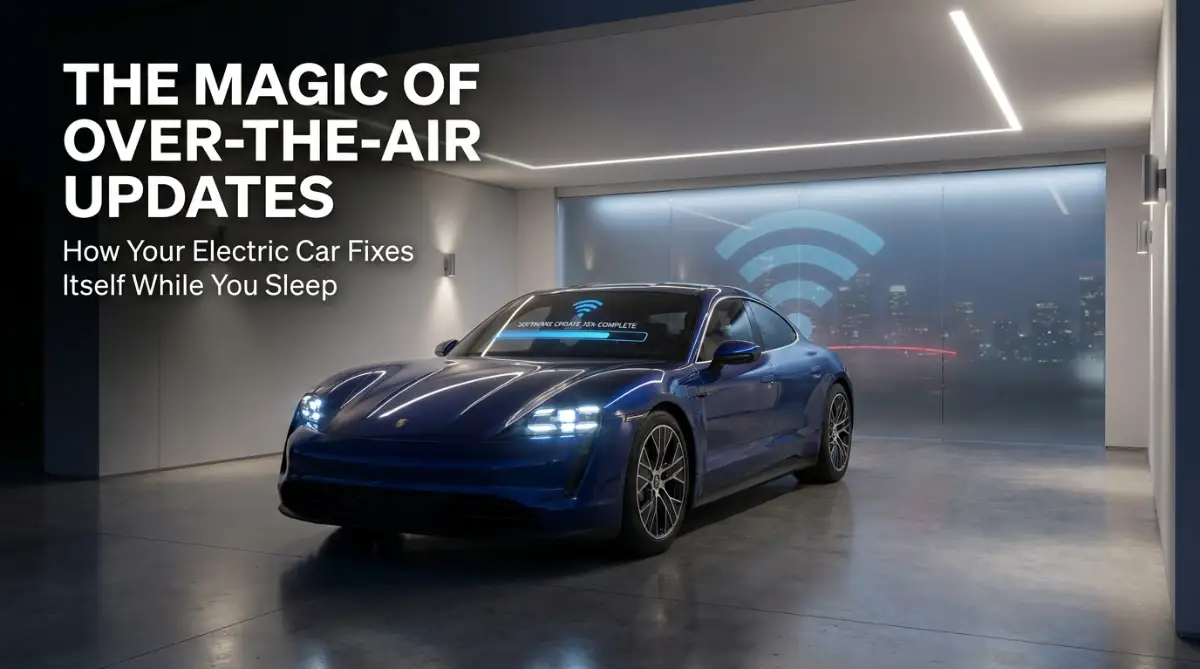
Your car connects to your home Wi-Fi network or a built-in cellular data connection exactly like your smartphone does. When the engineers at the factory find a way to make the car better, they bundle that improvement into a download package. You simply press a button on your screen, walk away, and let the car rebuild its own brain.
Waking Up to a Better Machine
One of the most mind-blowing benefits of this technology is the ability to gain entirely new features completely for free. Imagine buying a brand-new car, driving it for six months, and suddenly getting a notification that you now have a better sound system. In the past, upgrading your audio equalizer required tearing apart the dashboard and spending hundreds of dollars at a custom shop.
Now, a simple wireless download can re-tune your speakers, add new streaming apps, or completely change the look of your navigation map. It feels like you are getting a brand-new car every few months without ever signing another loan agreement. The excitement of checking the release notes to see what new toys your car just received never really gets old.
I used to actively ignore the update prompts on my dashboard because I wrongly assumed they would drain my battery overnight. I quickly realized my mistake when I completely missed a massive navigation upgrade right before a family road trip to the mountains. Now, I always hit the "install" button the exact second I park securely in my garage, ensuring I never miss out on free upgrades.
Dealership Visits vs. Over-the-Air Updates
Fixing Recalls Without Leaving Your Couch
The word "recall" used to strike absolute fear into the hearts of car owners everywhere. It meant waiting for a physical letter in the mail, calling a busy service center, and giving up your car for three days. It was a massive disruption to your life, even for the smallest manufacturing errors.
Today, the vast majority of safety recalls for electric vehicles are fixed silently through the air. If the manufacturer discovers a glitch in the backup camera or an issue with the window motors, they write a software patch immediately. They send that patch to every affected vehicle globally at the exact same time.
You might get a notification on your phone saying a critical safety issue was resolved while you were eating dinner. You never had to schedule an appointment, you never smelled mechanic grease, and your family remains perfectly safe on the road. This instant response completely transforms how we handle automotive safety and eliminates the danger of driving with known defects.
Watch this simple breakdown to see exactly how your electric car downloads new features just like your smartphone does:
How Software Secretly Adds Driving Range
One of the biggest concerns for any new electric vehicle owner is how far they can drive on a single charge. We tend to think that the physical size of the battery is the only thing that determines our maximum distance. However, the software running the Battery Management System (BMS) is equally important for squeezing out those extra miles.
Automakers constantly collect anonymous driving data from thousands of cars on the road to study how the batteries perform under different weather conditions. They use this massive amount of data to figure out better ways to route power to the electric motors. By tweaking the background algorithms, they can make the motors run more efficiently without losing any acceleration speed.
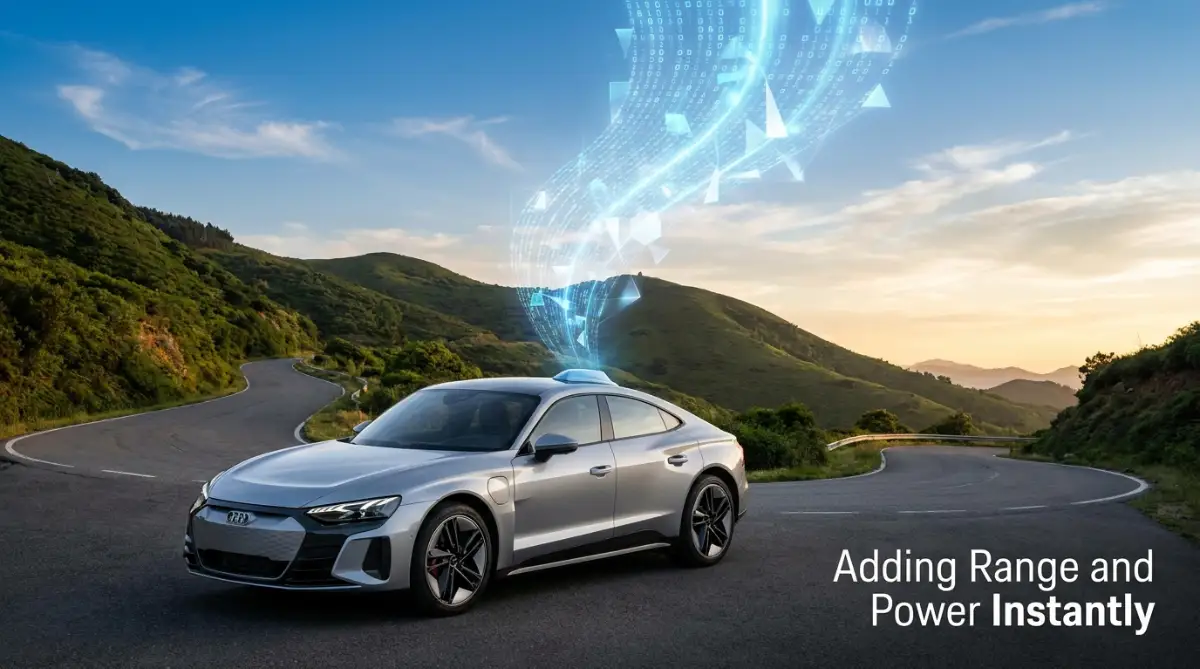
Through an over-the-air update, the company can suddenly give your car an extra 10 or 15 miles of driving range. They can also optimize the thermal management system, ensuring your battery stays warm in the winter to prevent power loss. You literally get a car that drives further today than it did the day you drove it off the dealership lot.
Faster Charging Times Delivered Wirelessly
Stopping at a public charging station is a necessary part of taking long road trips in your electric vehicle. The speed at which your car can accept electricity is heavily restricted by safety software to prevent the battery from overheating. When a car is first released, engineers often set these charging limits very conservatively just to be completely safe.
As the company monitors the fleet and realizes the batteries can safely handle more heat, they can increase the charging speed. An update can be sent out that alters the "charging curve," allowing the battery to accept maximum power for a longer period. This means your pit stops at the highway charger get noticeably shorter as your car gets older.
Imagine shaving five to ten minutes off every single charging session just because your car downloaded a file over Wi-Fi. This dramatically reduces travel fatigue and makes long-distance driving significantly more enjoyable for you and your passengers. The hardware was always capable of these speeds, but the wireless software update finally unlocked its true potential.
Unlocking Hidden Performance and Speed
If you are a driver who loves quick acceleration, wireless updates offer something truly spectacular. Automakers sometimes discover that their electric motors can safely output more horsepower than originally programmed at the factory. Instead of making you buy a newer sports model, they offer a software patch that increases your torque output.
Sometimes these performance boosts are given away entirely for free as a thank-you to loyal customers. Other times, they are offered as a digital purchase right from your smartphone app or the dashboard screen. You can literally sit in your driveway, enter your credit card information, and instantly make your car half a second faster from zero to sixty.
This level of customization was completely impossible with internal combustion engines, which required expensive turbochargers and exhaust modifications. Now, you can temporarily rent a performance boost for a track day weekend, or permanently upgrade your family sedan into a sports car. The flexibility of software means your vehicle adapts perfectly to your changing lifestyle and driving desires.
Constantly Evolving Safety and Autonomy
Modern electric cars are packed with high-definition cameras, ultrasonic sensors, and advanced radar systems. These sensors gather massive amounts of data about the road, pedestrians, and surrounding traffic to keep you safe. However, the software that interprets this data requires constant refinement to get better at predicting dangerous situations.
Through over-the-air updates, your car’s collision avoidance systems become significantly smarter as time goes on. The car might learn a better way to detect bicycles in your blind spot or react faster to sudden braking ahead. The adaptive cruise control becomes smoother, acting more like a human driver and less like a jerky robot.
For cars equipped with advanced driver assistance features, these updates are the only way to eventually achieve full self-driving capabilities. Every time the car connects to Wi-Fi, it downloads the collective learning of every other car in the company's fleet. Your vehicle is constantly evolving into a safer, more capable machine, giving you absolute confidence every time you take the wheel.
Pro-Level Secrets for a Seamless Software Experience
Now that you understand exactly how these wireless downloads improve your daily driving, it is time to take full control of the process. Managing a digital vehicle requires a slightly different mindset than taking care of a traditional mechanical car. The owners who have the best experiences are the ones who set up their environments perfectly to support these massive data transfers.
I want to share some incredibly practical habits that will make every single installation smooth, fast, and completely stress-free. By applying these specific techniques, you will never have to worry about a frozen screen or a failed download again. Let us dive into the expert strategies that keep your high-tech machine running at absolute peak performance.
The Concrete Bunker Problem and Strong Wi-Fi
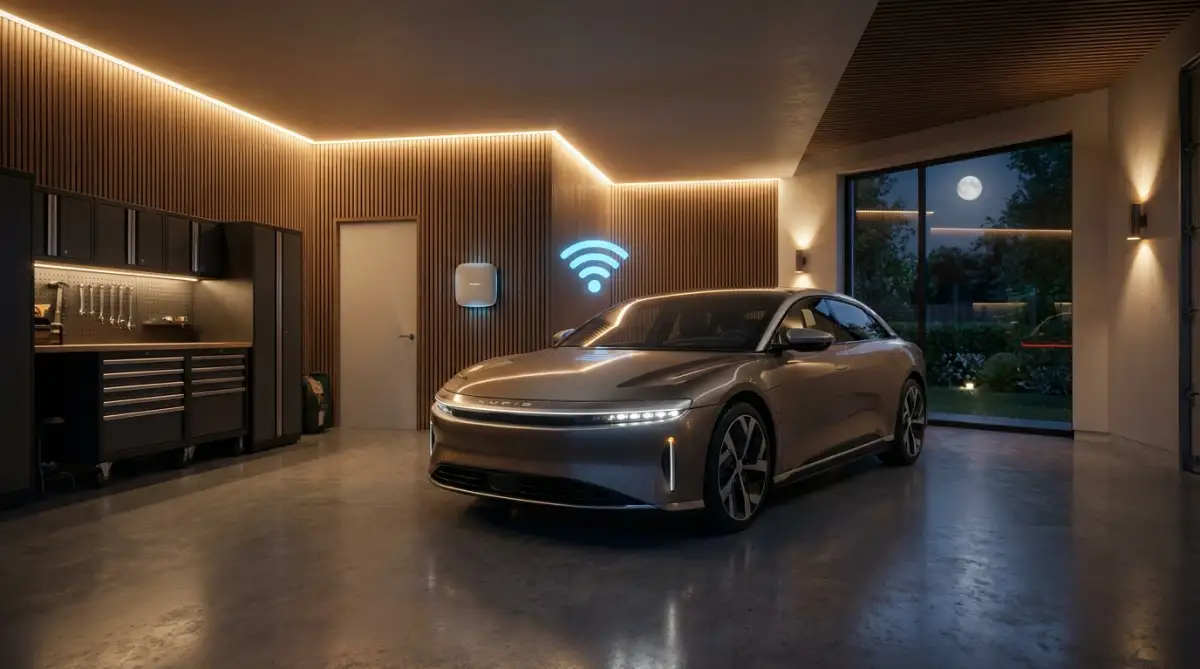
One of the biggest hidden challenges of owning a smart car is getting a reliable internet signal directly into your garage. Many of us have routers sitting in our living rooms, completely separated from the garage by thick concrete walls and metal doors. When your car tries to pull down a massive four-gigabyte file over a terribly weak connection, the process takes hours.
If the connection drops repeatedly, the car has to keep waking up its internal computers to try and reconnect. This constant waking and sleeping cycle actually wastes energy and creates a frustrating experience when the installation eventually fails.
To solve this, I highly recommend installing a simple mesh Wi-Fi extender on the wall closest to where you park. When you take the time to properly prepare your garage for an electric car, ensuring a rock-solid internet connection should be your top priority. A strong signal means the file downloads in minutes while you sleep, completely eliminating the chance of corrupted data.
💡 Pro-Tip for Smart Garage Owners:
Do not just use an old, dusty router from five years ago to connect your expensive car. Set up a dedicated "Guest Network" on your modern Wi-Fi system specifically for your vehicle. This keeps your main home network totally safe from hackers and ensures your car gets a dedicated internet stream for much faster downloads.
The Secret Life of Your 12-Volt Battery
Here is a fascinating mechanical secret that most salespeople completely forget to mention before you drive off the lot. Even though your vehicle has a massive high-voltage battery pack underneath it, that big battery goes completely to sleep when parked. The computers that actually process the over-the-air updates run entirely on the small, traditional 12-volt battery hidden under the hood.
Think of this little battery as the heart monitor keeping the brain alive while the rest of the body rests. If your 12-volt battery is old, degraded, or currently holding a low charge, the car’s main computer will automatically block the update. It does this to protect itself, knowing that if the power dies mid-installation, the car could become completely paralyzed.
Understanding this relationship is a huge part of mastering the secret science behind EV battery health and range loss over the long term. If you consistently receive messages that your software installation has paused or failed, have a mechanic test that small 12-volt unit. Replacing a cheap traditional battery often instantly solves all of your mysterious wireless download issues.
Myth vs. Fact: The Update Process
- The Myth: Your giant battery pack handles the software download, so you need a 100% charge to update safely.
- The Fact: The massive high-voltage battery actually goes to sleep. Your small, traditional 12-volt battery does all the heavy lifting during an installation. If that little battery is old or dying, your car will block the download to protect itself.
Mastering the Art of Midnight Scheduling
When a new software version finally drops, the excitement can make you want to press the "install now" button immediately. However, installing new software physically shuts down the entire vehicle for anywhere from twenty minutes to an over an hour. During this specific window, you cannot drive the car, you cannot open the electronic doors, and you cannot unplug the charger.
Imagine getting an emergency phone call from a family member, only to realize your vehicle is completely locked down for a reboot. This is a terrifying situation that you absolutely want to avoid at all costs. The absolute best practice is to always use the scheduling feature located inside your smartphone companion app.
You should set the installation timer for two or three in the morning when you are guaranteed to be fast asleep. According to detailed studies on electric vehicle charging behavior and grid management by the Department of Energy, off-peak night hours provide the most stable power delivery anyway. You get to wake up to a refreshed, upgraded machine without ever sacrificing your ability to handle a late-night emergency.
Becoming a Release Notes Detective
Whenever your smartphone gets a software patch, you probably just swipe the notification away and ignore the details. You should never treat your multi-thousand-dollar vehicle with that same level of casual indifference. Automakers always provide detailed "release notes" that explain exactly what lines of code were changed in the latest version.
Sometimes, an update might completely change how your regenerative braking feels when you lift your foot off the pedal. If you do not read the notes, you might drive out of your driveway and panic because the car feels entirely different.
Taking three minutes to read the summary on your dashboard screen prepares your muscle memory for any new driving dynamics. It also alerts you to new entertainment features, hidden climate control options, or adjustments made to the thermal management system. The more you understand about what changed, the more confident you will feel maneuvering your car on the open highway.
The Dangerous Pitfalls of Managing Digital Vehicles
While wireless technology makes ownership incredibly convenient, it also introduces a few entirely new ways to accidentally ruin your day. Because we are so used to traditional gasoline engines, it is very easy to make silly mistakes with these flying computers. A single bad decision during an installation can temporarily turn your expensive car into a completely useless metal box.
I want to walk you through the most painful errors I have seen drivers make so you can easily avoid them. Recognizing these dangerous traps will protect your mental health and save you from making an embarrassing call to a tow truck company.
The Grocery Store Parking Lot Gamble
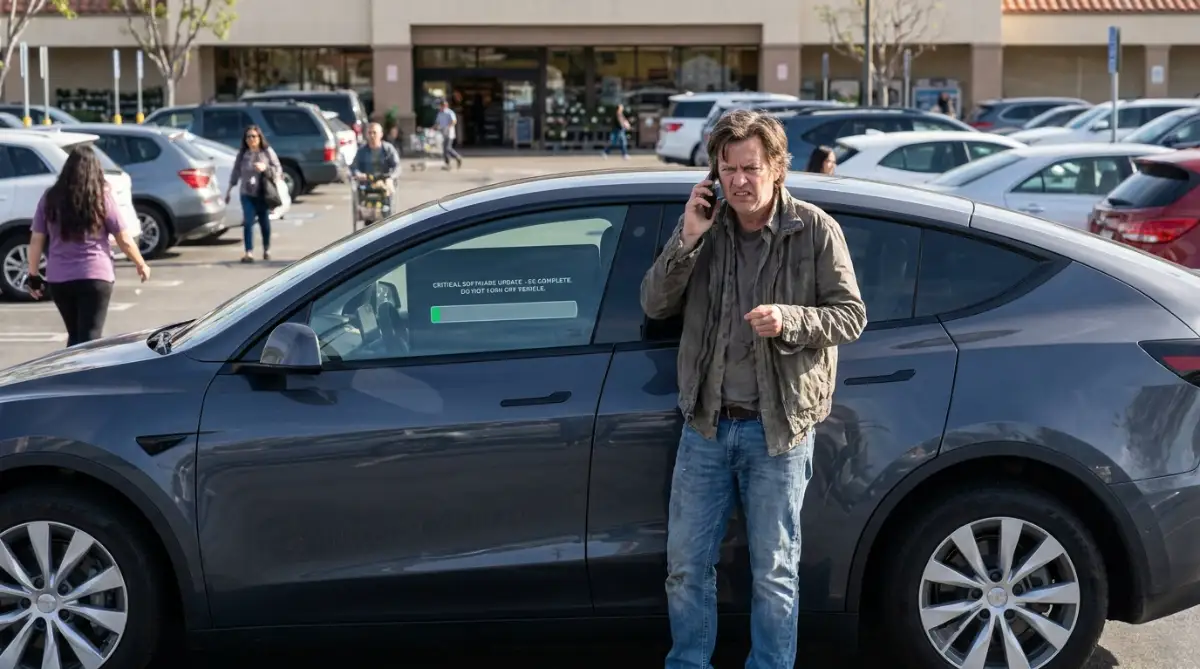
One of the most common mistakes new drivers make is starting an installation while they are away from home. You might be sitting in a busy shopping center, see the notification pop up on your screen, and decide to quickly install it. This is a massive gamble that can easily leave you stranded with melting ice cream in your trunk.
If the installation encounters a glitch, or the cellular data connection drops mid-download, the car might temporarily disable its own drivetrain. You are now stuck in a public space, unable to shift into drive, completely blocking other busy shoppers.
This scenario perfectly highlights why you must learn to stop making these costly electric car charging mistakes in public spaces. You should only ever authorize massive system overrides when the vehicle is parked safely inside your own locked garage. If something goes wrong at home, you have alternative transportation options and the safety to calmly call customer support.
Interrupting the Brain Surgery
When your car is actively rewriting its own operating system, it is essentially performing complex brain surgery on itself. During this delicate process, the internal screens will turn black, the headlights might flash randomly, and strange clicking noises will happen. Many new owners panic when they see this, thinking the vehicle is actively breaking down right in front of them.
Their first instinct is to pull the door handle, press the brake pedal, or try to aggressively restart the main computer screen. Doing this is incredibly dangerous because it sends conflicting physical signals to a computer that is highly vulnerable.
Interrupting the process can corrupt the installation files, completely "bricking" the car and forcing a mechanic to come out with a physical laptop. When the screen says "Installation in Progress," you must step away, trust the engineering, and leave the car completely alone.
Ignoring the "Minor" Security Patches
It is totally normal to get excited about big updates that add new streaming services or make the car accelerate faster. However, companies frequently send out tiny, invisible patches that do not seem to change anything on the surface. Because these small downloads seem boring, many drivers just continuously hit the "remind me later" button for months on end.
Ignoring these silent downloads is a massive security risk for your personal data and your physical safety. These patches often contain critical defenses against hackers who are constantly trying to find weaknesses in automotive software.
The National Highway Traffic Safety Administration's guidelines on automotive cybersecurity strongly emphasize that keeping your car's software current is the only way to prevent remote hacking. If you leave your digital doors unlocked by ignoring security patches, you are exposing your vehicle to completely unnecessary danger.
Overlooking the Cold Weather Drain
People often forget that downloading and installing massive data packages actually consumes a decent amount of battery power. If you leave your car parked outside in freezing weather and start an installation, the battery management system has to work incredibly hard. It must physically heat the battery pack just to keep the internal computers running safely during the download.
This unexpected energy drain is one of the sneaky hidden reasons your electric car loses power in winter overnight. You might go to sleep with fifty miles of range and wake up to find you only have thirty left.
If you are not actively plugged into a wall charger, never start a major software overhaul on a freezing winter night. Always ensure the car is comfortably plugged in and drawing power directly from your house before giving it permission to rewrite its brain.
Misunderstanding the Financial Value
When you sit down to properly calculate the total cost of ownership for an electric vehicle, free wireless upgrades change the math entirely. A gas car loses value and feels older every single day you own it.
An electric vehicle connected to the internet can actually gain new features, becoming more useful and retaining its resale value much longer. Understanding this financial reality takes away the purchase anxiety and proves that smart technology is actually a brilliant long-term investment.
Your Action Plan for a Smarter Drive
You now possess a deeply professional understanding of exactly how wireless software distribution transforms the automotive experience. You know that these vehicles are no longer just static pieces of metal; they are living, breathing digital ecosystems. By treating your car like a highly advanced computer, you unlock a level of convenience that older generations could only dream about.
You do not have to accept the old, broken model of wasting your precious weekends inside a loud, dirty mechanic's garage. You have the power to let your vehicle diagnose its own problems, download its own solutions, and improve its own performance while you sleep peacefully. This technology exists purely to make your life easier, safer, and significantly more enjoyable on the open road.
If you want to keep expanding your knowledge and explore more ways to master your digital machine, be sure to visit digitshopy.com for continuous expert guidance. Staying educated is the absolute best way to ensure you never get left behind in this rapidly changing automotive revolution.
Embrace the amazing convenience of waking up to a car that is genuinely better today than it was yesterday. The future of driving is already parked right in your driveway, completely ready to evolve at the simple touch of a button.
I know transitioning away from traditional mechanical habits can feel a little intimidating at first. My advice is to simply double-check your garage Wi-Fi connection tonight, plug your charger in securely, and let the car do its magic. You deserve a stress-free driving experience, so take a deep breath and enjoy the incredible benefits of owning a truly smart machine!
Common Questions About Wireless Vehicle Updates
Can an over-the-air update fail and ruin my car?
Yes, it is physically possible for an installation to fail if the internet connection drops or the 12-volt battery dies midway. However, modern systems have smart fail-safes built directly into the code to protect the vehicle. If a download gets corrupted, the car will automatically revert back to the previous stable version so you can still drive safely.
Do I have to pay money for these software downloads?
The vast majority of updates regarding safety, bug fixes, and general system optimizations are completely free for the life of the car. However, some manufacturers charge a premium fee for completely new features, like advanced self-driving capabilities or massive horsepower boosts. You always have the choice to ignore the paid upgrades and just enjoy the free maintenance patches.
How long does a typical installation process take?
Small bug fixes or background security patches usually finish in less than fifteen minutes without you even noticing. Major system overhauls, which change the user interface or alter driving dynamics, can take anywhere from forty-five minutes to an hour. This is exactly why experts highly recommend scheduling them for the middle of the night.
Will my vehicle drain its main battery during an update?
The process does consume some electricity, but it is a surprisingly small amount under normal weather conditions. You might lose one or two miles of total driving range during a standard installation process. To completely avoid this minor loss, simply keep the car plugged into your home charger while the download runs.
Are these wireless internet downloads actually secure from hackers?
Automakers use highly advanced, bank-level encryption to safely transfer these massive data packages from their servers to your driveway. The vehicle verifies an exclusive digital signature before it ever allows the software to unpack and install itself. While no system on earth is one hundred percent perfect, the security protocols protecting your steering and brakes are incredibly robust.
Disclaimer: The information provided in this guide is for educational and informational purposes only. It does not constitute professional mechanical or cybersecurity advice. Always consult with a certified automotive technician or refer to your specific vehicle's manufacturer guidelines before performing any maintenance, modifications, or software alterations.