My Exciting Upgrade Turned Into a Financial Headache
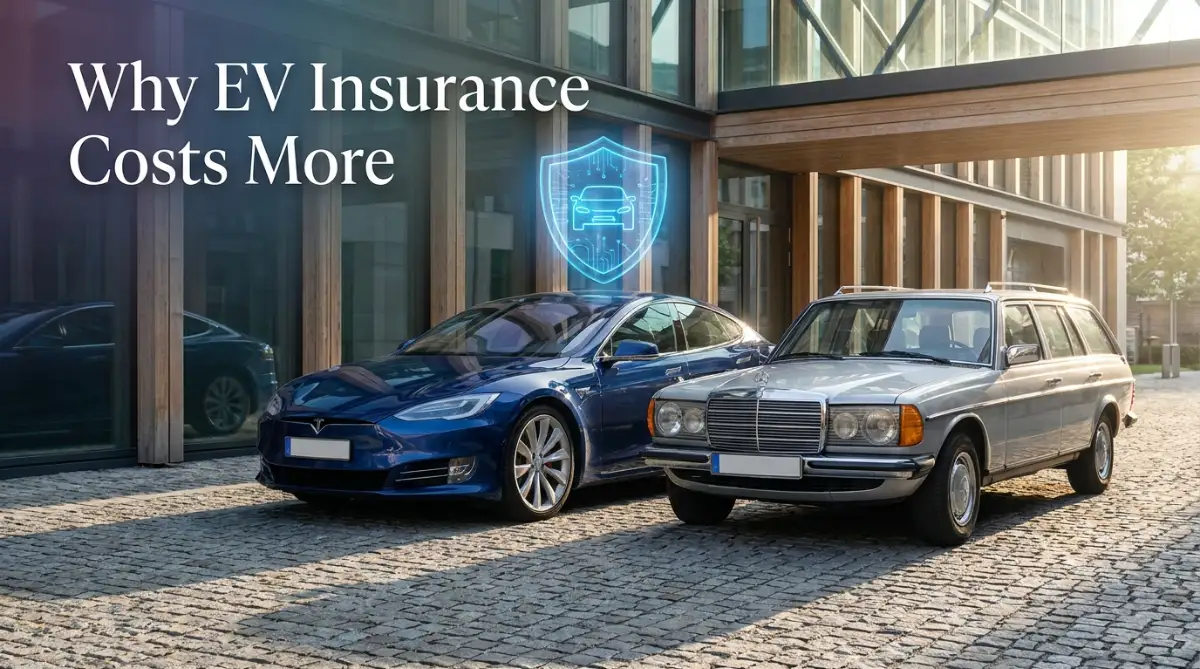
Look, buying an electric car is supposed to save you money on gas, right? But then you open that first auto insurance bill, and your jaw drops. You are not crazy—protecting a battery-powered car is currently way more expensive than insuring a regular gas guzzler. I learned this the hard way. Let's break down exactly why you are paying so much, and more importantly, how you can actually fight back and lower those crazy monthly premiums.
What You Will Learn in This Guide (Key Takeaways):
- Why a simple fender bender in a battery-powered car costs thousands more than a gas car.
- How the heavy weight of massive batteries drives up your liability coverage rates.
- Insider tricks to instantly lower your premium, like safe driving apps and green discounts.
- The hidden paperwork mistakes that leave your expensive home wall charger completely unprotected.
Unpacking the Hidden Price Tag of High-Tech Driving
To truly understand why your wallet is taking such a heavy hit every month, we need to look under the hood of your electric ride. It is not just about greedy corporations wanting to squeeze more money out of you. There are very real, physical reasons why protecting these specific cars is so wildly expensive.
Let us break down the exact science and logic behind these high numbers. By understanding these mechanical factors, you can start making much smarter choices about your coverage options.
The Giant, Fragile Power Plant Under Your Seats
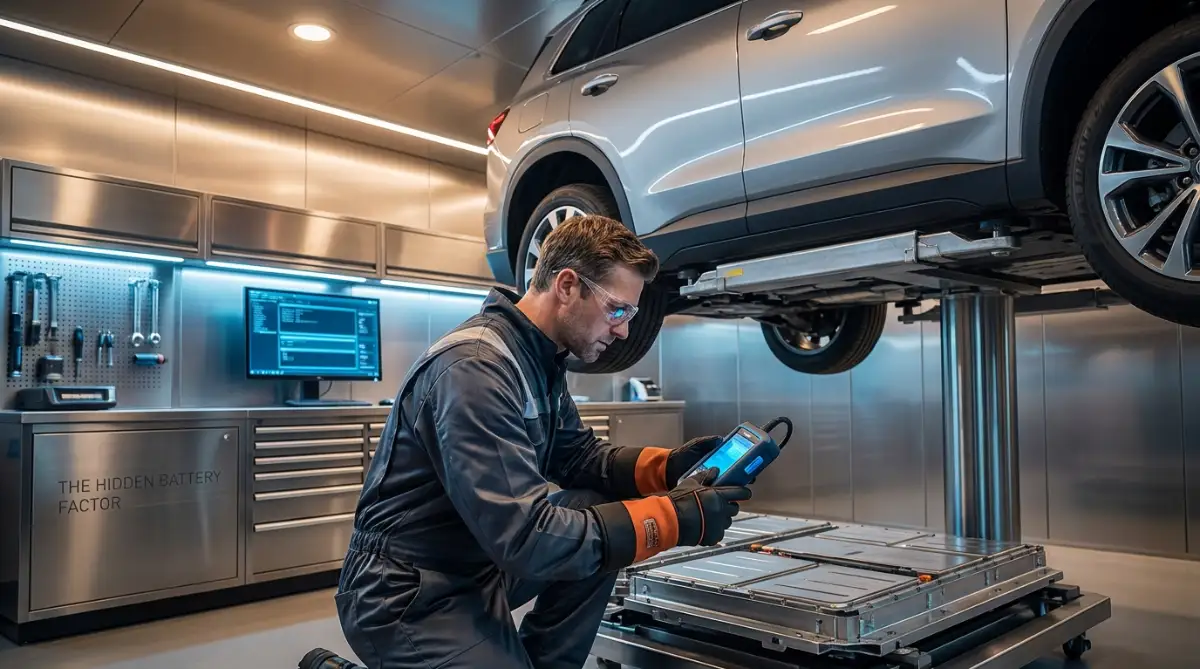
The absolute biggest difference between your old gas car and your new ride is the massive battery pack running along the entire bottom of the frame. In a traditional car, a minor scrape over a tall speed bump might damage a cheap plastic splash guard or a metal exhaust pipe. You can usually fix those simple parts for a few hundred dollars at any local corner shop.
However, if you accidentally scrape the bottom of an electric vehicle, you seriously risk damaging the external casing of the main battery. Even a tiny dent in this protective shell can easily compromise the entire liquid cooling system or the sensitive battery cells inside.
Insurance providers know perfectly well that they cannot just casually repair a highly complex, slightly damaged battery pack. For strict safety reasons, the manufacturer usually requires a complete, brand-new replacement of the entire unit. This means a minor accident that would cost a thousand dollars in a gas car can instantly turn into a twenty-thousand-dollar total loss.
Think of it exactly like dropping a solid wooden block versus dropping a highly expensive glass smartphone on the sidewalk. Both might hit the ground with the exact same force, but one is going to cost significantly more to fix. The insurance company is forced to take on all that extreme financial risk the very moment you sign your policy.
Real-World Repair Shock: Gas vs. Battery Powered
To give you a clear idea of what insurance companies are afraid of, here is a quick breakdown of everyday repair costs based on recent mechanic estimates:
The Shortage of Specialized Brainpower
If the standard engine in your traditional gas car starts making a weird rattling noise, you can take it to almost any mechanic in your town. There are thousands of independent auto shops with decades of deep experience fixing standard combustion engines. This heavy local competition keeps hourly labor rates somewhat reasonable and affordable for average people.
Electric vehicles are completely different machines entirely. They run on massive high-voltage electrical systems that can be extremely dangerous or even deadly if handled incorrectly. You absolutely cannot just hand a wrench to a standard mechanic and expect them to safely take apart your new car.
If you really want to see the wild mechanical differences inside these cars, watch this incredible breakdown below. It completely changed how I view my own repair bills and the mechanics who fix them.
Takeaway from the video: Notice how many tiny computer modules are packed right behind the bumper? That is exactly why you cannot just take these cars to the cheap auto shop down your street anymore.
Repairing an electric car requires highly specialized technicians who have gone through hundreds of hours of expensive, rigorous safety training. They need specialized insulated safety gear, custom non-conductive tools, and dedicated isolated bays in the repair shop. Because there are currently so few of these highly trained experts available across the country, the shops that do employ them charge a massive premium for their time.
When an insurance company calculates your daily premium, they directly factor in these sky-high specialized labor costs. They know that if you get into a crash, they will be paying top dollar per hour just to get a legally qualified human being to look at the damage.
Pro Tip: I learned this the hard way when a flying rock cracked my windshield on the highway last month. I thought my standard cheap glass coverage would handle it in an afternoon, but I had to wait three weeks for a certified shop because the glass is directly wired to the advanced autopilot cameras. Always ask your agent directly if your current policy fully covers the specific computer calibration costs for these high-tech sensors.
Bumpers Are Not Just Cheap Plastic Anymore
Let us talk about a standard, everyday rear-end collision at a stoplight. Ten years ago, replacing a cracked rear bumper meant buying a shaped piece of basic plastic, spraying it with matching paint, and bolting it on. The materials were incredibly cheap, and the whole process was amazingly fast.
Today, the front and rear bumpers on your electric vehicle are essentially sophisticated rolling supercomputers. They are completely packed with tiny ultrasonic sensors, short-range radar systems, and high-definition backup cameras. These hidden devices are entirely responsible for your blind-spot monitoring, auto-parking features, and automatic emergency braking systems.
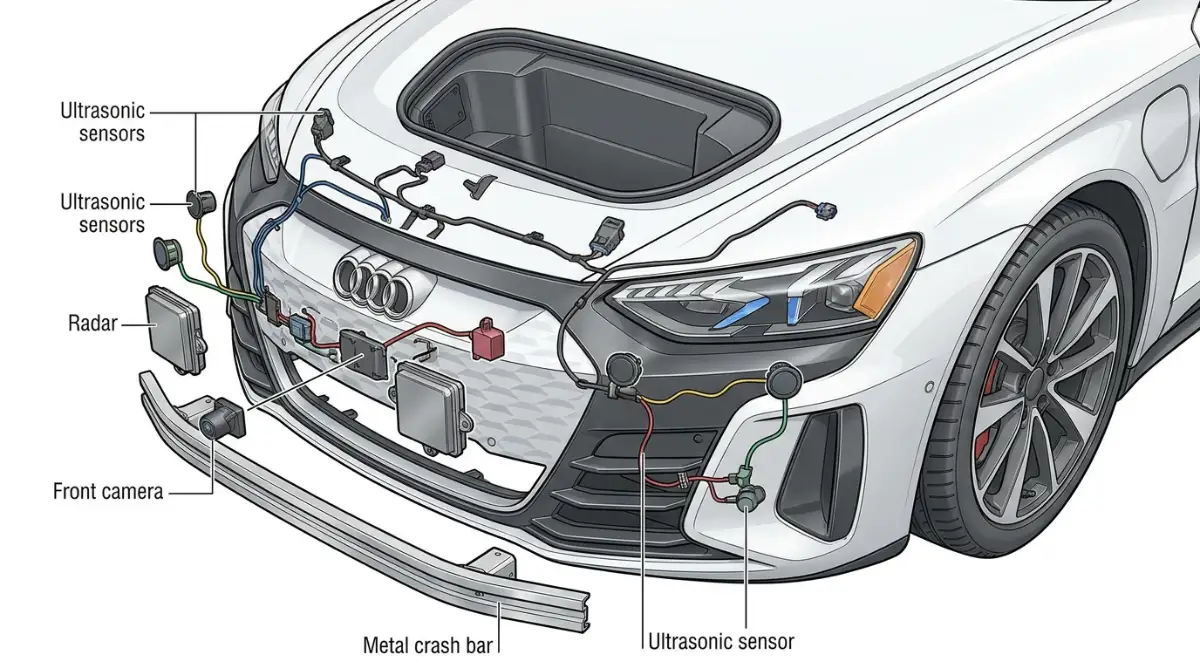
If someone accidentally bumps into you at a red light at just five miles per hour, the plastic cover might actually look totally fine on the outside. But directly underneath that plastic, those highly sensitive electronic components are easily crushed and permanently destroyed by the impact. Replacing them means buying highly expensive proprietary computer parts straight from the original manufacturer.
After the shiny new sensors are finally installed, the car must go through a complex, hours-long software calibration process. The main computer needs to learn exactly where the new sensors are pointing so you do not crash into a wall later. This mandatory software reset takes time, requires expensive diagnostic laptops, and drives up the final insurance claim cost dramatically.
Heavy Cars Cause Heavier Damage (The Physics Factor)
We often forget that our auto insurance does not just pay to fix our own shiny car. A huge chunk of your monthly premium actually goes toward your liability coverage limit. This specific part protects you financially if you accidentally destroy someone else's property or cause physical bodily harm to another driver.
Because of their massive, dense battery packs, electric vehicles are significantly heavier than gas cars of the exact same physical size. A standard electric family sedan can easily weigh a full thousand pounds more than a gas-powered sedan sitting right next to it. This simple, unavoidable law of physics creates a really big headache for insurance actuaries.
When a much heavier object heavily collides with a lighter object, the heavier one transfers a massive amount of destructive kinetic energy. If you accidentally rear-end a small, older gas car with your heavy electric SUV, the physical damage to the other person's vehicle will be incredibly severe. The risk of the other driver suffering serious medical injuries is also noticeably higher in this scenario.
Insurance companies have massive mountains of private data showing that accidents involving heavy cars result in much larger medical payouts for the other party involved. To legally cover this increased risk of causing severe damage to others, they have to charge you a much higher baseline rate for your liability coverage.
The Long Rental Car Nightmare
Let us look at another deeply hidden factor that quietly drives up your monthly insurance rates while you sleep. When you get into an accident and drop your broken car at the local body shop, your policy usually provides a rental vehicle. For a standard gas car, a simple bumper replacement might put you in a cheap rental for three or four days tops.
Electric vehicle repairs tell a completely different, much sadder story. Because these high-tech cars are still relatively new to the global market, manufacturers do not have massive, dusty warehouses full of spare parts sitting in every major city. If your mechanic needs a specific high-voltage power cable or a proprietary aluminum frame piece, the shop might have to order it directly from an overseas factory.
This incredibly slow supply chain means your car could easily sit in a dusty repair lot for six to eight long weeks just waiting for a single computer chip to arrive in the mail. During those entire two months, your insurance company is bleeding money paying a daily fee for your rental car.
Those daily rental fees add up incredibly fast. A simple, minor body repair job can easily generate thousands of extra dollars just in rental agency fees alone. The people running the insurance companies are very smart with their math, and they heavily spread this expected rental cost across every single policy they write.
Myth vs Reality: The Great Fire Risk Debate
You have probably seen those scary, viral videos on the evening news showing cars suddenly bursting into massive flames on the side of the highway. These dramatic, terrifying stories spread quickly on social media and naturally create a lot of public fear. Many people naturally assume that these modern cars cost more to insure simply because they are highly flammable fire hazards.
The Reality: The actual hard data tells a completely opposite, much more boring story. Statistically speaking, traditional gas cars actually catch fire significantly more often than their battery-powered counterparts. After all, a gas car is quite literally driving around with a large plastic tank full of highly explosive, flammable liquid right under the back seat.
Quick Reality Check: Fire Danger
- The Myth: You are paying higher insurance because battery cars catch fire all the time.
- The Fact: Gas cars actually catch fire at a much higher rate. The real issue isn't how often they burn, but how hard they are to put out. Firefighters need thousands of gallons of water just to cool down one battery fire, often resulting in a total loss of the car. That total loss is what you are paying for in your premium.
However, the massive insurance problem lies in exactly how these different fires behave once they start. When a gas car accidentally catches fire, local firefighters can usually put it out fairly quickly with standard water hoses and chemical foam. The physical damage is bad, but the situation is manageable.
When a giant battery pack catches fire, it creates a terrifying chemical phenomenon known as "thermal runaway." The complex chemicals inside the battery actually create their own oxygen supply as they aggressively burn, making the fire almost impossible to extinguish quickly. Fire departments often have to just stand back and let the car aggressively burn itself out completely, which can take several hours.
Because these specific chemical fires are so intensely hot and destructive, the vehicle is almost always declared a complete total loss by the adjuster. Even worse, the intense, prolonged heat can severely melt the public road surface underneath or catch nearby residential buildings on fire. This high severity of total destruction is what actually scares insurance providers, not the actual frequency of the fires.
The Real Wait Time: Why Your Car Sits in the Shop for Weeks
This highly simple chart perfectly highlights exactly why the people who calculate your monthly premiums are so incredibly cautious. Every single extra day your broken car quietly spends in the repair shop is just more money flying out of their corporate pockets. They legally protect themselves by proactively increasing your upfront monthly bills.
The Unbendable Aluminum Frame Dilemma
To effectively offset the extreme, heavy weight of the massive battery packs, clever car makers have to find new ways to make the rest of the vehicle much lighter. They simply cannot use heavy, thick steel for the heavy doors and main body panels like they used to in the old days. Instead, they rely heavily on specialized, highly expensive aluminum alloys.
Aluminum is an absolutely fantastic material for improving your daily driving range because it is so incredibly light and aerodynamic. However, it is a complete financial nightmare to try and repair in a standard body shop. When thick steel gets severely bent in a bad accident, a skilled metal worker can carefully heat it up and slowly pull it back into its perfect original shape.
Aluminum totally lacks this helpful "memory" that steel has. Once it gets aggressively bent or deeply crushed in a crash, it permanently loses its structural safety strength entirely. You absolutely cannot just cheaply bend it back into place with a hammer. If an aluminum door panel gets heavily dented, the body shop almost always has to throw it directly in the recycling bin and buy a brand new one.
Working safely with bare aluminum also requires an entirely separate set of clean tools and a completely dust-free workspace. If microscopic steel dust from another broken car mixes with the raw aluminum during a repair, it causes severe, unstoppable chemical corrosion. Body shops actually have to build dedicated, enclosed aluminum repair rooms, and they pass those expensive construction costs directly onto the insurance companies who write the checks.
Smart Strategies to Lower Your High-Tech Auto Premiums
Finding out that your modern ride costs a fortune to protect can feel like a heavy punch to your daily budget. However, you do not just have to sit back and accept these massive monthly bills without a fight. There are completely legal, highly effective ways to beat the system and force your insurance provider to give you a much better rate. You just need to know exactly which hidden levers to pull.
Let us explore some powerful, insider methods that smart drivers use to keep their money safely in their own pockets. I use these exact same strategies every single time my policy renewal paper arrives in the mail.
Let Your Good Driving Habits Speak for You
The absolute easiest way to slash your monthly premium is to prove to the insurance company that you are actually a safe driver. They normally base your rate on average statistics for people your age, which is honestly quite unfair. You can change this completely by signing up for a telematics program, often called a safe driving app.
You simply download their official app to your smartphone or plug a tiny device under your dashboard. This smart technology quietly tracks your daily driving habits, like how smoothly you brake and how gently you take sharp corners. If you consistently drive like a responsible adult, they will legally have to drop your rates, sometimes by as much as thirty percent.
This puts the financial control entirely back into your own hands. Instead of arguing with an agent on the phone, your actual on-road behavior does all the tough negotiating for you. It is a brilliant way to instantly lower your financial risk profile in their main computer system.
Hunting for Hidden Green Energy Discounts
Many people have no idea that certain forward-thinking insurance brands actually want more electric cars on their books. They actively offer special "green vehicle" or alternative fuel discounts that are rarely advertised on television commercials. You have to be aggressive and ask your local agent about these specific programs directly.
Some specialized companies will automatically drop your premium by five or ten percent just because your car does not use a gas pump. They know that environmentally conscious people tend to be statistically safer drivers overall. If your current agent says they do not offer any green discounts, it is definitely time to start shopping around for a new provider.
When you are comparing different providers, you need to manage your personal finances carefully. If you are already trying to balance an auto loan and expensive insurance, learning how to calculate your debt to income ratio for loan approval becomes a highly valuable skill. Keeping your monthly vehicle costs low ensures you remain financially stable if an emergency ever happens.
The Magic of Increasing Your Deductible Safely
Your deductible is simply the amount of money you promise to pay out of your own pocket before the insurance company covers the rest of the repair bill. Most people automatically choose a low five-hundred-dollar deductible because it feels much safer in their minds. However, choosing this low number guarantees your monthly premium will stay painfully high.
If you are a generally safe driver who rarely gets into fender benders, you should strongly consider raising that deductible to one thousand dollars. By taking on just a little more upfront risk yourself, the insurance company will drastically lower your everyday monthly payment. Over the course of a few trouble-free driving months, those monthly savings will easily pay for the higher deductible anyway.
You can take those monthly savings and put them straight into a dedicated emergency savings account. Creating healthy financial habits like this is a great step toward understanding smart personal finance strategies for your family's future. You become your own financial backup plan instead of relying entirely on expensive corporate policies.
Rethinking Your Rental Car Reimbursement Limits
We talked earlier about how incredibly long it takes to order specialized replacement parts for battery-powered cars. A standard auto policy usually covers about thirty days of a cheap rental car while your vehicle is stuck at the body shop. For a traditional gas car, thirty days is usually more than enough time to get everything fixed perfectly.
For your new high-tech ride, a thirty-day rental limit is a massive financial trap waiting to spring. Because complex battery repairs often drag on for six to eight weeks, you will end up paying for that rental car entirely out of your own pocket for an entire month. That extra month of unexpected rental fees can easily cost you thousands of extra dollars you did not plan for.
You need to proactively call your agent tomorrow and ask them to extend your rental reimbursement coverage to at least fifty or sixty days. It might add three or four dollars to your monthly premium right now, but it will save you from a massive financial disaster later. This small adjustment is the ultimate insider secret to stress-free ownership.
Securing Your Wall Charger Against Disaster
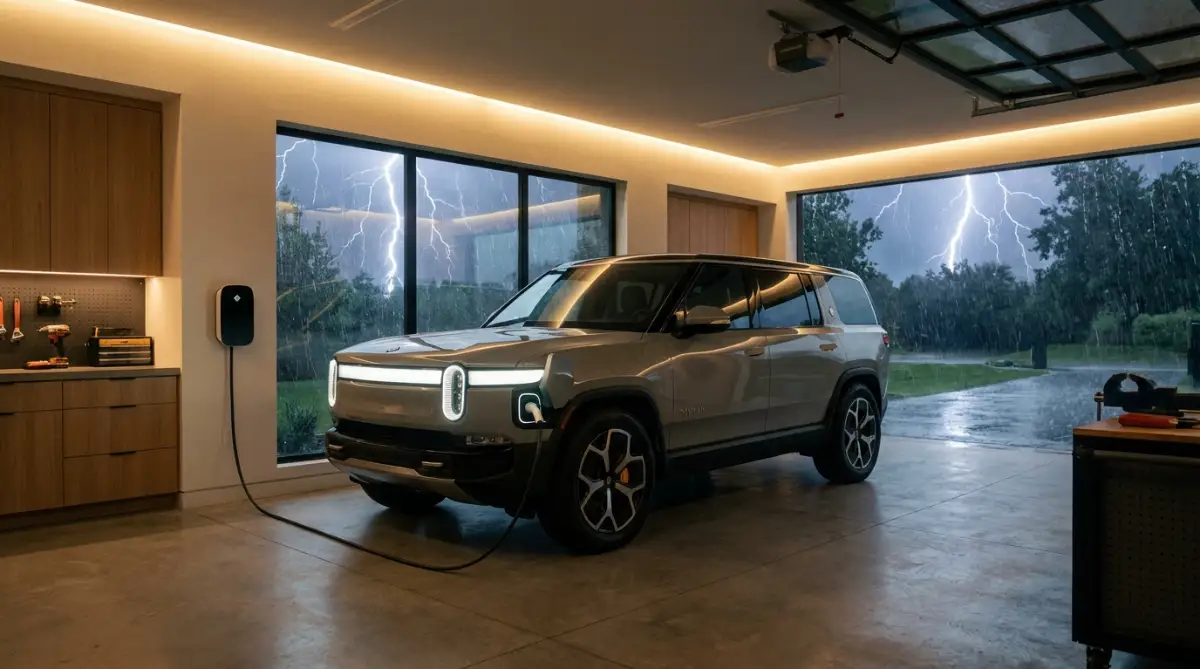
People easily forget that owning a modern car also means owning expensive home charging equipment bolted to their garage wall. A high-quality Level 2 home charger, plus the professional electrician installation fees, can easily cost you over two thousand dollars. If a severe lightning storm fries that charger, or a thief unbolts it in the middle of the night, your standard auto policy will absolutely not pay to replace it.
You need to actively link your vehicle protection with your standard homeowner or renter insurance policy. You must call your home insurance provider and confirm that your expensive wall charger is fully covered under your personal property limits. Do not just assume it is protected; ask them to put it in writing on your official policy declarations page.
Taking care of these small paperwork details ensures you never face a denied claim when you need help the most. When you organize your financial documents properly, you easily learn how to avoid common paperwork mistakes that often cost everyday people thousands of dollars. Protecting your complete driving ecosystem is just smart planning.
The Painful Blunders That Destroy Your Bank Account
Switching to a battery-powered lifestyle is a totally new experience for most everyday drivers. Because the rules are so wildly different now, it is incredibly easy to make simple mistakes that carry a massive financial penalty. I have watched too many smart people fall into these exact same expensive traps.
If you ignore these warnings, you might find yourself stuck with a broken car and an empty bank account. Let us walk through the most dangerous pitfalls you must absolutely avoid at all costs.
Buying the Car Before Checking the Quotes
This is by far the most common and most devastating mistake excited car buyers make every single day. You walk into a brightly lit dealership, take a perfectly quiet test drive, and immediately fall in love with the digital dashboard. You eagerly sign all the heavy financing paperwork without ever once calling your insurance agent to check the new rates.
A week later, your new premium bill arrives, and it is suddenly three hundred dollars higher than your old car payment. Your entire monthly household budget is instantly destroyed because you skipped one simple, ten-minute phone call. Never, ever sign a legal purchase contract until you have a firm, written insurance quote sitting right in your hand.
When you fail to plan your monthly budget accurately, it can heavily damage your long-term financial health and credit score. This is exactly why you need to research common reasons financial institutions reject applications when your debt gets completely out of control. Always do your boring math homework before you let the shiny car excitement take over your brain.
Skipping Gap Coverage on a Rapidly Depreciating Asset
The used market for battery-powered vehicles is currently experiencing some wild, unpredictable price swings. Because the underlying technology improves so incredibly fast, a brand-new model can lose a huge chunk of its resale value the moment you drive it home. If you financed the vehicle with a small down payment, you are likely "underwater" on your auto loan almost instantly.
Imagine a distracted driver totally totals your new ride at an intersection just three months after you bought it. The insurance adjuster will only write you a check for the current, depreciated value of the car, which might be ten thousand dollars less than what you actually owe the bank. You will personally have to pay the bank that missing ten thousand dollars out of your own pocket for a car that is sitting in a junkyard.
Gap coverage is a tiny, cheap addition to your policy that completely covers this terrifying difference between the car's actual value and your loan balance. Always ask your agent to add this specific protection if you are financing or leasing your new ride. Understanding these protective financial tools helps you make smart choices between different borrowing options when buying expensive assets.
Assuming All Auto Repair Shops Are Equal
When you get a minor scratch on your old gas sedan, you can safely take it to the cheap, friendly mechanic down the street. If you try to take your highly advanced computer-on-wheels to that exact same cheap shop, you are asking for a complete disaster. Most standard mechanics have zero professional training on how to safely handle high-voltage battery systems.
If an uncertified mechanic accidentally damages your sensitive cooling system, your vehicle manufacturer will instantly void your expensive factory warranty entirely. Your insurance company will also flatly refuse to pay to fix the new damage because you used an unauthorized repair facility. You will be stuck paying massive dealership repair bills completely alone.
Always demand that your insurance provider sends your vehicle strictly to a manufacturer-certified collision center. You can easily verify these strict safety and repair standards by checking official guidelines on the National Highway Traffic Safety Administration website for your specific vehicle model. Never compromise on professional safety just to get your car back a few days earlier.
Dropping Full Coverage to Save a Few Bucks
When inflation hits hard and grocery prices rise, many families desperately look for quick ways to trim their monthly bills. A very tempting option is to drop your expensive collision and comprehensive coverage, keeping only the bare minimum legal liability insurance. This is an absolutely massive gamble that almost always ends in tears.
Remember how we discussed that a tiny dent in your battery pack can result in a twenty-thousand-dollar total replacement bill? If you drop your full coverage, you are personally accepting one hundred percent of that extreme financial risk. One simple mistake sliding on an icy winter road could instantly bankrupt your family savings.
Instead of dropping your essential coverage, you should look for safer ways to manage your money across the board. You can explore a trusted digital marketplace for everyday financial solutions to find better ways to organize your monthly household budget. Keep your physical car fully protected, and find your financial savings somewhere much safer.

Your Roadmap to Stress-Free Driving
We have uncovered exactly why your high-tech ride commands such a premium price from the big insurance companies. It is not a random punishment; it is simply the real mathematical cost of protecting massive batteries, complex computer sensors, and highly specialized labor. The secret is that you no longer have to be a helpless victim to these confusing rate calculations.
By actively adjusting your deductibles, hunting for green discounts, and extending your rental coverage, you completely change the rules of the game. You now have the exact knowledge you need to call your agent and demand a policy that actually fits your real life. You can finally enjoy the quiet, smooth ride of your new car without that constant financial anxiety hanging over your head.
My absolute best advice is to set a reminder on your phone right now to review your current policy tomorrow morning. I want you to feel incredibly confident and totally secure every single time you press that start button. Taking fast, proactive control of your protection is the single best feeling in the world.
Common Questions About Protecting Battery-Powered Cars
Do these modern cars always cost more to insure than gas cars?
Not automatically, but they usually do cost roughly ten to twenty percent more on average across the country. The final price heavily depends on your personal driving record, your exact zip code, and the specific brand of car you choose to buy.
Does my home charging station need a separate insurance policy?
Your standard auto policy will absolutely not cover the expensive charger bolted to your garage wall. You must contact your home or renter insurance provider and specifically list the charger under your personal property protection limits.
Will a damaged battery always total my entire car?
It highly depends on the exact severity of the damage, but it is extremely common for adjusters to declare a total loss. Because replacing the massive battery pack often costs more than half the value of the entire vehicle, insurance companies usually find it cheaper to just write you a check for a new car.
Are there special companies that only insure these high-tech vehicles?
Yes, there are several new, innovative insurance startups that exclusively focus entirely on battery-powered rides. Because they truly understand the unique technology and repair costs, they can sometimes offer much better daily rates than the old, traditional insurance giants.
How does the extreme weight of the car affect my daily rates?
Because these rides are incredibly heavy, they cause significantly more physical damage to other vehicles during a highway crash. Insurance providers charge you a higher liability rate to legally cover the increased risk of paying out massive medical bills for the other drivers involved.
Disclaimer: The information provided in this article is for educational and informational purposes only and does not constitute professional financial or legal advice. Insurance rates, policies, and coverage options vary heavily by specific location and individual provider. Always consult directly with a licensed insurance agent or certified financial advisor to discuss your unique personal situation before signing any legally binding policy documents.