My Freezing Morning Panic: The Real Cost of Winter EV Driving
Picture this: it’s 15 degrees outside, you’re running late for work, and your EV's range meter is dropping faster than the temperature. We've all been there—glued to the heated seat, turning off the cabin air, and praying the battery lasts until we hit the office parking lot. But here’s the thing: staying warm shouldn't mean sacrificing your peace of mind. Let me show you how a smart piece of hidden tech, plus a few simple daily habits, can completely fix your winter driving range.
Quick Takeaways: Surviving Winter in Your EV
- The Heater Matters: Traditional EV heaters (PTC) drain your battery fast, while modern Heat Pumps can give you up to 300% more heating power for the same energy.
- Warm the Car, Not the Garage: Pre-conditioning your car while it is still plugged in at home saves your battery for the actual drive.
- Touch Points Win: Relying on your heated seats and steering wheel uses significantly less energy than blasting the main cabin fan.
- Check Before You Buy: Not all EVs come with a heat pump standard. Always verify if a used car has a "Winter Package" installed.
The Science of Keeping Warm Without Draining Your Battery
To solve this massive winter driving headache, automotive engineers started looking for a smarter way to manage temperatures. This is where the magic of modern thermal technology comes into play.
Instead of using a basic, power-hungry heating coil, they introduced a highly efficient system that completely changes how we drive in the cold. Let's break down exactly how this brilliant technology works and why it matters so much for your daily commute.
How Traditional EV Heaters Fail You
Before we talk about the smart solution, we need to understand the original problem. Most basic electric cars use something called a PTC heater, which stands for Positive Temperature Coefficient.
Think of a PTC heater like a giant hair dryer or a kitchen toaster hidden inside your dashboard. It works by pushing raw electricity from your battery through a metal wire to create heat.
While this method gives you warm air instantly, it is terribly inefficient. Every single bit of warmth you feel requires an equal amount of electricity pulled directly from your driving range. If you are stuck in a cold traffic jam, this giant toaster will slowly eat away your battery, leaving you stranded.
Enter the Heat Pump: Your Car's Magic Refrigerator
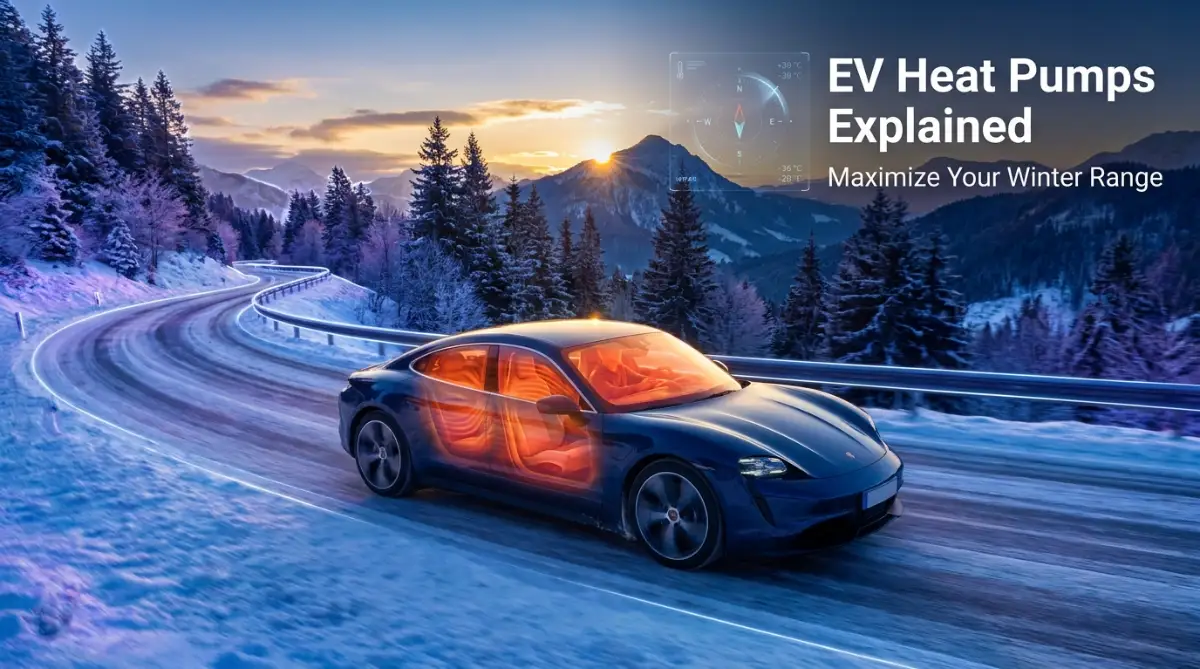
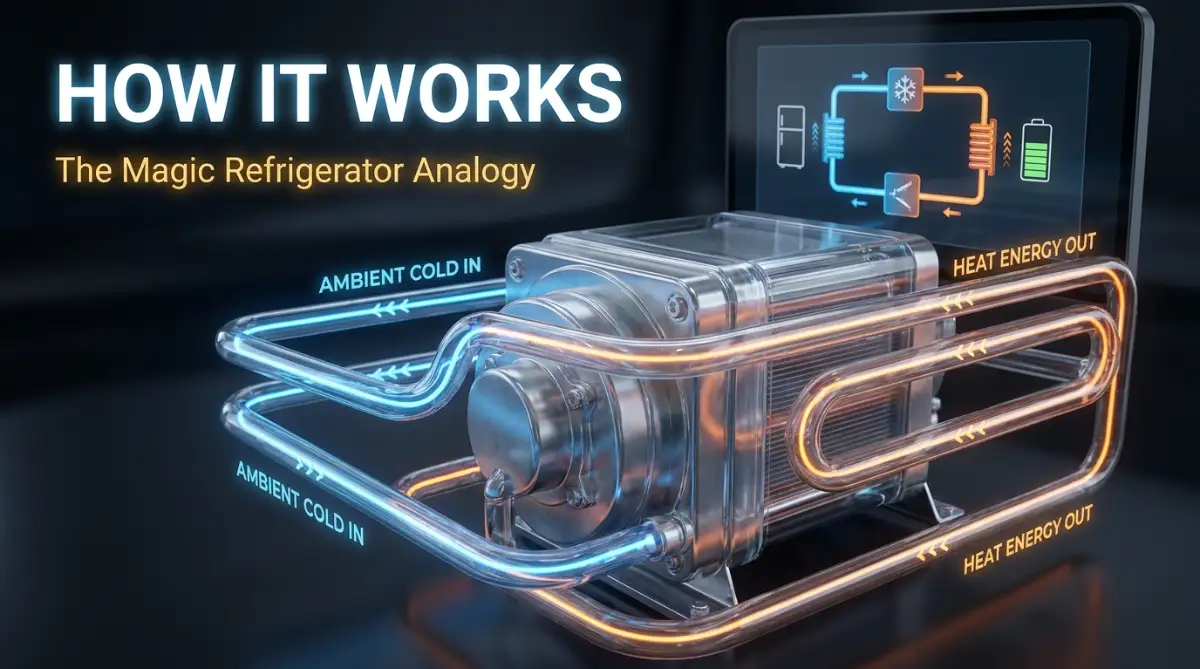
A heat pump is a completely different beast, and it is arguably the best feature you can have in an electric car today. Instead of creating heat from scratch like a toaster, it simply moves existing heat from one place to another.
The easiest way to understand this is to think about the refrigerator in your kitchen. Your fridge keeps your food cold by pulling the warm air out of the inside and pushing it into your kitchen.
An EV heat pump simply reverses this exact process. It captures heat from the outside air and pumps it directly into your car's cabin.
Wait, Is There Heat in Freezing Air?
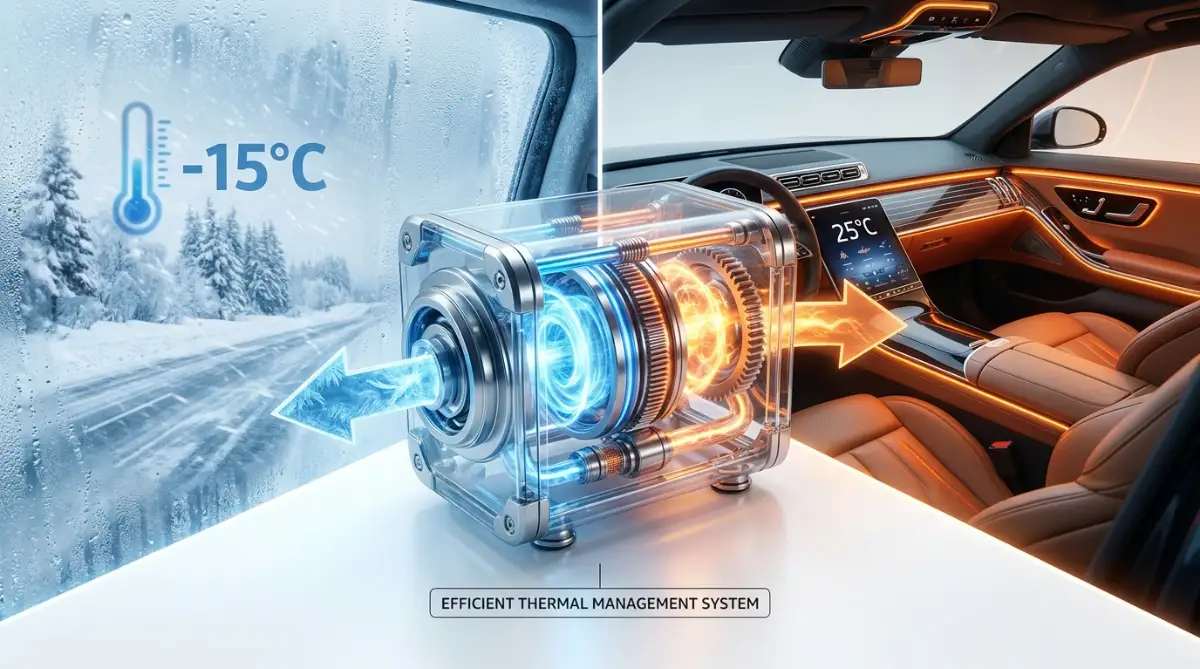
This is the part that confuses most people at first. You might be wondering how a system can pull warm air from the outside when it is literally freezing outdoors.
Believe it or not, even very cold air contains a decent amount of thermal energy. Unless the temperature outside hits absolute zero, there is always some heat moving around in the atmosphere.
The heat pump uses a special liquid called a refrigerant, which boils at extremely low temperatures. This liquid flows through pipes on the outside of your car, soaking up whatever tiny bit of ambient heat is hiding in the cold winter air.
Compressing the Gas for Maximum Comfort
Once that special liquid soaks up the outside warmth, it turns into a gas. But this gas is not quite hot enough to keep you warm in your driver's seat just yet.
This is where the system's compressor steps in and does the heavy lifting. The compressor squeezes this gas extremely hard, increasing its pressure.
When you compress a gas, it naturally gets much hotter. This super-heated gas is then sent into the cabin of your car, where a fan blows air over it, giving you beautiful, warm air without draining your battery.
Want to see exactly how this incredible process happens inside a real car? Check out this brilliant visual breakdown that makes the whole system super easy to understand.
The Shocking Efficiency Difference
The biggest reason a heat pump matters is pure, undeniable efficiency. As I mentioned earlier, a traditional PTC heater creates one unit of heat for every one unit of electricity it uses.
A heat pump, on the other hand, operates like a magical multiplier. For every single unit of electricity it uses to run the compressor, it can produce up to three or four units of heat!
This means you are getting up to 300% more heating power for the exact same amount of battery drain. This massive difference is what prevents your estimated range from falling off a cliff on cold mornings.
The Hidden Benefit: Warming Your Battery
Keeping you cozy is only half of the story when it comes to this amazing technology. Your car's large battery pack actually hates the cold just as much as you do.
When batteries get too cold, the chemical reactions inside them slow down drastically. This makes them hold less energy and charge much slower when you plug them in.
A smart heat pump system is often connected directly to the battery's thermal management system. It can gently warm up the battery pack while you drive, keeping the cells at their perfect operating temperature.
This means when you finally arrive at a fast charger, your car will accept power much faster. You will spend way less time waiting in the cold and more time getting to your actual destination.
Real-Talk: How Much Time Does a Cold Battery Actually Waste?
If you pull up to a fast charger with a freezing cold battery, your car will intentionally slow down the charging speed to protect the internal cells. Instead of getting a 20% to 80% charge in 25 minutes, you might sit there for 45 minutes to an hour! A heat pump system warms the battery before you arrive, meaning you get maximum charging speed right when you plug in.
Myth vs Reality: Common Heat Pump Misconceptions
There is a lot of confusing information out there about how these systems perform. Let's clear up some of the most common myths you might hear from other drivers.
A Quick Comparison Table: Heat Pump vs PTC Heater
To make things extremely clear, here is a simple breakdown of how these two heating methods stack up against each other.
Real-World Scenarios: When Do You Notice the Difference?
Understanding the science is great, but how does this actually affect your daily life? The benefits you experience will depend entirely on how and where you drive your car.
Let's look at a few common scenarios so you can see exactly why this feature matters.
The Stop-and-Go City Commuter
If you spend an hour every morning sitting in heavy city traffic, a heat pump is an absolute lifesaver. In traffic, you are barely moving, which means your car is not using much energy to spin the wheels.
However, your heater is running the entire time you are stuck behind other cars. With a traditional heater, sitting in traffic can drain your battery surprisingly fast.
With a heat pump, your car sips electricity so slowly that you can sit comfortably in traffic for hours. You will never have to choose between staying warm and having enough range to get back home.
Here is a quick look at what actually happens to your battery in freezing traffic. I tracked these numbers during a 32°F (0°C) winter commute to show you the real difference:
The Cold Weather Highway Traveler
Driving at highway speeds is already tough on an electric vehicle because pushing through wind requires lots of power. Add a freezing day into the mix, and your range can drop by a massive 30% or more.
If you frequently take road trips in the winter, having this highly efficient system is practically a requirement. It leaves more electricity in your battery to push the car forward, meaning fewer stressful charging stops along your route.
I actually learned this lesson the hard way during a family trip up to the mountains.
Pro Tip: I used to just hop in my car and immediately turn the heater on high while driving. I quickly realized this is a terrible idea for battery life! Now, I always set my car to pre-heat the cabin while it is still plugged into my house charger. This uses my home's electricity to warm the car, saving 100% of my battery range for the actual drive.
Does Every Electric Car Have This Technology?
You might assume that because this technology is so good, every car manufacturer includes it by default. Surprisingly, this is not always the case.
Because heat pumps have many moving parts like compressors, valves, and special tubing, they are more expensive to build. To keep the starting price of their vehicles low, some car makers still use old-school PTC heaters in their base models.
Some brands offer it as an optional "Winter Package" upgrade that you have to pay extra for. Others only include it on their more expensive, long-range luxury trims.
This is why you must always read the official spec sheet very carefully before buying a new vehicle. Never just assume that a modern-looking electric car has the best thermal management system inside.
The Used Car Market Warning
If you are shopping for a second-hand electric vehicle, you need to be extremely careful. Two cars of the exact same make and model sitting next to each other on a lot might have completely different heating systems.
A car originally sold in a warm place like California might not have the winter package installed. If you buy that car and ship it to a snowy state, you will be very disappointed when winter arrives.
Always ask the dealer to check the original window sticker or run the VIN number to confirm the exact features. Taking five minutes to verify this detail can save you years of winter driving frustration.
Can You Add One Later?
A very common question I get from frustrated drivers is whether they can upgrade their current car. They want to know if a mechanic can just install a better heating system after the fact.
Unfortunately, the simple answer is no. A heat pump is deeply integrated into the entire structure of the vehicle.
It connects to the cabin vents, the battery pack, the computer systems, and the main power lines. Trying to retrofit one into a car that was not built for it would be practically impossible and insanely expensive.
The Future of Thermal Management
Car manufacturers are not stopping here; they are constantly making these systems even smarter. The newest vehicles are now capturing waste heat generated by the car's electric motors.
When an electric motor spins really fast, it naturally gets warm. Instead of letting that heat escape under the car, the thermal system grabs it and sends it straight into your cabin.
This is the ultimate form of automotive recycling! By using the heat that the motors are already making, the car has to do even less work to keep you warm.
Protecting Your Resale Value
There is one more major reason why this technology matters, even if you live in a moderate climate. Having a highly efficient heating system directly impacts the future resale value of your vehicle.
When it comes time to sell your car, a smart buyer will actively look for this specific feature. Vehicles equipped with premium thermal management systems are much easier to sell and command a higher price.
It proves that the car is capable of handling all types of weather conditions without major compromises. Investing in this technology today will definitely pay off when you decide to upgrade your car down the road.
Unlocking Maximum Range: Pro-Level Climate Secrets
Now that you know how this incredible technology actually works, it is time to talk about everyday strategy. Having a smart heating system is a great start, but how you use it determines your actual driving experience.
Many new drivers simply treat their electric vehicle exactly like their old gas-powered car. They jump in, turn the fan to the highest setting, and expect everything to work perfectly.
However, a gas engine creates massive amounts of waste heat just by running. In an electric vehicle, every single degree of warmth must be carefully managed to protect your battery life.
By making a few tiny changes to your daily driving habits, you can stretch your winter range further than you ever thought possible. Let me share some everyday secrets that completely changed how I drive in freezing weather.
Master the Art of Pre-Conditioning
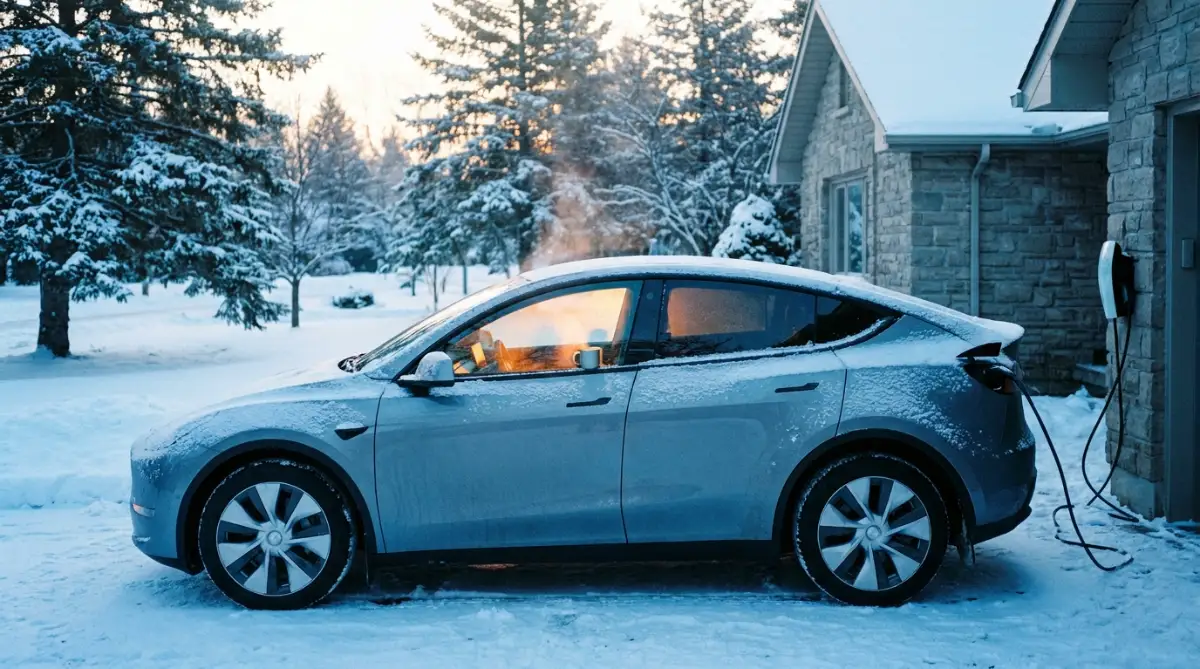
If there is one habit you need to build today, it is learning how to pre-condition your cabin. This simply means warming up the inside of your car while it is still safely parked in your driveway.
When your car is plugged into your home charger, it can pull electricity directly from your house to run the heater. This allows the heat pump to do all of its heavy lifting without touching a single drop of your stored battery juice.
Think of it like eating a huge breakfast before going for a long winter run. You are filling up on energy at home so you do not run out of stamina halfway down the road.
If you take the time to prepare your garage for an electric car, you can easily set this up on an automatic schedule. I just use my phone app to tell the car I am leaving for work at 8:00 AM every single morning.
By the time I open my car door, the seats are warm, the windows are completely defrosted, and my battery is still sitting at a perfect 100%.
The Seat Heater Hack
Here is a brilliant little trick that surprises almost every new driver I talk to. Heating the air inside a massive glass box takes a tremendous amount of energy, even with the best thermal systems.
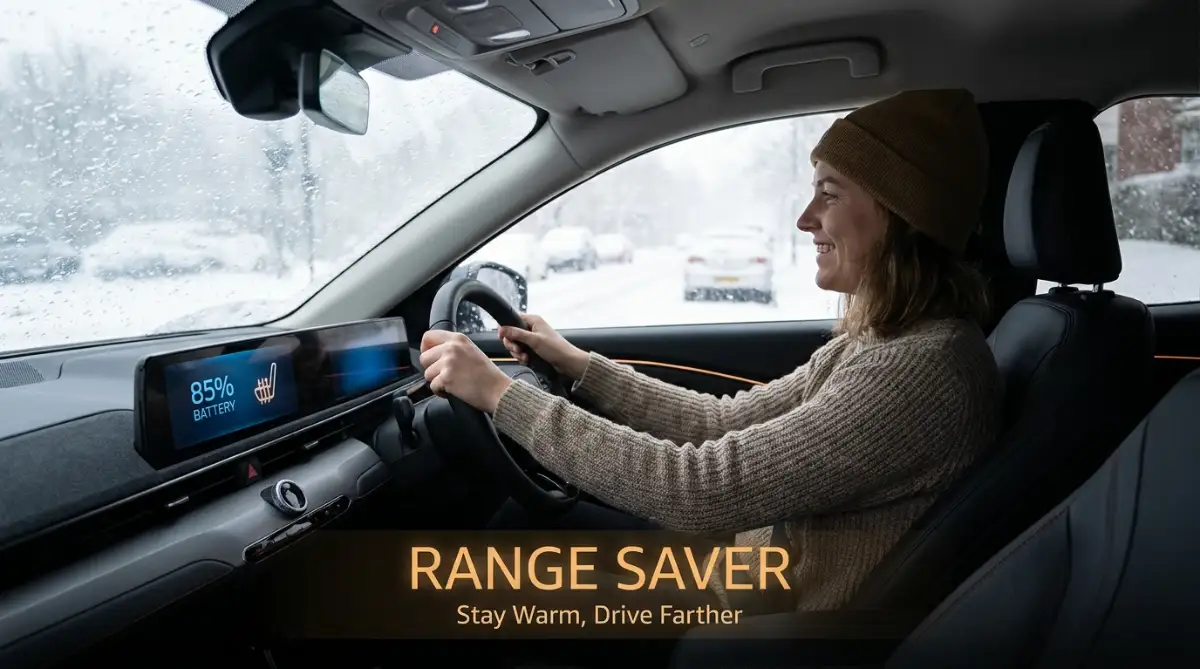
Heating your physical body directly is much easier and requires significantly less electricity. This is why you should always rely on your heated seats and heated steering wheel as your primary warmth source.
These direct contact heaters use a tiny fraction of the energy that blowing hot air requires. Once your body feels warm from the seat, you can actually turn the main cabin temperature down a few degrees.
Dropping the main thermostat by just three or four degrees can save you miles of driving range on a long highway trip. It is one of the easiest ways to fight the reasons your electric car loses power in winter without sacrificing any personal comfort.
Trust the Auto Setting
We all have a habit of constantly fiddling with the fan speed and temperature dials while driving. We blast the heat when we are cold, and then completely turn it off when we get too sweaty.
This constant stopping and starting forces the compressor to work much harder than it needs to. The smartest engineers in the world designed your car's automatic climate mode to be incredibly efficient.
When you set a specific temperature and press "Auto", the computer perfectly balances the fan speed, the refrigerant flow, and the battery temperature. It uses advanced thermal management systems to make thousands of tiny adjustments that a human could never do manually.
Just set your desired temperature once and let the car's brain figure out the most efficient way to maintain it.
Combining Eco-Mode with Climate Control
Almost every modern electric vehicle comes with some version of an "Eco" driving mode. Most people think this button only changes how fast the car accelerates when you press the pedal.
In reality, Eco-mode often places strict limits on how much power the heating system is allowed to consume. It gently reduces the maximum output of the compressor to ensure your battery drains as slowly as possible.
If you are running low on range and starting to feel nervous, turning on Eco-mode is a smart safety net. The cabin might warm up a little bit slower, but the massive energy savings are totally worth the wait.
Silent Range Killers: Thermal Mistakes You Are Probably Making
Even with the smartest technology quietly working behind the dashboard, human error can easily ruin your trip. I have seen so many frustrated drivers blame their car for poor winter performance when their own habits were the real problem.
Making the wrong choices with your climate control does not just make you cold; it can actually leave you stranded on the side of the highway. Let's walk through some painful mistakes you absolutely must avoid to protect your peace of mind.
Treating the Accelerator Like a Light Switch
One of the biggest mistakes people make in winter has nothing to do with the heater itself. When the roads are freezing and you are running the heat pump, your driving style matters more than ever.
Aggressive driving forces the battery to discharge energy extremely fast, which creates excess heat in the wrong places. If you are constantly speeding up and slamming on the brakes, you are fighting against the natural efficiency of the car.
Instead, you need to drive smoothly and understand how regenerative braking saves your battery. Letting the car slow down naturally helps push free energy back into the system, keeping your range exactly where it should be.
Ignoring the Battery Temperature
Many drivers completely forget that the battery pack needs to stay warm just as much as the passengers do. If you leave your car parked outside in freezing weather for days without plugging it in, the battery pack will turn into a block of ice.
When you finally start the car, the system has to use a huge amount of its own stored energy just to thaw itself out. This internal warming process can easily eat up ten to fifteen percent of your battery before you even leave your neighborhood.
This cold stress is terrible for EV battery health and range loss over the lifetime of the vehicle. If you do not have a garage, you should at least keep the car plugged into a standard wall outlet so the battery can maintain a safe resting temperature.
Blasting the Defroster Unnecessarily
The front windshield defroster is the most power-hungry setting on your entire dashboard. To quickly melt thick ice, the car will run the heating system at absolute maximum capacity, completely ignoring any energy-saving rules.
I see people leave the maximum defroster running for their entire thirty-minute commute, even after the glass is totally clear. This is a massive waste of precious battery capacity and a completely avoidable mistake.
Once your windshield is clear of fog and ice, immediately switch back to the normal "Auto" climate setting. The regular airflow is more than enough to keep the glass clear for the rest of your drive.
Poor Planning on Long Road Trips
Taking a winter road trip requires a slightly different mindset than driving a traditional gas car. You cannot just hop on the highway with a half-empty battery and assume everything will be fine.
I once made the terrible mistake of skipping a charging station because I thought I had plenty of miles left to reach the next town. Then, an unexpected snowstorm hit, the temperature plummeted, and my heat pump had to work overtime just to keep my windows from freezing.
My estimated range dropped like a rock, and I barely limped into the next charger with sweat pouring down my face. Avoiding electric car charging mistakes in public means always keeping a safe buffer in your battery during unpredictable weather.
When planning your route, assume you will lose at least twenty percent of your normal range just to fight the cold air and heavy winds.
Trying to Outsmart the Software
Electric vehicles are basically giant computers on wheels, and manufacturers send out regular software updates over the air. Many of these updates include hidden improvements to how the thermal management loop operates.
Engineers constantly analyze real-world driving data to find better ways to compress the refrigerant and balance the airflow. However, some drivers ignore these update notifications because they do not want to wait for the car to restart.
By ignoring software updates, you are actively choosing to run an outdated, less efficient heating system. Always install the latest software patches the moment they become available so your car can operate at peak performance.
According to major cold weather EV testing facilities, having optimized software can sometimes improve a vehicle's cold-weather performance by several percentage points.
Your Roadmap to Stress-Free Winter Driving
Driving an electric vehicle during the coldest months of the year no longer has to be a terrifying experience. The days of shivering in a freezing cabin just to make it home are completely behind us.
By utilizing the magic of modern thermal technology, automotive engineers have solved the biggest headache of battery-powered driving. You now understand exactly how capturing ambient air can keep you incredibly warm without destroying your driving range.
When you combine this brilliant hardware with smart daily habits, you unlock the true potential of your car. Pre-conditioning your cabin, using heated seats, and trusting the automatic climate control will make your winter commutes feel completely effortless.
More importantly, this knowledge protects your investment. Understanding how your car manages energy helps you lower the overall total cost of ownership for an electric vehicle. You spend less money on wasted electricity and experience far less stress on the highway.
Winter driving is simply a game of efficiency, and you now have the ultimate playbook in your hands.
I still think back to that freezing December morning when I thought buying an EV was a huge mistake. Once I actually learned how my car’s thermal management worked, everything changed. I stopped doing stressful math in my head and finally started enjoying the ride.
Over to You!
What is your biggest fear when driving your electric car in the winter? Do you already use the pre-conditioning trick, or are you still blasting the defroster like I used to? Let me know in the comments below—I read every single one!
Answers to Your Biggest EV Climate Control Questions
Does running the heat pump drain the battery at all?
Yes, it does use some electricity to run the internal compressor and the cabin fans. However, because of its incredible efficiency, it uses a tiny fraction of the power that older toaster-style heaters require.
Can I upgrade my current electric car to include this technology?
Unfortunately, you cannot simply bolt this system onto an older electric vehicle after it leaves the factory. The thermal system is deeply integrated into the main battery pack and the computer brains of the car.
Do these systems completely stop working in freezing weather?
No, modern automotive systems are designed to extract warmth even when temperatures drop well below freezing. While they do lose a little bit of their super-efficiency in extreme arctic conditions, they still easily outperform traditional heating methods.
Why does my cabin heater sometimes smell a little weird?
Just like a home air conditioner, moisture can occasionally build up inside the cabin air filters and cause a mild musty smell. Simply replacing your cabin air filter every few thousand miles will keep the air smelling completely fresh and clean.
Does pre-conditioning really make a noticeable difference?
It is genuinely the most impactful thing you can do for your winter range. Warming the car using your home's electricity means you leave your driveway with a fully heated cabin and a 100% full battery.
Disclaimer: The information provided in this guide is for educational and informational purposes only. Automotive technologies and battery performances vary widely based on the manufacturer, software versions, and extreme local weather conditions. Always consult your vehicle's official owner's manual and seek professional advice from certified dealership technicians for specific maintenance or safety concerns regarding your personal vehicle.