My Frustrating Journey with EV Charging Anxiety
Getting stranded with 4% battery in a random grocery store parking lot wasn't exactly my idea of a fun Friday night. When I bought my first electric vehicle, I figured I would just plug it in like my phone and go. Instead, I found myself paralyzed by wild internet rumors claiming fast chargers would instantly fry my expensive battery pack. If you are tired of doing complex math in your head every time you hit the highway, let's clear up the charging confusion right now. You don't need an engineering degree to keep your battery healthy—just a few smart daily habits.
If you drive an electric vehicle, you probably know this exact feeling of dread all too well. We spend thousands of our hard-earned dollars on these incredible machines, hoping for a smooth, quiet, and eco-friendly ride. But instead of simply enjoying the open road, we often find ourselves doing complex math in our heads. We worry about range drops, weather conditions, and where the next reliable station is located.
Before we jump into the real science of how your car eats energy, here is a quick look at the main hacks you are going to walk away with today.
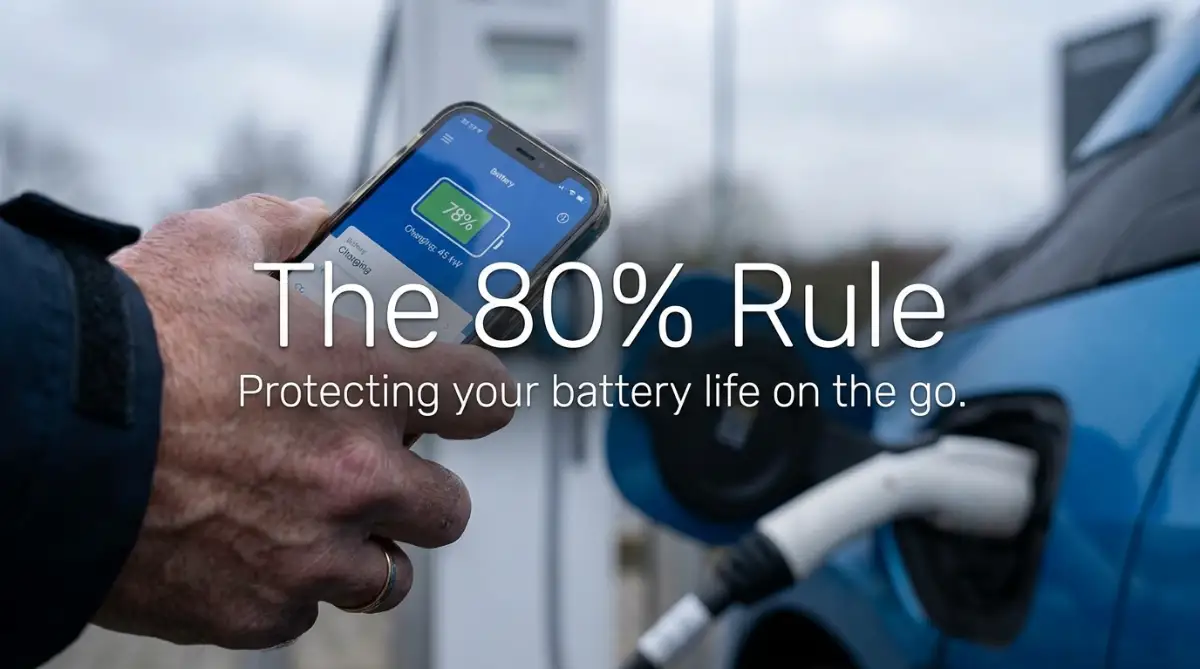
⚡ Quick Charging Cheat Sheet: What You'll Learn Today
- The 80% Sweet Spot: Why pushing your battery to a full 100% at public stations wastes your time and money.
- The "Micro-Hopping" Hack: How to finish road trips way faster by taking shorter, more frequent charging breaks.
- Preconditioning Secret: The one navigation trick that preps your battery to accept power instantly.
- Home vs. Highway: Why treating your EV like a gas car is the biggest mistake new owners make.
Breaking Down the Magic of High-Speed Power
To truly conquer this charging anxiety, we need to understand what happens when we plug our cars into these massive machines. Do not worry, we are going to skip the complicated engineering textbooks. Let us talk about how your electric vehicle actually eats energy.
All batteries, from the tiny one in your smartphone to the massive one under your car seats, strictly store power as Direct Current (DC). However, the electricity that flows through the power lines and out of your home wall outlets is always Alternating Current (AC).
If you plug your car into a standard home outlet, the car must convert that AC power into DC power before storing it. This built-in conversion process is incredibly slow, which is why a standard wall plug takes days to fill up a completely empty car.
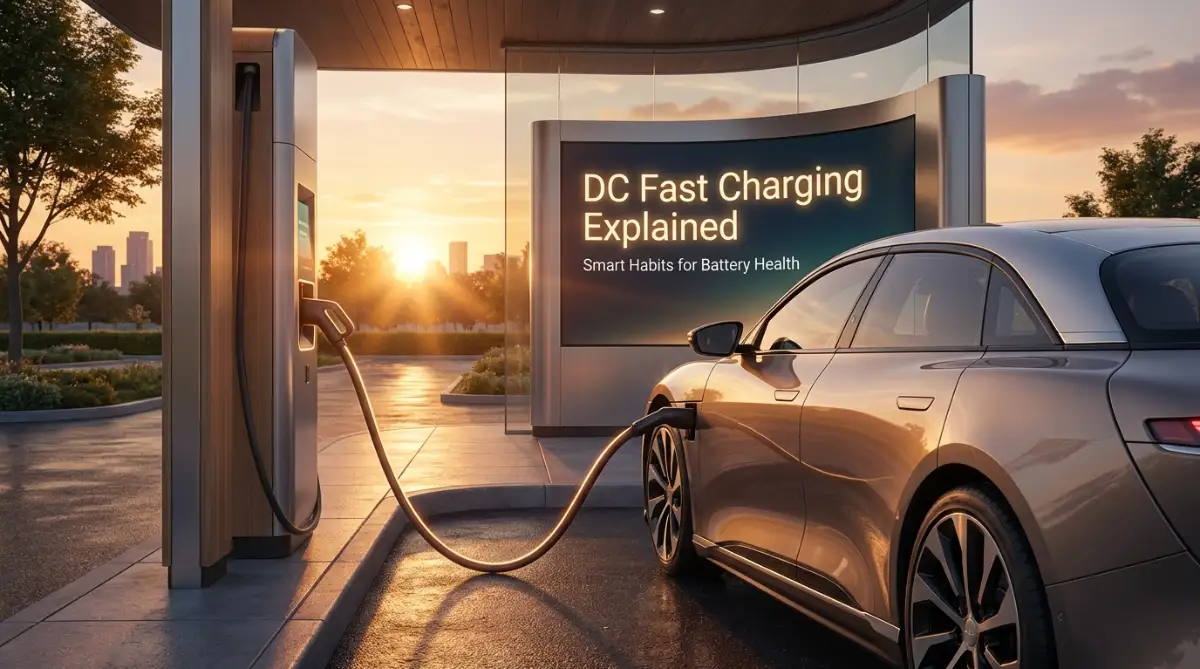
This is where the magic of a rapid charger steps in to save your road trip. A rapid station completely bypasses your car's internal converter. The heavy, thick cables deliver pure Direct Current straight into the battery pack at mind-blowing speeds.
The Garden Hose vs. The Fire Hydrant
Think of your car battery as a large, empty swimming pool. Using a standard home wall plug is exactly like trying to fill that massive pool with a tiny garden hose. It works, and it is very gentle on the pool walls, but it takes forever.
Using a fast charger is like opening a city fire hydrant right into that pool. A huge rush of water fills the space in just minutes. It is super fast and extremely satisfying when you are running late.
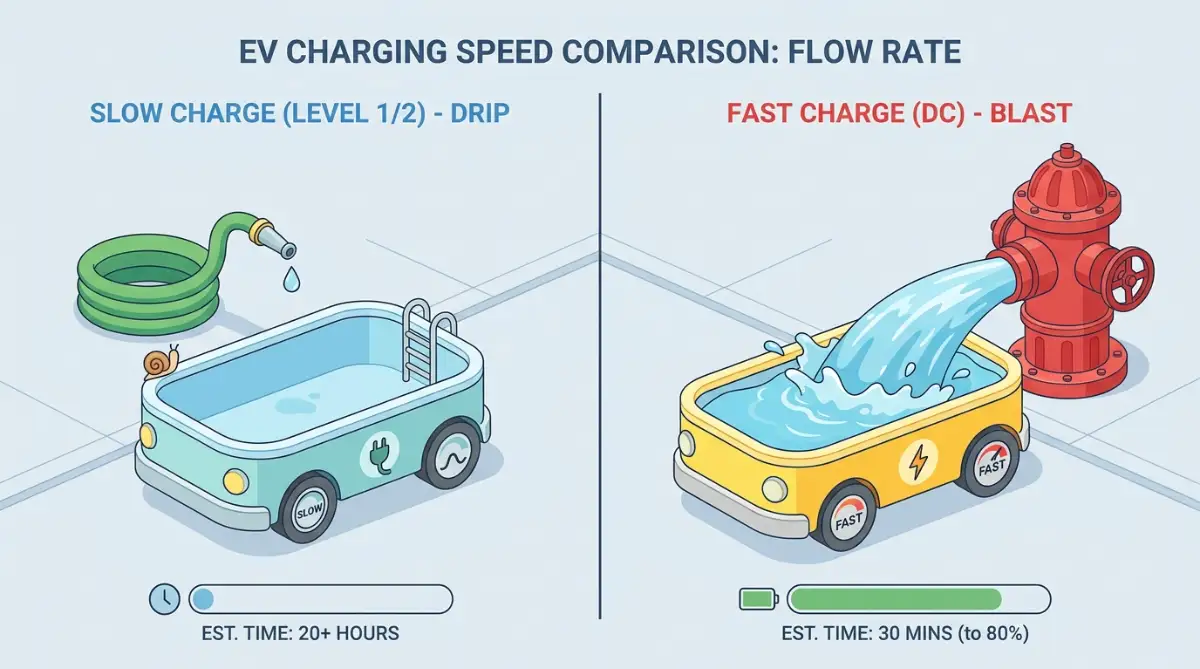
However, just like a fire hydrant, that massive rush of energy creates a lot of pressure and turbulence. In battery terms, this turbulence shows up as extreme heat. Heat is the natural enemy of lithium-ion technology, and managing this heat is the main secret to keeping your car healthy for years.
A Quick Reality Check on Battery Health
I used to believe that one single mistake would completely destroy my car. That is simply a massive myth built on fear. Modern electric vehicles are basically highly advanced computers on wheels.
They have brilliant internal cooling systems designed specifically to protect the internal cells from getting too hot. When you plug into a high-speed station, the car's computer talks directly to the station.
If you want to see exactly how these connections talk to each other to keep you safe, check out this incredible breakdown.
The computer tells the machine exactly how much power it can safely handle at that exact moment. It monitors the outside weather, the internal heat, and the current fullness of the pack. You are never blindly dumping power into the car; the car is actively managing its own diet.
My Personal Wake-Up Call (Pro Tip)
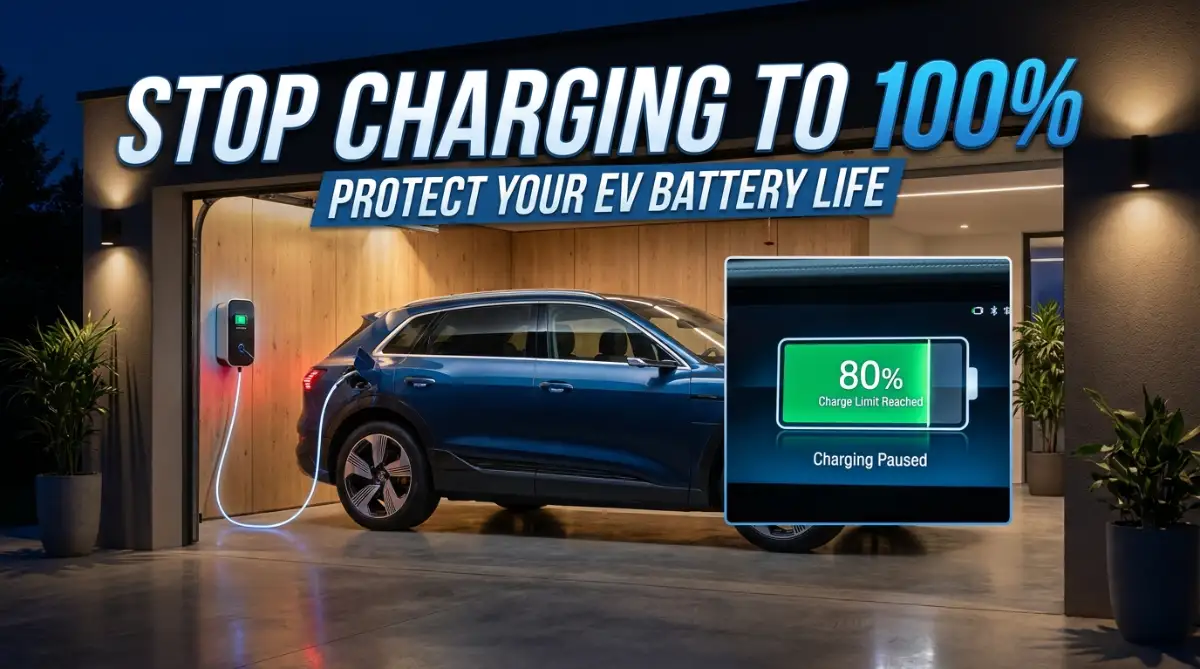
I used to plug into the fastest station I could find every single day after work and force the car all the way to 100%. I thought I was being a highly responsible owner by keeping it full. My big realization came when I noticed my driving range dropping slightly after a few months. Pro Tip: Never treat a rapid station like a daily gas station; use it only when you genuinely need to cover long distances fast, and always unplug when you hit 80% to save the most wear and tear on your internal cells.
Understanding the 80% Slowdown Rule
Have you ever noticed that a rapid charger is incredibly fast at first, but then suddenly crawls to a halt? This is not a broken machine; it is a brilliant safety feature.
When your battery is completely empty, it can easily absorb a massive rush of energy without creating dangerous levels of heat. The chemical particles have plenty of empty space to move around freely.
But as the battery reaches the 80% mark, the space inside becomes extremely crowded. Forcing power into a crowded battery creates immense heat and pressure.
To protect your expensive battery from swelling or degrading, the car's computer intentionally slows down the incoming power. Pushing from 80% to 100% on a rapid charger can actually take as long as it took to get from 10% to 80%.
When Should You Actually Use High-Speed Power?
Now that we know how it works, we can tackle the most common question. How often should you realistically hook up to these powerful machines?
The easiest way to think about this is to categorize your driving habits. Let us look at a few common real-world situations so you can easily identify your own daily routine.
Scenario 1: The Daily City Commuter
If you drive twenty to forty miles a day for work, groceries, and school drop-offs, you almost never need high-speed power. Your best strategy is to plug into a standard Level 1 or Level 2 charger at home while you sleep.
Waking up to a full tank of slow, gentle energy is the absolute best thing for your long-term battery health. You completely skip the anxiety of public charging lines and save a massive amount of money.
Scenario 2: The Cross-Country Road Tripper
This is exactly what rapid charging was invented for. When you are driving hundreds of miles in a single day, you simply do not have hours to wait around.
Pulling into a fast station, grabbing a quick cup of coffee, and getting back on the highway in twenty minutes is a total game changer. In this situation, use the fast options without any guilt. Your car is built to handle these trips safely.
Scenario 3: The Apartment Dweller
What if you live in a large apartment building and have absolutely no way to plug in at home? This is where many people feel totally stuck.
If rapid public stations are your only option, try to find a balanced routine. Instead of waiting until you are completely empty and forcing it to full, do shorter, more frequent top-offs.
Charge from 40% to 80% while you are buying groceries once a week. This keeps the battery in a comfortable middle zone and completely avoids extreme heat buildup.
Breaking Down the Charging Levels (A Quick Comparison)
To make things perfectly clear, here is a simple breakdown of the different charging speeds you will encounter in the real world.
Addressing the Battery Degradation Fear
Let us talk honestly about battery degradation. Yes, heavily relying on massive bursts of power every single day will slowly wear down the internal chemistry slightly faster than slow home charging.
But we need to look at the real-world numbers before we panic. Studies on modern electric cars show that even owners who exclusively use fast chargers only see a tiny percentage of extra degradation over many years.
Automakers are constantly improving battery technology and internal cooling systems. The liquid cooling loops wrapping around your battery cells are incredibly efficient at keeping temperatures perfectly stable during a heavy power session.
You are highly unlikely to "ruin" your car just by using the features it was designed to offer. The real danger comes from extremely bad habits, like leaving the car sitting completely dead at 0% for weeks in the freezing cold.
Myth vs. Reality Breakdown
Smart Habits for Long-Term Success
Instead of worrying about strict rules, focus on building simple, healthy habits. Treat your electric car battery just like you treat your own body.
You would not eat a massive, heavy meal right before running a marathon. In the same way, you should not blast your car with maximum power when it is sitting in the blazing summer sun.
If you are planning to use a fast station on a road trip, use your car's built-in navigation system to find the route. When the car knows it is heading to a station, it will automatically precondition the battery.
Preconditioning basically means the computer gently warms up or cools down the cells so they are at the absolute perfect temperature the exact second you plug the cable in. This smart feature drastically speeds up your wait time and protects the hardware from thermal shock.
The Financial Side of High-Speed Power
We also need to talk about your wallet. Convenience always comes with a price tag.
Building and maintaining these massive high-voltage machines is incredibly expensive for companies. Therefore, they charge a premium for the electricity they provide.
Filling your car at a commercial rapid station can often cost three to four times more than charging at home in your garage. If you use them constantly for your daily city driving, you are basically throwing away one of the biggest financial benefits of owning an electric vehicle.
Think about it like this: paying for a super-fast charger is just like buying a bottle of water at a theme park. You pay a massive premium simply for the convenience. Here is a quick breakdown of what it actually costs to drive 100 miles based on average rates:
- Charging at Home (Level 2): $3.50 to $5.00
- Fast Highway Charging (Level 3): $12.00 to $18.00
- Traditional Gas Car: $14.00 to $16.00
- As you can see, relying on fast chargers every day totally wipes out the financial perk of ditching gas!
Save the expensive highway stations for when you genuinely need the time savings. Use the cheap, slow energy at home for everything else. This simple financial strategy naturally aligns with the best health practices for your battery.
Managing Battery Heat Like a Pro
If you want to be a truly advanced owner, you need to understand environmental heat. Parking your car on perfectly black asphalt on a hundred-degree summer day puts a lot of stress on the cooling system.
If you then immediately plug it into a massive power source, the cooling fans will have to scream like jet engines to keep the cells safe. Try to park in the shade when possible.
If you just finished driving at very high highway speeds for two hours, your battery is already quite warm. Plugging in immediately is fine because the car will manage it, but being aware of this heat helps you understand why the charge might be a bit slower than you expected.
You are now equipped with the basic scientific knowledge to safely navigate any public station. You no longer have to sit in a dark parking lot feeling terrified of a blinking dashboard light.
You control the machine; the machine does not control you. By understanding the simple relationship between heat, power speed, and fullness, you can confidently drive anywhere you want.
Next-Level Battery Habits for the Daily Driver
Once you understand the basic science of how energy flows into your electric vehicle, you can start using some amazing advanced strategies. These are the daily habits that separate nervous beginners from confident, experienced drivers. I learned these secrets the hard way, through lots of trial and error on long highway trips.
You do not need to be an engineer to apply these tricks to your own daily routine. The main goal here is finding a perfect balance between ultimate convenience and taking great care of your vehicle. Let us explore exactly how you can maximize your power while completely protecting your expensive battery pack over the long run.
Mastering the "Charging Curve" Like a Pro
Every single electric car on the market has something built into its software called a charging curve. Think of this curve like packing a suitcase for a long vacation. When your suitcase is completely empty, you can easily throw your clothes inside in just a few seconds without thinking about it.
But as the suitcase fills up, you have to start pushing things down, organizing corners, and fighting to close the zipper. The same exact thing happens inside your battery cells. When the battery is nearly empty, it happily accepts massive amounts of high-speed power from the station.
As it gets closer to full, the car's computer has to work extremely hard to squeeze those last few drops of energy inside safely. This means the speed drops dramatically the closer you get to a full tank. If you spend time reading detailed research on lithium-ion battery longevity, you will see that stopping at the eighty percent mark is the ultimate sweet spot.
The "Micro-Hopping" Road Trip Strategy
Before I understood this curve, I used to drive my car down to ten percent, plug it in, and sit there for over an hour waiting for it to hit a completely full hundred percent. I thought this was the best way to travel long distances. It was exhausting, boring, and a terrible use of my time.
Now, I use a strategy called micro-hopping. Instead of making two massive stops that take an hour each, I make four tiny stops that take fifteen minutes each. I will pull into a station with twenty percent power, charge incredibly fast up to sixty percent, and immediately get back on the road.
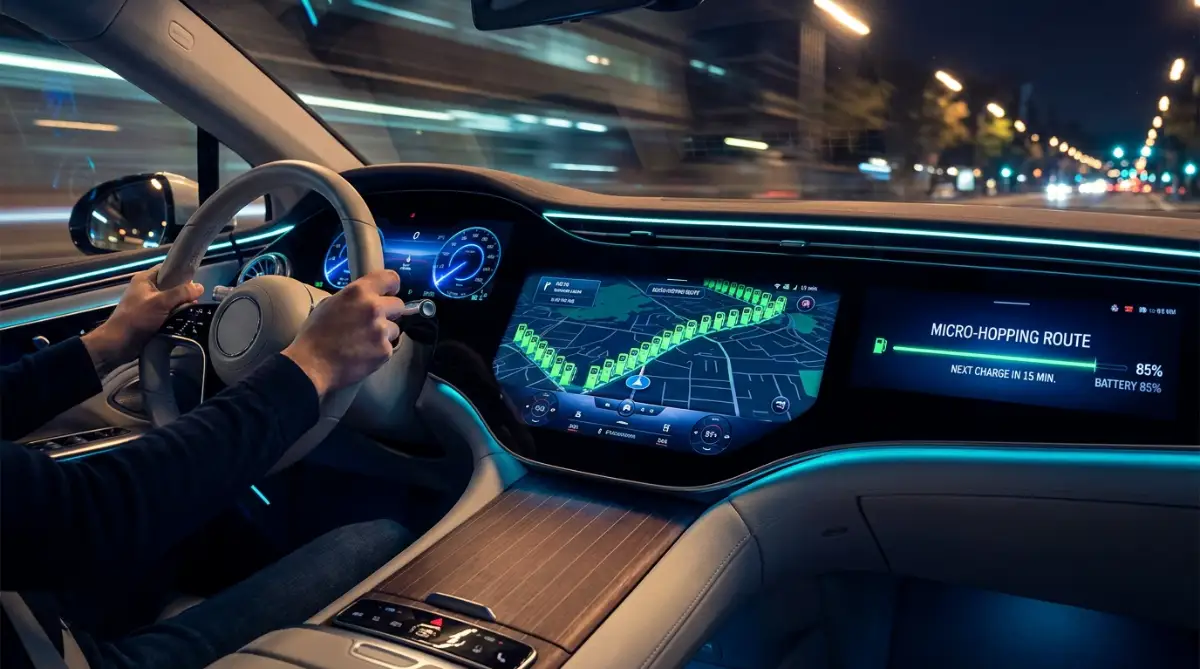
This keeps the car in the fastest possible section of the charging curve. You actually arrive at your destination much faster by making more frequent, shorter stops. This simple shift in thinking completely changed how I plan my family road trips.
Common Question: Doesn't stopping four times add more delay than just waiting once?
Not at all! Because your battery gobbles up energy the absolute fastest between 10% and 60%, doing four quick 15-minute stops can easily save you over 30 minutes overall compared to fighting that slow, painful 80% to 100% crawl. It gives you more bathroom breaks, keeps you refreshed, and gets you home faster.
Preconditioning: The Ultimate Insider Secret
One of the smartest features hidden inside your car's dashboard is the preconditioning system. If you just search for a public station on your phone and drive there, your car's battery might be too cold or too hot to accept power quickly. The station will purposefully slow down the energy flow to protect your cold cells.
To bypass this slow down, always use your car's built-in navigation screen to set the station as your exact destination. When the computer knows exactly where you are going, it quietly works behind the scenes while you drive.
Engineers have designed advanced thermal management systems that gently warm up or cool down the battery pack to the perfect temperature before you even park. By the time you plug the cable in, the car is physically ready to accept maximum power instantly.
Finding the Perfect Charging Balance
You should view high-speed public stations as a helpful tool for travel, not as your primary source of daily fuel. If you own a home, the smartest move you can possibly make is looking into setting up your own home charging station in your garage. Waking up to a full tank every single morning gives you incredible peace of mind.
Use the slow home energy for your daily chores, work commutes, and local shopping trips. Then, save the expensive, high-speed public stations specifically for times when you travel far outside your normal city limits.
Following this simple balance naturally protects your car and keeps your daily driving costs incredibly low. It really is the easiest way for anyone to start maintaining long-term battery range without feeling stressed or restricted.
The Most Expensive Charging Blunders People Make
Even with the best intentions, I see new electric vehicle owners making the same stressful mistakes every single day. These mistakes usually happen because people treat their new electric cars exactly like their old gas-powered cars. But electrons behave very differently than liquid fuel.
Falling into these common traps can waste your hard-earned money, steal your precious time, and even cause unnecessary wear and tear on your car. Let us look at the biggest pitfalls you absolutely must avoid to keep your driving experience smooth and enjoyable.
The "100% Camper" at Public Stations
The most frustrating mistake you can make is trying to force your car to reach a full 100% at a public charging box. As we talked about earlier, the speed drops off a cliff after you hit the 80% mark. I once watched a driver sit at a busy highway stop for an extra forty-five minutes just to get those last few drops of range. Meanwhile, a long line of tired drivers formed behind them, waiting for a spot to open up.
This behavior is not only a massive waste of your own time, but it also creates bad public charging etiquette that makes everyone else angry. Unless you absolutely need every single drop of range to safely reach the very next station on a lonely highway, always unplug at eighty percent and drive away.
The Deep Discharge Gamble
Another terrifying mistake is intentionally driving the car until the battery is almost completely dead before looking for a place to plug in. Some people love the thrill of arriving at a station with exactly one percent left on the screen. This is a very dangerous game to play.
Sitting at an extremely low battery level constantly stresses out the internal chemistry. Plus, think about the practical side. If you hit unexpected traffic, a sudden road closure, or find out the plug you drove to is out of order, you are out of luck.
Always treat twenty percent as your absolute zero. When your dashboard hits twenty percent, it is time to comfortably find a place to plug in. Giving yourself this healthy buffer completely removes the deep anxiety of getting stuck on the side of the road.
Ignoring Extreme Weather Conditions
Many drivers completely forget that batteries are basically giant chemical reactions, and chemistry is heavily impacted by the outside weather. Leaving your car sitting completely full at a hundred percent in a blazing hot parking lot for days is terrible for battery longevity.
Similarly, pulling up to a high-speed machine in the middle of a freezing snowstorm without warming the car up first will lead to a terribly slow session. You might think the machine is broken, but it is just cold weather impacts your driving range and charging speeds naturally.
If you must leave your car parked at an airport in extreme heat or extreme cold for a week, try to leave the battery resting comfortably around fifty percent. This middle ground is exactly where the battery feels the safest and most relaxed while resting.
Relying Exclusively on Fast Power
Some apartment renters or busy professionals think they can just use a high-speed public station once a week instead of finding a slower daily solution. While the car's computer will do its best to protect the battery from the intense heat, hitting it with maximum power constantly is just not ideal.
Doing this completely erodes the overall financial savings of going electric, because these commercial stations charge a high premium for their fast service. You end up paying prices very similar to traditional gasoline.
If you do not have a driveway, try asking your workplace if they can install a slow charger in the parking lot. You can also look for public parking garages or grocery stores that offer cheap, slow-speed boxes. Mixing in these slow sessions gives the internal cells time to balance themselves properly without extreme heat.
Your New Stress-Free Driving Strategy
You don't have to spend your nights sitting in a dark parking lot, terrified of a blinking dashboard light anymore. We passed the confusing engineering talk, and now you know exactly what your car needs.
The electric vehicle world is getting better every single day. Charging stations are popping up everywhere, and making the switch is easier than it has ever been. Just remember the simple 20% to 80% rule for your busy work weeks. Let the car's computer do the heavy lifting with temperature control, try the micro-hopping trick on your next long trip, and stop worrying about breaking your car. If you stick to these easy daily habits, you will finally get to enjoy the quiet, fun ride you paid for.
I still remember the exact moment my own charging anxiety finally disappeared; I just plugged the car in, grabbed a warm coffee, and actually enjoyed the quiet break on my road trip. You have the knowledge now to take complete control of your journey, so get out there and enjoy the open road with total confidence!
Clear Answers to Your Biggest Charging Doubts
Does fast public charging ruin my battery?
No, it does not. Modern EVs have built-in liquid cooling systems that actively protect the cells from getting too hot during a fast session. Using it for road trips is perfectly safe and expected by the automaker.
Is it safe to leave my car plugged in at home all night?
Yes, leaving your car plugged into a home wall box overnight is actually a great habit. Once the battery hits the limit you set on your dashboard (like 80%), the car simply stops pulling power.
Why does my car charge so slowly at a fast station sometimes?
This usually happens because your battery is too cold to accept power safely. It can also happen if your battery is already past 80%, causing the computer to slow things down on purpose to prevent heat damage.
Do I need to buy a special adapter for public stations?
Most non-Tesla vehicles in North America use a standard plug called CCS, which fits almost everywhere. However, the industry is moving toward a universal standard (NACS), so keeping a compatible adapter in your trunk is becoming a smart move for road trips.
Disclaimer: The information provided in this article is for educational and informational purposes only. Battery health, charging speeds, and vehicle performance vary greatly depending on your specific car model, local weather, and software updates. Always consult your official vehicle owner's manual or contact a certified dealership for the most accurate and safe charging recommendations for your specific electric vehicle.