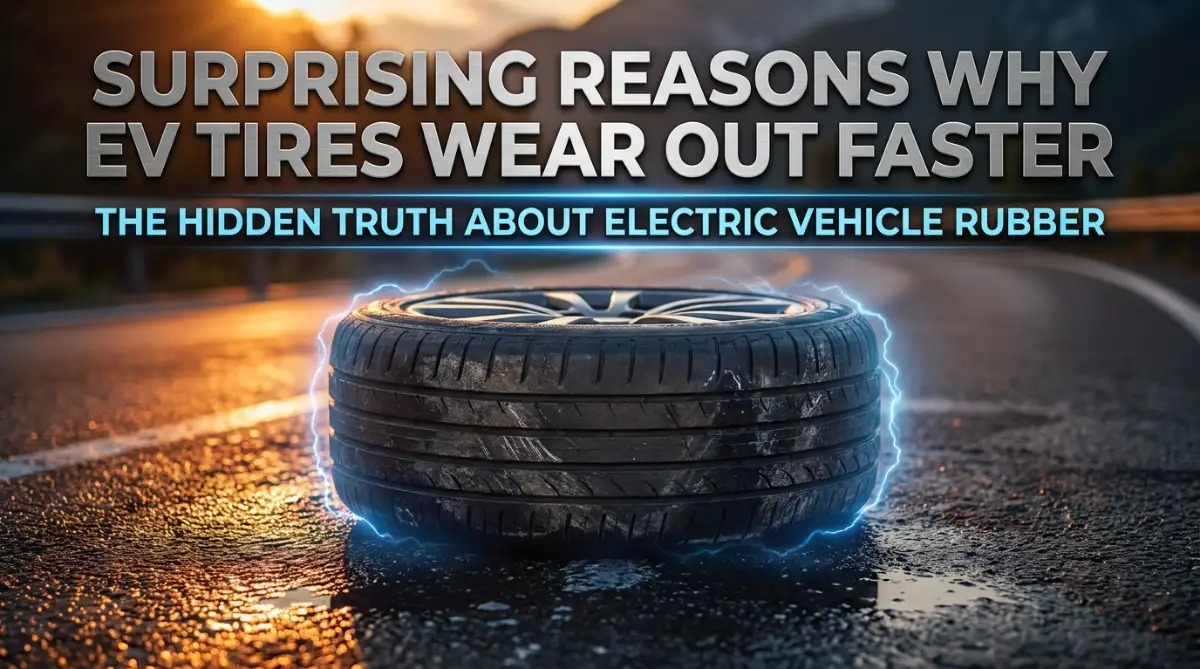
Why Your New Electric Vehicle Eats Tires (My Expensive Reality Check)
I recently got my first EV tire replacement bill, and it honestly made my jaw drop. We buy these amazing cars thinking we are wiping out maintenance costs, but nobody warns us about how fast they chew through rubber. If you are tired of watching your tire tread vanish in just a few short months, I am going to show you exactly how to stop the bleeding and keep your money in your pocket.
The TL;DR on EV Tire Survival
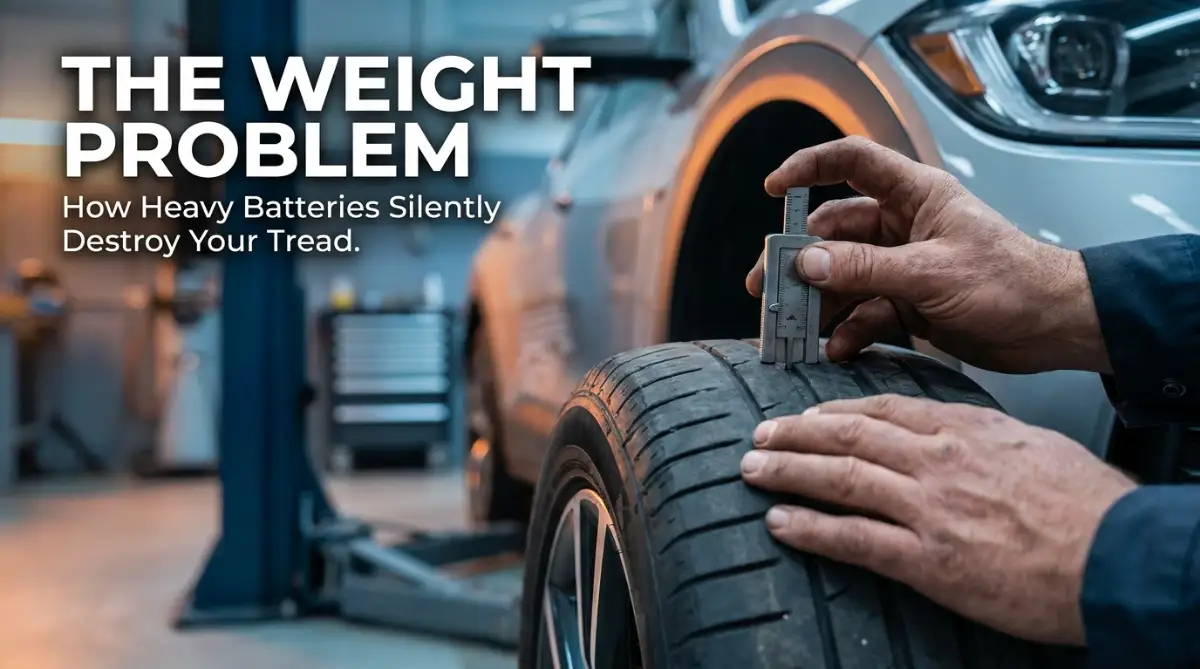
- Weight is your enemy: EVs carry massive batteries, acting like a heavy backpack that crushes standard rubber.
- Eco-mode saves cash: Taming your instant acceleration directly stops invisible rubber shaving.
- Rotation is everything: Swap your tires around every 5,000 miles without making excuses.
- Buy the right rubber: High Load (HL) rated EV tires with acoustic foam cost a little more but last way longer.
The Hidden Physics Destroying Your Rubber
When you make the switch from a traditional gas-powered car to an electric model, you are fundamentally changing how the vehicle interacts with the road. The problems do not stem from poor manufacturing or bad driving habits. Instead, they come directly from the incredible technology hiding right under your floorboards.
Let us break down exactly what is happening between your car and the asphalt. Understanding these core mechanical differences is the absolute best way to stop throwing your hard-earned cash away on replacement sets.
The Massive Battery Weight Problem
Electric cars are incredibly heavy, and this is entirely due to the massive battery packs required to give you a decent driving range. A standard electric sedan can easily weigh thousands of pounds more than its exact gasoline counterpart.
A Quick Look at the Weight Difference:
(Notice how that extra weight acts like a giant sandbag pressing down on your wheels? That is the exact reason your standard rubber gives up so early.)
Think about what happens when you run while carrying a heavily loaded backpack. Your shoes strike the pavement with much more force, and the soles wear down rapidly because of that extra downward pressure. Your tires are experiencing the exact same overwhelming burden every single second they touch the road.
This extreme weight pushes the rubber compound hard against the rough asphalt, creating intense friction just from rolling forward. Over time, this constant, heavy downward pressure literally shaves the rubber right off the outer edges of your wheels.
The Thrill and Threat of Instant Torque
One of the best things about driving an electric car is the instant power you get the moment you touch the accelerator. There are no gears shifting, and there is no engine lag holding you back. However, that thrilling rocket-like acceleration is an absolute nightmare for your wheels.
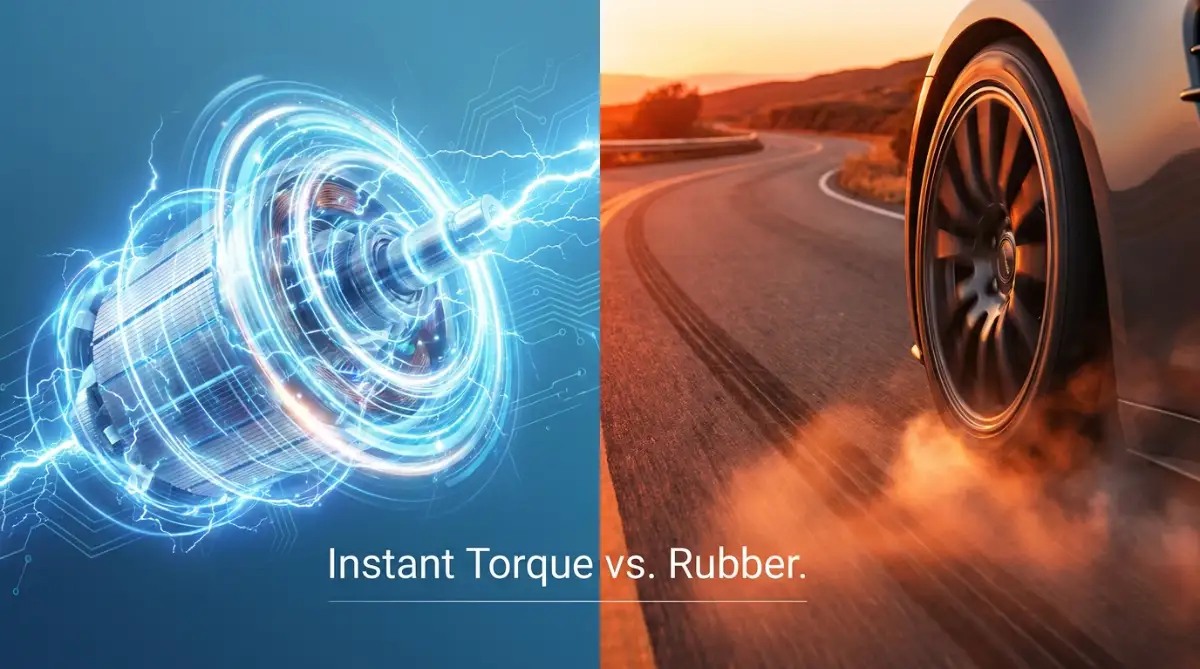
When you press the pedal, maximum power is sent directly to the wheels in a fraction of a second. This violent burst of energy causes the rubber to micro-slip against the pavement before the car even begins to move forward.
You might not hear the tires screeching, but the friction is happening silently at a microscopic level. Every time you merge onto a highway or jump ahead at a green light, you are leaving tiny, invisible layers of rubber behind.
Watch this quick breakdown to see exactly how instant torque silently shreds your tires before you even realize it:
The Double-Edged Sword of Regenerative Braking
Regenerative braking is a brilliant feature that captures energy when you slow down and feeds it directly back into your battery. It saves you from constantly using your brake pads, which sounds like a massive win for maintenance costs.
However, this aggressive slowing down action puts a reverse twisting force directly onto your tires. Instead of rolling smoothly to a stop, the wheels are actively fighting against the momentum of the heavy vehicle.
This creates a dragging effect on the pavement, increasing the friction and heat generated by the rubber. You are basically wearing out your tires from both ends—when you speed up quickly and when you slow down aggressively.
Quick Myth vs. Reality check on Brakes:
- The Myth: Because EVs use electric motors to slow down, the wheels experience zero physical stress.
- The Reality: The motor forces the heavy wheels to drag against their own momentum. You save your brake pads, but you punish your rubber instead. It is a trade-off nobody tells you about at the dealership!
Myth vs. Reality: The "Standard Tire" Trap
The Myth: Any high-quality tire from a reputable brand will work perfectly fine on a modern electric car.
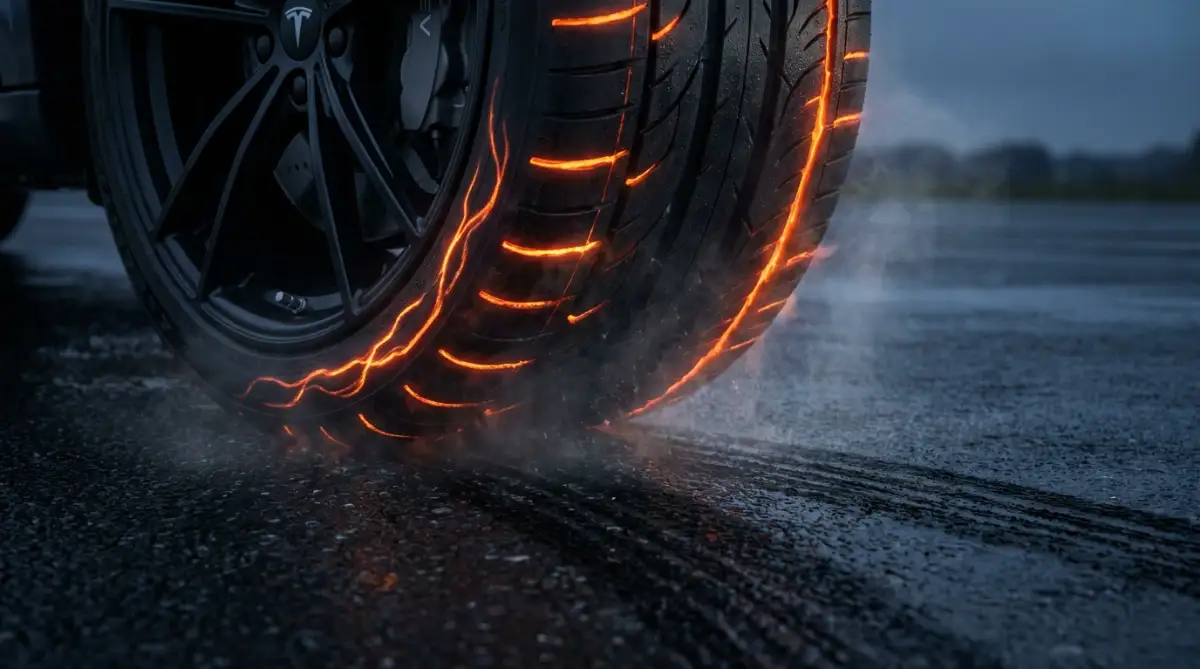
The Reality: Bolting a standard gas-car tire onto a heavy EV is a guaranteed recipe for rapid tread failure.
Standard tires are simply not engineered to handle the massive weight and extreme torque loads we just discussed. They use softer rubber compounds designed for lighter vehicles with gradual acceleration curves.
When you put them on an electric platform, the internal sidewalls flex too much, causing the tire to overheat and degrade at an alarming speed. You must look for specifically designed High Load (HL) tires that feature reinforced sidewalls and harder rubber compounds.
My Personal Realization on Tire Pressure
I learned the hard way that ignoring tire pressure for even a few short weeks accelerates wear dramatically on these heavy machines. Because the battery pack is so heavy, even a slight drop in air pressure causes the outer edges of the tire to collapse inward and drag on the road. My simple trick is setting a recurring alarm on my phone to check the PSI manually every single Saturday morning. I never rely solely on the dashboard sensor anymore, and this tiny habit has saved me hundreds of dollars.
How to Protect Your Wallet and Extend Tire Life
Now that you understand the powerful forces working against you, it is time to take control of the situation. You do not have to accept extremely short replacement cycles as a normal part of ownership. By making a few highly intentional changes to your daily driving and maintenance routine, you can completely change your experience.
Mastering the "Eco-Pedal" Mindset
The easiest way to stop burning cash is to change how you interact with the accelerator pedal. You do not need to launch your car like a spaceship every time the traffic light turns green.
Try putting your car into "Chill" or "Eco" mode for your daily commutes. This simple software change artificially limits the initial burst of power, making your acceleration much smoother and far less destructive.
Smooth driving equals cool tires, and cool tires last significantly longer. Treat the pedal as if there is an egg sitting underneath it, and you will instantly reduce the micro-slipping that destroys your tread.
The Aggressive Rotation Schedule
Most traditional mechanics will tell you to rotate your wheels every time you get an oil change. Since you no longer have oil changes to remind you, it is incredibly easy to forget this maintenance step entirely.
For heavy electric cars, you need to rotate your sets far more frequently than the old standard guidelines suggest. A smart rule of thumb is to swap them around every 5,000 miles without fail.
Because electric platforms often have uneven weight distribution depending on where the motors are mounted, some corners will take far more abuse than others. Frequent rotations ensure that the painful friction is distributed evenly across all four corners over time.
Why Perfect Alignment is Non-Negotiable
A slight misalignment on a light gasoline car might take an entire year to show up as uneven tread wear. On a heavy battery-powered platform, that exact same misalignment will destroy a brand-new set of rubber in a matter of weeks.
The massive downward force amplifies any slight angle errors in your suspension setup. If your wheels are pointing even slightly inward or outward, they are essentially being dragged sideways down the highway.
Make it a priority to get a professional four-wheel alignment check every single year, or immediately if you happen to hit a deep pothole. Spending a little money on an alignment today will absolutely save you from buying a full replacement set tomorrow.
Decoding the Rubber Compounds
When it finally comes time to replace your worn-out set, you have to be incredibly careful about what you buy. Do not just look at the cheapest price tag online, because cheap rubber will vanish in just a few months.
Look for products that specifically advertise "EV-Tuned" or "Electric Vehicle Specific" features. These specialized options use unique chemical blends that are harder in the center for longevity, yet sticky on the edges for cornering safety.
They also contain special sound-absorbing foam rings glued to the inside of the casing. Because electric cars do not have noisy engines to drown out road sounds, this internal foam stops annoying humming noises from entering your cabin.
Quick Fact-Check: Do I really need that weird foam inside my tire?
Yes, you do! Without an engine masking the noise, standard tires sound like a loud washing machine on the highway. That layer of acoustic polyurethane foam absorbs up to 9 decibels of road hum. I tried skipping it once to save fifty bucks, and the cabin noise gave me a massive headache on my next road trip.
A Quick Breakdown: Standard vs. EV-Specific Rubber
By understanding this breakdown, you can clearly see why specialized engineering is required. Paying a little extra upfront for the right product actually lowers your total cost of ownership over the long haul.
Owning an electric model is supposed to be a fun, quiet, and affordable experience. Once you master the hidden secrets of weight distribution, torque management, and proper pressure habits, that dream actually becomes a reality. You can finally stop dreading your garage visits and start enjoying the smooth, quiet ride you actually paid for.
Pro-Level Secrets to Make Your EV Tires Last Longer
The drivers who get maximum mileage out of their rubber share a few specific secrets that most people simply ignore. By adopting these advanced strategies today, you can dramatically shift the financial equation in your favor.
Let us explore exactly how you can turn your garage into the ultimate defense against premature tread wear. These are the same hidden techniques professional fleet managers use to keep their operating costs as low as possible.
Become a Detective in Your Own Driveway
Most drivers never actually look closely at their wheels until a mechanic points out a glaring issue during an inspection. By the time someone else notices the problem, the damage is already permanent, and your money is gone.
I want you to make a habit of walking around your car once a week just to visually inspect the contact patch. You are looking for tiny clues that tell a much bigger story about how your car is handling the road.
Look closely at the very outer edges of the front wheels. If those edges look significantly smoother than the center of the tire, your massive battery weight is causing the tire to fold over during sharp turns.
Mastering the Art of Seasonal Swapping
Many people try to run standard all-season rubber throughout the entire calendar, thinking they are saving money on an extra set. When you drive a heavy electric platform, this strategy almost always backfires and ends up costing you much more.
Summer heat turns black asphalt into a baking frying pan, making rubber compounds naturally softer and much stickier. When you combine that hot, soft rubber with the heavy weight of an electric car, the tread literally melts away.
Conversely, extreme cold makes the rubber incredibly stiff and brittle, completely changing how the vehicle grips the pavement. This sudden loss of grip is exactly why you might notice your electric car loses power in winter due to poor traction. Switching to dedicated, temperature-appropriate sets ensures the rubber compound matches the road conditions perfectly.
The Hidden Science of Suspension Geometry
Your car’s suspension system is constantly working to keep the wheels perfectly flat against the pavement. Because your vehicle is carrying a massive energy pack underneath it, the suspension works overtime just to keep things stable.
According to recent automotive mobility research from industry experts like J.D. Power, heavy battery-powered platforms require incredibly precise alignment angles. Even hitting a small pothole can knock this delicate balance completely out of alignment.
When your alignment is off by just a fraction of an inch, your tires are dragged diagonally across the road. This invisible dragging effect acts like a giant cheese grater, shaving off thousands of miles of life in just a few short weeks.
Mapping Your Daily Commute
Believe it or not, the actual route you drive every single day plays a massive role in how fast you need replacements. A commute filled with endless stop-and-go traffic forces your regenerative braking system to work constantly.
While this is amazing for understanding how regenerative braking saves your battery, it places an immense dragging force on your tread. Every single aggressive stop applies twisting friction directly to the rubber compound.
If possible, try choosing a route that allows for smooth, continuous driving at moderate speeds, even if it adds a few extra minutes. Fewer hard stops and fewer aggressive accelerations will radically extend the lifespan of your current set.
Upgrading Your Home Base
A truly proactive owner knows that maintaining a car starts before the vehicle even leaves the driveway. Having the right tools easily accessible makes you far more likely to actually perform your routine checks.
Investing in a high-quality digital pressure gauge and keeping it right next to your charging cable is a brilliant strategy. If you want to take things a step further, I highly recommend reading up on , which includes setting up a smart, dedicated tire care station.
Having a portable air compressor right next to your charger completely eliminates the annoying excuse of not having time to visit a gas station. When maintenance becomes this incredibly convenient, you will never drive on under-inflated wheels again.
The Expensive Pitfalls You Are Probably Falling Into
Fixing a problem is only half the battle; knowing exactly what terrible habits to avoid is just as important. There are a few highly specific mistakes that new electric vehicle owners make that instantly destroy their budget.
These pitfalls usually happen because people treat their new high-tech machine exactly like their old gas-powered sedan. Breaking these old habits is completely necessary if you want to stop dreading your trips to the local tire shop.
The Disaster of Mismatched Replacements
Let us imagine a real-life scenario that happens all too often. You accidentally run over a sharp nail, completely ruining one of your back tires beyond repair.
To save some money, you decide to just replace that single damaged tire with whatever cheap brand the local shop has in stock. This seemingly harmless financial decision is actually a mechanical nightmare for a heavy, high-torque vehicle.
Mixing an old, worn tire with a brand-new one creates different rolling diameters on the exact same axle. This forces the car’s advanced traction control system to work frantically to correct the imbalance, burning out the remaining good tires almost instantly.
Ignoring the "Cupping" Warning Signs
Because electric cars do not have a loud, rumbling engine, you can hear absolutely every single sound coming from the road. If you ever start to hear a rhythmic, low-pitched thumping noise while driving at highway speeds, you are in trouble.
That specific sound is usually a symptom of a dangerous wear pattern known as "cupping" or "feathering." It means your heavy car is literally bouncing down the highway like a basketball, rather than rolling smoothly.
According to the National Highway Traffic Safety Administration's guidelines on heavy vehicle safety, ignoring these specific vibrations can lead to a sudden and catastrophic blowout. You must immediately get your suspension dampers checked because the massive battery weight is completely overpowering your worn-out shocks.
The Public Charging Pressure Trap
We have all been there—you are sitting at a public charging station, bored, scrolling through your phone while waiting for the battery to fill up. You might even glance at your tires, notice they look a little low, but decide to ignore them until later.
This lazy mindset directly feeds into some of the most costly electric car charging mistakes in public that drivers make. Sitting idle for thirty minutes is the absolute perfect time to pull out your digital gauge and check your pressures.
Waiting until the tires are extremely hot after a long drive gives you completely inaccurate pressure readings. You end up over-inflating or under-inflating them, which directly leads to rapid center or edge wear the moment you hit the highway again.

Misunderstanding Your True Operating Costs
Many buyers get so excited by the prospect of never buying gasoline again that they completely ignore the other expenses of ownership. They assume their monthly budget will just magically shrink down to zero overnight.
This financial blind spot becomes painfully obvious when that first massive replacement bill suddenly hits your credit card. If you really want to avoid this shock, you need to deeply understand the total cost of ownership for an electric vehicle right from the start.
By simply budgeting a small amount of money each month specifically for specialized heavy-duty rubber, the eventual purchase feels painless. Proper financial planning removes all the anxiety and lets you simply enjoy the incredible acceleration and quiet ride.
The Danger of Ignoring Battery Weight Distribution
Unlike traditional cars that have a heavy engine completely in the front, your car has a massive, flat battery spanning the entire floor. This unique design gives you an amazing center of gravity, but it creates very strange friction patterns on the asphalt.
Recent scientific research on asphalt friction and synthetic rubber proves that this evenly distributed extreme weight forces all four wheels to work incredibly hard simultaneously. You cannot just assume your front tires are taking all the steering abuse like you did in your old car.
If you fail to rotate them religiously, the rear tires will degrade surprisingly fast just from the sheer force of pushing that massive battery forward. You have to treat all four corners of your vehicle with equal respect and attention.
Your New Action Plan for Maximum Mileage
You now have a deep, professional understanding of exactly why your heavy electric machine treats rubber so aggressively. More importantly, you know exactly how to fight back against the physics that are trying to drain your wallet.
Owning one of these incredible vehicles is supposed to feel like driving the future, not like a constant financial punishment. By shifting your mindset and making a few tiny adjustments to your weekly routine, you completely change the game.
You no longer have to live in fear of the local mechanic’s inspection bay or worry about losing traction in a rainstorm. You are fully equipped to maximize your range, protect your passengers, and keep your hard-earned money right where it belongs.
If you want to continue mastering your vehicle and discovering more advanced ownership strategies, checking out the resources at digitshopy.com is a fantastic next step. Education is truly the best tool you have to make your driving experience as perfect as possible.
The secret to incredible longevity is not magic; it is just consistent, intentional care mixed with a little bit of smart driving. Every smooth start, every properly inflated wheel, and every timely rotation adds up to massive savings over the life of your car.
I know how incredibly frustrating it feels to face an unexpected, massive repair bill just because nobody explained the rules to you. My absolute best advice is to grab a digital pressure gauge today, put your car in Eco mode tomorrow morning, and watch how smoothly your daily commute transforms. You have total control over this situation, so take action right now and start protecting your investment!
Top Questions Drivers Ask About EV Rubber
Do battery-powered cars actually require entirely different tires?
Yes, they absolutely require specifically engineered sets to handle the unique physics of the vehicle. These models feature highly reinforced internal sidewalls to support massive battery weights without collapsing. They also use a much harder synthetic compound to resist the aggressive friction caused by immediate acceleration.
How often should I realistically rotate the wheels on my heavy electric car?
You should aim to swap their positions every 5,000 miles to guarantee completely even wear across all four corners. Because these platforms distribute massive torque differently than gas cars, specific corners take far more abuse. Sticking to a strict 5,000-mile schedule prevents early degradation and saves you from buying premature replacements.
Does the regenerative braking system actually destroy my tread faster?
It definitely can if you do not understand how it affects road friction during aggressive stops. When the motors reverse resistance to capture energy, it essentially drags the rubber against the asphalt. By learning to lift off the pedal smoothly rather than abruptly, you minimize this heavy dragging force.
Why do my wheels always seem to lose their deep grooves so rapidly?
The primary culprits are the extreme weight of the vehicle and the incredibly fun, instant torque you use at green lights. Every time you accelerate quickly, micro-slipping occurs that shaves microscopic layers of material straight off the wheel. Additionally, neglecting to check your air pressure weekly dramatically accelerates this physical shaving process.
Can I just use a standard gas-car tire on my electric vehicle in an emergency?
While it will physically fit on the rim, it is highly dangerous and completely ruins your driving efficiency. Standard options lack the required stiffness to support your heavy battery pack safely during high-speed cornering. They will overheat rapidly, degrade in a fraction of the time, and completely void any mileage warranties you might have.
Disclaimer: The information provided in this guide is for educational and informational purposes only. It does not constitute professional mechanical advice. Always consult with a certified automotive technician or refer to your specific vehicle's manufacturer guidelines before performing any maintenance, modifications, or purchasing replacement parts.