The Shocking Truth About Switching to Electric
So, you just brought home your first electric car. Awesome! But let me guess—the second you looked at the dashboard, all those weird terms like 'kWh' and 'charging curves' made your head spin. Trust me, I felt the exact same way on day one. You just want to drive to the grocery store without doing complex math or worrying about getting stranded. Let's skip the heavy engineering talk. I will show you exactly how to read your battery, save money on charging, and actually enjoy your new ride without the constant range anxiety.
Quick Takeaways for New EV Owners
- Think in kWh: It is just the size of your energy "bucket" (like a gas tank).
- Charge at Home: Plug in at night to pay pennies instead of a premium at public chargers.
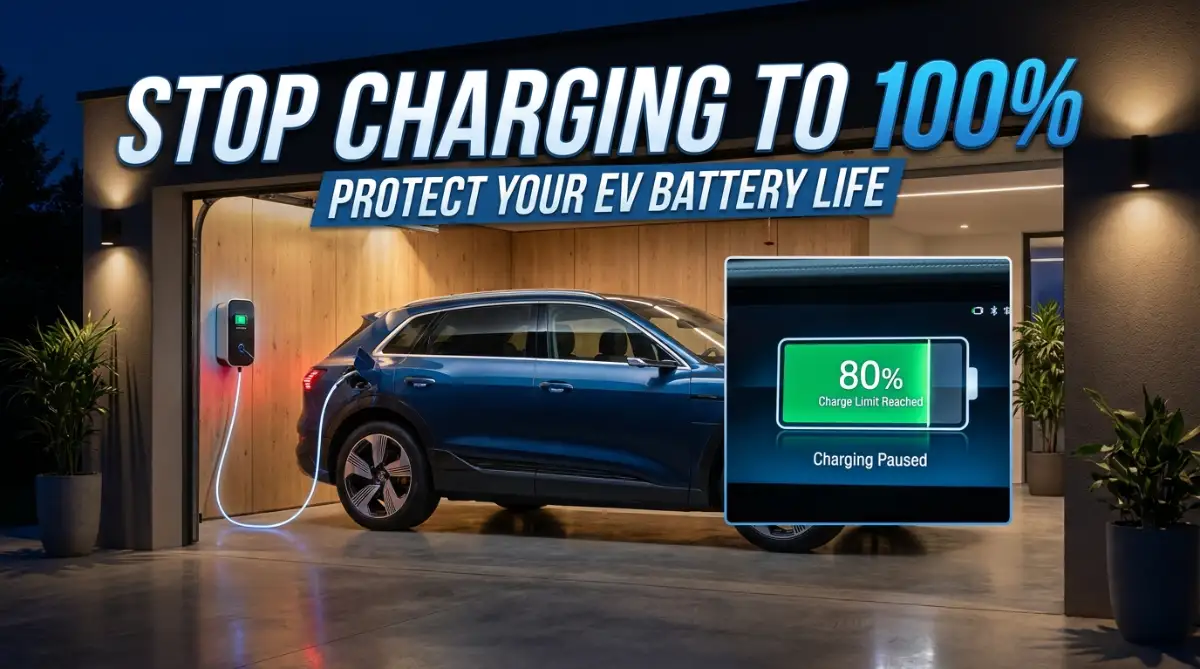
- The 80% Rule: Keep your daily charge limit at 80% to keep your battery healthy for years.
- Ignore the Guess-O-Meter: Trust your raw battery percentage, not the fluctuating dashboard range estimator.
Decoding Your EV Battery Without a Math Degree
The secret to mastering your driving range comes down to understanding three basic ideas. Once you grasp these simple concepts, you will never feel anxious about your battery percentage again. Let's look at the actual science of how your car stores its power.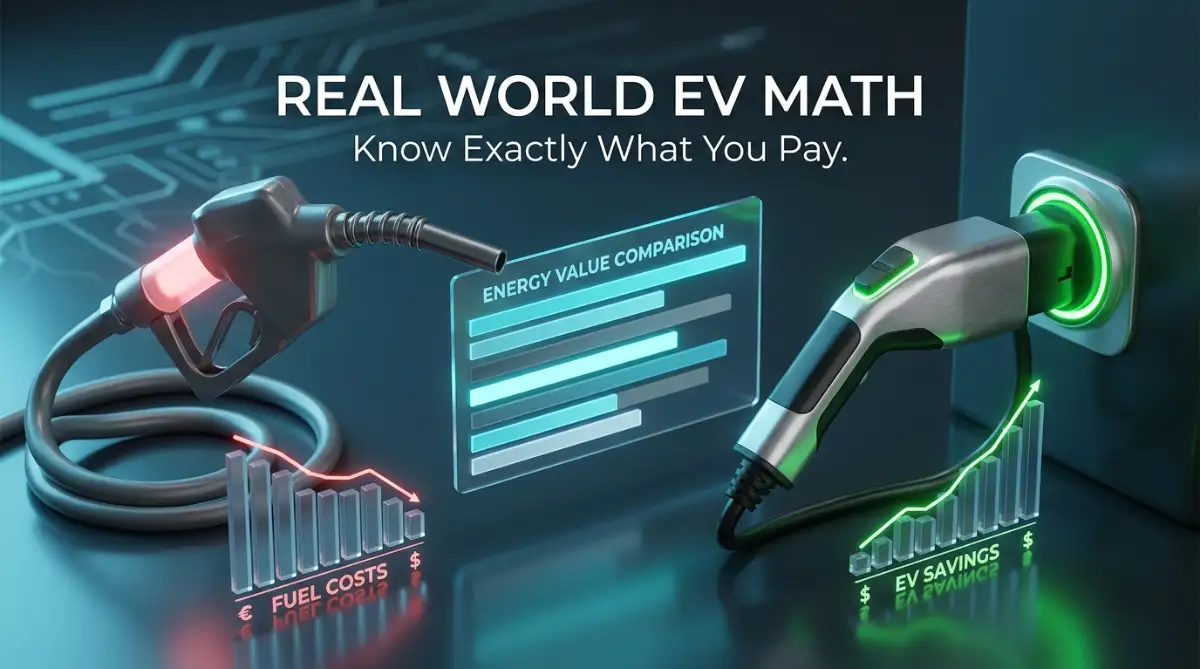
The Simple Water Bucket Analogy
The easiest way to understand electrical terms is to picture a simple garden hose filling up a large bucket of water. Water flowing through the hose is just like electricity flowing into your car.
A Watt (W) is the basic unit of electrical power. In our analogy, think of the Watt as the actual water pressure coming out of the hose. If you turn the faucet up, you get more pressure, which means more power is moving at that exact second.
Because car batteries are massive, measuring them in single Watts would be like measuring a swimming pool in teaspoons. That is why we use the Kilowatt (kW), which is simply one thousand Watts bundled together. A Kilowatt represents the speed or the rate at which electricity is flowing into your car.
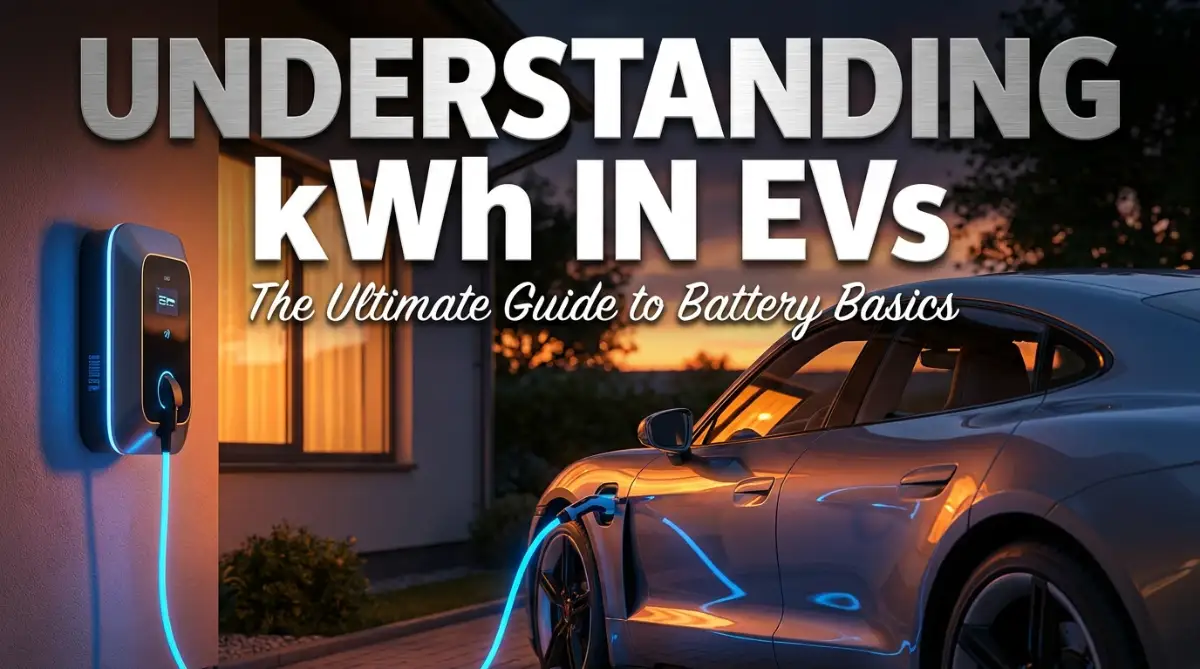
Now, here is the most important part of the puzzle. The Kilowatt-hour (kWh) is the actual size of the bucket you are trying to fill. It measures the total amount of energy your battery can hold when it is filled to the very top.
If you have a hose pumping water at a speed of one Kilowatt for exactly one hour, you have successfully collected one Kilowatt-hour of energy in your bucket. The bigger your battery capacity (measured in kWh), the more energy your car can store. It really is that simple.

Quick Look: How Big is Your EV Battery?
To give you a better idea of what these numbers look like in the real world, here is a quick comparison of popular cars on the road today:
Notice how the heavy Ford truck needs a massive 131 kWh bucket just to go a similar distance as the smaller Tesla!
Figuring Out Your Real World Range
Knowing the size of your battery is only half the battle. You also need to know how efficiently your car uses that stored energy while driving down the highway.
In a traditional gas car, we look at Miles Per Gallon (MPG) to figure out fuel efficiency. In the electric driving world, we look at Miles Per Kilowatt-hour (mi/kWh). This tells you exactly how many miles you can drive on a single unit of electrical energy.
Most modern electric vehicles average somewhere between three and four miles per kWh. If you want to look up the exact efficiency rating for your specific car model, the official EPA Fuel Economy website is the best place to check out the real numbers. Heavy electric trucks might only get two miles per kWh, while small, aerodynamic sedans might get close to five.
If your car gets 4 miles per kWh, and you have an 80 kWh battery pack, you just multiply the two numbers. That gives you a maximum driving range of 320 miles on a full charge. Understanding this simple math gives you complete confidence before a long road trip.
Watch this incredibly simple visual breakdown to completely master your battery capacity.
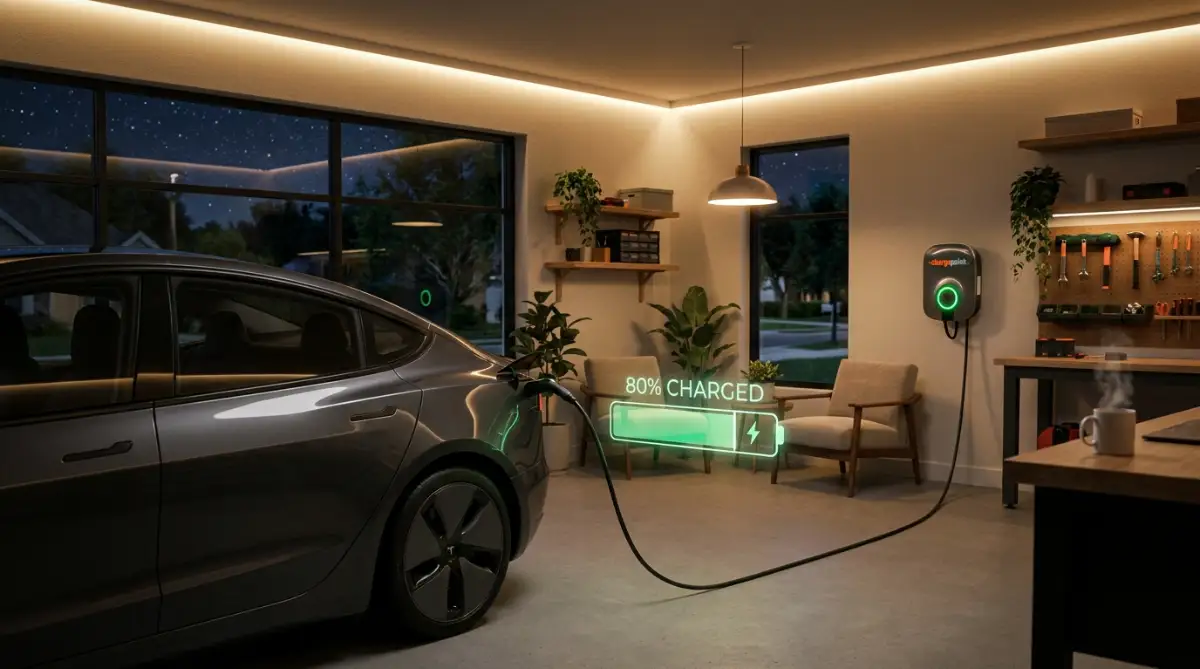
I used to plug my car in every single night, thinking I had to keep the battery at a perfect one hundred percent. I quickly realized that constantly pushing the battery to its absolute limit was actually harming the long-term health of the cells. Now, I just charge it to eighty percent for my daily driving, and it has completely removed my range anxiety while keeping the battery incredibly healthy.
How Much Does a Full Charge Actually Cost?
One of the biggest fears new owners have is seeing a massive spike in their home electricity bill. The good news is that calculating your exact charging cost is incredibly easy once you know your battery size.
First, you need to look at your most recent home utility bill. Find the section that tells you your specific electricity rate per kWh. In many places, this rate is around fifteen cents per unit of energy.
Let's imagine you own a car with a 60 kWh battery pack, and you pull into your garage with a completely empty battery. You simply multiply your battery size (60) by your electricity rate ($0.15).
In this scenario, a completely full charge from zero to one hundred percent would cost you exactly nine dollars. Think about how much nine dollars gets you at a traditional gas station these days. You are essentially filling up a whole tank for less than the cost of a fast-food meal.
Home Charging vs Public Charging Math
Things get a little trickier when you leave your house and use a public fast-charging network. Public stations are run by independent companies that want to make a profit on the electricity they sell you.
Because of this, they charge a premium rate for the convenience of filling up your battery quickly. While your home rate might be fifteen cents, a public highway charger might cost anywhere from forty to sixty cents per kWh.
This is exactly why smart drivers try to do ninety percent of their charging at home while they sleep. You should really only rely on expensive public networks when you are traveling far away from your local area. Managing where you buy your energy is the absolute best way to save money.
Why Your Battery Seems to Shrink in Winter
If you live in an area that gets cold weather, you might notice your driving range magically disappearing. This happens because chemical batteries absolutely hate freezing temperatures.
When a battery gets cold, the chemical reactions inside slow down significantly. The battery has to use a large chunk of its own stored energy just to keep itself warm enough to function properly.
On top of that, electric cars do not have a hot engine block to naturally heat the cabin. The car has to pull extra Kilowatt-hours directly from the battery to run the electric heater and keep you warm. All of this extra work means you have less energy available to actually spin the tires and move the car forward.
During a freezing winter morning, it is totally normal to see your overall efficiency drop by twenty or even thirty percent. In fact, a detailed study by AAA showed that extreme cold temperatures can temporarily cut your driving range by up to 41% if you are blasting the cabin heater on high. Knowing this ahead of time stops you from panicking when your dashboard shows a lower number than usual.
Myth vs. Fact: The Winter Range Drop
The Myth: Your battery permanently loses its capacity during winter.
The Fact: The energy does not disappear! The cold simply makes the chemical reactions sluggish, locking away some of your power temporarily. Once the battery warms up—or spring rolls around—your full range naturally returns. No permanent damage is done.
Myth vs Reality: Charging Speeds
There is a massive misunderstanding about how fast electric cars can actually charge. Many people think that if they plug into a 350 kW ultra-fast charger, their car will automatically charge at that exact speed.
The Reality: Your car is actually the boss of the charging session, not the charging station. Every car has a built-in computer that limits how many Kilowatts it can accept at one time.
If your specific car has a maximum charging limit of 150 kW, plugging it into a massive 350 kW station will not make it charge any faster. The car will simply tell the station to slow down and only deliver what it can safely handle.
Furthermore, batteries charge on a curve. They accept power extremely quickly when they are nearly empty. As the battery fills up past eighty percent, the car slows the charging speed down to a crawl to prevent overheating and damage.
Smart Habits for Better Energy Use
Getting the most miles out of your Kilowatt-hours is a fun game once you learn the basic rules. The easiest way to save energy is to simply slow down on the highway. Driving at high speeds forces the car to push through a massive wall of wind resistance.
Dropping your speed from eighty to seventy miles per hour can instantly give you a massive boost in battery efficiency. It is the easiest adjustment you can make today.
Another amazing feature you should use is called regenerative braking. When you lift your foot off the accelerator pedal, the car uses its electric motor to naturally slow the vehicle down.
Instead of wasting that forward momentum by using the regular brake pads, the motor captures that physical energy, turns it back into electricity, and pushes it directly back into your battery pack. It literally creates free Kilowatt-hours while you are driving down a steep hill or coming to a stoplight.
Pre-Conditioning Your Car Like a Pro
My Personal Range Hack:
Whenever I take a road trip, I try to keep my speed right around 65 mph instead of pushing 75 or 80. It sounds like a tiny difference, but I actually see a massive 10-15% jump in my total battery range just by slowing down those few miles per hour. Try it on your next highway drive—you will be amazed at how much energy you save!
If you want to beat the cold weather range drop, you need to learn how to pre-condition your car. Almost every modern electric vehicle has an app that lets you control the climate settings from your phone.
While the car is still plugged into the wall at your house, you can turn on the heater and warm up the battery. Because the car is connected to the grid, it pulls the energy needed for heating from your house, not from your battery.
When you finally unplug and start driving, the cabin is already perfectly warm, and the battery is at its happiest temperature. You get to keep all of your stored Kilowatt-hours exclusively for driving, giving you much better range on a cold day.
Reading Your Monthly Statement
Once you understand how your car consumes power, you can start tracking your actual monthly expenses. Some electric utility companies offer special time-of-use pricing plans for electric vehicle owners.
These special plans give you massively discounted electricity rates if you agree to only charge your car during the middle of the night. Because nobody else in the neighborhood is using heavy appliances at two in the morning, the power company has extra energy to sell for cheap.
You can simply tell your car's computer to wait until midnight to start pulling power from the wall. You get to wake up to a full "tank" every single morning, and you pay the absolute lowest price possible for those Kilowatt-hours. It is a win-win situation for both you and the electrical grid.
Expert Insight: Stop Comparing it to Gas
The biggest mental block new drivers face is constantly trying to convert their electric experience back into gas terms. Stop trying to figure out what a Kilowatt-hour equals in gallons of fuel.
Gasoline is a physical liquid that explodes inside an engine to create movement. Electricity is an invisible flow of electrons that spins magnets inside a motor. They are two completely different ways of interacting with the physical world.
Embrace the new system. Learn to look at your battery percentage the same way you look at your smartphone battery. You would never worry about how many 'gallons' of power your phone has left to make a phone call.
You just know that when it hits twenty percent, it is probably time to find a charger soon. Treating your car just like a giant, rolling smartphone makes the entire ownership experience incredibly relaxing and enjoyable.
Master Your Electric Ride Like a Seasoned Pro
Now that we have stripped away the confusing math, it is time to talk about real-world driving. Anyone can plug a car into a wall, but getting the absolute maximum distance out of your stored energy requires a few smart habits.
These are the insider secrets that veteran electric vehicle owners use to stretch their battery life. You do not have to become an obsessed hyper-miler to see massive improvements in your daily efficiency. Small, simple changes in how you operate the car can save you a tremendous amount of electricity over a month.
First, we need to talk about the physical connection between your car and the road. Your tire pressure has a massive impact on how fast your battery drains. When your tires are even slightly under-inflated, they create extra rolling resistance against the pavement.
The electric motors have to pull significantly more power from the battery just to maintain your normal highway speed. Checking your tire pressure once a month is the easiest way to instantly improve your driving range.
Next, you have to master the art of cabin climate control. In a traditional gas car, the engine produces a massive amount of waste heat, which the car simply blows into the cabin to keep you warm. Electric motors are incredibly efficient and do not produce that kind of excess heat.
Because of this, running the main cabin heater in an electric car requires raw power straight from your battery pack. If you want to stay warm without killing your range, try using your heated seats and heated steering wheel instead. These physical contact heaters use a tiny fraction of the energy compared to heating the entire volume of air inside the car.
You also need to understand a frustrating concept known as "vampire drain" or phantom power loss. Even when your car is parked and turned completely off, it is still quietly consuming energy in the background. The car has to keep its internal computers awake, monitor battery temperatures, and stay connected to cellular networks.
If you constantly open your smartphone app to check on the car, you are actually waking the vehicle up from its deep sleep. Every time the car wakes up, it pulls a little bit of extra power from the battery. If you leave the car parked at an airport for a week, do your best to leave the app alone so the car can fully sleep and conserve its energy.
Another massive efficiency hack is mastering your car's regenerative braking settings. Most modern electric vehicles let you choose how aggressively the car slows down when you lift your foot off the pedal. If you set this to the highest level, you can drive around town barely ever touching the physical brake pedal.
This aggressive setting captures the maximum amount of forward momentum and aggressively pushes it back into your battery pack. If you want to learn more about this specific physical process, you can read our detailed guide on how regenerative braking saves your battery. It truly changes the way you look at city driving.
Finally, smart route planning is the ultimate tool for road trips. You cannot just jump in an electric car and wing it on a cross-country adventure. Hills, mountains, and high-speed interstates will drain your energy much faster than flat country roads.
Quick EV Road Trip Checklist:
- Plan your charging stops using an app like PlugShare or A Better Routeplanner (ABRP).
- Check if the public chargers on your route are actually online and working (read recent user check-ins).
- Pack your Level 1 emergency charging cable in the trunk, just in case.
- Aim to arrive at charging stations with about 15% to 20% battery left, so you charge faster on the curve.
Using dedicated mapping apps helps you calculate exactly how much energy you will use before you even leave your driveway. These apps look at elevation changes, weather conditions, and your specific battery size to recommend the perfect places to stop. If you want to see how professionals test these variables, you can look at the real-world range testing standards used by automotive experts to verify exact mileage drops.
The Hidden Battery Traps Destroying Your Range
Making the switch to battery power is incredibly exciting, but there are a few dangerous traps that new owners fall into almost immediately. These mistakes will not just ruin your daily driving range; they can actually cause permanent damage to your expensive battery pack.
The absolute biggest mistake you can make is treating your car battery exactly like your smartphone battery. People have a deep psychological need to see their phone battery sitting at a perfect one hundred percent. They carry this exact same mindset over to their new car and plug it in every single night to fill it to the brim.
Lithium-ion batteries absolutely hate sitting at a completely full state of charge. When the battery cells are packed to the absolute limit with energy, they experience high physical stress and heat. Doing this every single day will permanently degrade the internal chemistry, meaning your maximum range will slowly shrink over time.
Instead, you should tell your car's computer to stop charging when it hits eighty percent for your daily commute. You should only ever push it to one hundred percent if you are leaving on a massive road trip that exact same morning. If you want a deep dive into preserving your cells, check out our breakdown on protecting your EV battery health and preventing range loss.
Another massive trap is relying purely on the dashboard range estimator, which veteran drivers jokingly call the "Guess-O-Meter." This digital number on your screen is just the car's computer making a wild guess based on how you drove over the last twenty miles.
If you just drove up a massive, steep mountain, the computer assumes you will be driving up a mountain forever. It will suddenly display a terrifyingly low range number, causing you to instantly panic. You have to learn to ignore this fluctuating number and start trusting your raw battery percentage instead.
We also see new owners making terrible financial decisions when it comes to charging away from home. Because they do not fully understand how electricity pricing works, they pull up to the most expensive ultra-fast chargers for daily use. Relying on public infrastructure every single day is a great way to drain your wallet.
In fact, making these quick convenience stops without checking the pricing tiers is one of the most costly electric car charging mistakes in public you can make. It entirely defeats the financial purpose of buying an electric car in the first place.
Cold weather denial is another huge pitfall that leaves drivers stranded on the side of the highway. Many people assume their car will perform exactly the same in a freezing blizzard as it does on a warm spring day. When the temperature drops below freezing, your battery simply cannot produce the same amount of accessible energy.
You must mentally prepare for a twenty to thirty percent drop in efficiency during the cold months. If you refuse to adjust your driving habits and heating preferences, you will find yourself calling a tow truck. Understanding why your electric car loses power in winter is a survival skill every modern driver needs to learn.
Finally, procrastinating on your home electrical setup is a massive headache waiting to happen. Trying to charge a massive vehicle on a standard wall plug (Level 1) is like trying to fill a swimming pool with a drinking straw. It can take three full days to refill a completely empty battery this way.
You absolutely must invest in a proper Level 2 charging station for your house if you want true peace of mind. Taking the time to properly prepare your garage for an electric car is the single best investment you can make for your daily sanity. It allows you to wake up to a fresh, perfectly charged vehicle every single morning without fail.
Your Personal Blueprint for Stress-Free Electric Driving
Once you stop viewing electricity as a mystery and start viewing it as a simple, measurable tool, the anxiety completely disappears. You finally get to experience the smooth, quiet, and incredibly fun performance that these modern cars were designed to deliver.
To help you lock in these new skills, I want you to try a simple weekend experiment. Next time you drive to the grocery store, pay close attention to your dashboard energy graph. Watch how the power spikes when you press the accelerator, and watch how it dips back down when you coast to a stop.
Start visualizing that invisible bucket of power sitting under the floorboards of your car. Check your local utility bill this weekend and do the simple math to figure out exactly what a full battery costs at your specific house. For a broader look at your overall savings, you can easily calculate the total cost of ownership for an electric vehicle compared to your old gas car.
You will quickly realize that you are holding the keys to the cheapest, most efficient transportation available today. You just have to follow the basic rules of battery care, plan your longer trips with a bit of patience, and embrace the convenience of waking up to a full tank every morning. If you want to explore more government data on home charging benefits, the Department of Energy's alternative fuels data is a fantastic place to verify your local savings.
I clearly remember the exact moment my own range anxiety completely vanished. I realized that my electric car was not a complicated puzzle to solve, but simply a smarter way to move through my daily life. My hope is that this guide helps you reach that exact same feeling of confidence on your very next drive!
Quick Answers to Your Biggest Battery Questions
How long does it actually take to fill a 60 kWh battery?
The time it takes entirely depends on the specific charger you are using. On a standard home wall plug, it could take up to forty hours to fill a completely empty battery. If you use a high-speed public charger on the highway, you can usually fill that exact same battery from ten to eighty percent in about thirty minutes.
Is a car with a higher kWh number always the better choice?
Not necessarily, because a bigger battery pack adds a massive amount of physical weight to the car. A heavier car requires more energy to move, which can make it less efficient on the highway. You should always choose a battery size that comfortably covers your daily commute rather than buying the biggest one available just for the sake of it.
What actually happens if my battery hits zero while driving?
Your car will not just suddenly shut off at highway speeds without warning. As you get extremely low on power, the car will slowly limit your top speed and turn off the air conditioning to save energy. If you completely run out of power, the car will safely pull to a stop, and you will need to call a flatbed tow truck to take you to the nearest charging station.
Why does my battery charge so slowly after it hits 80 percent?
This is a built-in safety feature designed to protect the internal chemistry of the battery cells from extreme heat. As the battery gets completely full, it becomes physically harder to force more energy inside without causing damage. If you want to read more about this exact scientific process, independent lithium-ion battery research explains exactly why charging slows down to protect the hardware.
Do electric cars lose their maximum energy capacity over time?
Yes, all modern batteries will slowly lose a tiny fraction of their maximum storage space as they age. However, most modern cars have built-in thermal management systems that protect the cells from extreme degradation. The vast majority of drivers will only lose a very small percentage of their total range even after driving the car for a decade.
Disclaimer: The information provided in this blog post is for educational and informational purposes only. It should not be considered professional financial, mechanical, or electrical advice. Electricity rates, charging speeds, and vehicle range will vary greatly depending on your location, weather conditions, and specific vehicle model. Always consult your vehicle's official owner's manual and local certified professionals for personalized guidance regarding your electric vehicle and home charging setup.