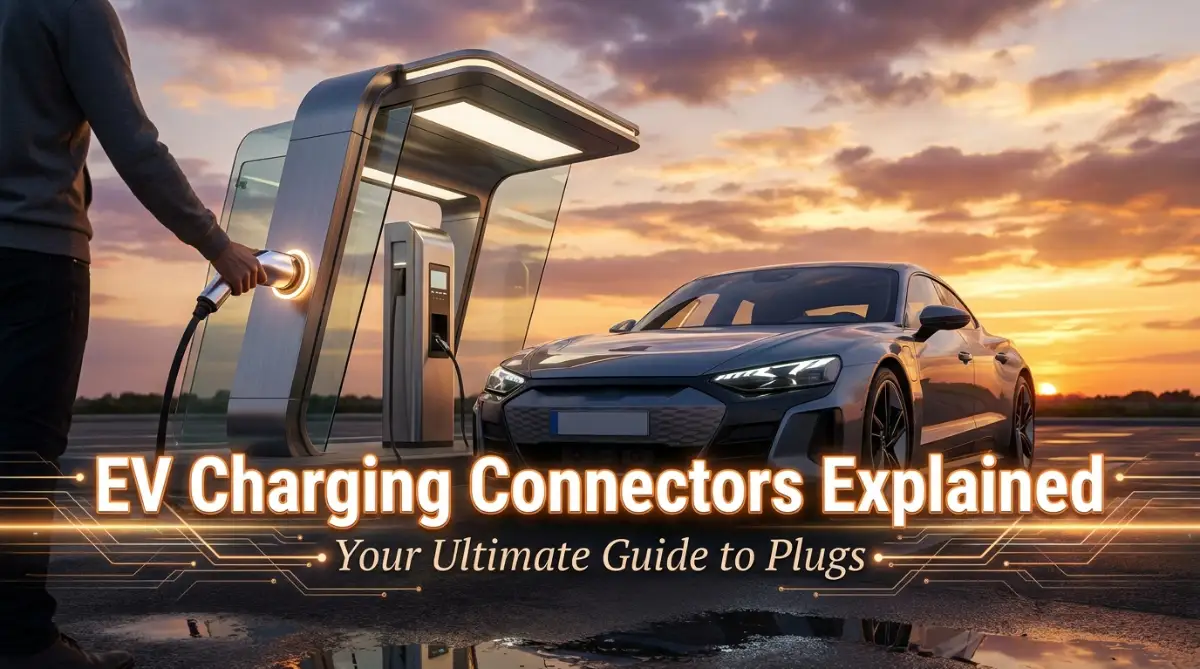
The Confusion Behind the Plug: My Personal EV Charging Nightmare
You just bought a shiny new electric car, hit the highway, and suddenly realize the public charger you pulled up to won't fit your port. It is a terrible, sinking feeling. Let's fix that today. I am going to show you exactly how to make sense of the confusing world of EV plugs, so you never get stuck holding the wrong cable again.
If you currently own an electric car or are seriously planning to transition to one soon, you likely share this exact same underlying fear. The sheer variety of charging plugs available at public stations can make you feel as though you are trying to solve an incredibly complicated puzzle just to keep your car moving.
Everyday drivers are facing constant anxiety because they never truly know if the next charging station on their route will actually be compatible with their specific car model. This relentless worry completely shatters the smooth, quiet, and otherwise peaceful driving experience that electric vehicles are supposed to offer.
Being a new EV owner often comes with a steep learning curve. Much like discovering the hidden reasons your EV tires are wearing out so fast, dealing with incompatible charging stations is an unexpected hurdle that catches many drivers entirely off guard.
To confidently avoid a towing disaster, you need to understand the main charging standards you will encounter in the wild:
- CCS (Combined Charging System): The standard fast-charging plug used by the vast majority of modern, non-Tesla electric vehicles.
- CHAdeMO: An older charging standard that you will predominantly find on older Japanese models.
- NACS (North American Charging Standard): The standard pioneered by Tesla, which is rapidly becoming the universal plug for future electric vehicles.
You should never have to guess whether you will be able to power up your car and get home safely to your family. By familiarizing yourself with your vehicle's specific hardware and planning your routes carefully, you can finally eliminate plug anxiety and reclaim the joy of driving your electric car.
What You Will Learn Today:
- How to easily tell the difference between slow AC plugs and fast DC chargers.
- A simple breakdown of the 5 major EV plugs (and which one your car actually needs).
- Why buying cheap charging adapters can permanently damage your car.
- My top secrets for keeping your charge port clean and avoiding expensive repair bills.
Breaking Down the Electric Vehicle Charging Ecosystem
To solve this massive headache, we need to look at why the electric car industry ended up with so many different plugs in the first place. You can think of it just like the early days of cell phones.
Years ago, every single phone brand had its own unique charger, which made borrowing a cable from a friend almost impossible. The electric vehicle industry went through a very similar messy phase before slowly trying to agree on common standards.
Different regions of the world, like North America, Europe, and Asia, developed their own electrical grids and safety rules. Because the power grids are fundamentally different, automakers had to design specific plugs to handle the local electricity safely.
On top of that, some visionary companies completely ignored the rules and decided to invent their own ultra-fast plugs from scratch. All of these separate decisions created the confusing web of heavy cables and adapters that we have to deal with today.
By understanding the basic science behind these cables, you can instantly remove the fear of pulling up to the wrong station. We are going to make this extremely simple so you can confidently charge your car anywhere, anytime.
The Foundation: Understanding AC vs. DC Power
Before we look at the actual physical plugs, you need to understand a very basic scientific concept about electricity. The power that comes from the electrical grid is always Alternating Current (AC).
However, the massive battery pack sitting underneath your electric car can only store Direct Current (DC) power. This means that somewhere along the line, that electricity has to be converted from AC into DC before it can enter your battery.
When you plug into a standard wall outlet at home, you are feeding AC power directly into your car. Your vehicle has a heavy, built-in computer called an onboard charger that slowly converts that AC power into DC power.
Because this internal conversion process takes time, AC charging is generally much slower and is meant for overnight charging. If you want to charge your car in minutes instead of hours, you have to bypass that internal converter entirely.
The Magic of Direct Current Fast Charging
This is exactly where DC fast charging stations come into the picture to save the day on long road trips. These massive, refrigerator-sized machines take the AC power from the grid and convert it into DC power internally.
Because the heavy lifting is done inside the actual machine, it pumps pure DC power straight into your car's battery pack. This completely skips your car's internal charger, allowing massive amounts of electricity to flow safely in a very short time.
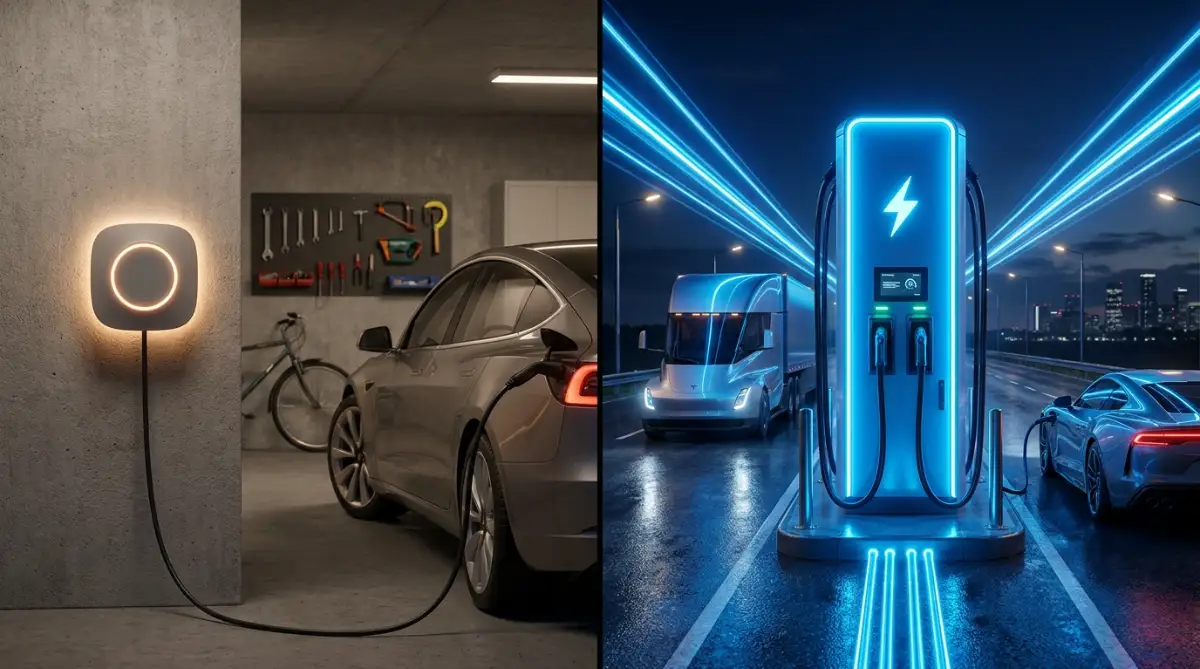
This fundamental difference in how power is delivered is the main reason why AC plugs look completely different from DC plugs. Let us break down the specific types of connectors you will encounter on your daily drives.
Level 1 and Level 2: The Slow and Steady AC Plugs
If you are charging your car at your house or at a local shopping mall, you will almost always use an AC connector. These plugs are relatively lightweight, easy to handle, and safe to use in the rain or snow.
The J1772 Connector (North American Standard)
If you live in North America, the J1772 connector will be your best friend for daily charging. You will find this specific plug on almost every single public Level 2 charger and home charging station.
The design is quite simple, featuring five small circular pins housed inside a round plastic casing. Three of these pins handle the actual electrical current and keep the connection safely grounded.
The other two pins are essentially communication wires that allow the charger to "talk" to your car's computer. The power will not start flowing until these communication pins confirm that the cable is securely locked into your car.
The Type 2 Mennekes Plug (European Standard)
If you travel to Europe or live in countries that follow European electrical standards, you will rarely see a J1772 plug. Instead, you will use the Type 2 connector, commonly referred to as the Mennekes plug.
Unlike the North American electrical grid, European power grids frequently use three-phase electricity for regular homes and businesses. The Type 2 plug was specifically designed with seven pins to handle this powerful three-phase electrical setup.
One of the coolest features of the Type 2 plug is its built-in physical locking mechanism. Once you plug it in and lock your car doors, a heavy metal pin drops down to physically lock the cable to your car, preventing anyone from stealing it while you shop.
If you are more of a visual learner, watch this brilliant breakdown that shows exactly what happens inside your car when you plug in a fast charger.
The Heavyweights: DC Fast Charging Connectors
When you are out on the highway and need to add hundreds of miles of range in just twenty minutes, you need a DC fast charger. These heavy, thick cables carry extreme amounts of voltage and require highly specialized connectors to prevent overheating.
Combined Charging System (CCS)
The Combined Charging System (CCS) is currently the undisputed heavyweight champion of the fast-charging world. Automotive engineers created this plug by taking the standard AC plugs we just talked about and adding two massive DC power pins to the bottom.
In North America, they added these two big pins to the J1772 plug to create the CCS1 connector. In Europe, they added the exact same two pins to the bottom of the Type 2 plug to create the CCS2 connector.
This genius "frankenplug" design means that an automaker only has to cut one single charging hole into the side of their cars. You can plug a round AC cable into the top half at home, or plug a massive CCS cable into the whole socket on the highway.
Pro Tip: I once made the huge mistake of buying a cheap, unbranded charging adapter from an online marketplace to save a few dollars. The plastic literally started melting during a fast-charging session and almost damaged my car's charging port. Always spend the extra money on certified adapters directly from your manufacturer because your peace of mind is worth it.
CHAdeMO: The Japanese Pioneer
Before CCS took over the world, Japanese engineers created the very first popular fast-charging standard known as CHAdeMO. The name is actually a clever pun based on a Japanese phrase that translates to "How about some tea?"
The joke implies that your car will charge so incredibly fast that you will only have time to drink a quick cup of tea. You will mostly find this large, completely round plug on older Japanese electric vehicles like the Nissan Leaf.
While most new cars have stopped using this standard, CHAdeMO actually has a brilliant hidden feature that other plugs lack. It easily allows bi-directional charging, meaning you can actually use your car's battery to power your entire house during a severe electrical blackout.
The Industry Disrupter: Tesla and the NACS Revolution
You simply cannot talk about electric vehicles without mentioning the massive impact of Tesla. Instead of using the bulky CCS or CHAdeMO plugs, Tesla engineered their own beautiful, slim, and lightweight plug from day one.
For years, this proprietary plug was totally exclusive to Tesla owners, granting them access to the incredibly reliable Supercharger network. The plug handles both slow AC charging and ultra-fast DC charging through the exact same two main pins.
Recently, the entire automotive industry experienced a massive earthquake when major car brands announced they were abandoning the bulky CCS plug. Companies agreed to adopt Tesla's elegant design, which was officially renamed the North American Charging Standard (NACS).
This historic shift means that in the very near future, almost every new electric car in North America will share the exact same charging plug. We are finally moving away from the chaotic mess of different cables and moving toward a universally simple charging experience.
A Quick Connector Comparison Guide
To make your life much easier, here is a simple breakdown of the main connectors you need to remember. Keep this mental checklist handy whenever you rent an electric car or look at public charging maps.
- J1772: Small, round, standard home and public AC charger for North America.
- Type 2 (Mennekes): Larger, flat-topped round AC charger used mostly in Europe.
- CCS1 / CCS2: The massive fast-charging plugs with two huge extra pins at the bottom.
- CHAdeMO: The large, older round Japanese fast charger, famous for the Nissan Leaf.
- NACS: The slim, elegant Tesla plug that handles both slow and fast charging perfectly.
Here is a cheat sheet to help you remember the main differences at a glance:
Navigating the World of Charging Adapters
Because we are currently living in a messy transition period, you will likely need to rely on charging adapters. Adapters act as a physical bridge, allowing you to plug a cable into your car even if the shapes do not match.
For example, many drivers keep a Tesla to J1772 adapter in their trunk at all times. This allows a non-Tesla driver to easily plug into the thousands of Tesla Destination Chargers located at hotels and restaurants.
However, you must be extremely careful when dealing with high-voltage DC fast charging adapters. Pushing hundreds of amps of electricity through a poorly made metal bridge generates a terrifying amount of heat.
If an adapter is not properly certified to handle that specific heat load, the internal pins can warp, melt, or cause electrical fires. You should only ever use heavy-duty adapters that are explicitly approved by your car's manufacturer.
My Quick Adapter Safety Checklist:
- Always buy directly from your car brand (avoid random online sellers).
- Check the adapter for cracks or bent pins before plugging it in.
- Keep it inside a dry, padded case in your trunk.
- Never force an adapter into a plug—if it feels completely stuck, stop pushing!
Overcoming the Heavy Cable Struggle
When you finally pull up to a DC fast charger, you might be shocked by how incredibly heavy and stiff the cables are. These thick cords are often liquid-cooled to prevent them from melting under the massive electrical loads.
If you have a bad back or limited arm strength, wrestling with a cold, stiff CCS cable can be a genuinely frustrating experience. Always try to park as close to the physical charging machine as safely possible to minimize how far you have to pull the cord.
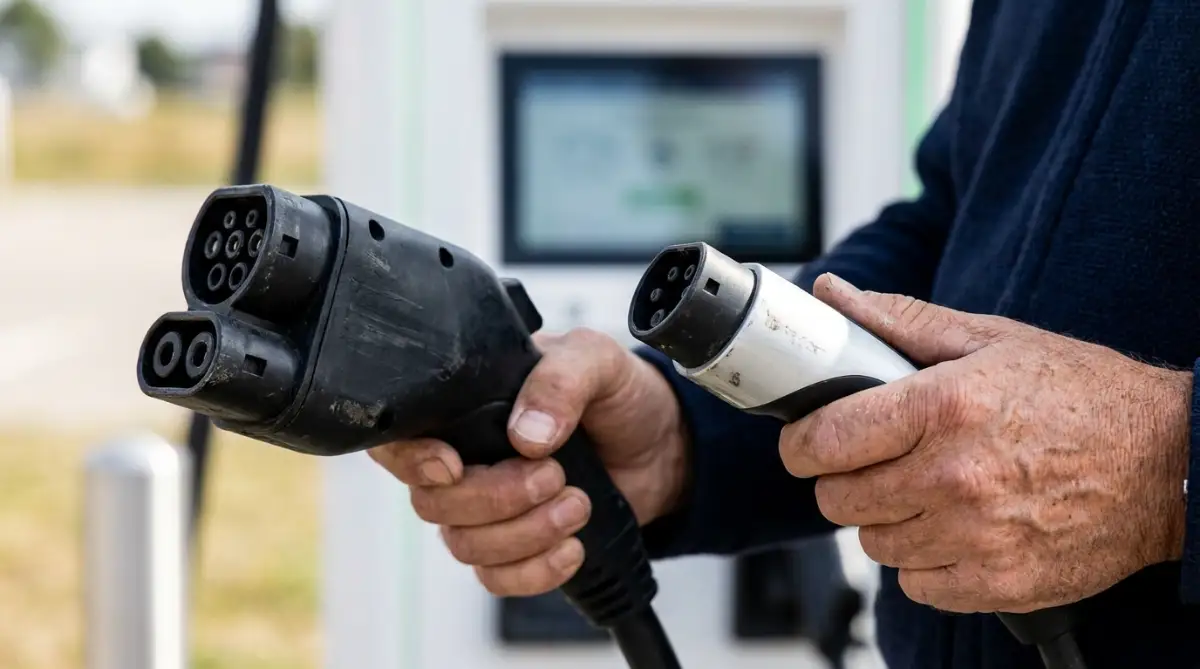
When you insert the heavy plug into your car, make sure you use two hands and push firmly until you hear a loud, distinct mechanical click. If the plug is sagging downwards from its own heavy weight, the communication pins might not connect properly, and the machine will refuse to start the charging session.
Real-Life Scenarios: Planning Your Route
Let us imagine you are planning a weekend camping trip to a remote state park with your family. You check your phone app and see that the only charger near the park is a 50kW CHAdeMO station.
To make this easier, I highly recommend downloading free community apps like PlugShare or A Better Routeplanner. Just type in your exact car model, and these tools will instantly filter the map so you only see stations that actually fit your vehicle. No guessing required.
If you drive a modern car equipped with a CCS port, you physically cannot use that machine to power your vehicle. By knowing your plug type beforehand, you can easily filter your charging maps to only show stations that actually fit your car.
This simple bit of knowledge entirely removes the blind panic of arriving at a station on an empty battery. You take back complete control of your journey, ensuring your road trips stay fun, predictable, and stress-free.
Mastering Your Daily EV Charging Routine
Now that you understand the basic shapes and sizes of different charging cables, we need to talk about actual daily usage. Knowing the name of a plug is only half the battle when you are standing outside at a public station.
You want to make sure your charging sessions are always safe, fast, and completely stress-free. To achieve this, you need to treat your car's charging port with the same care you give your smartphone screen.
Over time, I have learned a few brilliant secrets that completely changed how I approach charging my vehicle. Let us explore some advanced, pro-level tips that will make you look and feel like an absolute electric car expert.
The Smartphone Analogy: Keeping Things Clean
Think about the bottom of your cell phone for a second. Have you ever tried to plug in your phone, but the cable just kept falling out?
Usually, this happens because the charging port is packed completely full of pocket lint and dust. Your electric vehicle's charging port suffers from the exact same environmental problems, just on a much larger scale.
When you drive down the highway, dust, pollen, and road grime naturally blow into the small gaps around your car's charging door. If debris gets stuck inside the small metal pins of a J1772 or CCS plug, it creates physical resistance.
This hidden dirt stops the electrical current from flowing smoothly, which can actually cause the handle to overheat during a session. You should inspect your car’s port with a simple flashlight every few weeks just to make sure it is completely clean.
If you do spot some dirt, a quick blast of compressed air is usually all it takes to clear the pins. Never stick any metal tools inside the port, as this can severely damage the delicate communication wires.
Managing the Extreme Weight of Fast Chargers
If you have ever picked up a high-speed CCS cable, you know they are incredibly heavy and difficult to bend. These thick cords are often filled with cooling liquids to stop them from melting under extreme electrical loads.
When you finally plug this massive cord into your car, all of that heavy weight pulls straight down on your vehicle's plastic port. Over several months, this constant heavy downward pulling can actually warp the internal pins of your car.
To prevent this hidden damage, I always use a very simple physical trick at public stations. When I insert the heavy nozzle, I gently hold the handle up with my hand for about ten seconds.
I keep holding the weight of the cable until I hear the car's mechanical locking pin click into place. Taking the pressure off the port during that initial handshake process greatly extends the life of your vehicle's hardware.
If you want to read more about exactly how automotive engineers test these massive cables for durability, you can explore the official EV charging safety standards detailed by the Alternative Fuels Data Center. They spend years testing how these heavy plastics hold up against daily driver abuse.
Smart Adapter Storage and Maintenance
Adapters are basically your golden ticket to charging freedom, but only if you treat them correctly. Throwing an expensive NACS to J1772 adapter loosely into your trunk is a guaranteed way to ruin it.
As you drive around, a loose adapter will smash against other heavy items, potentially cracking the protective outer casing. If the plastic cracks, moisture can slowly creep inside the metal components and cause invisible rust.
I highly recommend keeping all of your charging adapters inside a padded, waterproof carrying case. You also want to keep them in a part of the car that is easy to reach, so you do not have to dig under your groceries in the rain.
Preparing for Extreme Weather Conditions
Mother Nature can completely change how your charging connectors behave on a day-to-day basis. If you live in a colder climate, you will notice that thick charging cables become incredibly stiff and stubborn during freezing weather.
Trying to bend a frozen, solid rubber cable into your car's charging port is a genuinely miserable experience. This relates perfectly to the hidden reasons your electric car loses power in winter, as extreme cold slows down almost everything in an EV.
When pulling into a station during a snowstorm, always check the actual handle of the public charger before inserting it. Snow can easily blow directly into the metal pins if the previous driver left the plug laying on the ground.
If you accidentally push a snow-filled plug into your warm car, that snow will instantly melt into water. While the systems have heavy safety checks, this moisture can still cause the charging station to temporarily shut down to protect your battery.
Perfecting Your Home Base
While public charging is an adventure, your home setup should be a perfectly oiled machine. When you decide to prepare your garage for an electric car, the placement of your wall charger matters deeply.
You want to mount the charging box so the cable reaches your car's port with plenty of slack left over. If the cable is stretched tight like a guitar string, it will put severe stress on the connector every single night.
Always hang the cable up neatly on a dedicated wall hook when you are finished charging for the morning. Leaving an expensive charging handle laying on the garage floor is the easiest way to accidentally run over it with your tires.
The Most Expensive Charging Port Disasters
Even with the best intentions, drivers make simple mistakes that end up costing them thousands of dollars in repairs. Electric vehicle ports are highly advanced pieces of technology, and they do not handle brute force very well.
Let us look at some extremely common pitfalls that catch new drivers off guard. By avoiding these bad habits, you can keep your car out of the repair shop and safely on the road.
The Impatient Yank
This is without a doubt the most common way people accidentally destroy their own vehicles. When an electric car is actively charging, a solid metal pin drops down inside the port to lock the cable in place.
This safety feature stops random strangers from unplugging your car while you are inside a store drinking coffee. The problem happens when an owner walks up to the car and immediately yanks the handle without waiting for the car to unlock.
If you pull hard enough, you can actually snap that internal metal locking pin right off. This is a very costly public electric car charging mistake because a broken locking pin usually means replacing the entire charging assembly.
Always press the unlock button on your key fob or inside your phone app first. Wait until you hear the distinct, loud mechanical click before you even attempt to pull the heavy handle out.
Trusting Unverified Digital Maps
Pulling up to a charging station only to find out it has the wrong plug is incredibly frustrating. This usually happens because drivers blindly trust outdated navigation apps without double-checking the specific plug details.
Many third-party apps will simply show a generic lightning bolt icon on the map, meaning "electricity is here." However, that location might only have older CHAdeMO plugs when your brand-new vehicle strictly requires a CCS or NACS connector.
Before starting a long road trip, always filter your charging app to only display your specific connector type. If you want the most accurate, government-verified maps, you can check the Alternative Fuels Data Center to see exact station hardware details.
Overusing the Ultra-Fast Chargers
It is extremely tempting to use DC fast chargers every single day because they are so incredibly convenient. Who would not want to fill up their battery in twenty minutes instead of waiting all night in the garage?
However, constantly blasting your vehicle with high-voltage DC electricity generates massive amounts of internal heat. Over time, this intense heat can slowly degrade the chemical makeup of your expensive battery pack.
Understanding the science behind EV battery health and range loss teaches us that slow, steady AC charging is always the healthiest option. You should save the massive fast-charging plugs for your weekend road trips and stick to your gentle home charger for daily commutes.
Myth vs. Fact: The Fast Charging Fear
Myth: Using a DC fast charger will destroy your battery in a few months.
Fact: Modern EVs have advanced battery management systems (BMS) that actively cool the battery while fast charging. While relying on it every single day can cause slight degradation over many years, using it heavily for a summer road trip is totally fine and exactly what the car was built to do.
The Cheap Adapter Trap
I cannot stress this enough: never gamble with third-party electrical adapters from unknown online brands. We are talking about pushing enough raw electricity to power an entire house through a small piece of plastic.
If an adapter is built with cheap, thin metals, it cannot handle the heavy electrical resistance. This causes the adapter to heat up rapidly, and it can literally melt directly into your car's expensive charging port.
To understand just how dangerous this can be, you can review the basic electrical fire safety guidelines provided by the NFPA regarding high-voltage equipment. Always spend the extra money on officially branded, certified adapters directly from your car's manufacturer.
The "Drop and Drive" Routine
We have all seen it at public stations: a driver finishes charging, unplugs their car, and just drops the heavy handle onto the concrete. They jump in their car and drive away, leaving the expensive connector laying in the dirt.
Dropping the handle smashes the delicate plastic housing and can bend the communication pins inside. The next driver who comes along will have to deal with a broken station that refuses to connect to their car.
Always take the extra five seconds to securely holster the handle back into the physical charging machine. Treating public equipment with respect ensures that the network stays reliable for everyone in the community.
Hitting the Road with Total Confidence
Understanding the different types of electric vehicle plugs does not have to feel like studying for a college exam. Once you grasp the basic differences between slow AC home charging and rapid DC highway charging, everything simply clicks into place.
You no longer have to feel a sense of dread when you pull up to an unfamiliar charging station in a new city. You know exactly what your car needs, you know how to handle the heavy cables safely, and you know which adapters to carry.
This simple knowledge completely eliminates "plug anxiety" and brings the fun back to driving an electric vehicle. You get to enjoy the quiet, smooth, and incredibly fast acceleration without constantly worrying about your next pit stop.
Your Pre-Trip Action Plan
Before you head out on your next big family adventure, take just two minutes to run through a mental checklist. Confirm the exact name of your car’s charging port, whether it is J1772, CCS, or the sleek NACS design.
Open your favorite route-planning app and filter the map so it only shows stations that perfectly match your vehicle. Double-check your trunk to make sure your certified adapters are safely packed away in their protective cases.
By taking these tiny proactive steps, you ensure that every single charging stop is completely boring and predictable. And when it comes to charging a car, a boring, predictable stop is exactly what you want.
Protecting your hardware by being smart about plugs also heavily reduces the total cost of ownership for an electric vehicle. Keeping your charge port safe means fewer expensive trips to the dealership for avoidable repairs.
If you want to keep optimizing your driving experience, you can always explore more guides and gear on our home page at DigitShopy. We love helping drivers unlock the full potential of their modern vehicles.
I genuinely hope this guide has lifted a heavy weight off your shoulders and cleared up the messy world of cables. My ultimate goal is to help you feel completely empowered every single time you sit behind the steering wheel. Get out there, enjoy the open road, and never let a confusing piece of plastic ruin your journey again!
Common Questions About EV Plugs
Even after learning about all the different cables, you might still have a few worries floating around in your head. Here are the most common questions I hear from new electric car owners:
Can I charge a Tesla at a regular public charging station?
Yes, you absolutely can use standard public stations to charge your Tesla. You just need to attach the small J1772 to NACS adapter that usually comes included with your car when you buy it.
Is it safe to plug in my electric car while it is raining?
It is completely safe to charge your electric vehicle in heavy rain or a snowstorm. These heavy-duty connectors are strictly weather-proofed and will not release any actual electricity until a secure, dry connection is digitally verified.
What should I do if the charging cable gets stuck in my car?
Never try to forcefully yank the cable out of the socket, as this will break the locking pin. Most electric cars have a manual release loop hidden inside the trunk or under the hood that safely unlocks the port.
Do all electric vehicles come with their own charging cables?
Many new models do include a basic Level 1 charging cord that plugs right into a standard wall outlet. However, several major automakers have recently stopped including them, meaning you might need to purchase one separately.
Will using a fast charger every day hurt my battery?
Relying exclusively on heavy DC fast chargers can slightly degrade your battery faster over several years due to high heat. For the absolute best long-term battery health, try to use slow AC charging at home for your daily driving needs.
Disclaimer: This article is for informational and educational purposes only. Always consult your vehicle's official owner's manual and use manufacturer-approved charging equipment to ensure maximum safety and compliance with local electrical regulations.