The Morning Panic: My Battle With an Empty EV Battery
Hey there. If you've just brought home your first electric car, you're probably wondering how to keep it fueled up without losing your mind. That standard plug they give you from the dealership? Sure, it works, but it takes forever to get any real miles out of it. Let's talk about what actually makes sense for your garage setup so you can wake up every single morning with a full battery, save some cash on your electric bill, and enjoy the drive with zero stress.
Quick Takeaways Before You Read:
- A standard wall outlet (Level 1) gives you about 4 miles of range per hour—good for short errands, bad for long commutes.
- Upgrading to a 240-volt outlet (Level 2) fills your battery overnight while you sleep.
- Smart charging during off-peak hours (usually after midnight) cuts your electric bill down big time.
- Pre-conditioning your car while it's plugged in saves massive amounts of battery life during winter months.
Understanding the Basics: What Exactly Are We Plugging Into?
Before we look at the specific hardware, we need to understand how electricity actually flows into your car battery. Think of your electric vehicle's battery as a giant empty swimming pool. The charging cable you use is basically the water hose filling that pool.
If you use a standard garden hose, it will eventually fill the pool, but it will take an incredibly long time. If you use a massive fire hose, the pool fills up much faster and you are ready to swim in no time. This simple idea perfectly explains the main difference between the two most common ways to power your car at home.
Quick Look: Level 1 vs. Level 2 Power
In the world of electricity, we measure this flow using volts and amps. Volts represent the pressure pushing the electricity, while Amps measure the volume of electricity flowing through the cable. When you increase the voltage and the amperage, you push a lot more energy into your car battery in a much shorter amount of time.
The Standard Wall Outlet: Breaking Down Level 1 Charging
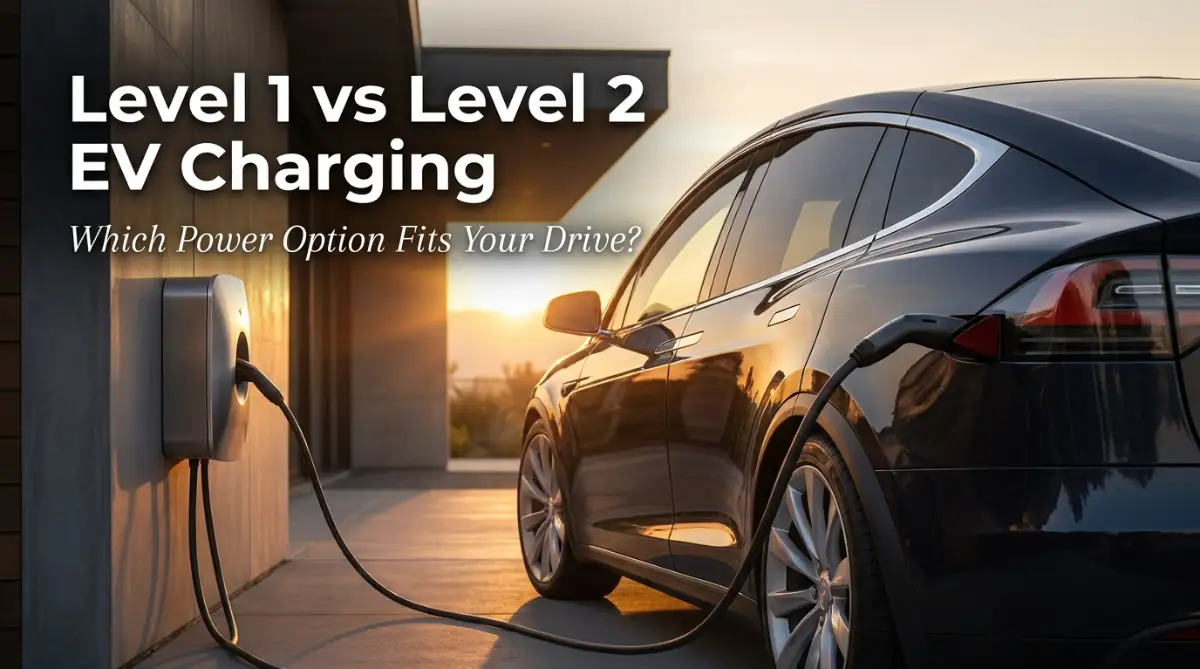
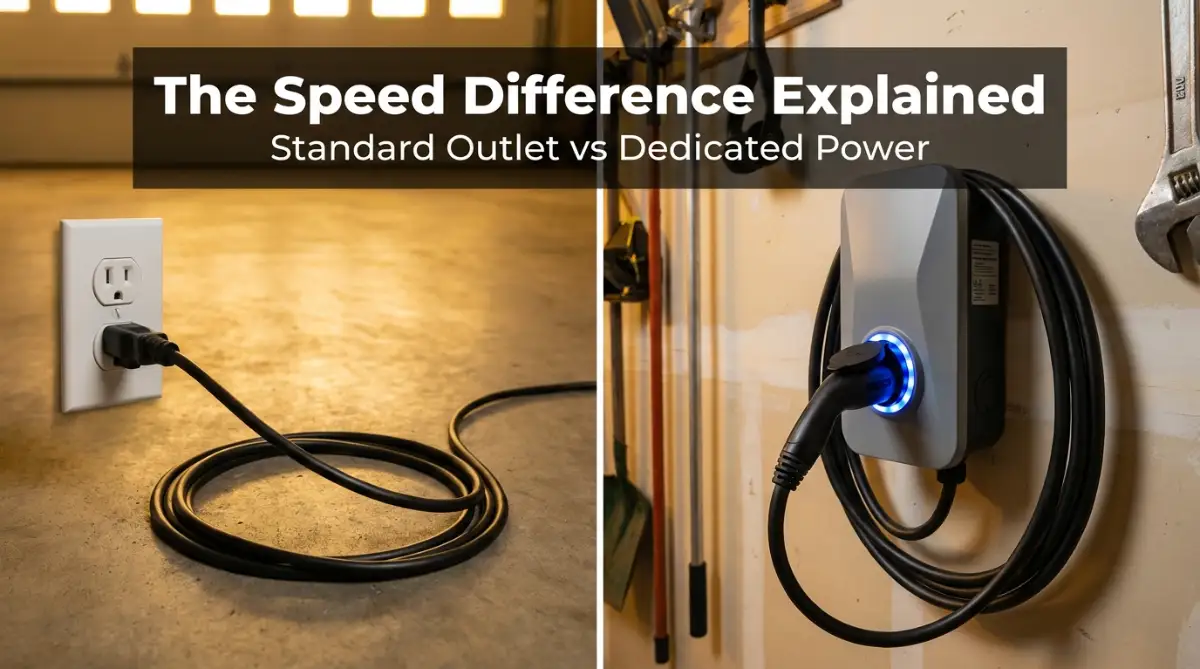
Level 1 charging is exactly what it sounds like—the absolute most basic way to give your car power. Whenever you buy a new electric vehicle, the manufacturer usually throws a simple charging cord into the trunk. This cord has a standard three-prong plug on one end and the vehicle connector on the other.
You take that plug and push it straight into any regular 120-volt household wall outlet. Yes, this is the exact same outlet you use to power your television, your toaster, or your laptop charger. Because it uses a standard plug, it is incredibly convenient and requires zero special installation work.
However, convenience comes with a massive downside when it comes to speed. A standard 120-volt outlet simply cannot push a large amount of electricity at once. It safely delivers a very slow, steady trickle of power to protect your home's basic electrical wiring.
How Fast Does It Actually Charge?
This is where reality hits most new electric vehicle owners hard. Level 1 charging gives you roughly 3 to 5 miles of driving range for every hour the car is plugged in. If you leave your car plugged in for a full 10 hours overnight, you will only gain about 40 to 50 miles of total range.
If your battery is completely empty, it can easily take multiple days to reach a full 100% charge using a regular wall outlet. For someone who drives a lot, this slow trickle is simply never going to keep up with their daily needs. You will constantly be operating on a low battery, hoping you do not have to take an unexpected trip.
Who Should Actually Stick with Level 1?
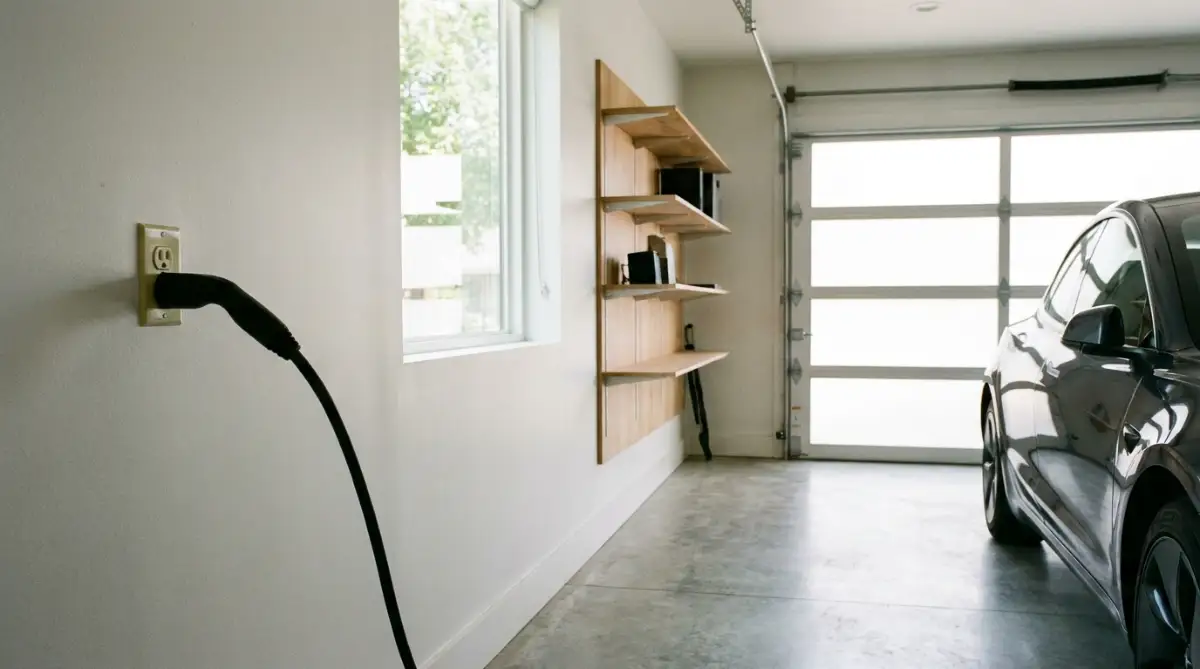
Despite the slow speeds, this basic method is not completely useless for everyone. If you work from home and only drive a few miles a day to grab coffee or drop off kids, this might be all you need. People who drive less than 30 miles a day can easily replenish their daily usage overnight while they sleep.
It is also a great fallback option if you are visiting relatives for the weekend. You can simply run an extension cord from their garage and slowly grab some extra miles while you relax. But for the average commuter with a busy schedule, relying solely on a standard outlet is a recipe for major frustration.
Stepping Up the Power: The Level 2 Advantage
This brings us to the ultimate solution for daily range anxiety. Level 2 charging is an entirely different beast, designed specifically to push a heavy flow of electricity directly into your car. Instead of using a standard 120-volt outlet, this setup requires a 240-volt electrical circuit.
This is the exact same type of heavy-duty power circuit that runs your large home appliances, like an electric oven or a clothes dryer. By doubling the voltage from 120 to 240, you dramatically increase the pressure of the electrical flow. This allows the charging equipment to safely dump a massive amount of energy into your battery in a fraction of the time.
The Speed Upgrade: Getting Your Range Back Overnight
The speed difference is truly night and day. A proper Level 2 setup will easily add 15 to 30 miles of range per hour of charging, depending on the specific equipment you buy. This means a completely empty battery can be recharged to 100% while you get a normal night of sleep.
Imagine pulling into your garage with only a 5% charge left after a massive road trip. You plug the car in, go to bed, and wake up the next morning to a completely full battery and 300 miles of fresh range. This completely eliminates the panic of waking up early to hunt for a public fast charger before work.
Here is a quick piece of personal advice regarding home setups.
I spent months avoiding a home power upgrade because I thought the upfront cost was too high. Looking back, the peace of mind I gained from waking up with a full battery every single day was worth every single penny. Do not let the initial installation fears keep you stuck with a frustrating daily routine.
Are you still feeling a bit confused about how these speeds compare in real life? Check out this helpful video breakdown below.
Watch this incredible visual breakdown that perfectly explains the speed differences between your daily power options!
What Does It Take to Install a Dedicated Home Station?
Unlike the simple plug-and-play nature of the basic cord, stepping up your power requires a bit of home modification. You cannot simply plug a heavy-duty station into a normal living room outlet. You will need to hire a licensed electrician to run a dedicated 240-volt circuit directly from your main electrical panel.
The electrician will typically install a specific heavy-duty outlet in your garage, most commonly known as a NEMA 14-50 receptacle. Once that specific outlet is wired correctly, you can simply mount your new charging box to the wall and plug it in. Some people prefer to have the station hardwired directly into the circuit, which provides a slightly cleaner look without any visible plugs.
Does Your Home Have Enough Power?
One major thing you must check before buying any equipment is your home's total electrical capacity. Older homes often have 100-amp electrical panels, which might not have enough extra room to handle a heavy-duty car charger. If your panel is already full of breakers for air conditioning, hot tubs, and electric stoves, it might be maxed out.
If this happens, your electrician will need to perform a panel upgrade to a 200-amp service. This guarantees your house can handle the extra electrical load without constantly tripping circuit breakers. Upgrading a panel adds to the total installation cost, but it makes your home much safer and more valuable in the long run.
Real-World Cost Reality Check
Direct Comparison: The Daily Commute Test
To really understand which option you need, we have to look at real-world daily driving scenarios. Let us compare two completely different types of drivers to see how their power needs change. The math always tells the true story of what you actually need in your garage.
Scenario A: The Short Commuter
Meet Sarah. She drives exactly 20 miles round trip to her office every single day. When she gets home at 6 PM, she plugs her car into a standard 120-volt wall outlet. Her car sits in the garage for 13 hours until she leaves for work the next morning at 7 AM.
During those 13 hours, her basic cord adds about 45 miles of range back into the battery. Since she only used 20 miles that day, she easily recovers everything she used and then some. For Sarah, sticking with the basic setup makes perfect sense and costs her absolutely nothing extra.
Scenario B: The Long Distance Driver
Now meet David. He has a tough daily commute, driving a total of 80 miles round trip. He also gets home at 6 PM and leaves at 7 AM, giving him the same 13-hour window to power up. If David uses a standard basic outlet, he will only gain back about 45 miles of range overnight.
He used 80 miles but only got 45 back, putting him in a 35-mile deficit for the day. By Wednesday, his battery will be dangerously low, and he will be forced to waste an hour at a public station just to make it home. David absolutely needs the upgraded 240-volt setup to replenish his entire 80-mile usage in just a few hours.
Breaking Down the Hardware: What Should You Buy?
If you decide to upgrade your garage, you will notice there are dozens of different boxes and cables available online. Choosing the right one can feel a bit overwhelming at first glance. Generally, these stations fall into two main categories: portable units and fixed wall-mounted units.
Portable High-Power Cords
A portable unit looks very similar to the basic cord that came with your car, but it has a much thicker cable and a larger plug. These are designed to plug directly into that heavy-duty NEMA 14-50 garage outlet we talked about earlier. The biggest benefit here is that you can easily unplug it, throw it in your trunk, and take it with you on a camping trip.
Hardwired Smart Stations
On the other hand, hardwired stations are permanently bolted to your garage wall and wired directly into the electrical box. These units cannot be moved easily, but they are incredibly durable and often waterproof for outdoor installation. They also provide slightly faster speeds because a direct wired connection can safely handle a higher flow of electricity without overheating a plug.
Portable vs. Hardwired: Which One Fits Your Garage?
Many of these permanent stations come packed with incredible smart features connected through Wi-Fi. You can download an app on your phone to track exactly how much electricity your car is pulling each month. You can even set up charging schedules, telling the box to only push power after midnight when local electricity rates are cheaper.
Myth vs Reality: Clearing Up EV Charging Confusion
There is a lot of bad information floating around the internet regarding how we power our electric cars. Many new owners are terrified of making a mistake that might ruin their expensive vehicle. Let us clear up a few of the most common myths directly right now.
Myth 1: Using a faster home charger will ruin the battery life quickly.
This is simply not true. Home setups, even the powerful 240-volt ones, push AC power that is easily managed by the car's internal computer. It is the extreme public DC fast stations that can cause heat stress if used every single day, not your garage unit.
Myth 2: You always have to hire an electrician for the basic setup.
If you are only using the standard 120-volt cord, you absolutely do not need an electrician. As long as you plug it into a normal, functioning wall outlet that is not sharing a circuit with a heavy appliance, you are perfectly safe. It is only the 240-volt upgrade that requires professional electrical work.
Myth 3: Leaving it plugged in overnight will overcharge and damage the car.
Modern electric vehicles are essentially giant rolling computers with incredibly smart battery management systems. Once the battery reaches the limit you set on your dashboard, the car physically stops pulling electricity from the wall. You can confidently leave it plugged in for weeks at a time without causing any damage whatsoever.
Weather Impact on Your Garage Power
One critical factor people often forget is how the weather changes their daily power needs. When the temperature drops below freezing during the winter, electric car batteries naturally lose efficiency. Your car uses a significant amount of battery energy just to keep the cabin warm and heat the internal battery pack.
This means you will use way more electricity to drive the same 40-mile commute in January than you would in July. If you are surviving purely on a slow standard outlet, winter weather can completely ruin your routine. The slow trickle might not even be enough to warm up the battery properly, let alone add any meaningful driving range.
Having a powerful 240-volt setup ensures you can blast the car heater while still pushing plenty of extra energy into the battery. It is the ultimate cold-weather defense for any electric vehicle owner. You will step into a warm, fully charged car every single morning, regardless of the freezing snow outside.
How Electricity Costs Change Based on Your Setup
Many people ask if upgrading to a faster station will make their monthly electric bill explode. The truth is, the total amount of electricity you pay for is based on how much energy the battery actually holds. Whether you fill an empty pool with a slow garden hose or a fast fire hose, the total amount of water used remains exactly the same.
However, a smart home station can actually save you money on your monthly utility bill. Many electric companies offer special discounts called "Time of Use" plans. They will charge you significantly less money for electricity if you use it during the middle of the night when demand is low.
With a smart 240-volt station, you can plug your car in at 6 PM, but program the app to delay the power flow until 1 AM. A slow standard cord cannot do this efficiently because it needs the entire evening just to grab a few miles. By charging faster during cheaper hours, the upgraded equipment eventually pays for itself through massive utility bill savings.
Mastering Your Home Setup: Next-Level Power Strategies
Once you understand the basic differences in charging speeds, you can start optimizing your daily routine for maximum efficiency. Upgrading your garage is a great first step, but how you actually manage that power flow makes all the difference. Many new drivers simply plug their cars in and walk away, completely ignoring the incredible smart features right at their fingertips.
If you want to save serious money on your monthly electric bill, you need to learn about utility rate schedules. Most local power companies use something called "Time-of-Use" billing, which means electricity costs wildly different amounts depending on the time of day. Pulling energy from the grid at 5 PM when everyone is cooking dinner is often the most expensive time to power your vehicle.
This is exactly where a smart 240-volt home station becomes your best financial friend. You can plug your car in right when you get home from work, but program the companion app to delay the actual energy transfer until 1 AM. According to the U.S. Department of Energy's Alternative Fuels Data Center, utilizing these deep off-peak hours can slash your monthly vehicle fueling costs by more than half.
The Wi-Fi Connectivity Advantage
Modern high-power boxes do much more than just deliver electricity; they are essentially smart appliances for your garage. When you connect your home station to your local Wi-Fi network, you gain incredible insights into your daily driving habits. You can open an app on your phone and see exactly how many kilowatt-hours of energy your car absorbed that week.
This data is incredibly helpful when you are calculating the total cost of ownership for an electric vehicle. Instead of guessing how much your commute is costing you, you will have exact, down-to-the-penny data right on your screen. You can even export these monthly reports if you need to expense your travel costs for work.
Many independent consumer research groups, including Consumer Reports' testing on EV chargers, highly recommend buying a unit with built-in Wi-Fi for these exact diagnostic tools. If your utility company offers special EV-only discount rates, they often require a smart charger to track the specific vehicle usage separately from your home.
Pre-Conditioning: The Ultimate Comfort Hack
Here is a brilliant secret that veteran electric vehicle owners use every single morning. When your car is securely plugged into a powerful 240-volt outlet, you can use the grid's electricity to warm up the cabin before you ever step outside. This process is known as pre-conditioning, and it completely changes the way you experience winter driving.
If you set your departure time for 7 AM in your phone app, the car will automatically turn on the heater and warm the battery pack at 6:45 AM. Because it is connected to a fast home station, it uses power directly from the wall instead of draining your stored battery range. You get to step into a perfectly warm, defrosted car that is still sitting at a beautiful 100% charge.

This small habit is actually a massive defense against range anxiety during the freezing months. If you are struggling to figure out why your electric car actually loses power in the winter, pre-conditioning your battery is the easiest way to fight back. A standard 120-volt cord simply does not have enough power to heat the car and charge the battery at the same time.
The Hidden Dangers: Costly Power Mistakes You Must Avoid
Transitioning to electric driving requires a slight learning curve, and unfortunately, some lessons are learned the hard way. I have seen countless new owners make completely avoidable mistakes just because they were trying to cut corners on their home setup. These errors do not just cause daily frustration; they can actually pose serious safety risks to your family and your property.
The Extension Cord Nightmare
This is easily the most common and dangerous mistake I see new drivers make when using the basic Level 1 cord. They park their car in the driveway, realize the standard cable cannot reach the wall outlet, and grab a cheap orange extension cord from the shed. Do not ever do this under any circumstances.
Standard household extension cords are simply not built to handle the continuous, heavy electrical draw required to fill a car battery. Pulling maximum power through a thin extension wire for 12 hours straight will cause the cord to severely overheat, melt, and potentially start a major fire. The Electrical Safety Foundation specifically warns against using temporary household extension cords for high-draw continuous EV loads.
If you absolutely must use an extension cable in an emergency, you have to purchase a specialized, heavy-duty 10-gauge EV cord. However, the best permanent solution is simply learning how to properly prepare your garage for an electric car so your dedicated station easily reaches your parking spot. A proper wall-mounted unit comes with a long, heavily insulated 25-foot cable designed specifically for this exact job.
Ignoring Your Daily Mileage Reality
Many people try to tough it out with the basic, slow plug simply because they are afraid of the initial electrician costs. They convince themselves that trickling 40 miles of range overnight will somehow be enough to cover their 60-mile daily commute. This creates a terrible cycle where the car has less and less power every single morning.
By Friday, their battery is practically empty, and they are forced to spend their weekend sitting at a public fast charger just to prepare for Monday. This completely defeats the convenience of owning an electric vehicle in the first place. Plus, constantly relying on expensive commercial stations means you are avoiding costly electric car charging mistakes in public the hard way.
Public fast stations charge a premium rate for electricity, often costing three to four times more than your home utility rate. Whatever money you saved by avoiding an electrician, you will quickly lose by paying premium commercial power rates every weekend. Upgrading your home equipment is an upfront investment that pays for itself through daily convenience and cheaper electricity.
Forgetting About the 80% Rule
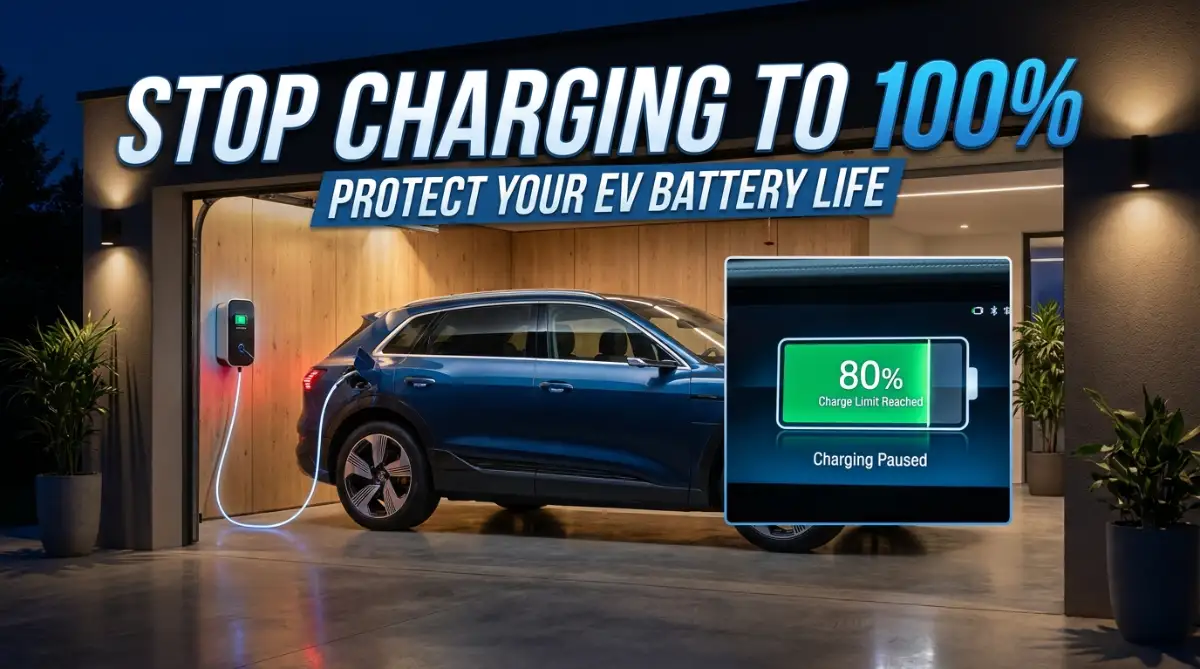
When you finally get that amazing upgraded station installed, it is incredibly tempting to fill the battery up to 100% every single night. Seeing that full range number on the dashboard feels great, but it is actually terrible for your vehicle's long-term health. Most manufacturers highly recommend capping your daily fill-up at around 80% to protect the battery chemistry.
Pushing electricity into a nearly full battery creates a lot of excess heat, which slowly degrades the internal cells over a period of years. Unless you are heading out on a massive cross-country road trip the next morning, 80% is plenty of range for normal daily driving. By setting this limit in your smart app, you are actively understanding the science behind EV battery health and range loss to protect your investment.
Do not worry about missing out on those last few miles of capacity for your morning commute. Once you hit the road, you can easily maximize your remaining power by learning how regenerative braking easily saves your battery during normal city traffic. Smart daily habits combined with a smart garage setup will keep your car running perfectly for over a decade.
My Quick Pro Tip: Set your EV's mobile app to stop charging at 80% for your Monday-to-Friday routine. But if you're planning a massive family road trip on Saturday morning, go ahead and slide that limit up to 100% on Friday night. A rare 100% fill-up right before you drive won't hurt your battery at all!
Your Roadmap to Daily Driving Freedom
Choosing the right way to power your vehicle at home completely dictates how much you will actually enjoy driving an electric car. If you barely drive and work from home, the basic plug that came with your vehicle might be all the power you ever need. It costs absolutely nothing to set up, and it safely trickles enough energy to cover quick grocery runs and local errands.
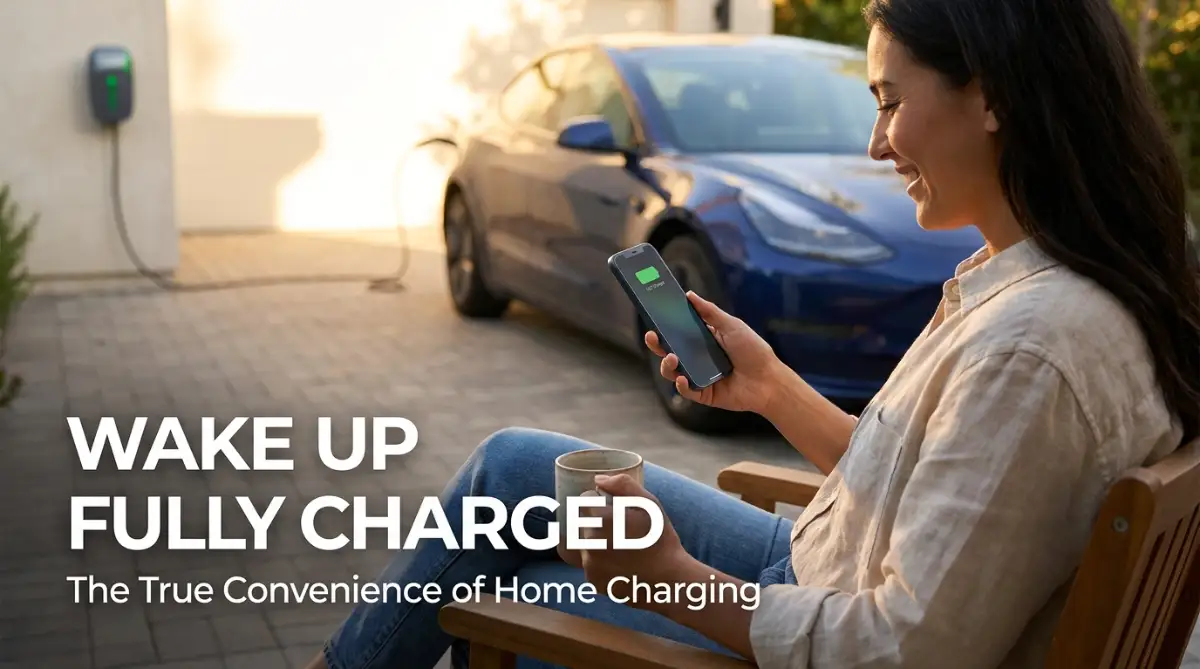
However, if you commute to an office every day or regularly run kids around town, you desperately need the speed of an upgraded 240-volt system. The ability to completely refill an empty battery overnight is the magic key that completely eliminates range anxiety from your life. You will never again have to wake up early in the freezing cold just to hunt down a working public station before your morning meeting.
Upgrading your home electrical system is not just about making your morning commute slightly easier; it is a genuine property investment. According to a housing market and EV report by Realtor.com, having a dedicated 240-volt EV station actively increases the resale value of modern homes. Buyers are actively looking for garages that are already pre-wired and ready for the future of transportation.
I know the initial thought of hiring an electrician and buying heavy-duty equipment feels a bit overwhelming at first. I dragged my feet for months, constantly stressing over my low battery simply because I wanted to avoid the installation process. Looking back now, making that upgrade was the single best decision I ever made for my daily peace of mind. Take control of your garage today, and start waking up to a full "tank" every single morning!
Quick Answers to Your Biggest Power Questions
Can I use both standard and upgraded plugs on the exact same car?
Yes, absolutely! The charging port on your electric vehicle is universal and safely accepts both the slow basic cord and the fast upgraded cables. Your car's internal computer automatically detects the incoming voltage and adjusts the power flow instantly.
Will upgrading my home electrical panel cost an absolute fortune?
Panel upgrades vary wildly depending on your location, usually ranging from $1,500 to $3,000 for the total job. However, many local utility companies and tax programs offer massive cash rebates to help cover this exact cost. Always check your local power company's website for EV hardware incentives before paying full price.
Does rain affect my outside charging box if I don't have a garage?
Not at all, as long as you buy a unit designed for outdoor use. Most high-quality permanent stations have a NEMA 4 waterproof rating, meaning they are built to withstand heavy rain, freezing snow, and brutal heat. Just make sure your electrician installs a properly sealed, weather-tight electrical box.
Should I leave the car plugged in when I go on vacation for two weeks?
Yes, you should definitely leave it connected while you travel. Modern battery management systems are incredibly smart and will never overcharge the vehicle. The car will occasionally pull tiny bits of power from the wall to keep the battery perfectly conditioned while you are away.
Do I really need to buy the most expensive smart charger on the market?
No, you do not need the most expensive option to get a fast, reliable fill-up. A basic "dumb" 240-volt station charges your car exactly as fast as a highly expensive Wi-Fi model. You only need the expensive smart features if your specific utility company requires them for special discount billing rates.
Disclaimer: This article is for informational and educational purposes only and does not constitute professional electrical or automotive advice. Always consult with a licensed, certified electrician before modifying your home’s electrical system or installing high-voltage equipment. The author and publisher are not responsible for any damage, injury, or loss resulting from the application of the information provided in this guide. Always follow your specific vehicle manufacturer’s guidelines.