My Expensive Mistake with My First Electric Vehicle
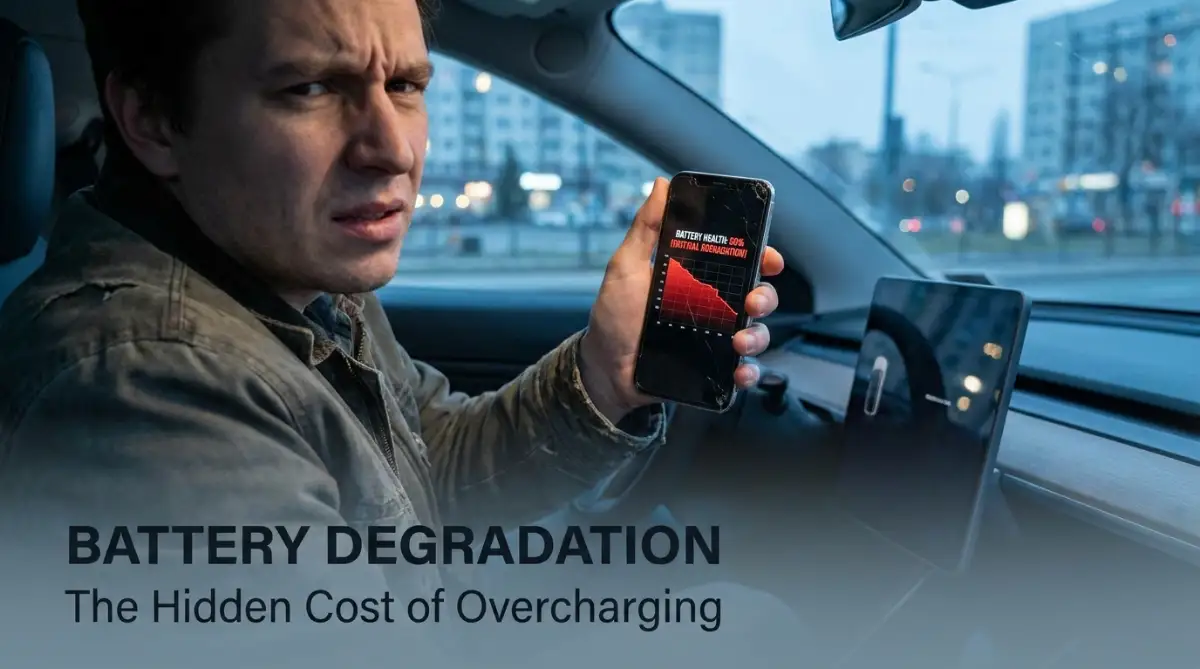
We all treat our cars like giant smartphones, assuming a 100% full battery is the absolute best way to start the morning. For my first few months of ownership, I forced my car to hit that maximum number every single night, thinking I was just being a prepared driver. But then, my estimated driving range started dropping fast. It turns out, treating your expensive vehicle like a cheap cell phone quietly damages the battery cells from the inside out. If you want to stop losing your driving range and avoid a massive repair bill down the road, you just need to change one simple setting today. Let me show you how it actually works.
Quick Summary & Action Plan: The 80% Rule for EVs
- The Core Issue: Charging to 100% daily stresses lithium-ion cells, causing permanent driving range loss.
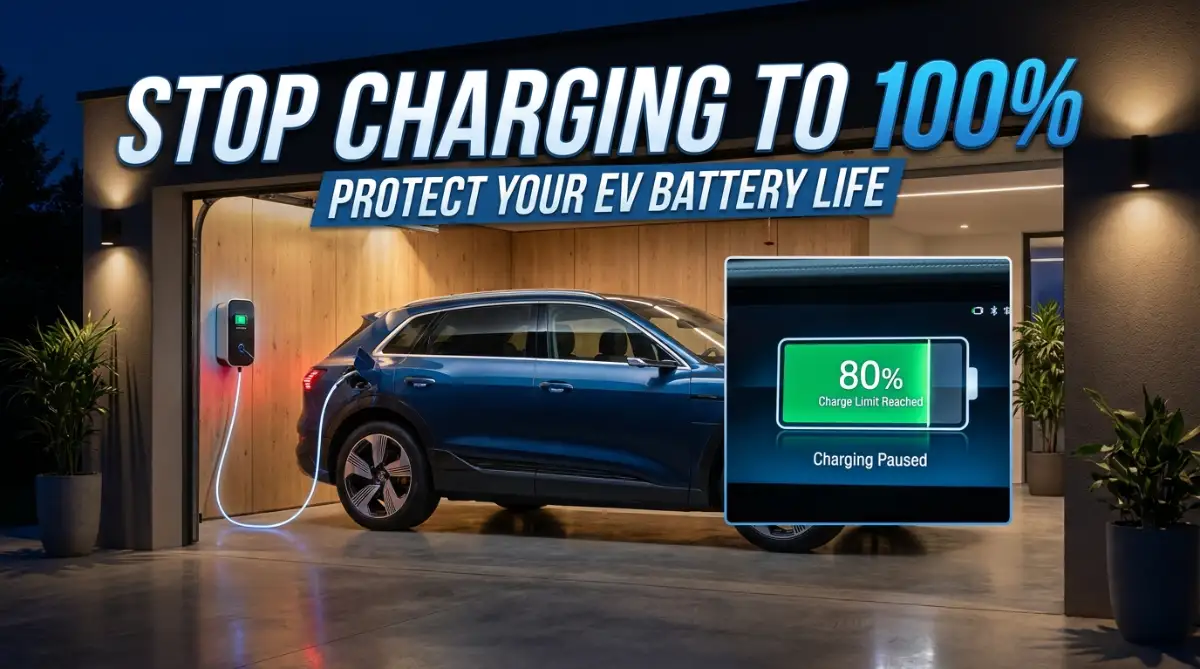
- The Daily Fix (Stop at 80%): Limit your home charging to 80% and treat it as your new "full tank" for everyday commutes.
- Smart Scheduling: Tell your car to finish charging just before you leave for work so the battery does not sit under pressure all night.
- When to Max Out: It is perfectly safe to charge to 100% only right before a long road trip.
- Heat is the Enemy: Avoid frequent use of public DC fast chargers, as the extreme heat accelerates battery capacity loss.
The Hidden Science of Battery Stress
Your electric car does not use a simple gas tank that happily accepts fuel until it reaches the brim. It uses a complex pack of lithium-ion cells to store energy. Think of these cells like a tightly packed suitcase. Getting the first few items into the suitcase is effortless.
However, forcing that very last pair of shoes into a completely full bag puts massive stress on the zippers. The same thing happens inside your vehicle's energy storage system. Pushing those final electrons into the pack requires a lot of extra force. This extra force creates high voltage pressure across the individual cells.
This pressure physically wears down the internal materials much faster than normal driving does. When you do this every single day, the damage slowly adds up. You might not notice it in the first few weeks, but the internal chemistry is definitely changing. The materials that hold the charge begin to break down permanently.
Here is a quick look at how your daily limit actually impacts the hardware over a full year of driving:
Watch this detailed breakdown to see exactly what happens inside your battery cells when they reach maximum capacity.
How Heat Quietly Destroys Your Range
One of the biggest enemies of any electronic device is extreme heat. When you push a charge past the eighty percent mark, the internal resistance skyrockets. This heavy resistance naturally generates excess heat inside the pack.
The cooling systems in your car have to work overtime to keep things safe. Even with the best liquid cooling, the cells still experience a slight temperature spike. This frequent heating and cooling cycle degrades the chemical components over time. Your car will start to lose its ability to hold the same amount of power.
Pro Tip: I completely changed my charging routine after learning this the hard way. Now, I set my home charger limit to 80 percent, and my daily range anxiety has completely disappeared. I only override this setting if I have a long cross-country trip planned for the next morning.
The Problem with Sitting Fully Charged
Driving immediately after hitting a full charge is bad enough. But letting your vehicle sit in the garage with a perfectly full battery is actually much worse. The cells remain in a high-stress state while the car just sits there doing nothing.
Imagine stretching a rubber band to its absolute limit and leaving it on a table for days. Eventually, that rubber band loses its natural elasticity and becomes weak. Your lithium-ion cells react the exact same way when left at maximum capacity. They lose their ability to bounce back, which directly reduces your driving range.
This is why many owners who work from home notice rapid range loss. They leave their cars plugged in at maximum capacity all weekend. The energy simply sits there, stressing the internal components hour after hour.
Breaking the Smartphone Habit
We all have a deep psychological need to see our devices hit that one hundred percent mark. We plug our phones in before bed and leave them connected all night long. Because we upgrade our phones every two years, we rarely notice the long-term battery damage.
But a car is an entirely different financial investment. You expect your vehicle to last for many years without needing a major replacement. Treating your car like a disposable smartphone is a recipe for financial disaster.
You have to retrain your brain to accept that an eighty percent charge is actually perfect. It provides more than enough range for almost any normal daily commute. Learning to let go of that perfectly full battery meter is half the battle.
Creating a Safe Daily Routine
So, how do we fix this everyday problem without losing our peace of mind? The solution is incredibly simple once you understand the basic rules of energy management. You just need to create a habit that protects the cells while giving you enough driving freedom.
You will likely find that you only use a small fraction of your total range going to work and the grocery store. This realization alone makes it much easier to lower your daily limit. You simply do not need all that extra power for a basic city commute.
Using Smart Charging Features
Almost every modern electric car has a built-in management system to help you. You can easily go into your dashboard settings or smartphone app to set a strict charging limit. Tell the car to automatically stop pulling power when it hits eighty percent.
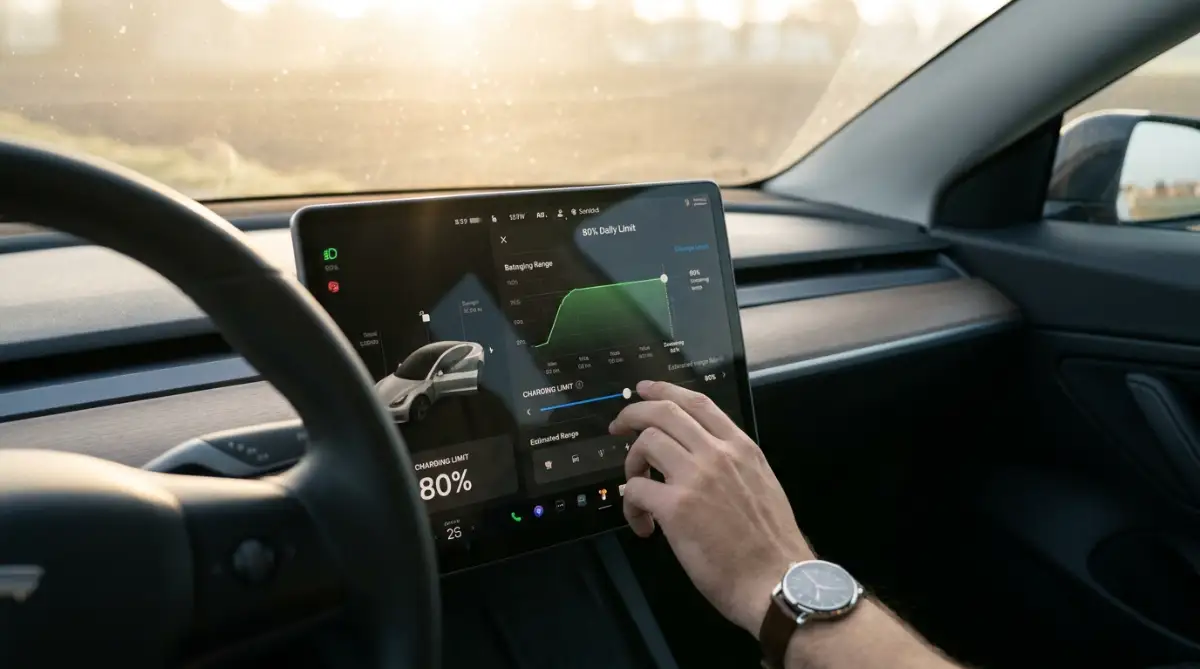
This is a set-it-and-forget-it feature that saves you thousands of dollars in the long run. Once you set this limit, you can safely plug your car in every single night. The computer will handle the rest, ensuring the cells never experience high-voltage stress.
Some older models might not have a slider to set an exact percentage. In that case, you can use the charging timer feature instead. Figure out how many hours it takes to get enough power, and have the charger shut off automatically.
When Is It Actually Safe to Max Out?
Now, you might be wondering if you can ever use the full capacity of your vehicle. The answer is absolutely yes, but only when you truly need it. Electric cars are meant to be driven on long road trips and exciting vacations.
If you are planning to drive hundreds of miles tomorrow, go ahead and max it out tonight. The key is to schedule the charging session so it finishes right before you leave. This way, the car does not sit in a high-stress state for very long.
As soon as you start driving, you burn off that top layer of energy and relieve the pressure. Occasional full charges will not destroy your system overnight. It is the repetitive, daily habit of maxing out that causes the permanent damage.
The Ideal Charging Bracket
Experts often talk about the ideal operating bracket for lithium-ion technology. The sweet spot for maximum longevity is keeping the power level between twenty and eighty percent. Staying within this comfortable middle zone is the best thing you can do for your vehicle.
Think of it like exercising your body. A light daily jog keeps you healthy and fit. But running a marathon every single day will eventually break down your joints. Keeping the power in the middle zone is like giving your car a light, healthy jog.
Whenever the battery drops near twenty percent, simply plug it in. When it hits the upper limit you set, let it stop. This comfortable cycle drastically slows down the natural degradation process.
Myth vs Reality: Common Misconceptions Explained
There is a lot of confusing information floating around on internet forums and social media. New owners often get bad advice from people who do not understand modern energy storage. Let us clear up some of the most common myths right now.
Myth: You need to completely drain the battery to zero before charging to prevent "memory effect."
Reality: Modern lithium-ion cells do not have a memory effect like old nickel-based batteries did. Draining them to absolute zero actually causes severe damage and should be avoided at all costs.
Myth: Fast charging your car every day is perfectly fine if you do not hit the maximum limit.
Reality: Frequent use of high-speed public chargers generates massive heat. Combined with daily full charges, this heat will rapidly speed up the degradation process. Keep fast chargers for road trips only.
Myth: The manufacturer would not let me charge to the maximum if it was actually bad.
Reality: Manufacturers give you full access because sometimes you truly need the maximum range. They provide the tool, but they expect you to read the manual and use it responsibly for daily driving.
Comparing Your Charging Options
To make things even clearer, let us look at a simple comparison of daily habits. Understanding the difference between these two approaches will instantly change how you plug your car in tonight.
As you can see, the benefits of stopping early heavily outweigh the temporary comfort of a full meter. You are actively extending the life of your vehicle by making one small adjustment in your app.
How Regenerative Braking Changes the Game
There is another interesting reason to leave some empty space in your battery pack. Electric vehicles use regenerative braking to capture energy when you slow down. The motor acts as a generator, taking the forward momentum and turning it back into electricity.
This captured energy needs an empty place to go inside the storage system. If your battery is already stuffed to the absolute limit, regenerative braking cannot work properly. The car has to rely on the traditional physical brakes to stop instead.
By starting your morning with an eighty percent charge, you leave plenty of room for free energy. Every time you stop at a red light, you are actively putting free miles back into the car. You get better braking performance and save heavy wear on your brake pads.
My Personal Observation: The first time I drove down a steep hill with an 80% charge, I was amazed at how much energy the car pulled back into the battery. If I had started that trip at 100%, the car would have ignored all that free electricity because it simply had nowhere to store it!
Understanding Depth of Discharge
Engineers use a term called Depth of Discharge to measure battery health. This simply refers to how much energy you take out before putting it back in. Smaller, more frequent charging sessions are actually much better than massive, deep cycles.
Using twenty percent of your range and then plugging it back in is very gentle on the system. Driving it all the way down and then forcing it all the way up creates deep, stressful cycles. You want to avoid those massive swings whenever you are driving around your local area.
Treat your home charging station like a convenient top-up tool rather than a gas pump. You do not need to wait until the tank is totally empty to plug it in. Frequent, shallow charging keeps the internal chemistry perfectly balanced and happy.
The Financial Reality of Battery Replacement
We need to talk directly about the money aspect of this daily habit. The battery pack is easily the most expensive single component in your entire vehicle. Replacing one outside of the standard warranty period can cost you many thousands of dollars.
When you lose ten or fifteen percent of your original range due to bad habits, you lose real resale value. A used electric vehicle is priced almost entirely on the health of its internal cells. A well-maintained pack means you can sell the car for a premium price later.
Protecting this component is literally protecting your bank account. The few extra miles you get from a daily full charge are absolutely not worth the financial risk. Smart owners know that preserving the hardware is the ultimate secret to cheap electric driving.
Next-Level Strategies for Maximum Battery Health
Understanding the basic rules of charging is just the beginning of your electric journey. To truly protect your investment, you need to understand how your vehicle's brain actually works. The computer inside your car is constantly making tiny adjustments to keep everything safe. By working with this system instead of against it, you can easily double the healthy lifespan of your pack.
The software managing your power is called a Battery Management System. This smart computer acts like a traffic cop, directing energy to the cells that need it most. When you constantly push this system to its absolute limits, the computer struggles to keep the temperature balanced. Giving the software some breathing room allows it to organize the stored energy perfectly.
If you are thinking about installing your home wallbox charger this weekend, set your limits up from day one. You can use your smartphone app to completely automate this entire process. Most apps allow you to set specific location-based rules for your daily routine. This means your car will automatically know to stop at eighty percent when it senses it is parked in your garage.
The Secret Power of Departure Scheduling
One of the best hidden features in almost every modern electric car is departure scheduling. Most owners just plug their car in when they get home from work and let it charge immediately. This means the car finishes pulling power by midnight and sits there full until morning. As we discussed earlier, letting the cells sit under pressure for hours causes unnecessary wear.
Instead, you should tell your car exactly what time you plan to leave for work the next day. The computer will calculate how long it takes to reach your target percentage. It will purposely delay the start of the session so it finishes right as you walk out the front door. This smart timing means the energy pack spends almost zero time sitting under pressure.
This schedule also allows the vehicle to pre-condition the battery temperature while it is still connected to the wall. Warming up cold cells using house electricity saves you a massive amount of driving range. You get to start your morning commute with a perfectly warmed vehicle and a happy, stress-free battery pack.
The Truth About Occasional Cell Balancing
I often get questions from friends who are completely terrified of ever hitting a full charge. They treat the eighty percent rule like an unbreakable law of physics. But the reality is that your power system actually needs a full charge every once in a while. This specific process is called cell balancing, and it is a completely normal part of ownership.
Think of the hundreds of little cells inside your car like a massive choir singing together. Over several months of short daily trips, some of those singers get slightly out of tune with the rest. The only way the main computer can tune everyone back up is by pushing the entire pack to the top. By filling it completely, the system can level out all the individual cells to the exact same voltage.
If you completely avoid a full charge for an entire year, your dashboard range estimator will actually become inaccurate. The computer loses its ability to calculate the true top end of your capacity. Doing this balancing act once every two or three months keeps everything running perfectly smoothly.
Decoding Your Real Energy Needs
Many new owners stress over percentages because they do not understand how the energy is actually measured. It helps immensely when making sense of kilowatt-hours and range for your specific lifestyle. A massive truck needs a lot more energy to move than a small daily commuter car. When you understand your actual efficiency, letting go of that full meter becomes much easier.
Try checking your vehicle's energy consumption screen after a normal day of running errands. You will quickly realize how little power you actually drain from the massive pack underneath you. Most people discover they can comfortably go three or four days without plugging into the wall at all.
You do not have to hook up the cable every single time you pull into your driveway. Treating your car like a regular appliance completely removes the daily stress of ownership. Just plug it in when it drops below fifty percent, and let it stop at your pre-set limit automatically.
Why Slower is Almost Always Better
We live in a society that wants everything done immediately, and vehicle charging is no exception. People often upgrade their home stations to the highest possible amperage to get the fastest speeds. But rushing this chemical process generates unnecessary heat inside your garage.
Your daily commute does not require a massive blast of rapid energy to recover. A moderate, steady flow of electricity overnight is much healthier for the internal chemistry. It allows the cooling system to relax while the cells absorb the energy naturally.
If your home station has an adjustable output setting, try lowering it slightly for your overnight sessions. You are sleeping anyway, so there is absolutely no rush to fill the pack in two hours. A gentle, slow charge is the best favor you can do for your vehicle's long-term health.
Everyday Traps That Slowly Destroy Your Range
Even with the best intentions, it is very easy to fall into bad habits that damage your vehicle. I made many of these mistakes myself simply because I did not understand the underlying chemistry. Let us walk through the most common pitfalls so you can protect your range and your wallet.
The most common trap is letting range anxiety completely control your daily actions. People get so nervous about being stranded that they completely ignore the manufacturer's clear guidelines. They plug in at the grocery store, at work, and at home just to keep the meter completely full. This constant micro-topping creates a highly stressful environment for the internal components.
When you refuse to let the energy levels naturally drop, you are basically suffocating the system. You have to trust that the estimated range on your dashboard is highly accurate. Stop chasing a perfectly full meter and let the vehicle use its energy the way it was designed to.
The Summer Heatwave Disaster
Combining extreme weather with bad charging habits is a recipe for complete disaster. Imagine eating a massive holiday dinner and then immediately trying to run a marathon in the desert. That is exactly what happens when you push a full charge during a scorching summer afternoon.
When you leave a fully loaded battery sitting in a hot asphalt parking lot, the internal temperatures skyrocket. The chemical reactions inside the cells become highly unstable under these intense conditions. If you want to extend your EV range in summer, you must lower your daily limit during heatwaves.
I strongly recommend dropping your target from eighty down to seventy percent during the hottest weeks of the year. This gives the chemical structure extra buffer room to handle the intense environmental heat. Park in the shade whenever possible, and let your car's cooling system do its job without the extra stress of a full pack.
The DC Fast Charging Pitfall
Public rapid stations are absolute lifesavers when you are traveling across the country. They pump massive amounts of direct current into your car, allowing you to get back on the highway quickly. However, relying on these stations for your daily energy needs will heavily degrade your capacity.
Understanding DC fast charging is completely different from using your quiet home wall plug. These rapid stations create intense thermal events inside the battery casing. The research on lithium-ion degradation shows that daily rapid sessions strip away the active materials inside the cells much faster.
The biggest mistake people make is sitting at a public station trying to reach one hundred percent. The charging speed intentionally drops to a crawl after you hit the eighty percent mark to protect the battery. Sitting there for an extra hour just to get those last few miles creates massive heat and blocks other drivers from using the station.
Real-Life Reality Check: Did you know that charging from 80% to 100% at a public fast charger often takes just as long as charging from 10% to 80%? The car's computer purposely slows down the power flow at the top end to stop the battery from overheating and catching fire. You are literally paying by the minute just to wait for those last few miles.
The Long Vacation Mistake
Leaving your car sitting unused requires a completely different strategy than your normal daily routine. Many owners mistakenly plug their car in and set the limit to maximum before leaving for a two-week vacation. They assume they will want a completely full "tank" waiting for them when they return from the airport.
Leaving lithium-ion cells sitting fully loaded for weeks is terrible for their long-term stability. Think of it like inflating a party balloon to its absolute breaking point and leaving it in a hot room. Eventually, the rubber stretches out completely and loses its natural bounce.
If you are leaving the car parked for a long time, adjust the limit down to fifty or sixty percent. This is the absolute most stable state for the chemical structure to rest in. It puts zero pressure on the internal components and prevents any long-term capacity loss while you are away.
Ignoring Software and App Updates
Your car is essentially a giant computer on wheels, and it needs regular maintenance just like your laptop. Manufacturers are constantly gathering data and improving how the power systems manage energy. They push these improvements directly to your vehicle through wireless software updates.
Many drivers ignore these update notifications because they do not want to wait for the installation process. By ignoring them, you are missing out on improved thermal management and better efficiency algorithms. These updates often tweak the charging curves to better protect the cells based on real-world fleet data.
Always connect your vehicle to your home Wi-Fi and allow it to update overnight. You should also keep your manufacturer's smartphone app updated to ensure you have the latest scheduling features. The better the software runs, the longer your physical hardware will last.
The Road Trip Paranoia
We all get a little nervous when taking an electric vehicle out of our familiar home city. Planning an EV road trip makes people abandon all their good daily habits instantly. They try to hit every single public station along the highway to keep the meter full.
You do not need to arrive at your hotel with a completely full battery. In fact, most public rapid chargers work much faster when your vehicle arrives nearly empty. The software pulls power aggressively when the pack is low, saving you hours of waiting time.
Trust the navigation system built into your dashboard. If it says you can reach the next station with ten percent remaining, you can safely trust that math. Embrace the freedom of arriving with a low battery; it just means your next charging session will be incredibly fast.
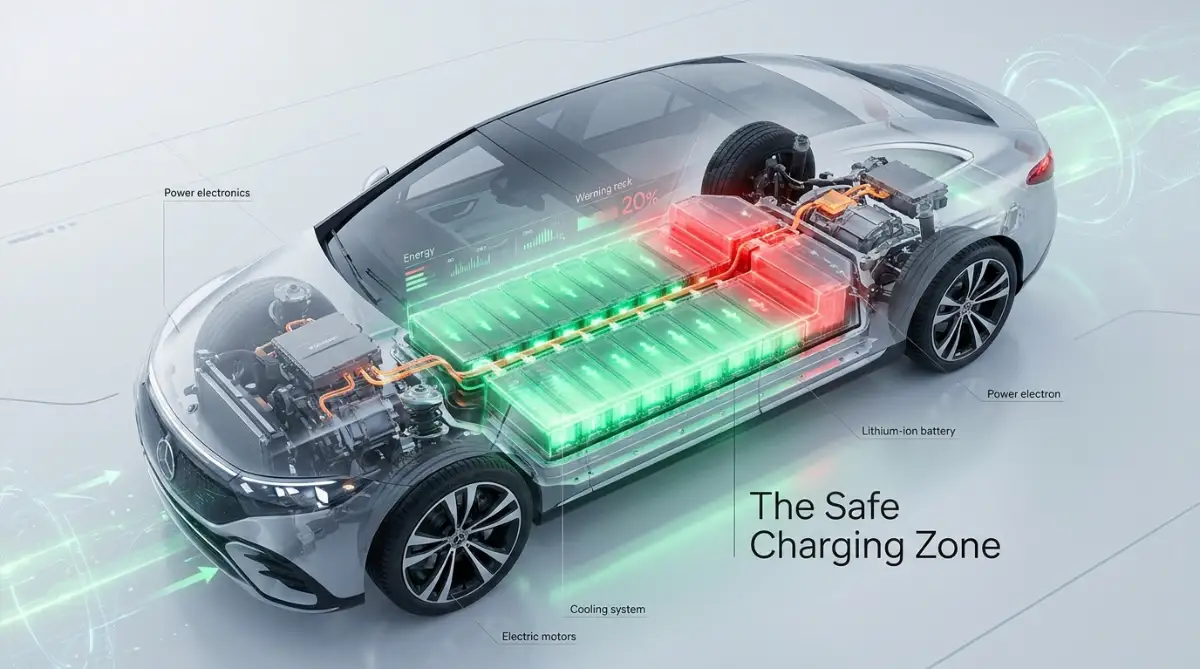
Your Simple Action Plan for Tomorrow Morning
Changing how you fuel your daily commute does not require any complicated engineering knowledge. It is all about shifting your mindset and trusting the smart technology you already paid for. You are in complete control of how long your vehicle will comfortably serve your family.
Take five minutes right now to open your smartphone app or sit in the driver's seat. Find the battery management settings and permanently move that slider down to a safe eighty percent. Set up your departure schedule so the car automatically warms up right before you leave the house.
These tiny adjustments take almost zero effort but provide massive financial rewards down the road. You will experience significantly less range loss over the years, keeping your car feeling brand new. Your resale value will stay high, and your daily driving anxiety will completely disappear.
I used to obsess over every single mile dropping off my dashboard screen, letting worry ruin my daily drive. Once I finally accepted the eighty percent rule, I stopped thinking about the battery entirely and just started enjoying the smooth ride. Make this small change to your settings tonight, and you will instantly reclaim the pure joy and peace of mind that electric driving was always meant to give you.
Clear Answers to Your Biggest Battery Concerns
Is it actually bad to plug my electric car in every single night?
No, plugging your vehicle in every night is perfectly fine as long as you have a safe maximum limit set. The problem is not how often you plug the cable in, but how full you force the battery to become. Frequent, small top-ups are actually much healthier than letting it drop to zero and doing massive recharges.
Should I set my daily target limit to 80 percent or 90 percent?
For the best possible long-term health, eighty percent is the universally recommended daily target. However, if your daily commute is unusually long, setting it to ninety percent is still much safer than maxing it out completely. Just evaluate your actual daily mileage and use the lowest comfortable number for your specific routine.
Does using a public fast charger constantly ruin my battery capacity?
Relying entirely on ultra-fast public stations generates extreme heat that slowly damages internal cell structures. These powerful stations are amazing tools for highway road trips, but they should not replace a gentle home wall plug. Stick to slow, overnight sessions for your everyday city driving needs.
What happens if I forget my settings and accidentally charge to 100 percent once?
Do not panic at all; a single full charge will not instantly destroy your vehicle. The damage comes from the repetitive, daily habit of pushing the cells to their absolute limit month after month. If you accidentally hit the maximum, just drive the car as normal to burn off that high-voltage stress.
Will I lose my total driving range if I only drive short distances every day?
Driving short distances is actually great for your car, but you still need to let the system balance itself occasionally. If you only ever use ten percent of your power, the computer might get confused about the actual total capacity. Letting it drain lower naturally and doing a full balance charge every few months keeps the software perfectly accurate.
Disclaimer: The information provided in this article is for educational and informational purposes only. It does not constitute professional mechanical advice or override your specific vehicle’s official manual. Always consult your manufacturer's guidelines and warnings regarding battery management, software updates, and safe electrical practices. We are not responsible for any damage or warranty voidance that may occur from altering your factory settings.