My Battery Anxiety Nightmare (And The Silent EV Killer)
You finally bought that beautiful electric car, but instead of enjoying the silent ride, you are probably staring at the battery percentage like it is a ticking countdown clock. I did the exact same thing. I treated my first EV exactly like my smartphone—plugging it in every single night trying to hit that perfect 100 percent mark. It turns out, that simple daily habit was secretly cooking my expensive battery from the inside out. Let me show you how understanding your 'State of Charge' can instantly cure your range anxiety and save you thousands of dollars in future battery replacements.
Quick Summary: How to Protect Your EV Battery
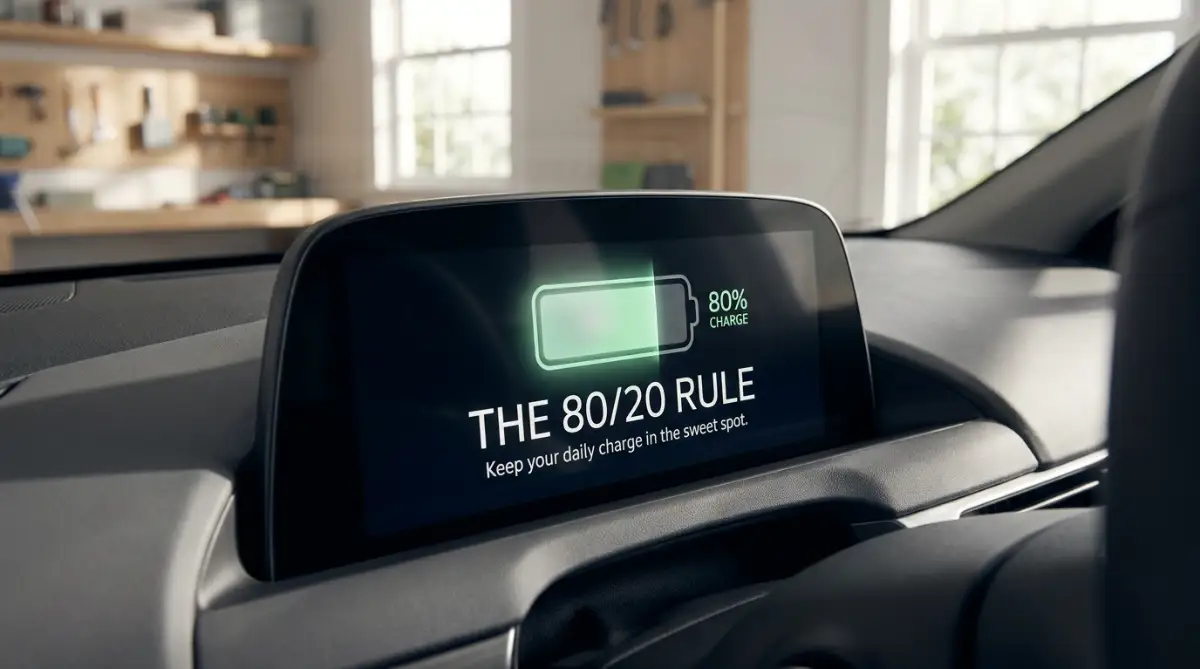
- The 80/20 Rule: Keep your daily charge between 20% and 80% to prevent chemical stress inside the cells.
- Avoid Daily Fast Charging: Limit DC fast chargers to road trips only to prevent permanent heat damage.
- Weather Matters: Extreme summer heat combined with a 100% charge is the deadliest situation for your battery range.
- Plug In Often: Frequent, small charging sessions at home are much better than waiting for the battery to hit zero.
Decoding the Secret Language of Your EV Battery
If you want to stop this daily anxiety, you need to understand the basic concept of State of Charge. Do not worry, we are not going to look at complex chemical equations or confusing engineering terms.
Think of State of Charge simply as the fuel gauge of your electric vehicle. It tells you exactly how much energy is currently stored in the battery, represented as a percentage from zero to one hundred.
But unlike a traditional gas tank, how you treat this "electric fuel gauge" directly impacts how long the tank itself will last. A gas tank does not shrink if you fill it to the brim every day.
An electric battery, however, absolutely does shrink over time if you treat it the wrong way. That shrinking capacity is what we call battery degradation.
To stop this from happening, we need to completely change how we think about "refueling." You have to stop treating your car like a gas-powered vehicle that needs a totally full tank.
Why the 80/20 Rule is Your Best Friend
You have probably heard people talk about the 80/20 rule on internet forums or at public charging stations. This is not just a random internet myth.
It is a scientifically backed habit that can add years of healthy life to your battery pack. The rule simply means you should try to keep your daily charge level between 20 percent and 80 percent.
Why does this work? Let's use a very simple analogy that everyone can understand.
Imagine you are eating a large meal at a buffet. When your stomach is completely empty, you feel weak and stressed. That is exactly how your battery feels when it drops below 20 percent.
Now, imagine eating until you are completely stuffed, unable to eat another bite. You feel bloated, uncomfortable, and your body is under stress. Your battery feels the exact same way when it sits at 100 percent.
Lithium-ion batteries are happiest and most relaxed when they are sitting comfortably in the middle. Keeping the charge around 50 to 60 percent is the absolute sweet spot for long-term health.
Of course, keeping it perfectly at 50 percent is impossible if you actually want to drive your car. That is why the 20 to 80 percent window gives you plenty of driving range while keeping the battery chemistry totally relaxed.
My biggest early mistake was ignoring this sweet spot before a long holiday weekend. I charged my car to 100% on a Friday night, but then my trip got canceled, and I left the car sitting fully charged in a hot garage for three straight days. I did not realize that the combination of maximum charge and high heat was slowly baking the battery cells, causing unnecessary long-term damage that I could have easily avoided.
Author's Quick Tip from the Garage:
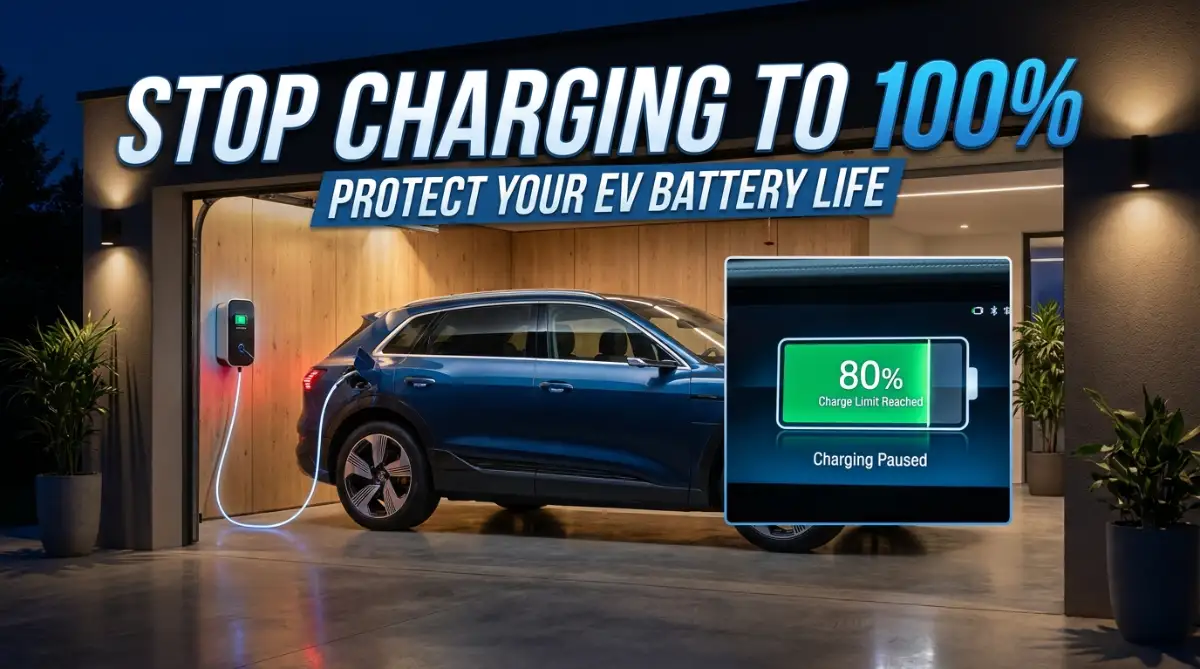
I highly recommend buying a smart home charger with a dedicated mobile app. I set my app to automatically stop the flow of electricity exactly at 80 percent. I plug the cable in, walk away, and go to sleep without thinking about it once. It completely takes the mental math out of the equation!
Breaking Down the Fast Charging Illusion
Another massive factor that connects directly to your State of Charge is how quickly you force energy into the battery. We all love the convenience of DC fast chargers on road trips.
You plug in, grab a coffee, and 30 minutes later you are ready to hit the road again. But relying on fast chargers for your daily energy needs is a huge mistake.
When you push a massive amount of electricity into a battery very quickly, it generates a ton of heat. Heat is the absolute worst enemy of battery longevity.
If your battery is already at a low State of Charge, say 10 percent, it can accept fast charging quite easily. The cells are "hungry" and can absorb the energy without getting too hot.
But as the State of Charge increases, pushing energy into the battery becomes much harder. It is like trying to pack clothes into a suitcase that is already mostly full.
You have to push harder, which creates more friction and heat. This is exactly why almost every EV slows down its charging speed dramatically once it hits 80 percent.
Want to see exactly how much damage fast charging does compared to slow home charging? Watch this incredible real-world test that breaks down the numbers perfectly.
The Hidden Impact of Extreme Weather
You cannot talk about State of Charge without talking about the weather outside. The temperature in your area changes how your battery holds and uses energy.
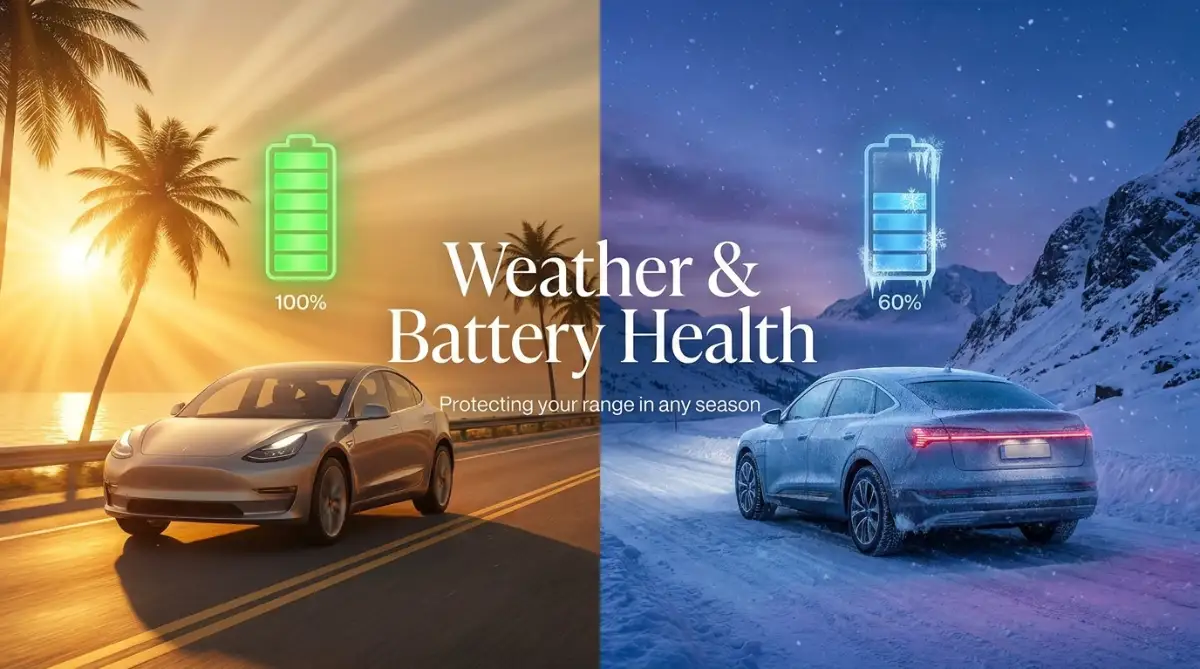
During the cold winter months, your battery gets sluggish. You might wake up, look at your app, and notice your State of Charge has magically dropped overnight.
This happens because the chemical reactions inside the battery slow down in freezing temperatures. The energy is still there, but the battery simply cannot access all of it until it warms up.
Because of this cold weather drop, many drivers panic and start charging to 100 percent every single night in the winter. This is a bad habit to get into.
Instead, you should rely on your vehicle's pre-conditioning feature. Most modern EVs allow you to warm up the battery while it is still plugged into the wall.
This uses the electricity from your house to heat the battery, rather than stealing your precious State of Charge. You get a warm car, a happy battery, and you still do not need to stress it to 100 percent.
Summer heat, on the other hand, presents a totally different challenge. High temperatures mixed with a high State of Charge is the most dangerous combination for battery longevity.
If you park your car in direct sunlight on a 100-degree day with a fully charged battery, you are actively degrading the cells.
A Simple Guide to Parking and Storage Levels
Look closely at the table above. You will notice a recurring theme for parking your car.
Unless you are about to drive hundreds of miles, keeping the State of Charge low is always better for the car. If you are going on a two-week vacation, do not leave your car plugged in and set to 100 percent.
Set your vehicle's charge limit to 50 percent. The battery will sleep comfortably while you are away.
When you get back, your battery will be exactly as healthy as the day you left it. Small, smart habits like this take zero extra effort but save you massive amounts of money in the long run.
Charging Myth vs. Battery Fact
Understanding the Built-In Buffer Zones
Now, you might be wondering if car manufacturers know about all these battery rules. Yes, they absolutely do.
In fact, the engineers who designed your car built in secret safety nets to protect you from your own bad habits. This safety net is called the "buffer zone."
When your dashboard screen says your State of Charge is 100 percent, the battery is not actually physically full. The manufacturer locks away a small percentage of the total battery capacity.
This means even when you think you are at maximum capacity, the battery is secretly resting at around 95 or 96 percent.
The same thing happens at the bottom of the scale. When your car hits zero percent and refuses to move, there is actually still a little bit of energy left deep inside the cells.
The car shuts down to prevent you from completely draining the battery, which would cause instant and permanent chemical damage.
Knowing about these hidden buffers should give you some peace of mind. It means that occasionally charging to 100 percent before a long road trip is perfectly safe.
The real danger comes from habitual overcharging. If you force the car to its maximum limit every single day, even the built-in buffers cannot protect the battery forever.
How Often Should You Actually Plug In?
This is the most common question new owners ask. "Should I plug in every time I park in my garage, or should I wait until the battery is almost empty?"
The answer depends entirely on how you set your charge limits. The healthiest routine is to plug your car in every single night, but set the maximum charge limit to 70 or 80 percent.
By plugging in every night, you allow the car to run its battery management system. The car will use wall power to balance the internal cells and manage the battery temperature.
If it gets really cold at night, the car can warm itself up without draining your driving range.
Waiting until the battery is at 10 percent before plugging in is an old habit left over from the days of flip phones. Modern electric vehicle batteries do not have a "memory effect."
They actually prefer many small, shallow charging sessions rather than one massive, deep charging session.
Treat your home charger like a slow drip of healthy energy. Plug it in, let the car manage its own temperature, and wake up to a perfectly healthy 80 percent State of Charge every morning.
Once you adopt this simple daily routine, your battery anxiety will completely disappear. You will stop looking at the percentage dropping, and you will start enjoying the amazing driving experience you paid for.
Taking Total Control: Next-Level Battery Habits
Now that you understand the basic rules of keeping your state of charge in the sweet spot, it is time to level up. Getting comfortable with daily charging is a great start. But if you want to keep your battery feeling brand new for a very long time, you need to understand how the car thinks.
Deep inside your electric vehicle is a smart computer called the Battery Management System. You can think of this system as a personal trainer for your battery cells.
Its entire job is to monitor temperature, adjust voltage, and keep all the individual cells perfectly balanced. However, sometimes this system gets a little bit confused if you never change your charging habits.
If you only ever drive your car between 40 percent and 60 percent, the computer might forget what a completely empty or completely full battery looks like. This causes the percentage on your dashboard to become slightly inaccurate.
You might think you have 50 percent left, but the battery might actually only have 45 percent. To fix this, you need to occasionally help the computer recalibrate itself.
Do not worry, this process is incredibly simple and completely safe. Every few months, allow your state of charge to drop down to around 10 or 15 percent naturally through regular driving.
Once it is low, let the car sit parked and turned off for three or four hours. This resting period gives the battery computer time to take a highly accurate reading of the lowest energy cells.
After that rest, plug the car in and charge it all the way up to 100 percent just before a long drive. If you want a deep dive into how these internal systems work, you can always check out the Department of Energy's main vehicle hub for incredible scientific insights.
My Personal Weekly Charging Routine:
- Monday - Thursday: Plug in at home, limit set strictly to 80% on the car app.
- Friday: Let the battery drop naturally down to around 30% to give the cells a nice break.
- Saturday (Road Trip Day): Bump the limit up to 100% just one hour before hitting the highway.
- Sunday: Return home, plug in, and reset the app limit back to 80% for the upcoming work week.
Another amazing trick is using your car's built-in location services to completely automate your charging limits. Almost all modern electric cars know exactly when they are parked inside your personal garage.
You can program the car to remember your home address and lock the maximum charge limit to 80 percent automatically. This means you will never accidentally overcharge your car at home again.
But here is where it gets really smart. You can also tell the car to temporarily ignore that limit when you are plugging into a public charger on a road trip.
This automation takes all the mental stress out of owning an electric car. If you are upgrading your home setup soon, make sure to read this complete guide before installing your home wallbox charger to ensure your electrical panel can safely handle the load.
Finally, you need to master the art of departure-based charging. Many drivers simply plug their cars in when they get home from work at 6:00 PM.
The car immediately starts sucking down power and hits its 80 percent limit by 10:00 PM. It then sits there, fully warmed up, slowly cooling down all night until you leave for work the next morning.
A much smarter approach is to tell your car exactly what time you plan to leave the house. The car will wait patiently all night and slowly time the charging session to finish exactly ten minutes before you open the door.
This means the battery is perfectly warmed up from the fresh electricity flow right as you start driving. You will notice much better efficiency in the morning, which you can easily track through the Federal Fuel Economy database to see how much money you are saving.
The Heartbreaking Pitfalls of EV Ownership
Even with the best intentions, I see new electric vehicle owners making terrible mistakes every single day. The biggest and most expensive mistake is what I call the "smartphone mentality."
We have all been trained by our phones to wait until the battery is at 1 percent before desperately searching for a charger. People carry this toxic habit directly over to their brand-new, expensive cars.
Driving your electric vehicle down to a single-digit state of charge is incredibly dangerous for the battery chemistry. When the energy levels get that low, the individual cells physically struggle to maintain their internal structure.
You are essentially starving the battery, forcing it to work twice as hard just to move the heavy car forward. Doing this once in an emergency is fine, but doing it every week will permanently destroy your maximum range.
If you truly want to understand how delicate these cells are, you should read up on EV battery basics to see exactly how energy is stored.
Another terrifying mistake is abusing public fast chargers because they feel convenient. I know a guy who lived right next to a super-fast public charger and decided he did not need a home setup.
He drove his car to the fast charger every single day, pumping massive amounts of heat into the battery to force it back to 100 percent. Within a single year, he lost over ten percent of his total driving range.
He did not realize that forcing energy into a nearly full battery creates intense chemical friction. If you want to avoid his fate, you must learn exactly what DC fast charging is and why it should only be used for actual road trips.
The Heatwave Destruction Scenario
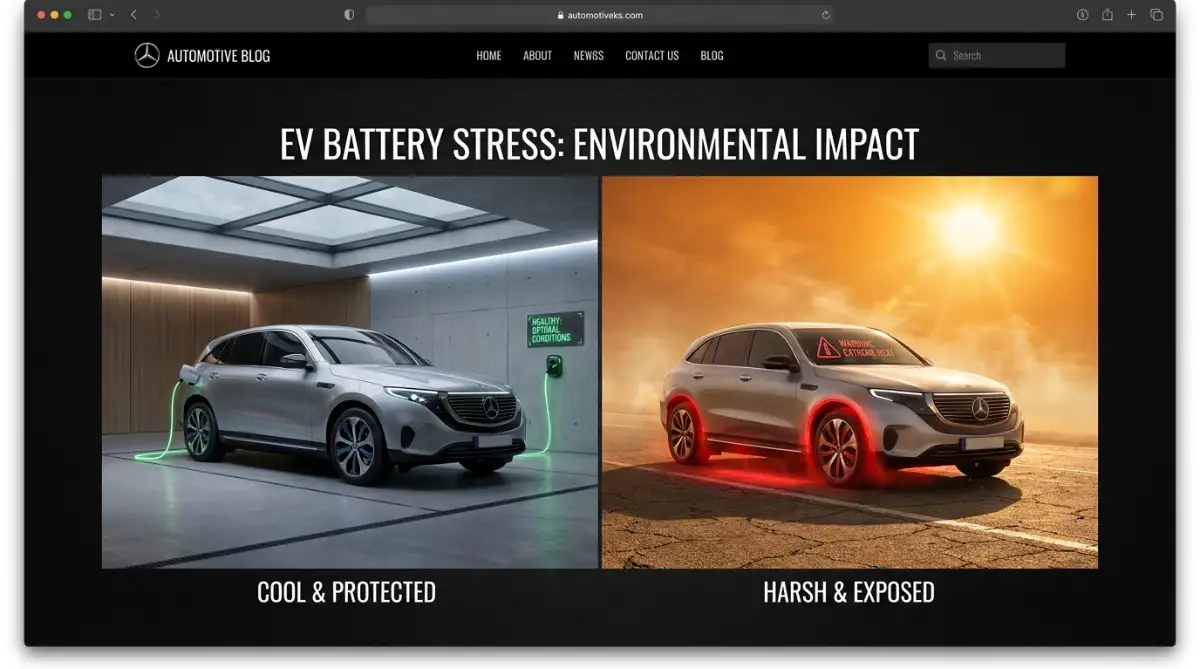
Let's talk about summer weather, because this is where a high state of charge becomes truly destructive. Imagine you are about to go on a long summer road trip with your family.
You do the right thing and charge your car to 100 percent on a Friday night, planning to leave early Saturday morning. But then a family emergency happens, and you have to delay the trip by two days.
Your car now sits outside in the blazing afternoon sun with a completely full battery. The heat outside mixes with the chemical pressure inside the full cells, cooking the battery from the inside out.
The battery management system will try its best to turn on cooling fans to save itself. But eventually, the car will run out of energy to cool itself, and permanent chemical degradation begins.
If you ever find yourself in this situation, simply turn on the car's air conditioning remotely to drain some power out of the battery. Bringing the charge down to 90 percent is enough to relieve the intense internal pressure.
Also, knowing how to extend your EV range in summer will help you plan better so you do not feel forced to max out the battery every time.
The Rainy Day Panic
Another strange behavior I notice happens during bad weather. Many new owners get terribly frightened of plugging their high-voltage cars in during massive rainstorms.
They watch their state of charge drop lower and lower, refusing to use their home charging station because they fear an electrical short. Because they waited, they wake up the next morning with an empty battery and cannot make it to work.
The truth is, these charging systems are completely sealed and designed to work underwater if necessary. Leaving your battery empty overnight in the cold rain does much more damage than the water ever could.
You should absolutely learn the facts about electric vehicle charging in the rain to clear up this dangerous misconception. Keeping your car plugged in during storms actually helps the battery stay warm and safe.
If you are ever in doubt about environmental impacts on energy storage, the International Energy Agency (IEA) provides amazing free data on how modern EV technology handles different environmental changes.
Finally, the most heartbreaking mistake is terrible road trip planning. People often try to stretch their state of charge to the absolute limit, aiming to arrive at a charger with just 2 percent left.
They do this thinking it will save them time, but it actually causes immense stress on the battery and the driver. If the charger is broken or currently being used by someone else, you are instantly stranded.
Always plan to arrive at a public charger with at least 15 to 20 percent remaining in your battery. This gives you a safe buffer to find another location if things go wrong.
You can easily avoid these costly mistakes when planning an EV road trip by just using a little bit of common sense. Treating your battery with respect on long trips makes the whole experience much more enjoyable.
Your New Daily Drive Playbook
Owning an electric car should feel like stepping into the future, not managing a stressful science experiment. Once you let go of the old gas-station mentality, everything becomes incredibly simple.
You just need to trust the technology and build a few simple habits into your daily routine. Think of your state of charge as a living system that responds wonderfully to a gentle, consistent touch.
By keeping your daily limits reasonable, avoiding excessive heat, and plugging in regularly, you are guaranteeing a long life for your vehicle.
Here is your action plan for tomorrow morning:
- Check Your Limits: Open your vehicle's app right now and ensure the daily charge limit is locked at 80 percent.
- Plug In Automatically: Stop waiting for the battery to get low. Plug your car in tonight, even if you only drove ten miles today.
- Trust The Buffer: Stop worrying about occasional drops in range during extreme weather. The car knows exactly how to protect itself.
- Plan For Departure: Set your charging schedule to finish right before you leave for work to enjoy a warm, highly efficient battery.
You have invested a lot of hard-earned money into this beautiful piece of technology. The battery pack is the absolute beating heart of the car, and it deserves to be treated with care.
I used to wake up sweating, worried that my battery was degrading while I slept. But once I simply set my limit to 80 percent and plugged it in every night, the stress completely melted away, leaving only the pure joy of driving electric.
Common Questions About State of Charge
Is it bad to charge my EV to 100% occasionally?
No, it is perfectly safe to charge to 100 percent when you actually need the range for a long road trip. The damage only happens when you charge to full every single day, or if you let the car sit parked at maximum capacity for several days. Just time your charging so you hit 100 percent right before you drive off.
At what percentage should I plug my electric car in?
You do not need to wait for a specific low number before plugging your vehicle into a wall charger. In fact, electric vehicle batteries are much happier when you plug them in every day, regardless of the current percentage. Even if you are at 70 percent, plugging it in keeps the battery management system active and healthy.
Does fast charging really degrade my battery faster?
Yes, relying entirely on DC fast chargers for your daily energy needs will absolutely degrade your battery faster than slow home charging. Fast charging forces a massive amount of heat into the chemical cells, which slowly breaks down their ability to hold a charge. Reserve fast charging strictly for highway road trips.
How much battery range is lost over time naturally?
Most modern electric vehicle batteries only lose around 1 to 2 percent of their total capacity per year under normal driving conditions. If you follow healthy state of charge habits, your battery will easily outlast the mechanical life of the car itself. Severe degradation is almost always caused by poor charging habits, not natural aging.
Should I leave my EV plugged in when going on vacation?
Yes, you should definitely leave it plugged in, but you must lower the maximum charge limit in the settings first. Set the limit to 50 percent, which allows the car to gently maintain the battery temperature without stressing the cells. Your vehicle will sleep perfectly and be ready to drive the moment you return.
Disclaimer: The information provided in this article is for educational and informational purposes only and is based on general electric vehicle best practices. Individual battery performance may vary depending on the specific vehicle manufacturer, environmental conditions, and driving habits. Always consult your official owner's manual or a certified automotive technician before making major changes to your charging routine or vehicle settings. We are not responsible for any direct or indirect damage resulting from the application of these tips.