The Scary Reality of Plugging in During a Downpour
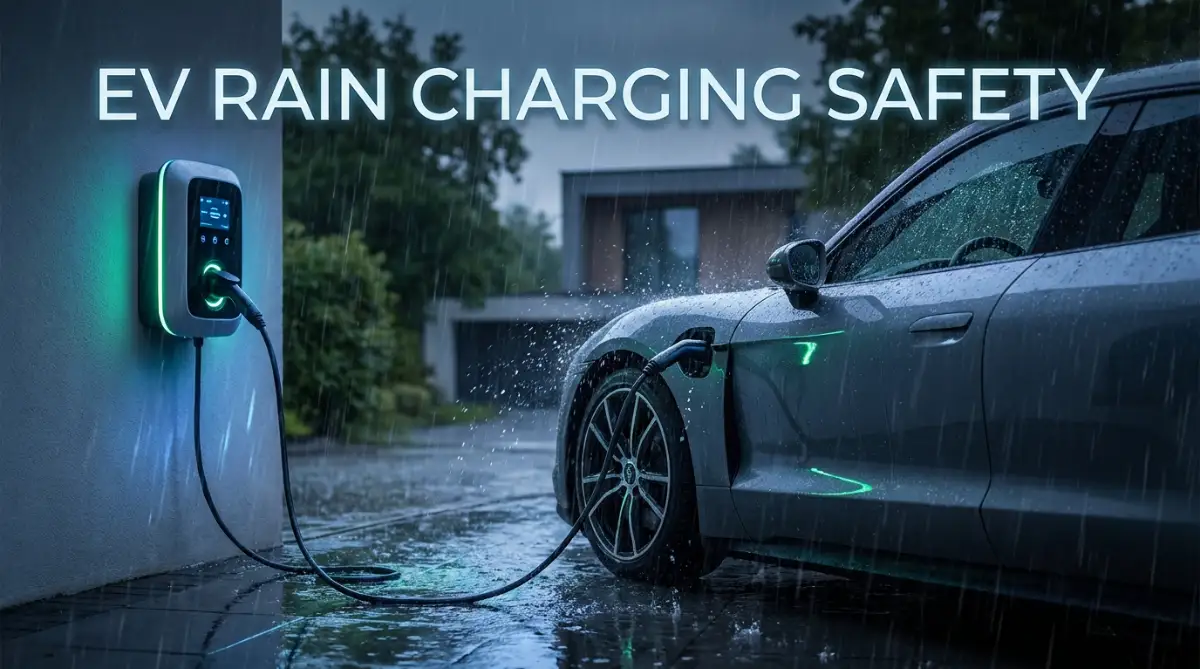
Standing in a freezing downpour with a high-voltage cable in your hand feels completely unnatural. We all learned in grade school that water and electricity are a terrible mix. Honestly, when I got my first electric car, I avoided plugging in on rainy days entirely just to play it safe. But after digging into how these cars are actually built, I realized I was stressing over nothing. Today, I will show you exactly what happens when you plug your EV in during a storm, and how to do it safely without second-guessing yourself.
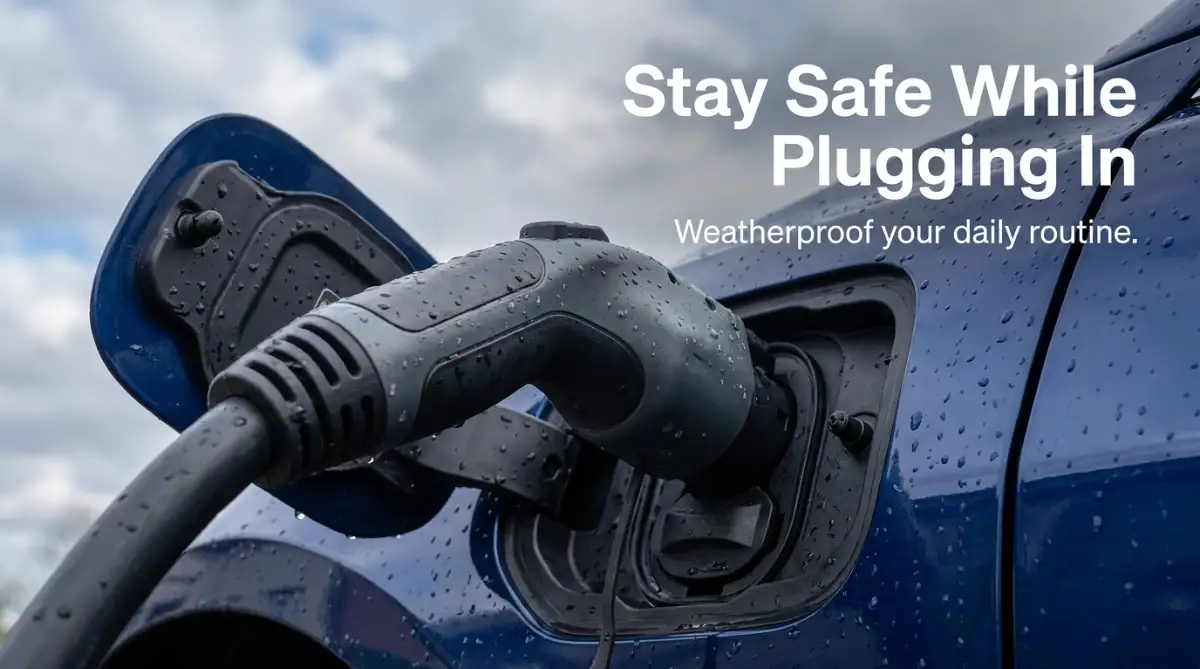
In a Rush? Here is Your Rainy Day Cheat Sheet:
- The Digital Handshake: Your EV checks for a 100% dry seal before it lets any power flow.
- Check the Rating: Make sure your outdoor home charger is rated at least IP65 for heavy storms.
- Ditch the Cheap Cords: Regular household extension cords will short out and melt in the rain.
- Master the Drip Loop: Always let your cable dip below the wall outlet to stop rainwater from running into your house's electrical system.
How Your Car is Built to Handle the Storm
The engineers who designed your electric vehicle spent a lot of time thinking about bad weather. They completely understand that cars live outside, and they face heavy rains, snow, and extreme humidity on a regular basis. Because of this, every single modern electric car goes through extreme water testing before it ever reaches the dealership.
You might be surprised to learn that the charging port on your car is highly engineered to push water away. The actual electrical pins are hidden deep inside the port, surrounded by thick layers of high-grade rubber seals. When you plug the cable in, these seals lock together, creating a perfectly dry bubble around the electrical connection.
This means that even if rain is pouring directly onto the side of your car, the water simply slides right off the plastic and rubber parts. It never actually reaches the metal pins where the electricity flows. Think of it like a professional scuba diver's waterproof watch, built to withstand immense pressure without letting a single drop inside.
The Magic "Handshake" Protocol Explained
One of the most amazing safety features of any electric car is something experts call the digital handshake. This simple feature is the main reason why you will not get shocked in the rain. When you plug the charger into your car, the electricity does not start flowing immediately.
Instead, the charging cable and your car's computer have a quick digital conversation. The charger basically asks the car, "Is everything completely sealed and perfectly safe?" The car's computer checks the physical connection to make sure there are no leaks, dirt, or loose parts.
If everything is perfectly sealed, the car sends a signal back to the charger to open the electrical gates. Only then does the high-voltage electricity actually start moving through the thick cable. If the system detects even a tiny bit of moisture on the metal pins, it will refuse to start the charge, keeping you completely safe from harm.
⚡ Quick Wet-Weather Safety Checklist Before You Plug In:
- Wipe your hands dry before grabbing the handle.
- Shake the charging nozzle gently facing down to remove any trapped raindrops.
- Listen for the loud "click" to ensure the waterproof seal is locked.
- Never let the main charging box rest in a puddle on the ground.
Ready to see this safety feature in action? Watch this amazing breakdown of how EV chargers block water out!
Why IP Ratings Are Your Best Friend
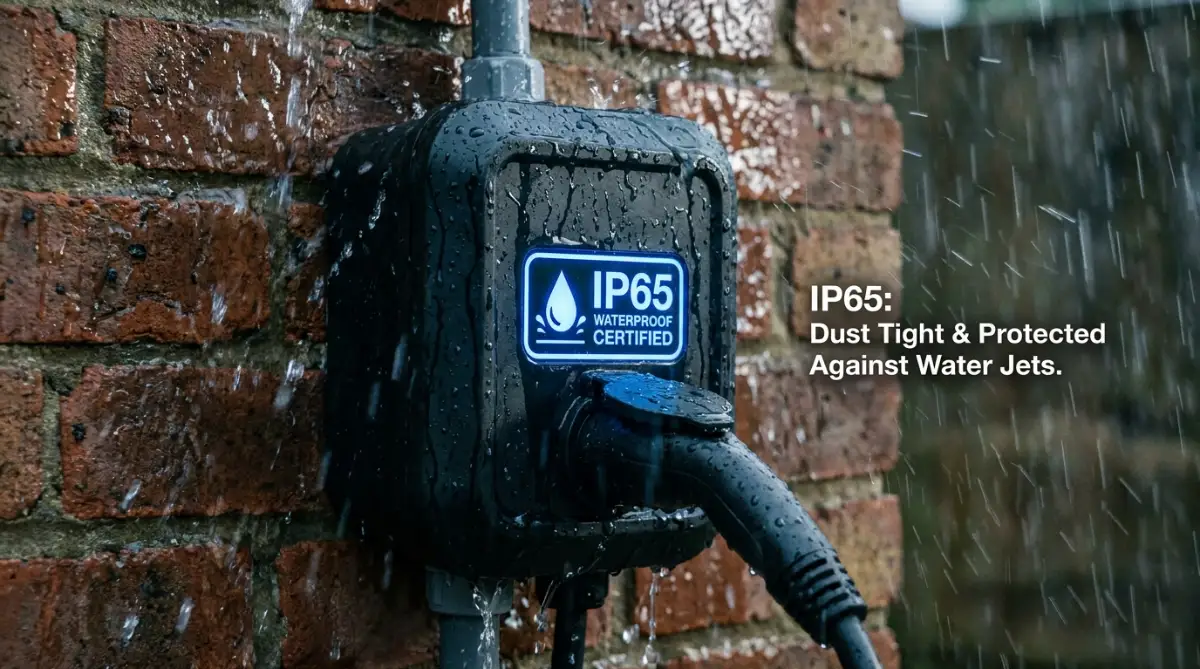
When you buy a home charging station, you will often see something called an IP rating on the box. IP stands for Ingress Protection, which is just a fancy way of saying how well a device blocks dirt and water. This is an international standard that tells you exactly what kind of weather your charger can survive.
Most quality outdoor charging stations come with a rating of IP65 or higher. The first number tells you that the charger is completely sealed against dust, while the second number means it can handle powerful jets of water from any direction. You should always check this rating before installing a charger outside your home.
If you are using a public charging station, you can trust that commercial chargers are built with even tougher materials. They are designed to sit out in heavy storms, baking sun, and freezing snow year after year. The thick cables are wrapped in multiple layers of heavy-duty insulation, meaning you can safely touch them even when they are soaking wet.
Here is a quick breakdown of what those IP ratings actually mean for your charger:
Here is a quick look at the most common myths people believe about EV charging in bad weather.
Myth vs Reality: Rainy Day Charging
I actually used to hold an umbrella over my charging port while plugging it in, looking absolutely ridiculous to my neighbors. The reality is, your car is significantly smarter and tougher than we give it credit for.
Smart Habits for Your Home Charging Setup
While the car itself is incredibly safe, your home charging setup requires a little bit of common sense. If you charge your car in an open driveway, you need to make sure your charging box is installed correctly. Always hire a certified electrician who knows exactly how to handle outdoor electrical installations.
Your electrician should install a specialized outdoor cover for your power outlet, often called a weatherproof in-use cover. This special plastic box allows you to keep the charger plugged into the wall while a cover drops down over the plug. This blocks rain from hitting the wall outlet directly, keeping your home electrical system safe from short circuits.
You also need to pay close attention to where your charging cable rests on the ground. Try to avoid letting the thick cable sit in deep puddles of standing water for hours at a time. While the cable is fully insulated, keeping it out of deep water helps protect the rubber coating from wearing down over time.
If your home charger starts looking old, or if you notice any deep cuts in the rubber cable, stop using it immediately. A damaged cable completely ruins the waterproof seal and creates a massive safety risk in the rain. It is always better to replace a worn-out cable than to risk an electrical accident.
Navigating Public Charging Stations in the Rain
Using a public fast charger during a storm requires a slightly different approach than charging at home. When you pull up to a public station, the very first thing you should do is look at the ground. Avoid parking in spots where there are deep pools of water hiding the bottom of the charging machine.
Before you grab the heavy charging handle, give the entire cable a quick visual inspection. Public chargers get dropped on the ground, driven over, and abused by hundreds of different drivers every single week. If you see exposed wires or broken plastic on the handle, report the station on the charging app and move to a different plug.
When you pick up the handle, point it downwards for a second and give it a gentle shake. Sometimes, the previous driver might have dropped the handle in a puddle, leaving water inside the plastic connector. Shaking it gently ensures any leftover water drips out before you connect it to your expensive vehicle.
Make sure you push the connector into your car firmly until you hear a loud, solid click. That clicking sound is the physical lock engaging, which pulls the waterproof seals tightly together. If it does not click, the connection is not secure, and the car's computer will refuse to start the charging process.
The Big Danger: Regular Extension Cords
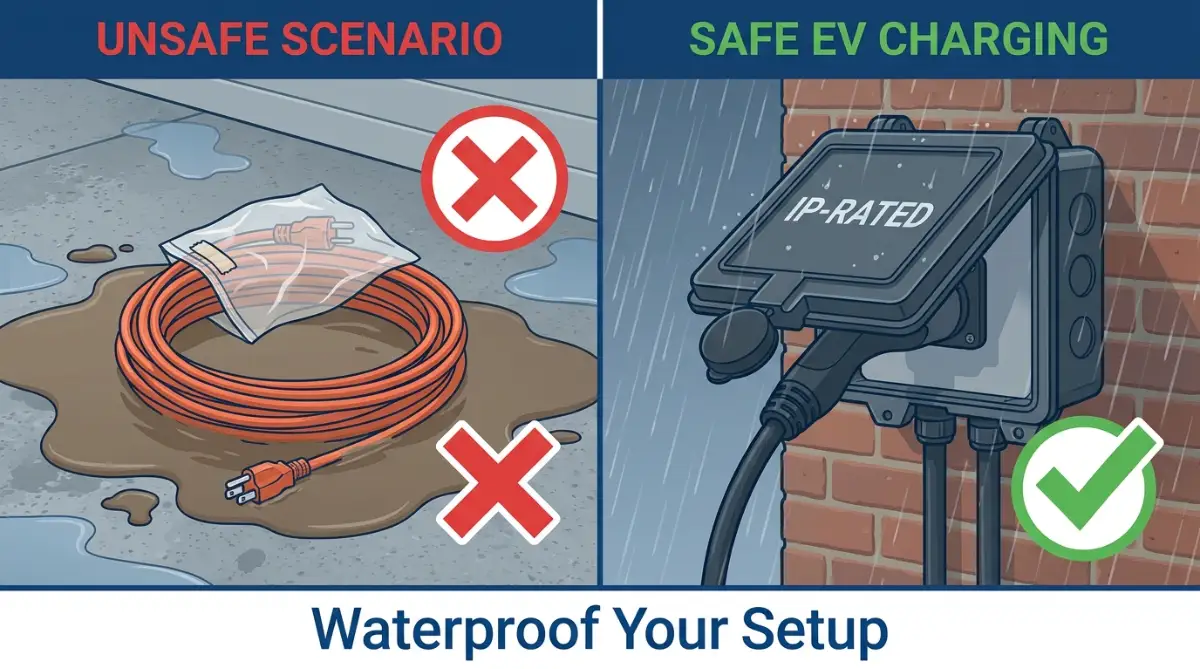
This brings us to the absolute biggest mistake you can make when charging your electric vehicle in bad weather. You should never, under any circumstances, use a regular household extension cord to charge your car in the rain. Standard orange or green extension cords are simply not built to handle the intense power demands of an electric vehicle.
More importantly, the connection point where the extension cord meets your charger plug is not waterproof at all. If rain gets into that loose connection lying on the wet driveway, it will almost certainly spark or cause a breaker to trip. This can easily melt your charging cable, damage your car's internal battery system, or even start a fire.
If you absolutely must extend your charging reach, you have to buy a specialized EV extension cable. These heavy-duty cables come with their own tightly sealed, waterproof connection points. They are expensive, but they are the only safe way to bridge a long gap between your car and the power source during a storm.
Quick Fix: What to do if your extension cord connection gets wet?
If you mess up and water gets into the connection point of your extension cord, do not touch the wet parts bare-handed. First, go inside your house and flip the breaker off for that specific wall outlet. Only after the power is totally dead should you unplug the wet cords. Wipe them down with a dry towel and let them air out inside your garage for at least 24 hours before trying to use them again.
💡 My Personal Pro-Tip for Extension Cords: If you ever use a certified EV extension cable in the rain, grab a cheap plastic storage bin. Cut a small hole on each side, run the connection point through the bin, and put the lid on. It creates an instant, bone-dry mini garage for your cord connections while sitting in the driveway!
Best Practices Before and After You Plug In
Developing a simple routine can make wet weather charging feel completely normal and stress-free. When you step out of your car in the rain, try to keep your hands as dry as possible. Keep a small microfiber towel tucked inside your car door specifically for drying your hands before grabbing the charging handle.
When your car is done charging and you are ready to unplug, do it quickly and smoothly. Pull the handle straight out and immediately close the plastic flap that covers your car's charging port. Most modern electric cars have a rubber cap that goes over the pins, followed by the main painted outer door.
Make sure both of these covers are securely snapped shut before you start driving. Leaving the charging flap open by mistake allows dirty rainwater and road salt to splash directly into the port while you drive. Over many years, this dirty water can cause a slow build-up of grime that might interfere with your next charging session.
Finally, do not forget to hang the charging handle properly back on its hook when you are finished. Leaving a charging handle lying on the wet ground is extremely disrespectful to the next driver. It also exposes the delicate connection pins to dirt, mud, and heavy rainwater, which degrades the equipment much faster.
Dealing with Extreme Weather Scenarios
Sometimes, we face weather that goes way beyond a normal rainstorm. If you live in an area that experiences heavy flooding, hurricanes, or severe lightning storms, you need to change your charging habits. While your car is waterproof, it is never a good idea to charge during an active lightning storm.
If a massive lightning strike hits the power grid near your home, it can send a huge surge of electricity through the lines. Even if your home has surge protectors, that massive spike can travel straight down the charging cable and damage your car's battery computer. It is much smarter to unplug your car and wait for the thunder and lightning to pass completely.
If you find yourself driving through deep floodwaters, you should also reconsider plugging in immediately when you get home. Your car's battery pack is safely sealed at the bottom of the vehicle, but driving through deep water can push debris into sensitive areas. Give your car a few hours to drip dry in the garage before connecting the high-voltage cable.
🧠 Fun Fact You Probably Didn't Know:
Electric vehicles actually handle deep floodwaters much better than regular gas cars! Because EVs do not have an engine air intake or an exhaust pipe, they cannot "stall out" from sucking in water. The entire battery pack on the bottom is completely sealed. However, driving through deep water is still a bad idea because it can ruin your interior electronics or wash you off the road.
Why You Can Trust the Technology
It took me a long time to build trust in my electric car, but understanding the science truly changed my perspective. We have to remember that electricity has been used safely outdoors for over a hundred years. Think about electric streetlights, outdoor amusement park rides, and electric trains operating safely in terrible weather.
Mastering Wet Weather Charging Like a Pro
Once you understand that your electric car is built to handle heavy rain, you can start focusing on long-term safety. I want to share some expert-level habits I have picked up over my years of driving an EV. These are simple, everyday practices that keep your equipment running smoothly for a very long time.
The Secret "Drip Loop" Technique
An old electrician taught me this incredibly smart trick a few months after I bought my car. When you plug your charging cable into a wall outlet, never let the heavy wire pull straight down. Instead, create a small, U-shaped dip in the cable right below the plug before it runs toward your car.
This simple U-shape is known as a drip loop, and it uses basic gravity to protect your electrical sockets. If rain hits the middle of your long cable, the water will naturally slide down the rubber wire. When it reaches the bottom of the loop, the water drips harmlessly onto the ground instead of traveling straight into your wall outlet.
You can easily secure this loop by hanging a small plastic hook next to your outdoor power box. This one tiny habit completely transformed how I feel about leaving my car plugged in during massive storms. It is a brilliant way to align your daily routine with professional electrical safety guidelines for outdoor outlets established by safety experts.
Keeping Your Port Clean and Dry
Your car's charging port does an amazing job blocking water, but it needs a little help to stay clean. When you drive through heavy rain, dirt and road salt often splash up behind the protective plastic door. If this grime builds up over time, it can prevent the waterproof seals from locking together properly.
I make it a personal rule to check my charging port with a small flashlight at least once a month. If I see dirt or dust settling around the metal pins, I never use wet wipes or liquid cleaners to wash it out. Instead, I use a simple can of compressed air to blow the dust away safely without introducing any extra moisture.
If you notice the rubber seals looking a little dry or cracked, you can use a tiny drop of silicone-based lubricant to soften them. You just have to be extremely careful never to spray anything directly onto the metal electrical contacts. Taking care of these small details is a huge part of understanding the long-term budget for maintaining an EV.
Optimizing Your Garage and Driveway Setup
If you park outside, upgrading your home charging station is the best money you will ever spend. I highly recommend installing a small, inexpensive metal canopy or awning directly above your outdoor charging box. This gives you a dry, comfortable spot to stand while you handle the heavy electrical cable in the pouring rain.
You also want to make sure the cable itself is kept off the wet ground as much as possible. Sitting in puddles will not immediately break the insulated wire, but it slowly wears down the protective rubber coating over time. You can buy cheap cable management tracks that mount to your wall, keeping the wire safely elevated and completely dry.
When you start setting up your home charging station, always ask your installer to use GFCI (Ground Fault Circuit Interrupter) breakers. These smart breakers monitor the electrical current and will instantly cut the power if they sense water interfering with the connection. This acts as your ultimate safety net if a severe storm ever breaches your equipment.
Understanding Cold and Wet Battery Behavior
Rainy days often bring a massive drop in temperature, which completely changes how your electric car behaves. When the battery pack gets cold and wet, it naturally charges a bit slower to protect the internal chemical cells. I used to panic when I saw my charging speed drop during a storm, thinking the rain was damaging my battery.
The truth is, your car's computer intentionally slows down the electricity flow when the weather gets bad. It does this to safely manage the heat generated during the charging process. If you want to dive deeper into this topic, you can learn exactly how bad weather affects your battery performance in cold and wet conditions.
You can actually help your car charge faster by using the "preconditioning" feature on your mobile app before you start charging. This warms up the battery while the car is still plugged in, making it much more receptive to receiving power. It is a great trick that saves time and helps in preserving your overall battery longevity over the lifespan of your vehicle.
Hidden Dangers: Avoid These Costly Mistakes
Even though electric vehicles have amazing safety features, human error can still cause serious problems in bad weather. I have seen too many smart people make terrible choices simply because they were in a rush to escape the rain. When you mix high-voltage electricity with bad habits, you are putting yourself and your expensive car at massive risk.
Some mistakes might seem completely harmless at first glance, but they can slowly destroy your car's internal charging computer. Replacing a damaged charging port can cost thousands of dollars, and it is usually not covered by standard warranties if it was caused by user negligence. Let me walk you through the absolute worst things you can do when plugging in during a storm.
The Trap of Cheap Online Adapters
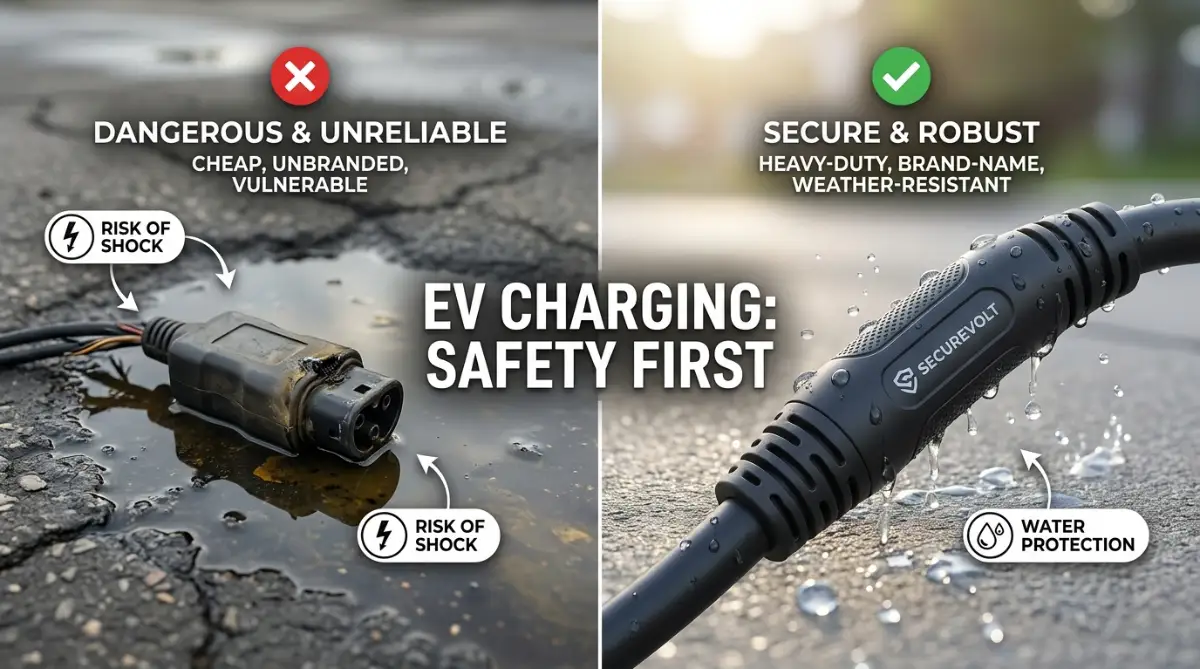
This is honestly the scariest mistake I see new electric vehicle owners making today. You will find hundreds of super cheap charging adapters on huge online marketplaces, promising to connect any cable to any car. Because official adapters can be very expensive, people often buy these cheap knock-offs to save a few dollars.
Please, never use a cheap, unverified adapter to charge your car, especially outside in the rain. These low-budget devices are rarely tested for water resistance and almost never meet proper automotive engineering standards for charging connectors. The plastic they use is often low quality, meaning a single drop of water can cause the internal wires to short circuit.
I actually bought one of these cheap adapters when I first got my car, just to have as a backup. One rainy evening, I touched the adapter while it was charging, and it was burning hot and making a faint buzzing sound. I immediately unplugged it and threw it in the trash, realizing I almost set my beautiful new car on fire just to save fifty bucks.
Ignoring Signs of Damage on Public Stations
When you pull up to a charging station in a freezing downpour, you naturally want to plug in as fast as humanly possible. Because of this rush, people often skip checking the equipment for obvious signs of physical damage. This is one of the most dangerous habits at public charging stations you can possibly develop.
If a previous driver backed into the charging machine and cracked the heavy plastic casing, rainwater is pouring directly onto the internal computers. If you grab a handle that has exposed, frayed wires wrapped in electrical tape, you are literally holding a live hazard. The built-in safety locks might fail to trigger if the handle itself is structurally broken.
Always take three extra seconds to visually inspect the machine, the screen, and the handle before you touch anything. If a screen is flickering strangely or you see dark scorch marks around the plug, get back in your car and drive to the next station. It is absolutely never worth risking your safety just to save a few miles of driving.
Forcing a Stuck Connection
Sometimes, dirt and rainwater can make the charging handle feel stiff or difficult to push into your car's port. When this happens, people often push incredibly hard, twisting and slamming the heavy handle to make it fit. This aggressive force crushes the delicate waterproof seals around the electrical pins inside your car.
If the handle does not slide in smoothly and click into place with a gentle push, something is wrong. Pull it back out, check both the handle and your car port for a small rock or a piece of debris blocking the way. A quick blow of air or a gentle tap is usually enough to clear the obstruction.
Remember, these connectors are designed to slide together easily to form a perfectly tight water seal. If you have to force it, you are actively breaking that seal, which completely ruins your protection against the rain. Treat the charging port gently, and it will keep you safe for decades.
Exposing the Port to Sideways Rain
While the charging port is waterproof when the cable is plugged in, it is quite vulnerable when the protective door is wide open. I have seen drivers open their charging flap in a massive, blowing thunderstorm, and then take two minutes to untangle their charging cable. During that time, sideways rain is blasting directly onto the unprotected metal pins inside the port.
This introduces a massive amount of sitting water right into the core of your electrical connection. If the car detects this pool of water when you finally plug the cable in, it will instantly shut down the charging session for safety. You will then have to stand in the rain with a dry cloth, desperately trying to dry out the tiny holes before the car will accept power.
To avoid this, I always get my charging cable completely untangled and ready in my hand before I ever press the button to open my car's charging door. I pop the door open, plug the cable in instantly, and the whole process takes less than two seconds. Minimizing the time your port is exposed to the open weather is a massive game-changer.
Feeling Confident Every Time You Plug In
Learning to trust your electric vehicle in bad weather takes a little bit of time and patience. It is completely normal to feel nervous the first few times you hold a heavy electrical cable in a rainstorm. But once you understand the incredible engineering protecting you, that fear quickly turns into complete confidence.
Your car is actively working to keep you safe through digital handshakes, tight rubber seals, and instant power cut-offs. As long as you maintain your home equipment and visually inspect public chargers, you have absolutely nothing to worry about. You can finally stop checking the weather app and start enjoying the smooth, quiet ride of your EV, no matter how hard it rains.
I know how stressful this journey can feel at the beginning, because I lived through those same anxious nights myself. But I promise you, by following these simple tips, wet weather charging will soon become just another boring, ordinary part of your daily routine. Keep your cables tidy, check your equipment, and drive safe out there!
Questions I Hear Most About Rainy Day Charging
Can lightning strike my car while it is plugged in?
Yes, lightning can technically strike any vehicle, but electric cars are grounded just like normal cars. However, a nearby lightning strike can send a massive power surge through the grid and down your charging cable. It is always safest to unplug your car and wait for a severe lightning storm to pass to protect your battery computer.
Should I wipe the charger connector before plugging it in?
If you pull a public charging handle directly out of a deep puddle, you should definitely dry it off first. A quick wipe with a microfiber towel helps ensure no excess water gets pushed into your car's port. Just be gentle and never shove a towel directly into the tiny holes where the electrical pins live.
Is it safe to sit inside the EV while it charges in a thunderstorm?
Yes, it is incredibly safe to sit inside your electric car while it charges in the rain. Your car acts as a "Faraday cage," meaning if electricity ever hit the car, it would travel harmlessly around the metal frame and into the ground. I actually love sitting in my EV during a rainstorm. I just turn on the heater, play a movie on the dashboard screen, and let the car charge up while the rain taps on the glass. It is super relaxing and 100% safe.
What happens if water actually gets into the charging port?
If the charging pins get too wet before you plug in, your car's safety sensors will immediately detect the moisture. The computer will simply refuse to start the charging process, and a warning light will pop up on your dashboard. You will need to wait for the port to dry completely before the car allows electricity to flow again.
Does charging take longer in the rain?
Rain itself does not slow down the electricity, but the cold temperatures that come with rain definitely do. Cold weather makes the chemical reactions inside your battery move much slower, meaning it takes more time to safely absorb power. You can always check official federal guidelines on electric vehicle charging to understand how extreme temperatures impact overall charging speeds.
Disclaimer: The information provided in this article is for educational and informational purposes only. While every effort has been made to ensure accuracy based on standard EV safety guidelines, always consult your specific vehicle’s owner's manual and hire certified electricians for any home charging installations. We are not responsible for any damage, injury, or loss resulting from the application of these tips.