The Day My Battery Melted My Weekend Plans
Ever watched your EV battery percentage drop like a countdown timer on a hot summer afternoon? You bought an electric car for a smooth, quiet ride, not to sweat with the AC off just to reach the next town. Summer heat doesn't just make you uncomfortable—it actively fights your car's battery. Let me show you exactly how to beat the heat, save your range, and actually enjoy your summer road trips again without doing constant math in your head.
Quick Summary: How to Protect Your Range Today
- Cool it before you unplug: Always run the AC while your car is still attached to your home charger.
- Highway vs. City: Keep windows down on slow neighborhood streets, but roll them up and use AC on the highway.
- Check those tires: Hot asphalt makes tire pressure spike, which hurts your smooth ride and eats up extra battery.
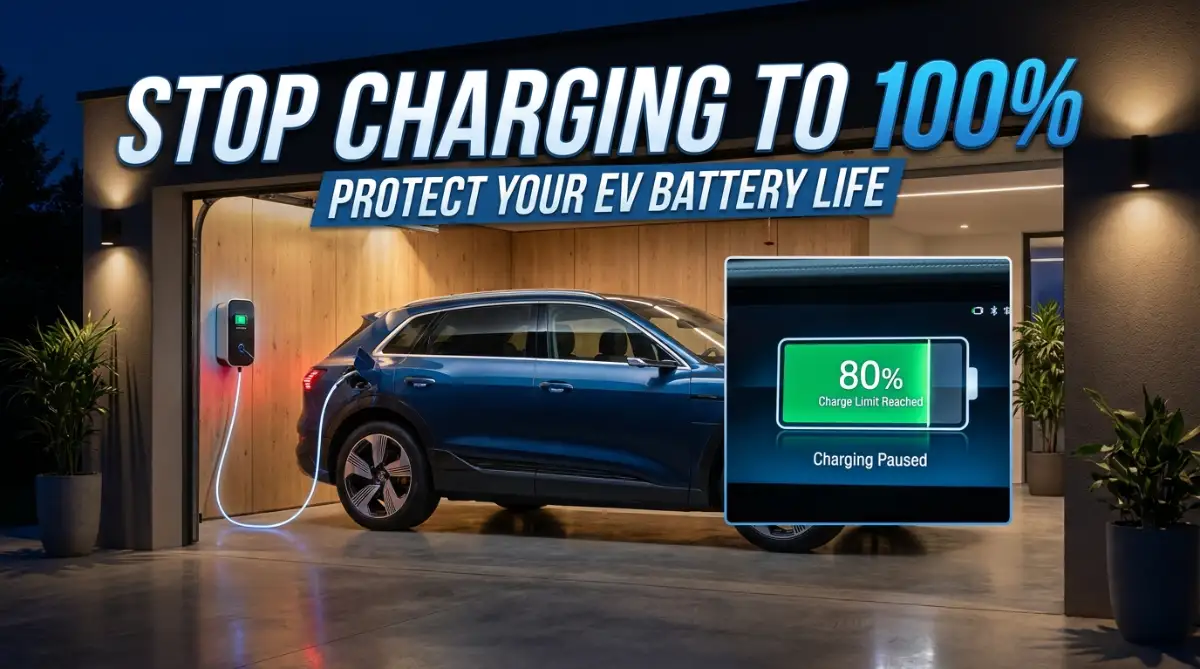
- Stop at 80%: Pushing a fast charger to 100% in extreme heat stresses out your battery cells. Unplug at 80% and keep moving.
Why Hot Weather is Your Battery's Worst Enemy
To truly fix this annoying problem, we first need to understand what exactly happens inside your car when the temperature spikes. Lithium-ion batteries are surprisingly similar to the human body. They like to exist comfortably around room temperature.
When things get way too hot, the battery gets highly stressed and starts working inefficiently. Your car has a built-in thermal management system, which is essentially a giant refrigerator for your battery pack. When you drive on hot pavement, this system works overtime to cool the battery down.
This cooling process requires a massive amount of energy. Instead of sending power to your wheels to move you forward, your car is forced to use that energy just to keep itself from overheating. It is exactly like trying to run a long marathon while carrying a heavy backpack. You are going to get tired much faster.
The hotter the asphalt gets, the harder your car has to work to maintain a safe internal temperature. This is the exact reason why you see your estimated miles completely plummet on a hot afternoon, even if you are driving perfectly fine.
The Secret Weapon: Pre-Cooling Before You Unplug
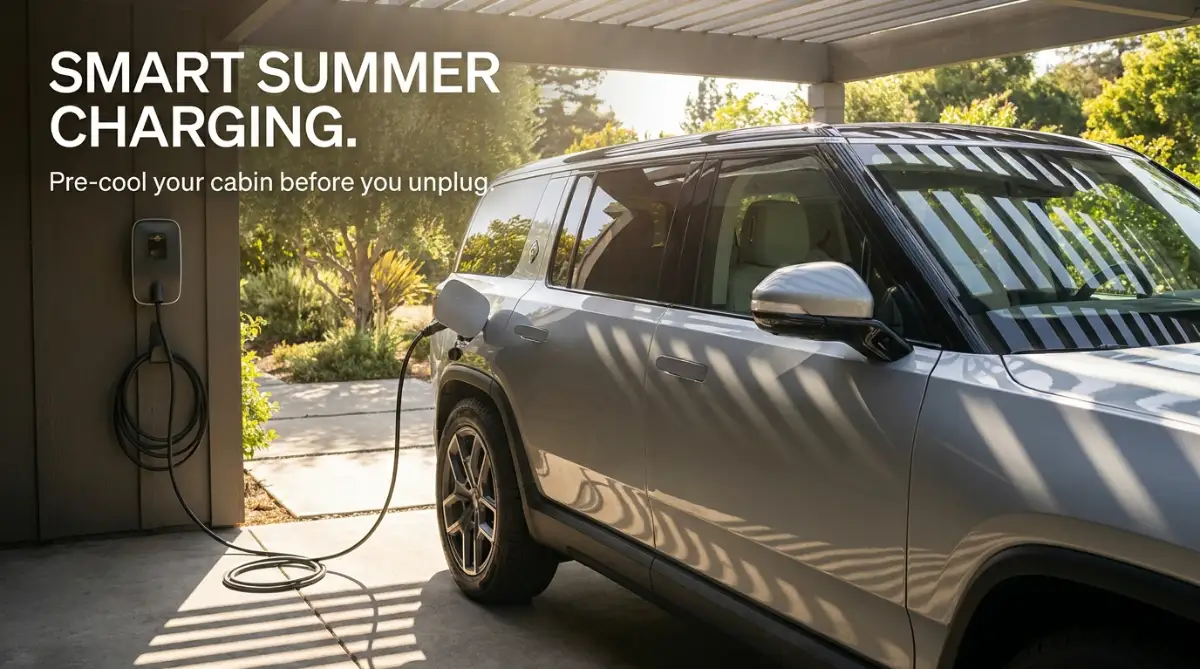
One of the absolute smartest things you can do to protect your battery happens before you even open the car door. We call this preconditioning, and it is a total game-changer for summer driving. When your car is safely plugged into your home charger, you can use your phone app to turn on the air conditioning.
This pulls electricity directly from your house, not from your car's battery. By doing this, you cool down the entire cabin and the battery pack while still maintaining a completely full charge. When you finally unplug and start driving, your car does not have to fight to cool down a boiling hot interior.
If you want to see exactly how much battery you save by preconditioning your car in the garage, check out this incredible real-world test.
Real-World Pre-Cooling Impact (95°F / 35°C Day)
The energy required to maintain a cool temperature is significantly lower than the energy needed to drop the temperature from extreme heat. Think of it like cooling down a hot oven. The initial blast of cold air takes the most effort. By shifting that heavy workload to your home's power grid, you leave your car's battery entirely dedicated to driving.
This simple habit can instantly save you up to ten percent of your daily range. You step into a wonderfully cold car, and your battery stays totally full.
Mastering Your Cabin Climate Control
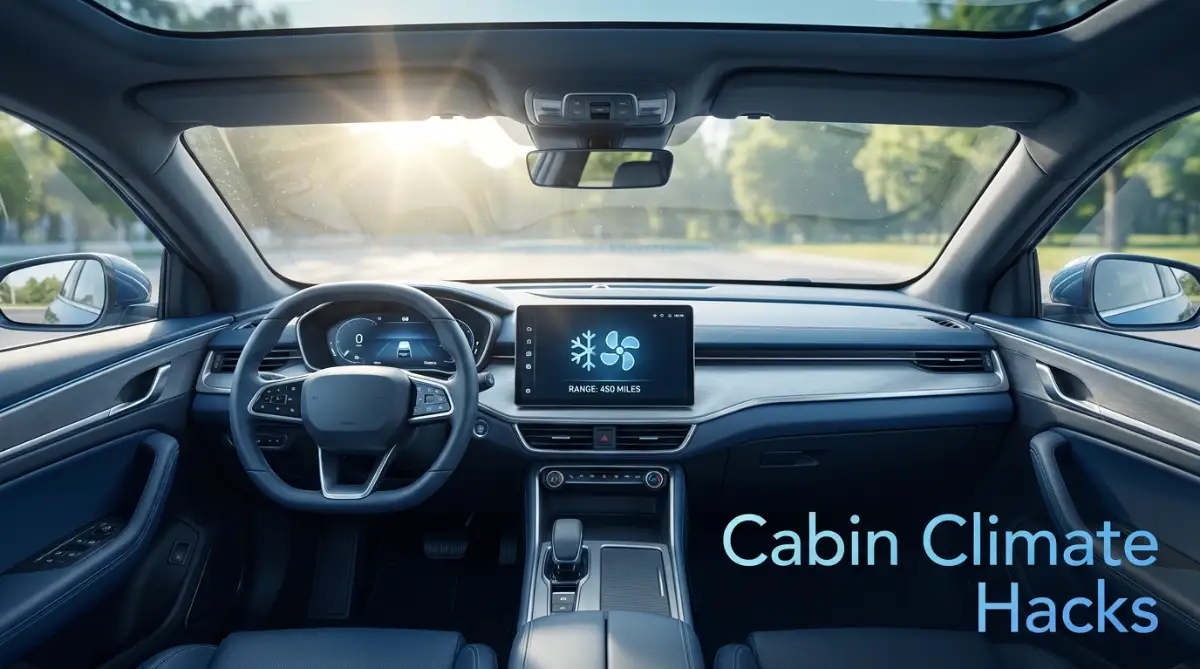
Once you are actually on the road, how you manage the air inside the car plays a massive role in your overall efficiency. Many drivers make the mistake of leaving their climate control on the automatic setting at a freezing temperature. This constantly drains power as the car fights the strong summer sun hitting the glass.
Instead, try setting your air conditioning to a comfortable, moderate level and use the manual fan speed. Pointing the vents directly at your face and body gives you the sensation of being cold without forcing the entire cabin to act like a meat freezer.
I used to blast the air conditioning at the lowest possible setting the minute I got into my boiling car, which instantly drained my battery. Then I realized that simply rolling down the windows for the first two minutes to push the trapped hot air out, followed by turning on my ventilated seats, saved me an absolute ton of energy. My daily commute became so much more efficient once I stopped fighting the hot air and started working with my car's features.
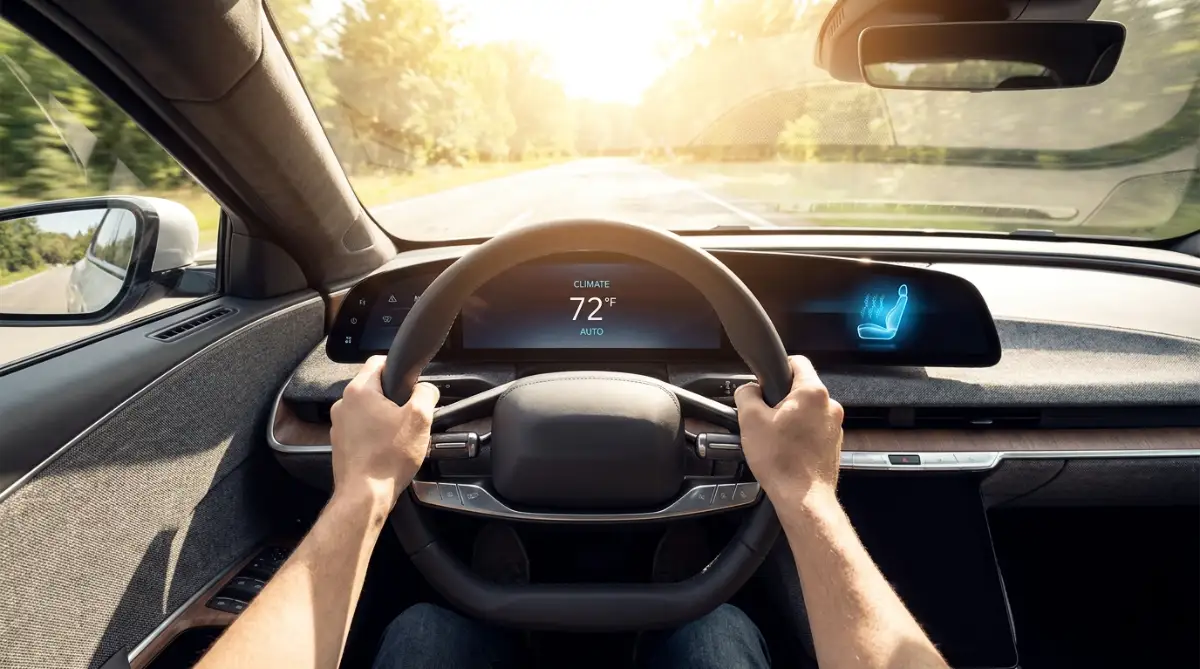
Using seat coolers is a remarkably efficient way to stay comfortable. They use a tiny fraction of the electricity that the main compressor uses. If your car has them, turn them on immediately. You can then raise the main cabin temperature by a few degrees without ever feeling warm.
The Great Debate: Windows Down vs Air Conditioning
There is a long-standing argument among drivers about whether rolling down the windows is better than using the air conditioner. The actual science behind this is fascinating and very easy to apply to your daily trips. When you drive at slow speeds around your neighborhood, rolling the windows down is highly efficient.
The aerodynamic drag is very low, so the open windows do not slow the car down much. At these low speeds, the air conditioner would use far more power than the aerodynamic drag takes away. So, if you are stuck in city traffic, let the natural breeze cool you down.
However, everything completely changes once you merge onto a fast highway. At high speeds, open windows act like giant parachutes attached to the sides of your car. This massive aerodynamic drag forces your electric motors to work incredibly hard just to push through the air.
At highway speeds, running the air conditioner is actually much more efficient than driving with the windows open. A smart driver knows exactly when to switch between the two methods based on their driving speed.
How Eco Mode Saves Your Summer Road Trips
Almost every modern electric car comes with a specific driving setting called Eco Mode. While many people ignore it, this button is your best friend during a severe heatwave. When you activate this mode, the car automatically makes a series of smart decisions to conserve power.
First, it usually dulls the response of the accelerator pedal. This prevents you from taking off too quickly at green lights, which is a major waste of battery power. Smooth and steady acceleration is always the key to maintaining good range.
More importantly, Eco Mode often changes how the climate control system operates. It gently reduces the power of the air conditioning compressor, allowing it to run much more efficiently in the background. You might barely notice the difference in temperature, but your battery definitely notices the reduced workload.
Some cars will even shift more power to the front wheels or adjust regenerative braking specifically for better efficiency. Making it a strong habit to tap that Eco button on hot days will keep your estimated range dropping at a normal, predictable pace.
Parking Secrets Most Drivers Completely Ignore
Where you choose to leave your car during the day has a massive impact on your evening commute. Parking in the direct sunlight turns your vehicle into a giant greenhouse. The interior temperature can easily exceed one hundred and forty degrees within just an hour.
When you return, the car has to use a ridiculous amount of battery just to make the steering wheel safe to touch. Always look for a shaded spot, even if it means walking a little further to the store entrance. Parking under a tree or next to a tall building makes a huge difference.
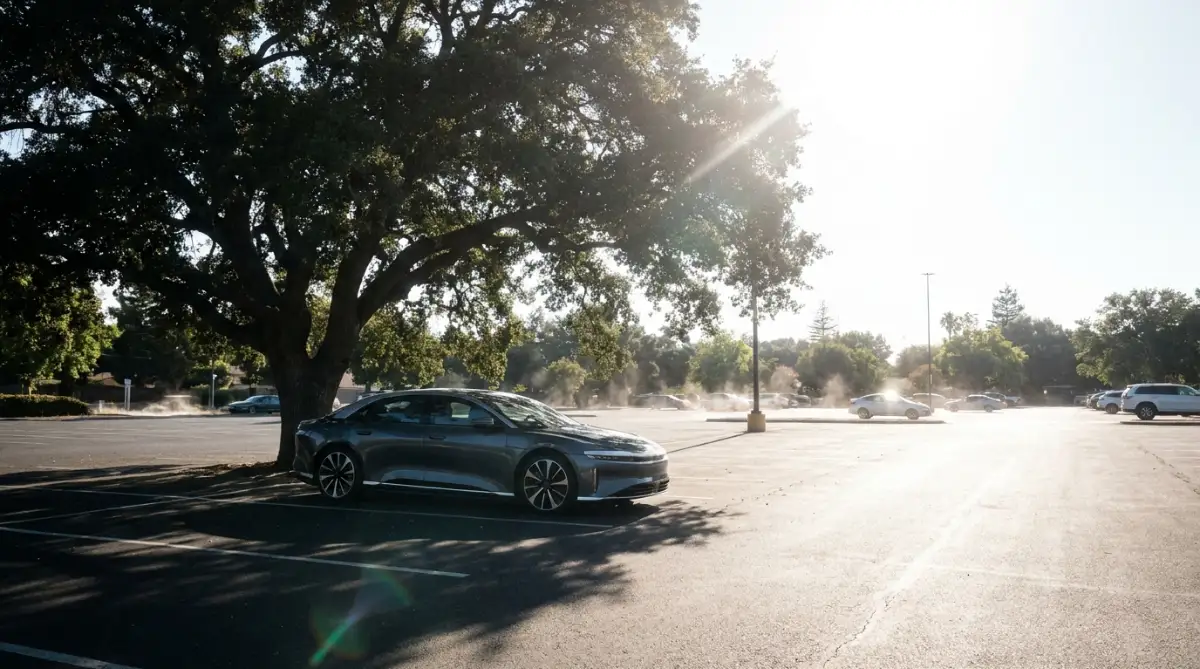
If you absolutely cannot find any shade, you should seriously consider buying a high-quality windshield sunshade. These simple reflective screens block the harsh UV rays from cooking your dashboard and heating up the cabin air. Some modern electric cars also have a feature that automatically vents the windows slightly when it gets too hot inside.
If you are parking in a secure area, leaving the windows cracked by just an inch allows the boiling air to naturally escape. Keeping the starting temperature lower means less work for your battery when you finally turn the car back on.
The Reality of Hot Pavement and Tire Pressure
One of the most overlooked aspects of summer driving is what happens to your tires when they touch boiling black asphalt. The physical heat from the road transfers directly into your tires, causing the air inside them to expand rapidly. If your tires were already full, this extreme heat can cause them to become dangerously over-inflated.
Over-inflated tires give you a very bumpy ride and reduce the amount of grip you have on the road. On the flip side, if your tires are under-inflated, they create excess friction against the road surface.
This extra friction means your electric motors have to pull more electricity just to keep the car rolling at a steady speed. You should make a habit of checking your tire pressure early in the morning, before the sun has heated up the driveway. Always fill them to the exact pressure recommended on the sticker inside your driver's side door.
To understand exactly how heat causes tire blowouts, you can check out the NHTSA guidelines on summer tire safety.
Properly inflated tires roll smoothly and effortlessly, completely minimizing rolling resistance. This simple five-minute maintenance check can easily add several extra miles to your total range.
Smart Charging Habits for Blistering Days
Charging your car creates its own natural heat, especially when using a fast charger on a highway. When you combine this charging heat with a blazing summer afternoon, your battery goes into thermal shock. To protect itself, the car will forcefully slow down the charging speed.
You might plug into a fast charger expecting to leave in twenty minutes, only to find yourself sitting there for an hour. Whenever possible, try to do your heavy charging during the cool evening hours or very early in the morning.
If you absolutely must use a fast charger during the peak heat of the day, do not try to force the battery all the way to one hundred percent. The battery gets the hottest during the last twenty percent of the charging cycle. It is much smarter, and much faster, to unplug when you hit eighty percent and just drive to the next station.
This keeps the battery temperature in a safe zone and saves you from sitting in a baking parking lot.
Quick Q&A: Summer Charging Myths
- Q: Will fast charging in the heat permanently ruin my battery?
- A: Not immediately, but doing it every day will speed up battery aging. Your car has a built-in safety net that slows down the charge to protect the cells.
- Q: Should I pour cold water on my car while it charges to help it cool?
- A: Never do this! Sudden temperature changes can shock the glass and metal, and it won't reach the battery pack anyway. Just park in the shade.
Why Ceramic Window Tint is a Worthy Investment
If you live in an area that constantly experiences harsh summers, you might want to consider upgrading your window glass. Standard factory windows do a decent job of blocking basic sunlight, but they let a massive amount of infrared heat pass straight through. This heat gets trapped inside the cabin, constantly fighting your air conditioner.
Ceramic window tint is a special type of film that specifically targets and blocks this invisible infrared heat. It is completely different from cheap, dark tint that just makes the windows hard to see through.
You can actually install a very light, almost clear ceramic film on your windows and still block an incredible amount of heat. I had a clear ceramic film placed on my large panoramic glass roof, and the difference was instantly noticeable. The top of my head stopped feeling like it was burning, and my climate control system settled into a very low, quiet fan speed.
By physically blocking the heat from entering the car in the first place, your battery never has to waste power cooling it down. It is a one-time purchase that pays you back in saved electricity and improved comfort every single day.
Mastering Regenerative Braking on Hot Roads
Electric vehicles have a unique feature called regenerative braking, which captures energy when you slow down and feeds it back into the battery. This system is normally incredibly helpful for extending your driving range. However, extremely hot batteries sometimes struggle to accept this rapid influx of captured energy safely.
If your battery is already sweating from a hot drive, the car's computer might secretly reduce your regenerative braking power to protect the internal cells. This means the car will not slow down as aggressively when you lift your foot off the pedal.
To get the most out of your captured energy, try to drive as smoothly as possible. Look far ahead down the road and anticipate red lights or stopped traffic well in advance. Slowly ease off the pedal rather than waiting until the last second to brake.
By giving the car more time to gently capture the energy, you prevent the system from getting overwhelmed by heat. Smooth driving not only keeps your passengers comfortable, but it also ensures your battery can safely swallow every drop of free energy it creates.
Managing Weight and Aerodynamics
We often treat our cars like rolling storage units, leaving heavy items in the trunk long after we actually need them. Every single pound of extra weight in your vehicle forces the electric motors to work harder. While you might not notice a few extra bags of potting soil during the winter, that extra weight becomes a massive burden during a heatwave.
Take ten minutes this weekend to completely clean out your trunk and remove anything you do not absolutely need for your daily commute. A lighter car simply rolls easier and requires far less battery power to accelerate from a dead stop.
The same rule applies to the outside of your vehicle. If you have a roof rack, a cargo box, or a bike rack attached to your car, take it off when you are not actively using it. These external accessories completely ruin the smooth aerodynamic shape of your electric car.
They catch the wind and create a huge amount of drag, especially when driving fast on the highway. Removing a bulky roof box can sometimes improve your highway efficiency by over fifteen percent. Keeping the exterior clean and sleek allows the car to slice through the hot summer air with minimal effort.
Next-Level Strategies for Ultimate Battery Preservation
Once you master the basic daily habits, it is time to look at the deeper mechanics of your electric vehicle. Truly maximizing your range during a heatwave requires a slightly more strategic approach to how you plan your drives. The most successful electric car owners do not just rely on the dashboard guess-o-meter.
Instead, they actively use smart technology to outsmart the brutal summer sun. You need to start thinking about your battery as a living organism that needs careful management, especially when the environment becomes hostile.
The Magic of Topographical Route Planning
One of the biggest hidden drains on your battery during the summer is driving uphill. When you combine the extreme weight of a battery pack with a steep mountain climb, your electric motors generate a massive amount of internal heat. Your thermal management system then has to work twice as hard to cool everything down.
Instead of relying on standard maps, I highly recommend using dedicated route planners like A Better Routeplanner (ABRP) to map out your charging stops based on actual road elevation and weather conditions. These specialized apps analyze the actual physical elevation of your route before you even leave your driveway.
If an app shows a route with a massive uphill climb, it might suggest a slightly longer but much flatter alternative road. Taking the flat road keeps your battery temperature stable and prevents unexpected range drops. It is exactly like choosing to walk around a steep hill rather than climbing directly over it on a blistering hot afternoon.
You arrive at your destination feeling much more relaxed, and your battery holds onto significantly more power.
Finding the Shaded Charging Oasis
Not all charging stations are created equal, especially when the temperature hits triple digits. If you look closely at community-driven charging maps on your phone, you can actually see user photos of the charging locations. You should specifically hunt for charging stations that are located under large solar canopies or built inside concrete parking garages.
Plugging your car into a completely exposed charger in the middle of a hot asphalt parking lot is a terrible idea. The black pavement radiates intense heat right up into the bottom of your car where the battery lives.
When you find a shaded station, your car does not have to fight the ambient environment while it accepts electricity. The charging session finishes much faster because the battery stays in a comfortable temperature zone. You get back on the road quicker, and you save a surprising amount of cooling energy.
The 80-Percent Sweet Spot Rule
There is a very specific scientific reason why almost every manufacturer tells you not to charge past eighty percent on a daily basis. Lithium-ion batteries experience extreme physical stress when they are stuffed completely full of electricity. Imagine eating a massive Thanksgiving dinner until your stomach physically hurts.
That uncomfortable, bloated feeling is exactly what your battery experiences when it sits at one hundred percent. Now, imagine feeling that way while standing in the middle of a boiling hot desert.
The combination of a totally full battery and extreme outside heat accelerates chemical degradation faster than anything else. By keeping your daily charge limit set securely at eighty percent, you give the battery cells room to breathe and expand safely. You will preserve the long-term health of your car and maintain your original driving range for many years to come.
💡 Pro-Tip for Daily Commuters:
If you know you have a long drive ahead and actually need 100% battery, schedule your home charger to finish charging right when you wake up. This way, the battery does not sit full and stressed in the heat for hours before you leave. You grab the car while the battery is still fresh from the charge!
Maintaining Your Cabin Air Filters
Most people completely forget that their electric vehicle has a physical air filter for the climate control system. Over the course of a year, this filter gets clogged with dust, pollen, and road dirt. When summer arrives, you might notice that your air conditioning seems weak or noisy.
A clogged filter forces the blower motor to pull much more electricity just to push the same amount of cold air into the cabin. This extra electrical draw silently eats away at your driving range every single minute you are on the road.
Replacing this filter is usually a very cheap and easy five-minute job you can do right in your driveway. A brand new, clean filter allows the cold air to flow effortlessly into the car. Your climate system reaches the target temperature much faster, allowing the energy-hungry compressor to turn off sooner.
This tiny maintenance detail makes a shocking difference in how far you can drive on a hot afternoon. According to automotive engineering standards for climate control, maintaining clear airflow is one of the easiest ways to improve overall vehicle efficiency.
Heartbreaking Mistakes That Quietly Destroy Your EV Battery
Even with the best intentions, many drivers accidentally ruin their summer road trips by making completely avoidable errors. The biggest issue with electric cars is that they do not complain loudly when they are hurting. A gas car might overheat and blow steam out of the hood, but an electric car just quietly degrades its battery cells.
By the time you finally realize what you have done wrong, the permanent damage is already locked in. Let us look at the most dangerous habits you need to break right now.
The Fast-Charging Road Trip Trap
We all want to get to our vacation spot as quickly as humanly possible. This often leads drivers to hit three or four ultra-fast chargers in a single afternoon. When you force massive amounts of electricity into the battery rapidly, you generate an incredible amount of internal heat.
Doing this repeatedly on a day with record-breaking temperatures overwhelms the car's cooling system. This phenomenon is commonly known as rapid-gating in the electric vehicle community.
To protect the battery from literally melting, the car's computer will suddenly throttle your charging speed down to a painfully slow crawl. You might expect a quick twenty-minute stop, but end up sitting in a hot parking lot for two hours.
Always try to mix in slower charging sessions if you are taking a multi-day trip in extreme heat. Pushing the battery too hard for too long will absolutely ruin your travel schedule and fry your nerves.
Ignoring Critical Software Updates
Your electric vehicle is essentially a giant computer on wheels. The manufacturer is constantly monitoring real-world data from thousands of cars on the road. When they discover a better way to manage battery temperatures or optimize air conditioning performance, they send out a software update.
Many drivers ignore these alerts on their dashboard because they do not want to wait for the installation process to finish. This is a massive mistake that directly hurts your summer driving efficiency.
These updates often contain specific adjustments to the thermal management system that make cooling the battery much more efficient. Skipping these free improvements means you are leaving valuable driving miles completely on the table. Always connect your car to your home WiFi and install these updates overnight while you sleep.
Think of these software updates as free upgrades from the dealership—they quietly fix cooling issues you didn't even know you had.
Leaving the Car Empty in the Sun
We already talked about the dangers of leaving a fully charged car in the hot sun. However, leaving your car completely empty in a blazing parking lot is actually much worse. When your battery level drops below ten percent, the car might disable the automatic battery cooling system to save the last few drops of power.
This means your battery pack is sitting totally defenseless against the brutal summer heat baking the asphalt beneath it. The internal cells can become dangerously unbalanced in this vulnerable state.
If the heat causes permanent cell damage, the financial consequences are absolutely devastating. A full battery pack replacement completely out of pocket can easily cost more than fifteen thousand dollars.
Getting hit with a massive replacement bill because you left the car sitting empty in the baking sun is a nightmare nobody wants to deal with. Never let your car sit outside in the heat with a nearly empty battery, even if you plan to charge it later that evening.
Using Unverified Third-Party Charging Adapters
With so many different charging networks popping up, it is very tempting to buy cheap adapters from random online sellers. These budget adapters promise to let you plug your car into any brand of charger you find on the highway.
However, these cheap pieces of plastic rarely have the proper heat sensors built into them. When you push high voltage through a cheap adapter on a hundred-degree day, the metal pins can easily warp, melt, or even fuse directly to your car's charging port.
A melted charging port will leave you completely stranded and require a very expensive tow to the nearest dealership. Replacing the main charging hardware is a nightmare scenario you definitely want to avoid. Always spend the extra money to buy official, heavy-duty adapters directly from your car's manufacturer.
Sticking to official equipment might cost a few extra bucks upfront, but it completely protects your vehicle's sensitive electronics from going up in smoke.
Your Roadmap to Stress-Free Summer Driving
Driving an electric vehicle during a severe heatwave does not have to be a miserable or anxiety-inducing experience. The key to enjoying your summer travels is simply understanding how your amazing machine actually works. By shifting your mindset from a gas-station mentality to a smart-charging mentality, you completely take control of your journey.
You no longer have to stare nervously at the remaining mileage number while sweating in a hot cabin.
Every small adjustment you make adds up to a massive improvement in your overall driving experience. Whether you are pre-cooling your cabin in the morning or actively seeking out shaded parking spots at the grocery store, you are actively protecting your investment.
Treating your battery with respect means it will happily serve you for hundreds of thousands of miles without a single issue. The peace of mind that comes from knowing you are driving efficiently is truly priceless.
Taking care of your electric car today guarantees a secure and comfortable ride tomorrow.
I honestly used to hate driving my electric car in July because I was constantly terrified of running out of power on the highway. Once I started applying these simple cooling hacks and smart charging routines, my entire perspective shifted, and I finally started enjoying my summer road trips again. You have the power to completely eliminate range anxiety starting right now, so get out there and enjoy the open road with complete confidence!
Common Questions About Hot Weather EV Driving
Does driving at night save electric car battery?
Yes, driving at night is significantly better for your battery during a summer heatwave. The outside air is much cooler, meaning your car's thermal management system requires far less energy to keep the battery safe. You also do not have to fight the direct radiant heat from the sun hitting your windows, which drastically lowers your air conditioning usage.
How much range do you actually lose in extreme heat?
Most drivers will see a range drop of roughly ten to twenty percent when temperatures climb above ninety-five degrees. This drop happens entirely because the car is forced to use heavy amounts of battery power for aggressive cooling systems rather than pushing the wheels. If you precondition the car while plugged in, you can easily win back a large portion of those lost miles.
Is it safe to wash an electric car in the hot sun?
You can safely wash your electric car anytime, but doing it in direct summer sunlight is generally a bad idea for the paint. The water droplets dry incredibly fast on the hot metal, leaving terrible hard water spots all over the clear coat. It is always best to wash your car early in the morning or late in the evening when the body panels are cool to the touch.
Should I leave my EV plugged in during a heatwave?
Absolutely, keeping your car plugged in at home during a massive heatwave is one of the smartest things you can do. When plugged into the wall, the car can pull electricity directly from your house to run the battery cooling fans throughout the day. This keeps the battery perfectly healthy without draining your actual driving range while it sits in the garage.
Will turning off the AC completely save my battery?
Turning off your air conditioning will definitely save some battery power, but it is rarely worth the extreme physical discomfort. If you end up rolling down the windows at high highway speeds to cool off, the aerodynamic drag will actually waste more energy than the AC would have used. It is much smarter to use the AC on a low, manual setting paired with ventilated seats.
Disclaimer: The information provided in this article is for educational and informational purposes only. Automotive technologies change frequently, and individual vehicle performance may vary based on driving habits, specific models, and environmental conditions. Always consult your official vehicle owner's manual or contact your manufacturer directly for specific charging guidelines and safety procedures. We are not responsible for any damage or financial loss resulting from the application of these tips.