How My First Electric Road Trip Almost Broke My Spirit
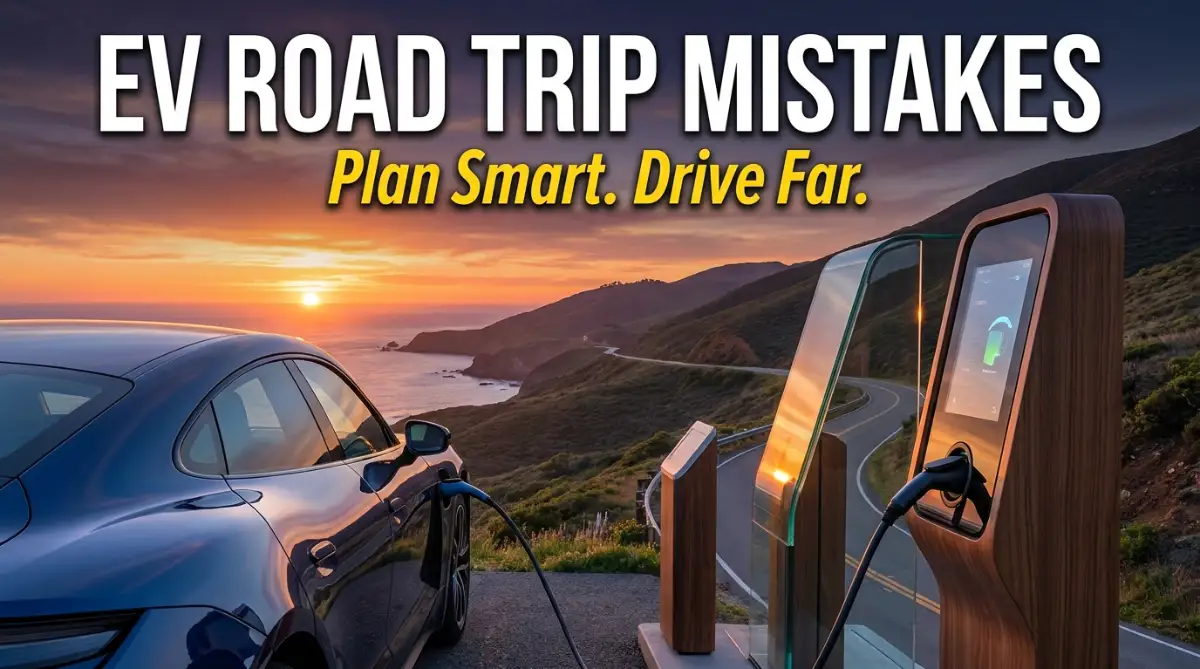
So, there I was, staring at a broken public charger with exactly 4% battery left on my dashboard. I had two hungry kids in the back seat and a melting ice cream cone dripping onto my shoes. I really thought I had mapped out my first electric road trip perfectly. Spoiler alert: I didn't. What was supposed to be a fun family getaway turned into a sweaty, math-filled panic attack. But that terrible afternoon taught me exactly how to outsmart the system. Let me show you how I turned that nightmare into a foolproof routine for hitting the road without a single drop of battery anxiety.
Before we get to the good stuff, you have to understand why so many of us fail on our first try. We worry about running the air conditioning, we panic on steep hills, and we trust our phone apps a little too much. It turns what should be a relaxing vacation into a stressful countdown. But it really does not have to be that way.
My Personal Cheat Sheet for EV Road Trips
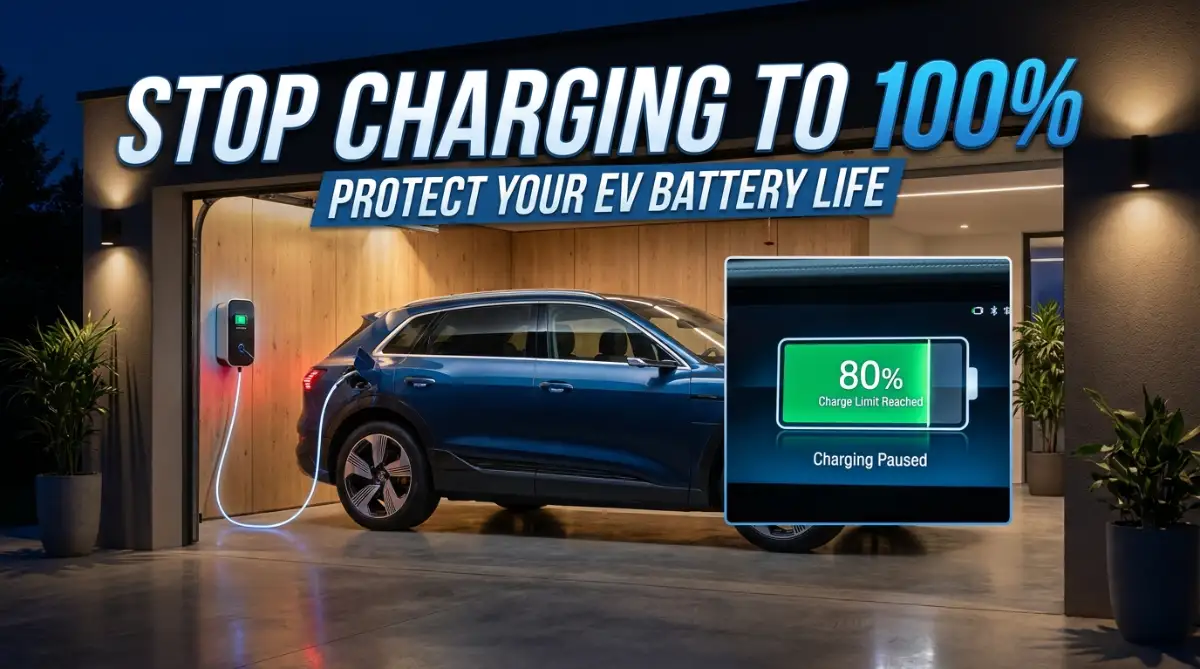
- The 80% Rule: Never wait at a public fast charger for 100% unless you are heading into a total charging desert. It wastes too much time.
- Speed Kills Range: Keep your highway speed around 65 mph. The faster you drive, the faster the wind resistance eats your battery.
- Always Bring a Backup Plan: Never trust a single app. Carry a portable charger and download at least three different network apps before you leave home.
- Pre-heat While Plugged In: In winter, warm up your car’s cabin using your home's electricity before you unplug. Save your battery for the actual driving!
Mastering the Art of Electric Travel: Smart Battery and Route Management
Getting past the fear of long-distance electric driving requires a big shift in how you think about travel. You cannot just hop in the driver seat and figure it out on the fly. You need to approach your journey with a completely different mindset.
When you start treating your electric car's battery like a scientific instrument rather than a bottomless fuel tank, everything changes. The secret to a perfect trip lies in understanding exactly how your specific vehicle reacts to the world around it.
Understanding the Physics of Your Battery
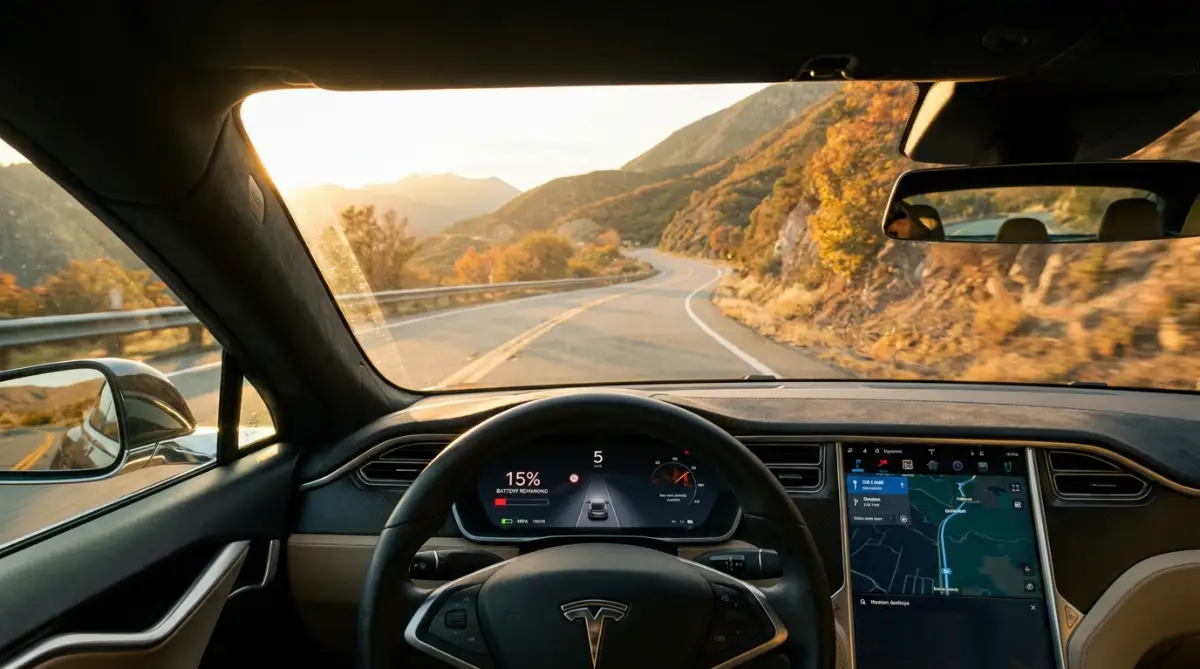
Many new drivers assume that if their car says it has a 300-mile range, they can drive exactly 300 miles. This is one of the biggest misconceptions in the electric vehicle community. That number is calculated based on perfect conditions, driving at moderate speeds on completely flat ground.
In reality, your battery is highly sensitive to the laws of physics. If you are driving on an interstate at 75 miles per hour, you are pushing a lot of air out of the way. This aerodynamic drag forces your electric motors to work significantly harder.
You might notice that driving just 10 miles per hour faster can reduce your overall efficiency by up to twenty percent. This means your 300-mile range could easily shrink to 240 miles just because you have a heavy foot on the highway.
Here is a quick look at how highway speeds actually impact your EV range based on my own testing:
Pro Tip: I used to speed up to save time on my trips, only to realize I was spending an extra forty minutes waiting at the charger because I drained my battery so fast. Now, I keep my speed at exactly 65 on the highway, and I actually reach my destinations much faster overall!
The Cold Weather Trap
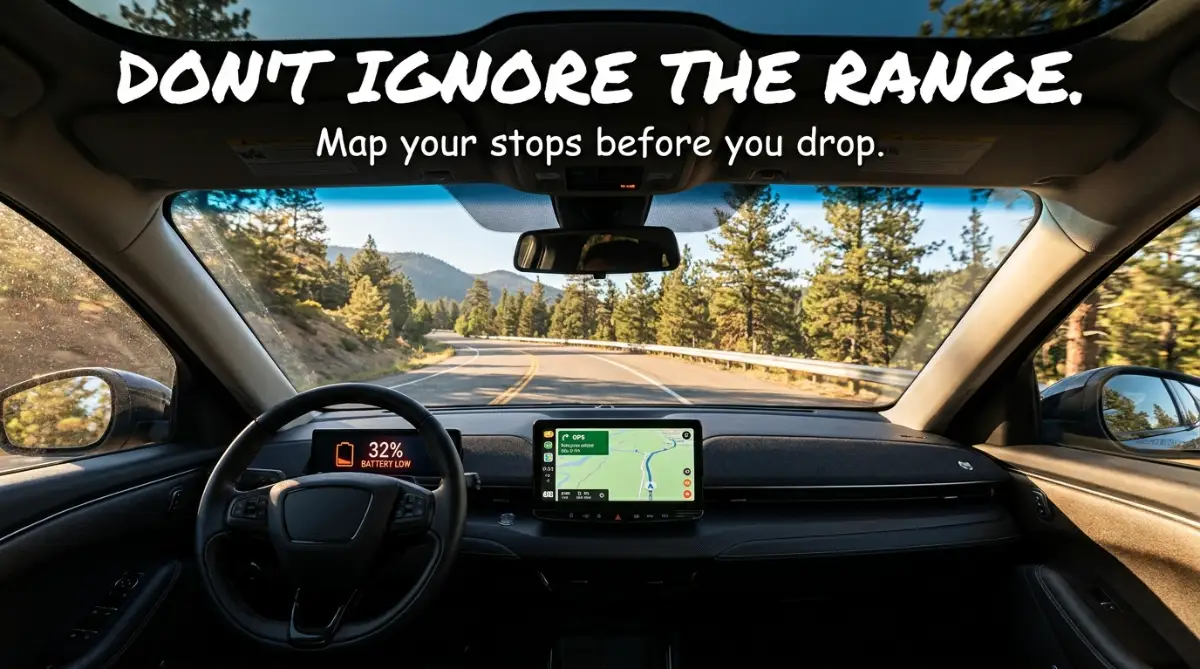
Another massive factor that catches drivers off guard is the outside temperature. Electric batteries rely on chemical reactions to generate power, and those reactions slow down in the cold. If you are traveling during the winter months, your battery has to use its own energy just to keep itself warm.
This thermal management system is essential for the health of your car, but it acts like a hidden tax on your range. On a freezing day, you can expect to lose up to thirty percent of your expected mileage right off the top.
If you do not factor this weather penalty into your route planning, you will find yourself dangerously short on power before reaching your first planned stop. To fight this, you should always pre-condition your cabin and battery while the car is still plugged in at home.
By pulling power directly from your house to warm up the car, you save your battery's precious stored energy for the actual driving. It is a simple habit that makes a world of difference when the temperatures drop.
Why Topography is Your Silent Enemy
Flat roads give you predictable results, but mountains and hills tell a completely different story. Driving up a steep incline requires a huge amount of sustained power from your motors. You might drive only five physical miles up a mountain, but your car's computer might deduct fifteen miles from your range estimate.
Are you struggling to understand how to map your charging stops efficiently? Check out this highly detailed guide that breaks down the best apps and strategies to use on the road.
The good news is that what goes up must come down. Electric vehicles have a brilliant feature called regenerative braking. When you drive down the other side of that mountain, the electric motors run in reverse, acting as generators.
This process captures the kinetic energy of your moving car and feeds it directly back into your battery pack. I have actually gained back five or six miles of range just by coasting down a long, steep grade.
However, you should never rely on regenerative braking to save you if you miscalculated your climb. Always map out the elevation changes of your route before you leave your driveway.
The 80 Percent Charging Rule
One of the most common mistakes people make at public charging stations is trying to fill their battery all the way up to one hundred percent. This shows a fundamental misunderstanding of how fast-charging technology actually works.
Think of charging your car like packing a suitcase. When the suitcase is completely empty, it is incredibly easy to toss your clothes inside very quickly. But as the suitcase gets closer to being full, you have to start carefully folding and pressing things down to make everything fit safely.
Your car's battery management system does the exact same thing to protect the internal battery cells. From ten percent to about eighty percent, the car accepts electricity at an incredibly rapid pace. You might gain two hundred miles of range in just twenty or thirty minutes.
But the moment you hit that eighty percent mark, the car intentionally slows down the charging speed to prevent overheating and cell damage. Getting from eighty to one hundred percent can often take just as long as it took to get from ten to eighty.
To give you a clear picture, here is exactly how my car’s charging speed changes as the battery fills up:
If you are sitting at a public fast charger waiting for that last twenty percent, you are wasting an enormous amount of your travel time. The smartest strategy is to charge only enough to confidently reach your next planned charging station, plus a comfortable safety buffer.
Planning the Perfect Safety Buffer
Speaking of safety buffers, planning to arrive at a charger with only a two percent charge is a recipe for extreme anxiety. You are essentially betting your entire trip on the assumption that the charger will be fully functional and available.
In the real world, things break down. Public charging infrastructure is still growing, and you will occasionally encounter stations that are offline due to network errors or physical damage. Sometimes, every single plug is occupied by other travelers, and the waiting line stretches around the parking lot.
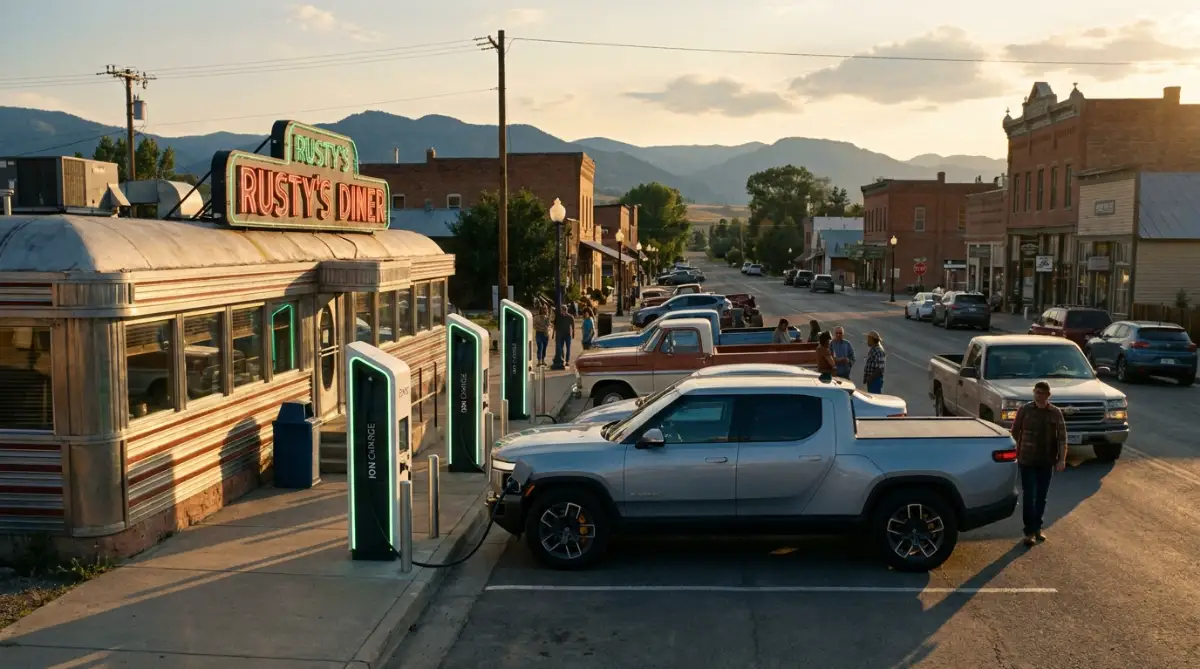
To protect your sanity, you should always aim to arrive at your next stop with at least a fifteen to twenty percent charge remaining. This specific buffer gives you options.
If the charger you intended to use is broken or overcrowded, that twenty percent buffer gives you enough remaining power to drive to an alternative station a few towns over. It turns a potential roadside emergency into a minor inconvenience.
The Myth of Relying on Just One App
When I first started driving electric, I downloaded the app for my car's specific brand and ignored everything else. I assumed my dashboard navigation was the only tool I would ever need. This is a very limiting way to travel.
Your built-in navigation might only show you charging stations that belong to a specific network partnership. It might completely hide brand-new stations built by local utility companies or smaller third-party networks.
To become a true expert at electric travel, you need a diverse toolkit on your smartphone. You should download community-driven mapping applications where real drivers leave comments and reviews about specific chargers.
These community reviews are absolute gold. They will tell you if the card reader at a specific machine is broken, or if the station output is heavily reduced. Having this real-time, crowd-sourced information prevents you from driving miles out of your way just to find a dead machine.
Preparing for the Charging Desert
There will be times when you want to visit a national park, a remote beach, or a small rural town. These areas are often considered "charging deserts" because they lack high-speed infrastructure.
Traveling into these zones requires a very specific plan. You cannot simply hope to find a plug when you get there. You must identify the very last high-speed charger on your route before you enter the desert.
When you reach this final fast charger, this is the one and only time you should break the eighty percent rule. You need to charge your car as close to one hundred percent as possible to give yourself the maximum physical range to explore the remote area and make it back to civilization.
It is also incredibly wise to carry a portable charging cable in your trunk. While plugging into a standard household outlet provides a very slow charge, it acts as the ultimate safety net. If you are staying at an Airbnb or visiting family in a rural area, you can slowly trickle-charge your car overnight, gaining enough miles to get back to a major highway.
Managing Your Cabin Comfort Efficiently
Many drivers forget that keeping the human body comfortable takes a lot of energy. On a scorching hot summer day, blasting your air conditioning on the highest setting can noticeably drain your battery.
Instead of relying solely on the main cabin air conditioning, use your seat coolers if your car has them. Cooling the seat directly against your body uses a tiny fraction of the electricity required to cool the entire volume of air inside the car.
The same logic applies to winter travel. Heating the cabin air requires a powerful electric heater, which eats into your driving range heavily. Using your heated steering wheel and heated seats will keep you perfectly warm while saving massive amounts of battery power.
These small, subtle changes in how you interact with your vehicle add up over a long journey. By combining smart route planning, understanding your battery's physical limits, and managing your comfort systems wisely, you completely eliminate the stress of electric travel.
You no longer feel like you are at the mercy of the machine. Instead, you feel in total control, ready to enjoy the open road with complete confidence and peace of mind.
Pro-Level Secrets for a Flawless Electric Journey
Once you understand the basic physical limits of your battery, you can start applying advanced strategies to make your travel completely seamless. The goal is to spend less time worrying about your dashboard screen and more time enjoying the actual drive. I remember my second big trip was infinitely better than my first, simply because I stopped treating my electric car like a traditional gas vehicle.
One of the biggest game-changers for any long journey is mastering the art of destination charging. Instead of relying purely on fast chargers along the highway, you should actively seek out hotels or Airbnbs that offer overnight plug-ins. Waking up to a completely full battery changes the entire rhythm of your travel day.
You effectively get your first couple of hundred miles completely for free, without wasting a single minute of your daylight hours waiting at a public station. If you are staying with friends or family, you can achieve a similar result by using a standard wall outlet. While it charges slowly, plugging in for twelve to fourteen hours overnight adds a significant safety net to your range.
If you plan to do this often, it really helps to understand how to properly prepare your home base as well. You can learn exactly how to set up your own space by reading about preparing your home for an electric car.
The Ultimate RV Park Backup Plan
Sometimes, you will find yourself in areas where modern fast chargers simply do not exist. This is where an expert electric driver relies on a hidden network that most people completely ignore. I am talking about traditional RV parks and campgrounds.
Campgrounds across the country are equipped with heavy-duty NEMA 14-50 electrical outlets to power large motorhomes. These are the exact same high-voltage outlets that many people use to power their electric vehicle chargers at home. If you carry a portable level-two charging cable in your trunk, you suddenly have access to thousands of emergency charging locations.
Many campground owners will happily let you plug in for a few hours for a small fee. It is a fantastic trick that has saved me from calling a tow truck on more than one occasion. You can sit at a picnic table, enjoy some fresh air, and gain twenty to thirty miles of range per hour.
Mastering the Wind and Weather
We already talked about the cold, but there is another invisible force that will absolutely destroy your driving range if you ignore it. A strong headwind is the hidden enemy of every electric vehicle on the highway.
If you are driving at seventy miles per hour directly into a twenty-mile-per-hour headwind, your car's motors have to work as if you are driving ninety miles per hour. This giant jump in wind resistance will drain your battery incredibly fast. On the flip side, a strong tailwind will actually boost your efficiency and give you extra miles for free.
The United States Department of Energy specifically notes how aerodynamic drag severely impacts your vehicle's overall efficiency at highway speeds. Before you leave for a long drive, you should always check a weather app to see which way the wind is blowing.
If you are facing a heavy headwind, you must plan to stop at an earlier charging station than you originally intended. By anticipating the weather, you remove the element of surprise entirely.
Managing Heavy Loads and Roof Racks
Another secret to preserving your battery life is managing the physical profile of your car. Putting a bulky cargo box or a couple of bicycles on your roof might seem harmless, but it drastically changes the aerodynamics of your vehicle.
Those items create a massive amount of wind resistance. You can easily lose up to twenty-five percent of your total range just by driving with a large box on your roof. If you absolutely need extra storage space, consider using a hitch-mounted cargo carrier instead.
Placing the extra weight behind the car keeps it hidden in the vehicle's aerodynamic slipstream, saving a massive amount of battery power. Furthermore, carrying unnecessary heavy items in your trunk forces your motors to work harder to pull that weight up hills.
Understanding the deeper mechanics of your car can really open your eyes to how it consumes energy. If you are curious about the technical details, you can dive into the science behind battery health to see exactly what causes these fluctuations.
The Most Dangerous Pitfalls on the Open Road
Even with a solid plan, people still fall into traps that can completely derail their vacation. These are the heartbreaking mistakes that leave families stranded on the side of the road with a dead battery and zero options. The worst part is that almost all of these disasters are entirely preventable.
Let me walk you through the absolute worst scenarios so you never have to experience them yourself. I have seen new drivers make these errors time and time again, and the results are never pretty.
The Cell Service Trap
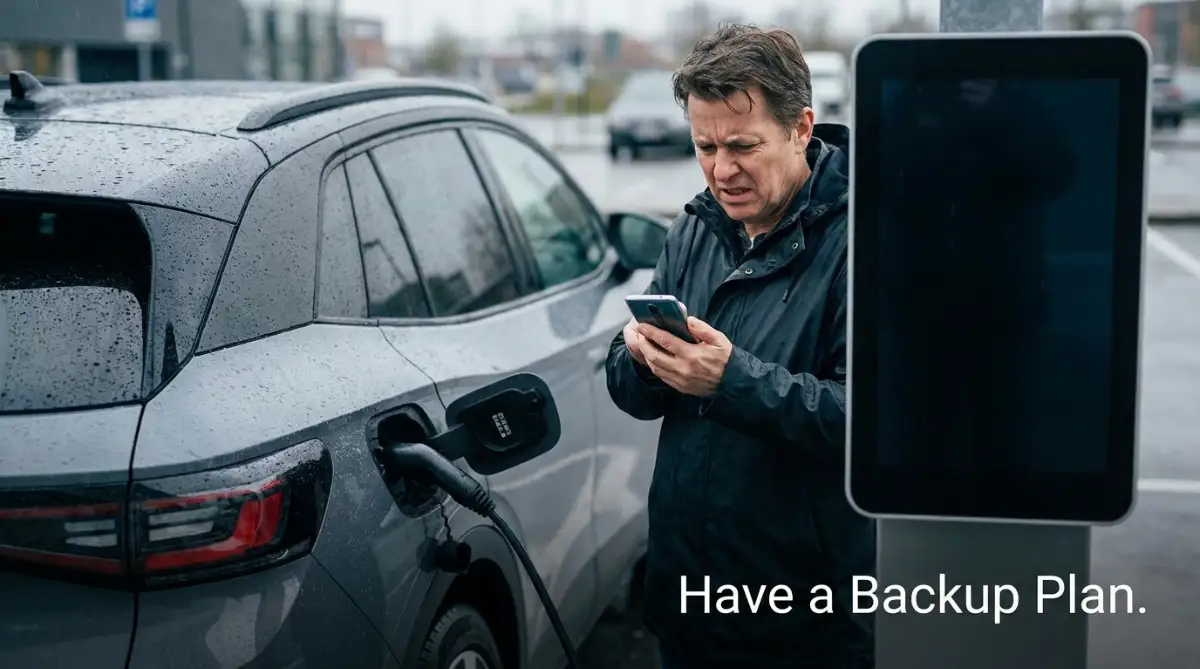
Picture this: you arrive at a public charging station with only five percent battery remaining. You pull up to the machine, step out of your car, and scan the QR code to start the charging session. But your phone screen just keeps loading and loading.
You look up at the top of your phone and see the dreaded "No Service" icon. Because you are in a rural area, you have zero internet connection. If you do not already have the specific charging company's app installed and an account set up with a saved credit card, you cannot activate the machine.
This exact scenario leaves dozens of drivers stranded every single day. The machine works perfectly fine, but they simply cannot tell it to start dispensing electricity. This is one of the most frustrating public charging mistakes you can possibly make.
To avoid this nightmare, you must download the apps for every major charging network along your route before you leave your house. Create your accounts, save your payment methods, and order physical RFID cards if the network offers them. A physical tap-card will start a charging session instantly, even if your phone is completely dead or lacks service.
The Danger of Flat Towing
If you do make a mistake and run completely out of battery power, your problems might just be starting. When you call roadside assistance, you must be incredibly specific about the type of vehicle you are driving.
You cannot let a standard tow truck drag your electric vehicle along the road on two wheels. The motors in an electric car are physically connected to the wheels. If the wheels spin while the car is powered down, the motors will generate heat and electricity with nowhere for it to go.
This will quickly destroy your car's entire drivetrain, leading to a repair bill that costs tens of thousands of dollars. An electric vehicle must always be transported on a flatbed tow truck with all four wheels completely off the ground.
Never let a tow truck driver convince you that dragging the car a few miles is safe. It is your responsibility to protect your vehicle from this kind of catastrophic damage.
If you ever find yourself waiting on the side of the road for a tow truck, keep this quick checklist handy so you do not accidentally ruin your car:
Trusting the Dashboard Blindly in the Mountains
The range indicator on your dashboard is often affectionately called the "Guess-o-Meter" by experienced drivers. It calculates your remaining miles based on your recent driving habits. But it has absolutely no idea that a massive mountain pass is waiting for you five miles up the road.
If your screen says you have fifty miles of range, and the charger is forty miles away, you might feel safe. But if those forty miles involve climbing a steep mountain elevation, your car will run out of power halfway up. The energy required to lift a heavy electric vehicle thousands of feet into the air is staggering.
You cannot rely on the car's basic computer to predict the future. You have to actively research the route yourself. Thankfully, you can often recover a lot of that energy on the way back down.
Learning how this energy recovery works is fascinating, and you can read all about the regenerative braking benefits to understand how it effectively refills your battery for free on steep descents.
Pushing Through Extreme Temperatures Without a Plan
Ignoring extreme heat or cold is another quick way to end up sitting in the dark on the shoulder of the highway. During extreme heatwaves, your car's battery cooling system has to work overtime. If you push the car too hard by driving fast in triple-digit heat, the battery may intentionally restrict your power output to prevent itself from catching fire.
Conversely, extreme cold absolutely slashes your available driving distance. Independent organizations like AAA have conducted extensive testing on cold weather driving, proving that freezing temperatures can severely reduce your expected mileage.
If you are traveling through a snowstorm, you need to plan your charging stops much closer together than you normally would. Failing to adjust your strategy for the local climate is a guaranteed way to induce severe range anxiety and put your family in an uncomfortable situation.
If you want to know exactly why the cold steals so much of your energy, check out this guide on winter power loss to better protect your vehicle.
Your Blueprint for Stress-Free Electric Adventures
Planning a long journey in an electric vehicle does not have to be a miserable experience. In fact, when you execute your plan correctly, it becomes one of the most relaxing ways to travel across the country. The silence of the cabin, the smooth acceleration, and the lack of engine vibration make for an incredibly peaceful ride.
By taking the time to map out your charging stops, understanding how the weather affects your battery, and keeping a healthy power buffer, you completely remove the fear of the unknown. You stop worrying about breaking down and start enjoying the scenery out your window.
This level of preparation also helps you maximize your financial savings on the road. When you know how to find the most affordable chargers and avoid expensive mistakes, the economics of electric driving become highly favorable.
You can even map out exactly how much money you save over time by looking at the true total cost of ownership for these incredible machines. You will see that the extra planning effort pays off tremendously in the long run.
I know that making the switch from gas to electric feels incredibly intimidating at first. My early road trips were filled with nervous sweating and constant screen-checking. But once I adopted these smarter planning habits, my anxiety completely vanished, and I truly fell in love with driving my car all over again.
Common Questions About Electric Road Trips
How long does it actually take to charge on a road trip?
If you are using a modern DC fast charger and keeping your battery between ten and eighty percent, your stops will generally take around twenty to thirty minutes. This is just enough time to grab a snack, use the restroom, and stretch your legs before hitting the road again.
Should I charge my car to 100 percent before leaving?
Yes, you should definitely start your journey from home with a completely full battery. However, once you are out on the highway using fast chargers, you should only charge to about eighty percent to save time, unless you are driving into an area with no chargers at all.
What happens if I completely run out of battery on the highway?
If your car hits zero, it will safely lose power and force you to pull over to the shoulder. You will then need to call a flatbed tow truck to take you to the nearest charging station, as electric cars cannot be safely towed with their wheels on the ground.
Can I plug my car into a regular outlet at a hotel?
Yes, every electric car comes with or supports a portable charging cable that plugs into a standard 120-volt wall outlet. It is very slow, giving you about three to five miles of range per hour, but it is a great backup option while you sleep.
Do I need a special app to find public chargers?
While your car has built-in navigation, it is highly recommended to download community-based mapping apps. These apps allow you to see reviews from other drivers, which helps you avoid broken machines and find the most reliable charging locations.
Disclaimer: The information provided in this article is for educational and informational purposes only. Electric vehicle specifications, charging networks, and safety guidelines vary heavily by manufacturer and region. Always consult your vehicle's official owner's manual and local traffic laws before planning a long-distance trip. We are not responsible for any damage, loss of range, or roadside emergencies resulting from the use of these strategies.