The Heavy Weight of Financial Emergencies Without a Safety Net
Nearly 40% of adults cannot cover a $400 emergency expense using just their cash savings. When your car transmission fails or a surprise medical bill hits out of nowhere, panic is usually the first reaction—especially if you do not own a house to use as backup collateral. But you really don't need a massive property portfolio to get out of a tight spot. Sometimes, your track record of paying bills on time is the only golden ticket you need to get the cash flowing again, all without putting your hard-earned assets at risk. Let's break down how you can use your good name to fund life's worst surprises.

Fast Facts: Before You Borrow
- No Collateral Needed: You don't have to risk your house or car to get emergency cash.
- Soft Pulls Are Your Friend: Always shop around using pre-qualification offers so you don't hurt your credit score.
- Watch the Hidden Fees: Keep a sharp eye out for "Origination Fees" that secretly reduce the actual cash deposited into your bank account.
- Pay Off Balances First: Dropping your credit card usage below 30% before you apply can easily score you a much better interest rate.
Decoding the Mystery: Borrowing Based on Trust and History
The bank looks at your financial past and decides if they can trust you. It is very similar to borrowing money from a good friend. Your friend does not ask you to leave your laptop with them as security. They lend you the cash because they know you, they trust your character, and they believe you will return it on time.
Banks and online lenders do this on a much larger, mathematical scale. They use specific numbers to measure how trustworthy you are with money. Because they are taking a bigger risk by not holding any of your property, they protect themselves in other ways. This is the core foundation of how modern personal lending actually works for average consumers.
The Mechanics: How Lenders Make Their Decisions
Since a lender cannot seize your property if you stop paying an unsecured loan, they need solid proof that you are responsible. They turn to science and data to measure your financial habits. The biggest tool they use is your credit score.
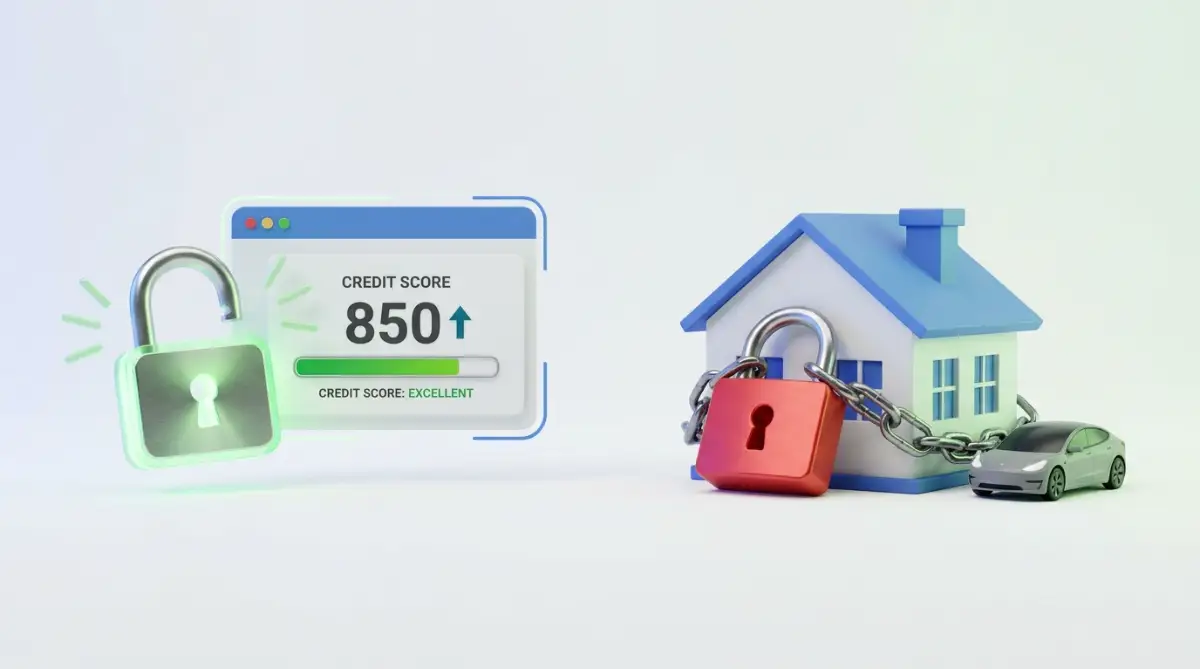
Think of your credit score as your financial report card. It tracks every time you paid a bill on time, and it remembers if you ever missed a payment. Lenders run this score through advanced computer algorithms to predict how likely you are to pay back a new debt. If you have a high score, the algorithm signals that you are a safe bet.
Pro Tip: Early in my financial journey, I learned a tough lesson about my credit profile. I realized that checking my own credit report frequently did not hurt my score, but letting an error sit on my report cost me a higher interest rate. Always review your credit report for mistakes before applying for any type of new credit.
You don't need to pay a sketchy website to see your financial report card. You can safely check your credit history for free through the only federally authorized website: AnnualCreditReport.com. Doing a quick check here before you ask a bank for money is just smart planning.
Another major factor they check is your debt-to-income ratio (DTI). This is a simple mathematical calculation showing how much of your monthly income goes toward paying debts. If you make $4,000 a month and spend $1,000 on debt payments, your DTI is 25%. Most lenders want to see this number below 36%. It proves to them scientifically that you have enough leftover cash to handle a new monthly payment comfortably.
Quick Myth-Buster: Credit Scores & Borrowing
- Myth: You need a 750+ score to get approved anywhere.
- Fact: Many modern online platforms specifically approve scores in the 600s. You will pay a higher rate, but approval is still on the table.
- Myth: Checking your rate ruins your credit.
- Fact: A "soft pull" to check your rate does not drop your score at all. Only a formal application (hard pull) affects it.
A Clear Look at Unsecured vs. Secured Options
To really grasp how unsecured lending works, it helps to see it side-by-side with secured lending. Many people confuse the two, leading to poor financial choices.
As you can see from the breakdown, an unsecured option offers incredible peace of mind regarding your personal property. Even though you might pay a slightly higher interest rate, the relief of knowing your home or car is completely safe is often worth the extra cost.
Still Confused? Watch This Quick Breakdown
If reading about algorithms and interest rates makes your head spin, don't worry. Hit play on this short video below. It easily explains the exact math lenders use to calculate your interest rate. Spending two minutes watching this could honestly save you hundreds of dollars in completely avoidable fees.
Identifying the Right Candidate: Is This Move Right for You?
Not every financial tool is a perfect fit for every single person. Figuring out if you should consider an unsecured option depends heavily on your specific life situation and your money habits. There are a few distinct scenarios where taking this route is highly logical and beneficial.
First, let us look at the "Debt Consolidator." This is someone who has three or four different credit cards, all charging massive interest rates. Keeping track of multiple due dates is stressful, and the high interest means their balances barely drop each month. If this person gets a single unsecured personal loan with a lower interest rate, they can pay off all those credit cards instantly. Now, they only have one simple, predictable monthly payment. This strategy saves them money and significantly reduces their mental stress.
Another great candidate is the "Emergency Funder." Life is entirely unpredictable. A massive storm might damage your roof, or a sudden medical issue might require an expensive procedure. If you do not have a large emergency savings fund, waiting is not an option. An unsecured loan can put cash in your bank account within 24 to 48 hours. This fast access allows you to handle the emergency immediately without begging friends for money or maxing out dangerous high-interest credit cards.
Finally, we have the "Home Improver." Many homeowners want to upgrade their kitchens or fix a failing plumbing system. However, they may not have enough equity in their home to qualify for a traditional home equity line of credit (HELOC). Instead of putting the house on the line, they can use an unsecured personal loan to fund the renovation. The improvements can actually increase the overall value of the home, making the borrowed money a smart, strategic investment.
Exposing the Common Myths and Realities
When people talk about borrowing money without collateral, a lot of misinformation spreads around. This bad advice often scares people away from a tool that could genuinely help them. Let us clear up some of the most common misunderstandings right now.
Myth: Only people with perfect credit can get approved.
Reality: While having an excellent credit history gets you the cheapest interest rates, it is absolutely not mandatory. Many modern online lenders specifically design their products for people with average or fair credit. They might look at other data, like your job history and education, to approve you. You will pay a higher rate, but approval is still very possible.
Myth: Unsecured loans will ruin your credit score permanently.
Reality: When you first apply, the lender does a "hard pull" on your credit, which might drop your score by a few points temporarily. However, if you use the money to pay off maxed-out credit cards, your score can actually shoot up very quickly. Making your new loan payments on time every single month will build a strong, positive payment history. Over the long run, managing this debt responsibly will make your credit profile much stronger.
Myth: The interest rates are exactly the same as payday loans.
Reality: This is a dangerous comparison. Payday loans are predatory traps that can charge interest rates of 300% or 400%, forcing you into a cycle of poverty. Traditional unsecured personal loans from banks, credit unions, or reputable online lenders have capped, fixed rates. They usually range from 6% to 36%, depending on your credit profile. The payments are fixed, meaning they never change, giving you a clear and exact date when you will be 100% debt-free.
Strategic Steps to Polish Your Financial Profile
If you see yourself in the scenarios above and think this is the right path, you should not just rush out and apply immediately. Taking a few scientific, calculated steps before submitting an application can drastically improve your chances of getting approved with a great rate.
Start by lowering your credit card balances as much as possible. A huge chunk of your credit score is based on your "credit utilization ratio." This simply means how much of your available credit you are actually using. If you have a credit card with a $10,000 limit and a $9,000 balance, you look risky to a computer algorithm. Try to aggressively pay those balances down below 30% of their limits a month or two before you apply for new credit.
Next, gather all your income documentation before you start shopping around. Lenders want solid proof that you make the money you claim on your application. Having your recent pay stubs, bank statements, and tax returns saved in a folder on your computer makes the process incredibly smooth. If an underwriter asks for a document and you provide it within five minutes, it shows you are organized and financially responsible.
Finally, avoid changing jobs right before you apply. Stability is a massive green flag for banking institutions. They love to see that you have been with the same employer for a steady period. If you jump to a new job just days before asking for money, the lender's risk algorithm might flag your file. They worry that a new job might not work out, leaving you without a paycheck to cover your new monthly obligation. Keep your career stable during the application window to present the safest possible profile.
Expert Strategies for Securing the Best Borrowing Terms
Now that we understand the basic mechanics behind borrowing without collateral, it is time to look at how smart borrowers beat the system. Getting approved is just the first hurdle. Your actual goal should be locking in the lowest possible interest rate and the most favorable repayment terms.
Many average borrowers just accept the very first offer a bank hands them, thinking they have no power to negotiate. This is a massive missed opportunity that costs them thousands of dollars in unnecessary interest. You actually have a lot of control over how lenders view your profile if you know exactly which strings to pull before you submit your application.
The secret to winning this game lies in how you prepare your financial background in the shadows before any bank even sees your name. Let us look at a few highly effective strategies that the most financially savvy people use to force lenders to compete for their business.
The Pre-Qualification Strategy (Soft vs. Hard Inquiries)
One of the smartest moves you can make is taking full advantage of pre-qualification offers. Almost all reputable online lenders and modern banks now offer a way to check your potential interest rate without hurting your credit score. They do this through something called a "soft credit pull."
A soft pull is basically a light background check. The lender takes a quick peek at your financial history to give you an estimated rate, but this check does not get recorded as an official application. You can literally pre-qualify with ten different lenders in a single afternoon without your credit score dropping a single point.
Pro Tip: My personal rule is to always compare at least three different pre-qualification offers before making a final decision. I once found a lender willing to give me an interest rate that was 4% lower than my own primary bank simply because I took thirty minutes to shop around online.
Once you find the absolute best offer, you will then submit a formal application. This is when the lender performs a "hard pull" on your report. A hard pull will temporarily lower your score by a few points, but since you already know you are getting the best deal, this tiny drop is completely worth it. For more detailed insights into protecting your score while applying, spending time on building a powerful credit foundation is incredibly helpful.
Decoding the Fine Print: Origination Fees
A very common trap that catches people off guard is the hidden origination fee. When you read a lender's advertisement, they usually highlight their amazing interest rate in huge, bold letters. But buried in the small print, they might mention a 5% origination fee.

An origination fee is an upfront charge the lender takes simply for processing your paperwork. The tricky part is how they collect it. If you ask to borrow $10,000 and the lender charges a 5% origination fee, they will keep $500 right off the top. They only deposit $9,500 into your checking account, but you are still legally required to pay back the full $10,000 plus interest.
If you are borrowing money to pay for an exact expense, like a $10,000 medical bill, coming up $500 short is a complete disaster. Always look for lenders who advertise "Zero Origination Fees." The Consumer Financial Protection Bureau (CFPB) offers great, unbiased resources explaining how these sneaky administrative fees can completely change the true cost of borrowing money.
To make this perfectly clear, look at how a 5% origination fee changes your actual math. Here is what happens when you ask for a $10,000 loan:
Pro tip: Always run this basic math before signing anything. If your medical bill is exactly $10,000, you need to ask for $10,550 to cover the fee and still get the exact cash you need.
Choosing Your Rate Structure Wisely
Another major decision you will face is picking the specific type of interest rate. You will generally see two options presented to you. Understanding the difference between these two paths will dictate how your monthly budget looks for the next few years.
First, you have a fixed interest rate. This means your rate is locked in completely on the day you sign the paperwork. Whether the economy crashes or booms, your monthly payment will remain exactly the same down to the penny. This is incredibly safe and highly recommended for people who love predictable budgeting.
On the flip side, some lenders offer variable rates. These rates often start out looking much cheaper than fixed options. However, they are tied to broader economic markets. If national interest rates rise, your monthly loan payment will suddenly increase too. Taking time to learn about selecting the right interest structure can save you from a nasty payment shock down the road.
The Hidden Financial Traps You Must Avoid
Even with the best intentions, borrowing money is a serious financial commitment that can easily go wrong. When people are desperate for cash, they tend to make highly emotional decisions rather than logical ones. I want to walk you through some of the most dangerous pitfalls that completely ruin people's finances when dealing with these types of agreements.
Do not fall into the trap of thinking that just because you got approved, everything is perfectly fine. The banks want you to borrow money because that is how they generate their massive profits. It is entirely your job to protect yourself from predatory terms and your own bad spending habits.
Borrowing More Than You Actually Need
The single biggest mistake people make is treating a loan offer like free money. Let us say you need $5,000 to fix a broken transmission on your car. You apply online, and the screen suddenly flashes that you are approved for up to $15,000. It is incredibly tempting to take the full amount, thinking you can use the extra cash for a nice vacation or a new television.
This is a massive financial error. Every single extra dollar you borrow generates interest that you have to pay back out of your future paychecks. You are essentially stealing money from your future self just to buy things you do not genuinely need today. Stick strictly to borrowing the exact amount required to solve your immediate problem.
The Trap of Prepayment Penalties
Imagine you work incredibly hard, pick up a second job, and save enough cash to pay off your remaining debt two years early. You call the bank, excited to finally be debt-free, only to discover they are charging you a massive fee for paying them back too fast. This nightmare scenario is called a prepayment penalty.
Some lenders get very upset when you pay them back early because it means they miss out on collecting years of interest payments from you. To protect their profits, they hide a penalty fee deep inside the contract. Before you ever sign your name on a financial document, you must demand a clear answer on whether you can pay the balance early without any extra charges. According to guidelines from the Federal Trade Commission (FTC), you should always specifically ask the lender to highlight their prepayment policies in writing.
Applying with Too Many Lenders at Once
When panic sets in during an emergency, some people start filling out full applications with every single bank they can find on Google. They think that applying to twenty places increases their odds of getting a yes. In reality, doing this destroys their chances entirely.
Every time you submit a formal application, it triggers a hard inquiry on your credit report. If banks see ten hard inquiries pop up on your report in a single week, they immediately panic. Their computer systems view you as someone who is desperately begging for money, which makes you look like a massive risk. If you want to understand exactly why banks get spooked by this behavior, reviewing the common reasons lenders reject applications is an absolute must.
Always use the soft-pull pre-qualification tools we discussed earlier. Once you select the best single offer, then and only then should you submit the one formal application. Keeping your record clean of messy inquiries is the best way to present yourself as a calm, responsible borrower. By studying how to avoid these basic application errors, you make the entire approval process incredibly smooth.
Mixing Up Secured and Unsecured Obligations
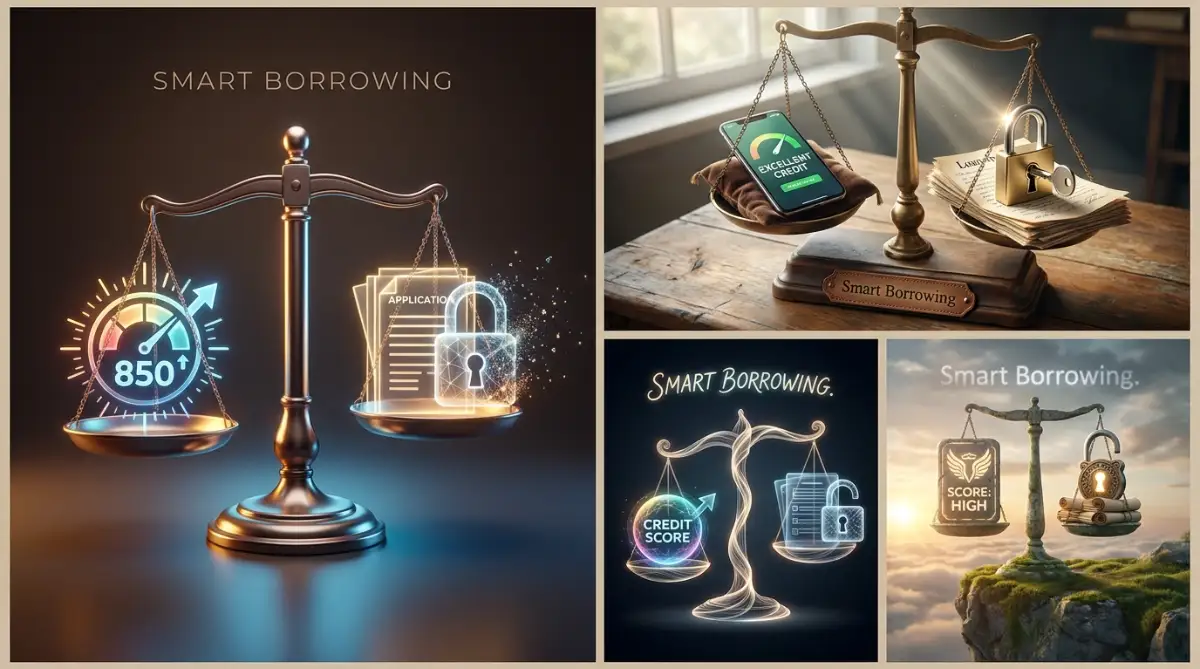
Sometimes people get confused at the bank and accidentally sign up for the wrong product entirely. A bank teller might push you toward a home equity line because the interest rate looks slightly better on paper. But if you fall behind on those payments, the bank can legally foreclose on your family home.
You must always stay highly aware of what type of document you are signing. If the paperwork asks for information about your vehicle title or property deed, it is no longer an unsecured agreement. The beauty of an unsecured agreement is the absolute safety of your personal property. If you need a refresher on how the opposite side of lending works, checking out the details on understanding asset-backed borrowing can clear up any remaining confusion.
Your Blueprint for Smarter Financial Decisions
Navigating the world of personal borrowing does not have to feel like walking through a minefield. When you take the time to strip away the banking jargon, you discover that these are simply tools designed to help you manage your cash flow during difficult times. You are now equipped with the exact knowledge needed to walk into any bank or apply on any website with total confidence.
Remember that an unsecured option is built entirely on the trust you have established through your past financial behavior. Your credit history is your most valuable asset when you do not want to put your physical belongings at risk. Protect that history fiercely by paying your current bills on time and keeping your credit card balances as low as possible.
By actively comparing rates, watching out for hidden origination fees, and borrowing only what you absolutely need, you turn a stressful money situation into a manageable, structured plan. You no longer have to rely on dangerous payday lenders or beg family members for help when an emergency strikes. You have the power to fund your needs responsibly while protecting your future wealth. For excellent educational resources on building a long-term plan to stay completely out of debt, checking the guides from the National Endowment for Financial Education (NEFE) offers amazing, free guidance for everyday consumers.
Whenever you feel overwhelmed by a sudden expense, take a deep breath. Use the strategies we discussed today to evaluate your options clearly and logically. You hold the steering wheel of your financial life, and making informed choices today will build a incredibly strong foundation for your family tomorrow.
Final Recap: The Good and The Bad
Before you make any final moves, here is a super quick breakdown of what you are actually signing up for.
Clear Answers to Common Questions About Borrowing
Can I get an unsecured option if I have a bad credit history?
Yes, it is definitely possible, but it will be much harder and more expensive. Lenders who work with bad credit profiles will charge you significantly higher interest rates to cover their risk. You must carefully calculate if the high monthly payment easily fits into your current budget before accepting their offer.
How fast do lenders actually deposit the money into my bank account?
Online lenders have made this process incredibly fast over the past few years. If you apply on a weekday morning and submit all your documents quickly, many companies will wire the money directly to your checking account by the very next business day. Traditional brick-and-mortar banks might take a few days longer to process everything.
What is considered a genuinely good interest rate right now?
A great rate always depends heavily on your personal credit score. Generally, if you have excellent credit, finding a rate between 6% and 10% is highly competitive. If your score is average, you should expect to see rates ranging anywhere from 12% to 24%.
Will asking for a personal loan completely ruin my credit score?
When you officially apply, your score might drop by roughly three to five points due to the hard inquiry. However, this small drop is very temporary. If you use the borrowed money to pay off maxed-out credit cards, your score can actually increase dramatically within a month or two.
Can I choose what day of the month my payment is due?
Many modern lenders are extremely flexible and want to help you succeed. They often allow you to pick a custom due date that lines up perfectly with your payday. If your lender does not offer this online, you can usually call their customer service desk to request a date change.
Disclaimer: The information provided in this article is strictly for educational and informational purposes only. It does not constitute professional financial, legal, or tax advice. I am sharing general knowledge based on personal experience and research. Always consult with a certified financial advisor or a licensed banking professional before signing any loan agreements or making major financial decisions. Rates, terms, and approval conditions vary widely by individual and institution.