
The Hidden Trap Behind Every Rejected Loan Application
Did you know that over 10 million loan applications get tossed into the rejection pile every single year? The craziest part is that most of these applicants actually have decent credit scores, but they fail because of a tiny spelling mistake or a mismatched zip code on their form. I used to blame the banks when my own applications got blocked, but then I learned exactly how their automated software flags files. Let me show you the exact steps I use to bypass the automated filters and get approvals without the headache.
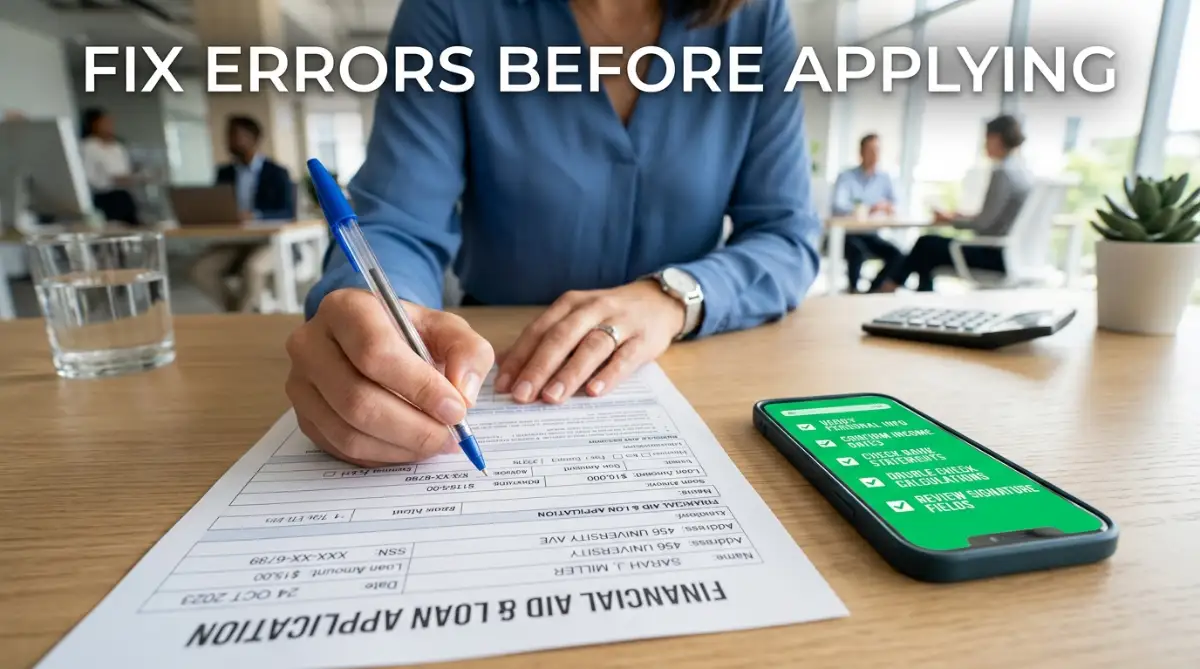
Inside This Guide (Quick Action Points):
- Check for typos first: 80% of instant automated rejections happen due to minor spelling errors on basic ID details.
- Use the soft-pull method: Never apply to 5 banks at once. Shop around using pre-qualification links to protect your credit score.
- Match your exact numbers: Ask for the exact dollar amount you need, down to the penny. It proves to the lender that you are a serious planner.
- Keep proofs ready: Always have 3 months of pay stubs and your last tax return saved in PDF format on your phone or computer.
The Ultimate Playbook for Flawless Loan Applications
Step 1: Mastering the Art of Extreme Accuracy
The most common reason for a rejected loan is not a terrible credit score. Surprisingly, it is basic human error. Banks process thousands of applications every single day using automated software systems.
These computer systems do not have human emotions or common sense. If your name is "Jonathan" on your ID but you write "John" on your application, the computer spots a mismatch. This tiny error immediately kicks your file into the high-risk pile.

Real-Life Scenario: The Typo Trap
Imagine a hard-working guy named Michael. Michael makes a great living but accidentally typed his annual income as $5,000 instead of $50,000. He hit submit without reviewing the page. The automated system instantly rejected him because his requested loan amount was higher than his stated annual income.
Michael spent weeks trying to call customer service to fix this simple mistake. He lost valuable time and missed out on a great interest rate. All of this could have been avoided with a simple two-minute review.
How to Fix This Today:
- Print it out: If you are applying online, write your answers on a piece of scratch paper first. Reading words on paper helps your brain catch spelling mistakes faster than reading on a bright screen.
- Match your official IDs perfectly: Pull out your driver’s license and your social security card before you start typing. Copy the information exactly as it appears on those official government documents.
- Use the buddy system: Have a trusted friend or family member read over your application before you hit submit. A fresh pair of eyes will often catch the small errors you completely overlooked.
Step 2: The Transparency Rule with Debts and Income
One of the biggest mistakes applicants make is trying to hide their current debts. Lenders use a specific formula called the Debt-to-Income (DTI) ratio. This formula calculates how much of your monthly income goes toward paying off what you owe.
Many people think that if they leave a private credit card off the application, the bank will never find out. This is a massive myth. Banks pull your complete financial history from major credit bureaus within seconds.
When an underwriter sees that you hid a $5,000 credit card balance, they instantly lose trust in you. If you lie about small things, they assume you will lie about paying them back. Honesty is your biggest weapon here.
Understanding the Bucket Analogy
Think of your monthly income as a bucket of water. Every debt you have is a small hole at the bottom of that bucket. If you have too many holes, the water drains out before you can use it.

Banks want to make sure your bucket can hold enough water to cover a brand new hole (the new loan). If you try to cover up the existing holes with duct tape, the bank's system will easily see right through it. They want clear, factual data to prove you can handle the monthly payments.
Myth vs Reality: Income Reporting
Myth: You should include your future promised bonus as part of your current income to look richer.
Reality: Banks only care about guaranteed, documented income. If you list a bonus you have not received yet, and cannot prove it with a pay stub, your application will be delayed or denied.
Pro Tip for Income Verification:
Always keep your last three months of pay stubs saved on your computer in PDF format. If you are self-employed, have your most recent tax returns ready to go. Having these exact documents instantly available proves to the bank that you are highly organized and serious.
Quick Guide: Acceptable vs. Unacceptable Income Proof
Step 3: Pacing Your Applications Smartly
When people need money quickly, panic often sets in. This panic leads to a behavior known in the finance world as "shotgunning." Shotgunning happens when you apply for five different loans at five different banks on the exact same afternoon.
I made this exact mistake a few years ago when I panicked and applied to four different banks in a single afternoon. My credit score took a massive hit within days, teaching me the hard way that a soft-pull pre-qualification is the only safe way to shop for rates.
You might think that applying everywhere increases your chances of getting at least one "Yes." In reality, this strategy completely destroys your credit profile. Every time you submit a formal loan application, the bank performs what is called a "hard inquiry" on your credit report.
The Danger of Hard Inquiries
A hard inquiry temporarily lowers your credit score by a few points. One inquiry is completely normal and expected. However, five hard inquiries in a single week send a massive red flag to every lender in the system.
To the banking software, multiple sudden applications make you look desperate for cash. It signals that you might be in deep financial trouble and are trying to borrow more than you can ever repay. Even if you have a perfect payment history, this panicked behavior can lead to automatic denials across the board.
A Better Strategy for Rate Shopping
You absolutely have the right to shop around for the best interest rates. The trick is knowing how to do it safely. Instead of filling out full applications everywhere, look for lenders that offer a "pre-qualification" process.
Pre-qualifications usually use a "soft pull" on your credit. A soft pull gives you an estimated interest rate without damaging your actual credit score. You can gather pre-qualification offers from four different banks without any penalty.
Once you compare the soft offers and find the absolute best deal, you only submit one official application. This smart, calculated approach keeps your credit score protected. It also shows the final lender that you are a calm, responsible borrower who manages money wisely.
A Quick Comparison: Hard Pull vs Soft Pull
If you are still a bit confused about how hard and soft credit checks actually affect your score, watch this quick and easy breakdown below. After watching, keep reading to discover the advanced secrets human underwriters look for when approving your file!
By mastering these three foundational steps, you are already far ahead of the average applicant. You now know how to present yourself as a low-risk, highly reliable borrower. You understand that taking your time, being perfectly honest, and protecting your credit score are the main keys to success.
What Happens After the Computer Says "Yes"?
Once you get past the automated software by keeping things accurate and honest, a real human takes over. We call these people underwriters.
Underwriters are essentially risk managers. Their job is to look at your file and decide if giving you money will get them fired. They look for very specific behavior patterns to feel safe about you. If you want to breeze through this final human check, pay close attention to these next few details.
The Power of Employment Consistency
Banks love stability more than anything else in the world. You might have a fantastic salary, but if you change jobs every three months, red flags will go up. Lenders see frequent job hopping as a sign of financial instability.
They worry that you might suddenly quit your current job and stop making monthly payments. When filling out the employment section, clarity is your best friend.
Expert Insight:
Always list your employment history exactly as it appears on your official tax documents. If you have a gap in your work history, be prepared to explain it in a short, professional manner.
Perhaps you took time off to study or care for a family member. Having a clear, honest explanation ready prevents the underwriter from making negative assumptions. A steady two-year history with the same employer is the golden standard for instant approvals.
Understanding Your Exact Loan Structure
Many people rush through the application form just to see if they get approved. They completely ignore the specific terms they are applying for. This is a massive trap that leads to long-term financial pain.
You need to know exactly how your interest will be calculated over the life of the loan. Some banks offer a great introductory rate that quietly doubles after six months.
Taking the time to research and understand the differences when choosing between fixed and variable rates will save you thousands of dollars. A fixed rate gives you a predictable monthly bill, which is perfect for strict budgeting. A variable rate might start lower, but it carries the risk of sudden price jumps if the market changes.
Real-Life Math: Fixed vs. Variable Rates
Pro Tip: Variable rates look cheap on day one, but they can easily cost you an extra $1,000 in hidden interest over the life of a small $10,000 loan. Always do the math first!
Leveraging Assets to Build Deep Trust
Sometimes, a standard unsecured personal application simply will not work. If your credit file is a bit thin, the bank's automated system might automatically reject you. Instead of giving up, you can change your strategy entirely.
You can show the bank that you are willing to share the financial risk. This is where understanding how collateral works for borrowers becomes highly useful.
By offering a savings account or a vehicle as backing for the loan, you instantly lower the lender's risk. The application form for this type of funding looks slightly different. You will need to provide exact details about the asset you are pledging.
Because the bank feels much safer, they are often willing to ignore a slightly lower credit score. You also generally receive a much better interest rate.

The Hidden Pitfalls That Ruin Approval Odds
Even smart, well-prepared applicants can trip over completely avoidable mistakes. The application form is a legal document, and small errors carry heavy consequences.
Let us look at the most dangerous traps people fall into. Avoiding these specific pitfalls is essential for keeping your financial reputation safe.
The Danger of the Blank Space
Have you ever looked at a long form and decided to skip a question because it seemed optional? This is one of the fastest ways to get your file thrown into the pending folder.
Automated banking software hates blank spaces. When the computer scans your document, an empty box registers as an "incomplete file."
Real-Life Scenario: The Missing Phone Number
Sarah was applying for a small home improvement loan. She filled out everything perfectly but left the "Previous Employer Phone Number" box empty. She figured the bank would not actually call a job she left three years ago.
The software immediately flagged her application as incomplete. Her file sat in a digital waiting room for two weeks. By the time a human finally looked at it, the special promotional interest rate she wanted had expired.
How to Handle Missing Information:
- Never leave it blank: If a question truly does not apply to your situation, type "N/A" (Not Applicable).
- Use zeros for amounts: If they ask for "Other Monthly Income" and you have none, type "0" instead of leaving it empty.
- Double-check optional fields: Even if a box says optional, providing that information shows you are transparent and cooperative.
The Credit Blindspot Trap
Applying for funding without looking at your own financial history is like taking a test blindfolded. You have absolutely no idea what the grader is seeing.
Many applicants get rejected for past errors they did not even know existed. A simple medical bill sent to the wrong address five years ago can completely ruin your current chances.
Before you ever open an application form, you need to review your own data. Checking your own data first is a smart habit that protects your identity. I highly recommend pulling your completely free, federally authorized file from AnnualCreditReport.com before you even think about applying for new funds.
Once you know exactly where you stand, you can use proven strategies to master your credit score before asking for money. Fixing a small reporting error can bump your score up just enough to move from "Denied" to "Approved."
The Greed Factor (Asking for Too Much)
We all want a little extra financial breathing room. However, treating a loan application like a wish list is a terrible idea.
When you ask for $50,000 but your stated project only costs $20,000, lenders become extremely suspicious. They will wonder what you secretly plan to do with the extra cash.
The Math Behind the Rejection
Banks use strict mathematical formulas to decide how much you can safely borrow. If your requested amount pushes your monthly obligations too high, the system will block you.
Taking a few minutes to check how debt-to-income limits work on official government hubs like the Consumer Financial Protection Bureau (CFPB) is a total game changer for your borrowing power. Only apply for the exact amount of money you actually need.
If you are consolidating credit cards, add up the exact balances down to the penny. Requesting a highly specific number, like $14,562, actually makes you look like a meticulous planner. The bank will see that you have done the math and respect your disciplined approach.
Misrepresenting the Loan's Purpose
Almost every application will ask: "What is the primary purpose of this loan?" Many applicants try to game the system by picking the answer they think the bank wants to hear.
For example, a person might select "Home Remodeling" because they assume it sounds like a safe investment. In reality, they plan to use the money to start a risky side business.
Why This Backfires Horribly:
Banks have specialized departments for different types of funding. A personal loan has entirely different rules than a business start-up loan.
If the bank discovers you lied about the purpose, they can instantly demand the full balance back. They might also close your everyday checking accounts for violating their terms of service. Always state your true intentions clearly. If you need money for a wedding, just say it is for a wedding.
Frequently Asked Questions from Real Borrowers
Sometimes, the standard rules do not perfectly fit your unique lifestyle. Let us address some specific situations that often confuse everyday applicants.
Q: What if my income comes from freelance work and varies every month?
A: Banks understand the modern gig economy, but they still need proof of stability. Instead of providing regular pay stubs, you will need to upload your full tax returns for the last two years. The underwriter will calculate your average monthly income based on those official yearly totals.
Q: I was recently rejected. How long should I wait before trying again?
A: Do not apply again the next day. Take a minimum of three to six months to cool off. Use this time to pay down existing small balances and let the hard inquiry age on your profile. Applying too quickly makes you look desperate and leads to automatic secondary rejections.
Q: Should I include my spouse's income on my individual application?
A: Only include your spouse's income if they are officially co-signing the document with you. If you are applying solely in your own name, you can only claim the money that you personally earn. Mixing up household income on an individual form is a very common reason for instant denial.
Your Personal Action Plan for Tomorrow
Getting approved for funding is not about magic tricks or secret insider connections. It is a simple process of proving that you are a highly organized, trustworthy individual.
You now have a massive advantage over the average person filling out these forms. You know exactly what the automated systems want, and you know how to make the human underwriters smile.
Your Pre-Application Checklist:
- Gather your physical documents: Put your ID, latest pay stubs, and exact debt statements on your desk.
- Pull your own data: Check your credit report for any hidden errors and dispute them immediately.
- Do the math first: Calculate exactly how much you need to borrow, not a penny more.
- Review the final page: Read every single box on the form twice before you ever click the submit button.
By treating this process with respect and careful attention, you completely remove the fear of rejection. You take back control of your financial future.
Start organizing your paperwork today. When you finally sit down to type out that application, you will do it with absolute confidence and peace of mind.
Trust me, once you understand these simple banking rules, you will never have to fear a loan rejection email again. Take a deep breath, start organizing your documents, and take control of your money story today—you absolutely have got this!
Disclaimer: The information provided in this article is for educational and informational purposes only. It does not constitute professional financial, legal, or tax advice. Lending criteria vary heavily by institution and individual circumstances. Always consult with a certified financial advisor or your banking representative before making any major financial decisions or signing legal loan documents.