The Hidden Anxiety Behind the Wheel of the Future
Let’s be honest—dropping a small fortune on a brand new electric car feels amazing, right up until you realize you have zero idea how the thing actually works. You happily trade in your familiar spark plugs and oil changes for what is basically a giant iPad on wheels, and suddenly, battery anxiety creeps in. I have been exactly where you are, staring at the dashboard, wondering what is happening under the floorboards. Good news? You absolutely do not need an engineering degree to figure it out, and understanding the basics will completely change how you drive.
The Short Version (Key Takeaways):
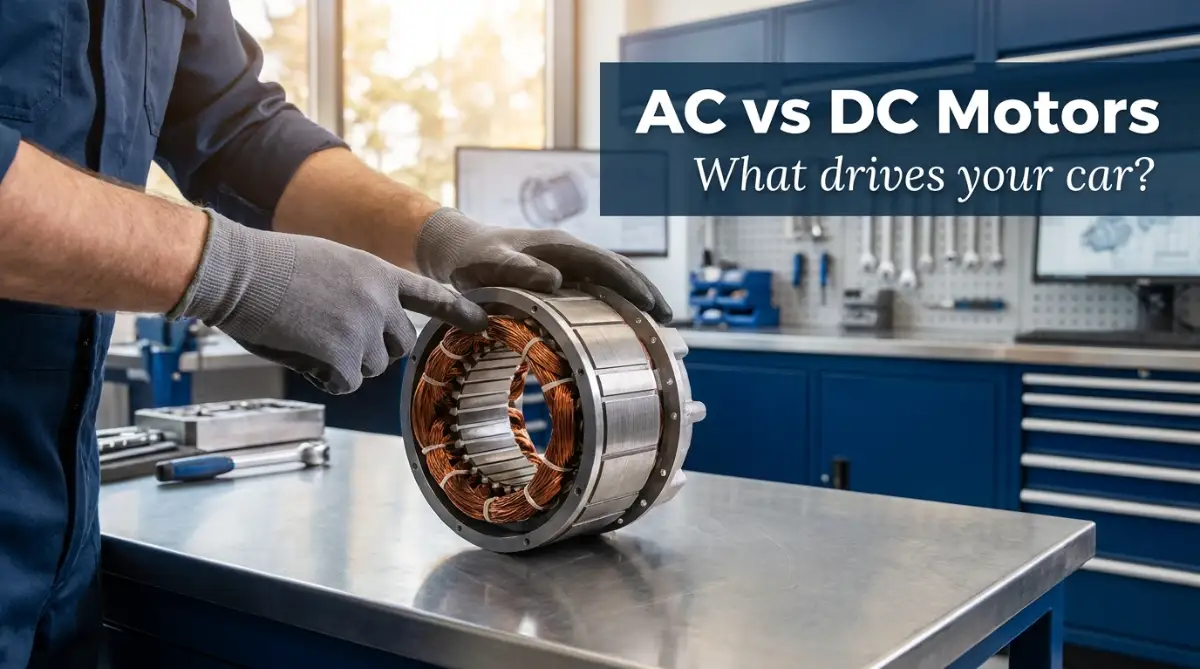
- Your EV motor only has two main pieces you need to care about: a stationary part (the stator) and a spinning part (the rotor).
- Electric motors magically convert about 85-90% of energy into pure motion, while gas cars waste up to 80% of their energy as heat.
- Keeping regenerative braking turned on is the absolute easiest way to add free miles to your daily range.
- Hard acceleration and bad tire pressure will kill your battery range much faster than running the air conditioner.
Lifting the Hood: What Actually Makes Your EV Move?
Let us completely forget about heavy, complicated engineering textbooks for a moment. To understand the heart of your electric car, we just need to look at basic magnets.
If you have ever played with two magnets, you know that opposite sides pull toward each other, and matching sides push away. This simple pushing and pulling force is exactly what moves a heavy electric car down the highway.
Instead of blowing up gasoline to push heavy metal pistons up and down, your electric car uses electromagnets. By rapidly turning these magnets on and off in a circle, the car creates a spinning force. That spinning force goes straight to your wheels.
Because there are no tiny explosions happening, the ride is completely silent. There are no heavy gears shifting, which is why your electric car feels so incredibly smooth and fast when you press the pedal.
The Two Main Parts You Should Know
To make things even simpler, every electric motor really only has two major parts you need to remember. Understanding these two pieces makes everything else make sense.
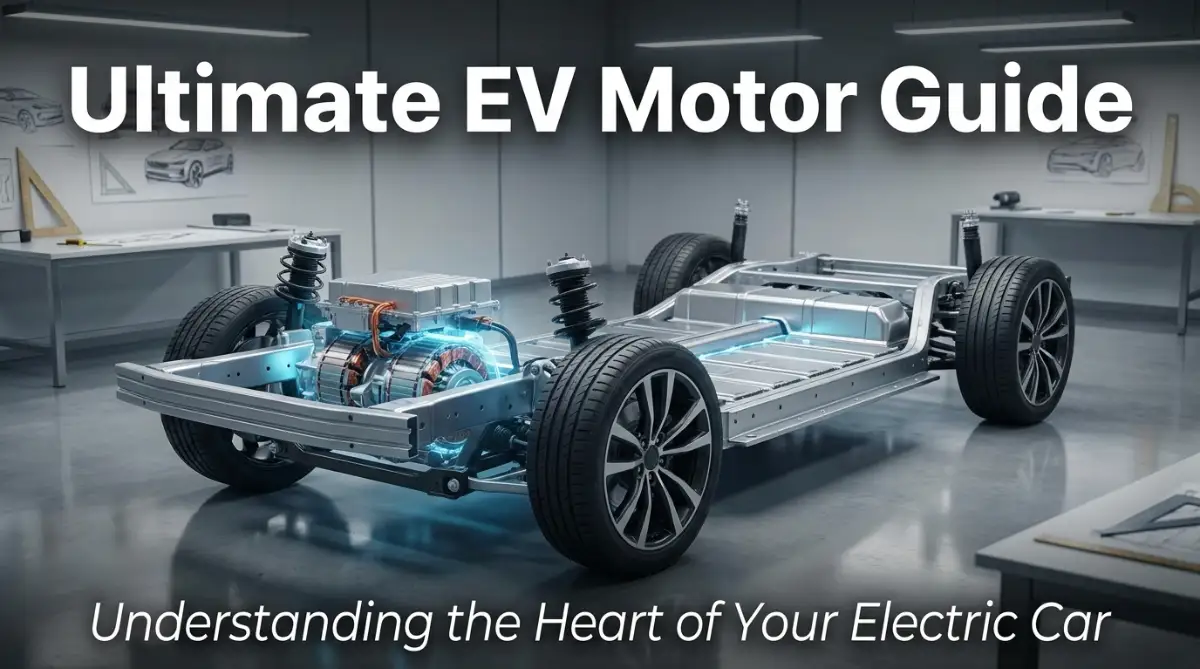
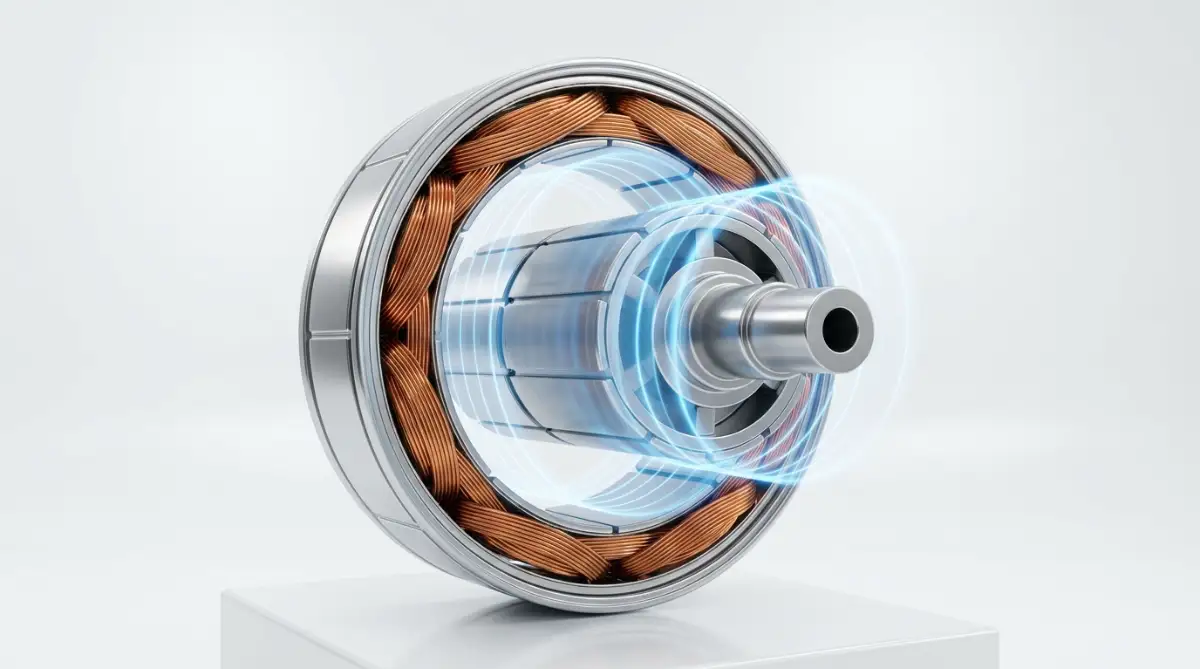
The first part is the Stator. Just like the name sounds, the stator stays completely stationary. It is a hollow metal cylinder filled with coils of copper wire, firmly attached to the frame of the car.
The second part is the Rotor. The rotor sits directly inside the stator. When electricity from your battery hits the copper wires in the stator, it creates a powerful magnetic field that forces the rotor to spin rapidly.
Why EV Motors Are Better Than Gas Engines
Let us look at a real-life comparison to see why this technology is taking over the world. A traditional gas engine has hundreds of moving parts, including valves, pistons, belts, and gears.
Every single one of those parts rubs together, creating massive amounts of heat and friction. All that friction means a gas engine wastes about 70% of the energy from fuel just as heat.
Electric motors, on the other hand, usually only have one moving part. Because they only have one moving part, they easily convert about 85% to 90% of the electrical energy straight into forward motion. You are getting way more power for every single dollar you spend on charging.
Here is a quick breakdown of how much energy actually makes it to your wheels:
Decoding the Types of Electric Motors on the Road
Now that we know the basic science, we need to talk about the different kinds of motors car companies are actually building. Not all electric cars use the exact same technology.
Automakers basically choose between two major types of motors. Your driving experience, the car's range, and even the price tag depend heavily on which motor the manufacturer decided to use.
1. The AC Induction Motor: The Powerhouse
This is the motor that really kicked off the modern electric car revolution. The AC induction motor does not use any permanent magnets at all.
Instead, it relies entirely on electricity to create its own magnetic fields in both the stator and the rotor. Think of it like a greyhound dog chasing a mechanical rabbit around a race track. The magnetic field in the stator spins, and the rotor constantly chases it, trying to catch up.
These motors are amazing because they are cheap to build and they provide massive amounts of power for high-speed highway driving. However, they are slightly less efficient at slow, stop-and-go city speeds.
2. The Permanent Magnet Synchronous Motor: The Modern Standard
Today, almost every new electric car hitting the streets uses a permanent magnet motor. Unlike the induction motor, the rotor inside this machine actually has real, physical magnets embedded directly into it.
Because the magnets are already there, the battery does not have to waste energy creating a second magnetic field. The stator's magnetic field grabs onto the rotor's magnets, and they spin perfectly together in complete sync.
These motors are incredibly efficient, especially for everyday city driving and stop-and-go traffic. The only downside is that they require rare earth metals to build the magnets, which makes them a bit more expensive to manufacture.
Quick Comparison: Induction vs. Permanent Magnet
The Magic Trick: Regenerative Braking Explained
One of the biggest advantages of driving an electric vehicle is something called regenerative braking. This is the feature that usually confuses new drivers the most, but it is actually a beautiful piece of engineering.
In a normal gas car, when you press the brake pedal, brake pads squeeze against a metal disc to stop the wheels. All of your forward momentum is completely wasted and turned into useless heat.
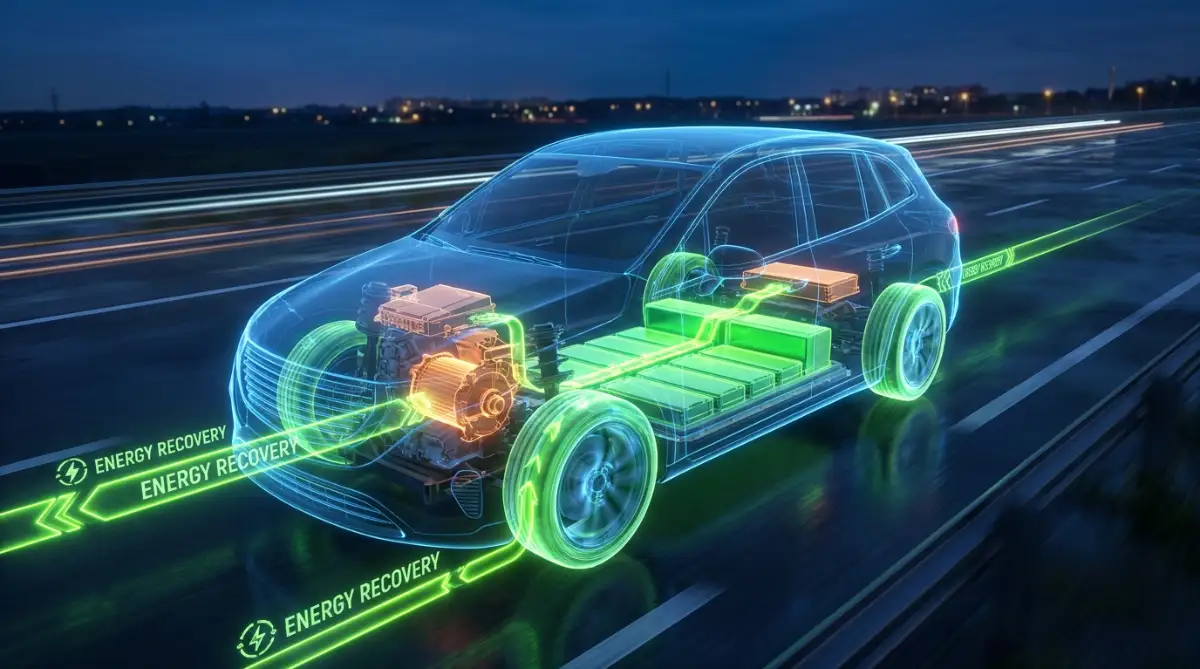
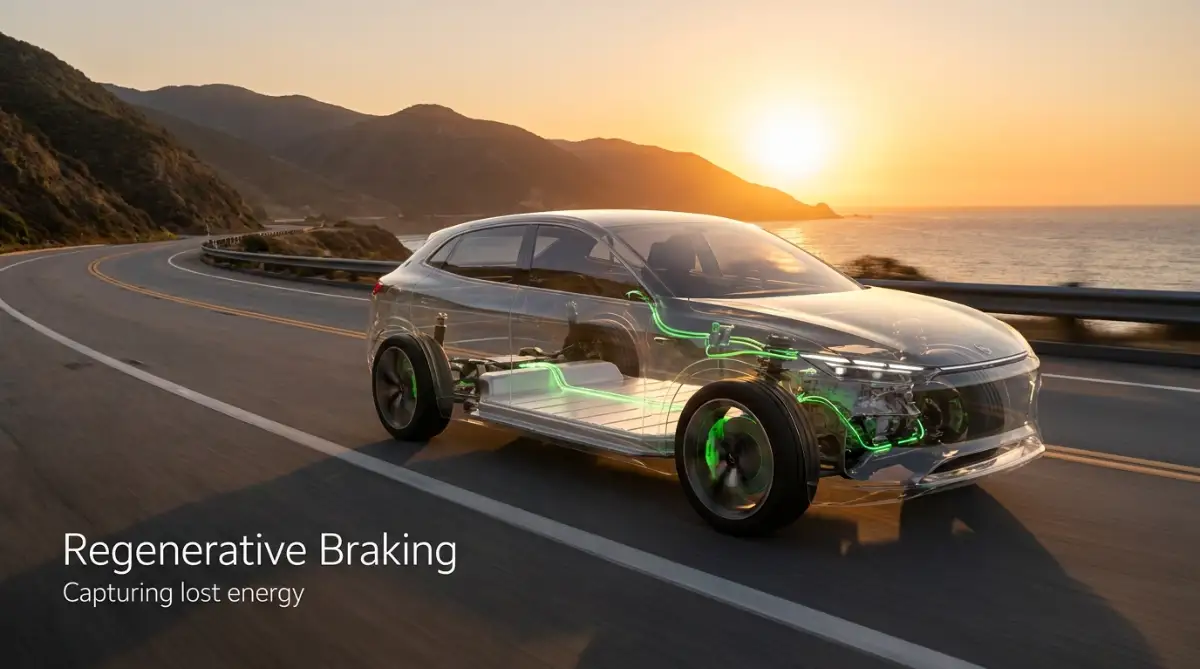
In an electric car, when you take your foot off the accelerator, the entire motor instantly runs in reverse. Instead of using electricity to spin the wheels, the forward motion of the wheels spins the motor.
When the motor spins backward like this, it magically turns into a generator. It takes the heavy weight and speed of your car, turns it back into electricity, and pushes that power straight back into your battery pack.
I remember my second week driving my EV, I completely turned off the regenerative braking because the slowing sensation felt too strange to me. My battery range dropped so fast that I panicked, thinking the car was broken. I quickly learned that keeping this feature turned on is the ultimate secret to maximizing my daily driving range, and now I barely even touch the physical brake pedal anymore.
Want to see exactly how this energy recovery looks in action? Check out this brilliant visual breakdown that makes the whole process incredibly easy to understand.
Quick Visual Guide: Watch this short clip to see exactly how regenerative braking captures your lost forward momentum and pushes free energy straight back into your battery pack.
Myth vs. Reality: Clearing Up EV Motor Confusion
There is an enormous amount of bad information floating around the internet about electric motors. When you do not know what is true, it is easy to make bad decisions about buying or driving an electric car. Let us look closely at a few of the most common myths and break them down with actual facts.
Myth 1: The Motor Will Degrade Just Like a Cell Phone Battery
A lot of people think that because an EV is electric, the motor will slowly die over a few years just like a smartphone. This is completely false.
Batteries do slowly lose capacity over time, but the motor itself is a highly durable piece of industrial machinery. Because an electric motor has almost no moving parts touching each other, there is practically nothing inside it that can wear out from normal daily driving. An electric motor can easily outlast the body of the car itself.
Myth 2: Electric Motors Can Not Handle Extreme Heat
You might have heard that driving an EV in the middle of summer will melt the motor. While extreme heat does affect battery chemistry, modern motors are incredibly well protected.
Today's electric vehicles use advanced liquid cooling systems. A mixture of water and special coolant constantly flows around the stator to pull away heat, just like the radiator in a gas car. As long as the cooling system is working, the motor will run perfectly safely in the hottest deserts.
Myth 3: They Are Too Expensive to Maintain
Many drivers are terrified of buying an EV because they think fixing a broken electric motor will bankrupt them. The reality is that electric motors require almost zero routine maintenance.
You never have to change the oil, there are no spark plugs to replace, and there are no timing belts to snap. The only thing you really need to check is the coolant fluid level every few years. The day-to-day savings on mechanic bills are absolutely massive.
How Your Driving Habits Affect Motor Efficiency
Even though electric motors are technological marvels, the person sitting in the driver's seat still controls how well they perform. Your daily driving habits have a huge impact on how much range you get out of a single charge.
The Heavy Foot Problem
Electric motors deliver 100% of their torque instantly. When you stomp on the accelerator at a green light, the motor demands a massive surge of electricity from the battery.
Doing this constantly is incredibly fun, but it creates excess heat in the motor and drains your battery extremely fast. Easing into the accelerator smoothly gives the motor time to build speed efficiently. A smooth driver can easily squeeze an extra 20 to 30 miles of range out of their car just by being gentle.
Highway Speeds and Wind Resistance
Electric motors are generally less efficient at very high highway speeds compared to low city speeds. When you drive over 70 miles per hour, the motor has to fight extremely hard against wind resistance.
Because there are no multiple gears to shift into at high speeds, the motor just has to spin faster and work harder. If you are ever running low on battery during a road trip, simply dropping your speed by 10 miles per hour will significantly reduce the strain on the motor and help you reach the next charger safely.
A Look Ahead: The Future of Motor Technology
The electric motors we have today are fantastic, but engineers are already working on the next generation of technology. The automotive industry is moving incredibly fast, and the cars coming out soon will be even more amazing.
Axial Flux Motors
Right now, most cars use "radial flux" motors, where the magnetic force moves outward from the center. A new technology called "axial flux" changes the direction of the magnetic force so it runs parallel to the axle.
These new motors are completely flat, almost like a giant metal pancake. Because they are so small and light, car manufacturers can easily put one tiny motor directly inside each individual wheel. This gives the car insane amounts of grip and control in bad weather.
Eliminating Rare Earth Metals
As we talked about earlier, permanent magnet motors rely on rare earth metals that are difficult and expensive to mine. Many smart automotive companies are heavily investing in new designs that completely replace these expensive magnets.
They are testing advanced copper windings and new types of steel that can mimic the power of rare magnets without the environmental cost. Once this technology hits the mainstream market, the total cost of buying an electric vehicle will drop dramatically for everyone.
Understanding what happens under the floorboard of your car completely transforms how you drive. When you know how the magnets spin, how the braking captures energy, and how to manage your speed, you stop worrying. You finally get to just sit back, relax, and truly enjoy the quiet, powerful ride of the future.
Master Your Machine: Insider Secrets to EV Efficiency
You already know the basic mechanics of how magnets spin the wheels of your car. Now, we need to talk about how you can actually use this knowledge to become a smarter, more efficient driver.
Most people just buy an electric car, drive it like their old gas guzzler, and wonder why their battery drains so fast. If you want to protect your investment and skip the charging anxiety, you need to learn a few pro-level secrets.
These are not complicated engineering tasks. These are simple everyday habits that directly reduce the strain on your electric motor and keep it running like a dream.
The Software Brain Controlling Your Motor
Your electric motor does not act alone; it takes direct orders from a computer called the motor controller. Think of this controller as the conductor of a massive orchestra, telling exactly how much electrical power should flow to the stator at any given millisecond.
Because this is entirely digital, car manufacturers can actually change how your motor performs remotely. This is exactly why your electric car keeps getting better while it simply sits in your driveway overnight. Over-the-air software updates frequently tweak these motor control algorithms to give you smoother acceleration or better highway range.
Always connect your car to your home Wi-Fi and install these updates immediately. Skipping a software update means you might be missing out on free range and improved motor efficiency provided by the manufacturer.
The Hidden Connection Between Tires and Torque
You might think your tires have nothing to do with your electric motor, but they are deeply connected. Electric motors deliver instant, massive torque the second you touch the pedal.
This heavy, instant power is exactly why EV tires are wearing out so fast compared to regular gas cars. When your tires lose their special aerodynamic tread, they create a massive amount of rolling resistance against the road.
Your motor has to work twice as hard to push a car with bad or under-inflated tires. Simply checking your tire pressure once a month is the easiest way to take a heavy load off your motor and increase your daily driving range.
My Quick Tire Rule of Thumb:
If you are ever switching out your factory EV tires, always look for ones marked with "Low Rolling Resistance" (LRR). Regular gas-car tires might fit your EV perfectly fine, but they grip the road too hard against that instant motor torque. Using the wrong tires can silently eat up to 15% of your total battery range without you even noticing!
Understanding Voltage Drop and Motor Strain
Your electric motor loves high voltage. When your battery is fully charged, it pushes electricity into the motor with intense pressure, making the car feel snappy and fast.
However, as your battery gets lower, that electrical pressure drops significantly. You can actually master this concept easily by understanding kilowatt-hours and range. When you force the motor to perform heavy acceleration on a low battery, it has to pull more physical current to make up for the low voltage.
Pulling this extra current creates excess heat inside the stator coils. To keep your motor incredibly healthy, try to avoid hard racing or heavy towing when your battery dips below twenty percent. According to detailed Department of Energy research on electric traction motors, maintaining stable voltage levels prevents long-term thermal wear on the internal components.
Mastering the Cabin Climate Controls
Here is a brilliant secret most new drivers never realize. Your electric motor, your battery, and your cabin heater often share the exact same thermal management system.
If you blast the traditional cabin heater on a freezing morning, it pulls massive amounts of energy away from the motor's power reserves. Instead, a smart driver relies on a heat pump in an electric vehicle if their car has one, or simply uses the heated seats and steering wheel.
Seat heaters use a tiny fraction of the electricity compared to heating the entire air volume of the car. Keeping the main cabin heater low ensures that the maximum amount of energy goes straight to your motor where it belongs.
The Costly Traps: Dangerous Habits Wasting Your Range
Now that we know what to do, we have to talk about the things you must absolutely avoid. The transition from gas to electric requires breaking some deeply ingrained driving habits.
I have seen countless new owners complain that their electric cars are terrible, simply because they refuse to change how they drive. If you hold onto these old habits, you are not just wasting electricity; you are silently damaging your peace of mind.
Let us look at the most common mistakes drivers make that aggressively ruin their driving range and put unnecessary strain on their expensive machines.
1. Treating Every Stoplight Like a Race Track
We all know that the instant acceleration of an EV is incredibly fun. Pinning your passengers to their seats never really gets old.
However, performing maximum acceleration pulls extreme amounts of power and generates intense heat in both the battery and the motor. If you do this repeatedly, the car's computer will eventually trigger "thermal throttling" to protect the system.
Thermal throttling means the car intentionally reduces your motor's power output until things cool down. Stop treating your daily commute like a drag race, and your motor will reward you with years of perfectly smooth, ice-cold operation.
2. Disabling the Regenerative Braking System
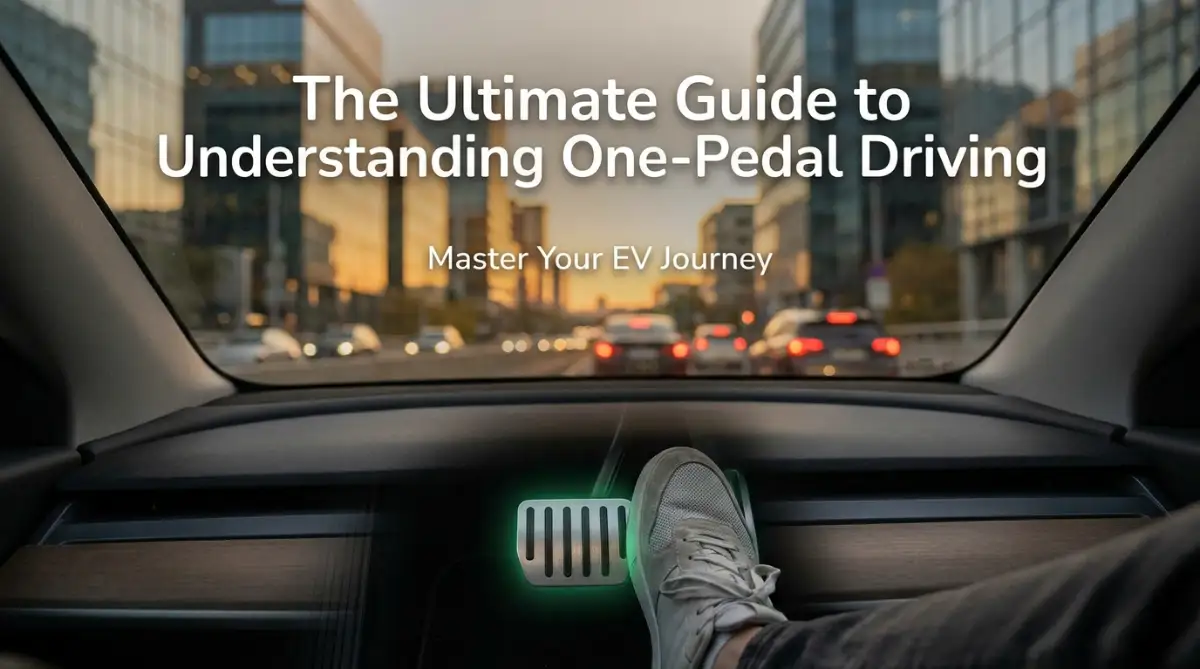
Some drivers absolutely hate the feeling of the car slowing itself down when they lift their foot off the pedal. To make the car feel more like an old gas vehicle, they dive into the settings and completely turn off the regenerative braking.
This is the absolute worst mistake you can make as an EV owner. By turning this off, you are throwing away free electricity every single time you stop at a red light.
You are also forcing your traditional mechanical friction brakes to do all the heavy lifting. Extensive Society of Automotive Engineers insights on regenerative systems show that using one-pedal driving can extend the life of your physical brake pads to over 100,000 miles. Give yourself a few days to get used to the feeling, and you will never want to go back.
3. Abusing the DC Fast Charging Network
Fast chargers are amazing tools when you are traveling across the country. They pump massive amounts of direct current straight into your car in a matter of minutes.
But if you use a high-speed charger every single day for your daily commute, you are asking for trouble. If you want to know why, you should read up on what is DC fast charging and how it creates excess heat.
The heavy heat generated by daily fast charging puts serious stress on the cooling loops that protect your motor and battery. For the best long-term health of your vehicle, you should rely on slow, gentle AC charging at home while you sleep, saving the fast chargers strictly for long highway trips.
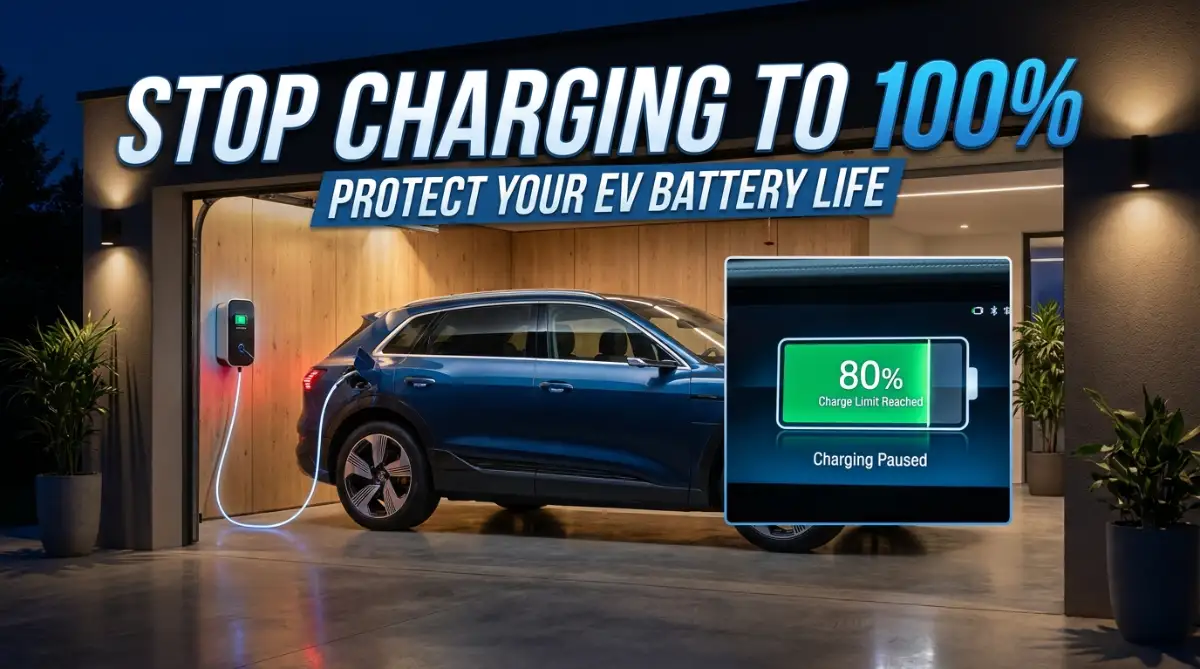
The Golden 80/20 Charging Rule:
Want to make your battery last for a decade without losing its punch? Try to keep your daily charge between 20% and 80%. Pushing the battery all the way to 100% every single night actually stresses the internal chemistry, just like overeating makes you feel stuffed and sluggish. Set your car's charging limit to 80% on your touchscreen for your daily commute, and only fill it up to 100% when you are packing up for a long weekend road trip.
4. Ignoring Aerodynamics on the Highway
Gas engines are so inefficient that we barely notice when bad aerodynamics hurt our fuel economy. Electric motors are so incredibly efficient that even minor changes in wind resistance have a huge, immediate impact.
If you leave an empty roof rack on your car, or drive down the interstate with all the windows completely rolled down, you create massive aerodynamic drag. Your motor has to pull significantly more electricity just to maintain a normal highway speed.
Official EPA guidelines on electric vehicle efficiency clearly show that aerodynamic drag is the number one range killer at speeds over sixty miles per hour. Roll up the windows, take off the empty bike racks, and let your car slice smoothly through the wind.
5. Poor Planning on Extreme Weather Days
Electric motors and batteries are basically the exact same as humans; they like to be at a comfortable room temperature. When the weather drops below freezing or hits triple digits, your system has to work overtime just to keep itself safe.
A massive mistake people make is avoiding proper planning on an EV road trip during extreme weather. They expect the exact same range in the dead of winter as they get on a beautiful spring morning.
Always pre-condition your car while it is still plugged into your house charger. This allows the car to use electricity from your house to warm up the battery and motor, saving all of your stored battery energy for the actual drive. Advanced National Renewable Energy Laboratory studies on thermal management prove that pre-conditioning is the single best way to beat extreme weather efficiency drops.
Empowering Your Electric Journey Ahead
My Biggest Personal Takeaway:
If I could go back and tell my past self one thing on the day I bought my EV, it would be this: stop staring at the battery percentage like it is a ticking clock! Once I learned to trust the car's built-in navigation and smart battery management system, driving actually became fun again. Give yourself a solid week to adjust to the new feeling, and I promise the range anxiety completely disappears.
Stepping into the world of electric vehicles can feel like learning a completely new language. At first, all the talk about stators, rotors, and kilowatt-hours seems incredibly overwhelming.
But as we have explored today, you absolutely do not need an advanced engineering degree to master this technology. The mechanics are beautifully simple, and the benefits to your daily life are massive.
You are no longer bound by oil changes, broken timing belts, or the constant anxiety of expensive engine failures. You are driving a clean, highly efficient machine that turns simple magnetic forces into thrilling forward motion.
By embracing regenerative braking, understanding your tires, and treating your accelerator pedal with a bit of respect, you take complete control over your driving experience. You will squeeze every single mile out of your battery, saving a massive amount of money in the long run.
I know how scary the switch to electric feels at first, because I went through that exact same fear myself. But once I truly understood the simple magic happening under my feet, my daily commute turned from a stressful chore into the absolute best part of my day. Trust the technology, practice good driving habits, and enjoy the beautiful silence of the electric road!
Clear Answers to Your Biggest EV Motor Questions
Do electric car motors ever need their oil changed?
No, electric motors do not use engine oil like a traditional gas car because there are no combustion pistons moving up and down. Some electric vehicles do use a special reduction gear fluid that might need to be checked after many years, but routine oil changes are a thing of the past.
How long does an electric vehicle motor actually last?
Because they only have one major moving part, electric motors are incredibly durable and rarely break down. Most modern EV motors are designed to easily outlast the physical body of the car, often running perfectly for over half a million miles.
Is it safe to drive my electric motor through deep water or heavy rain?
Yes, the entire electric motor and high-voltage battery system are heavily sealed and waterproofed straight from the factory. You can safely drive through normal rainstorms, and electric vehicle charging in the rain is completely safe due to multiple built-in electronic fail-safes.
Can a mechanic repair a broken electric motor, or do I need a new one?
In the rare event that an electric motor fails, it is usually much cheaper and faster to swap the entire motor unit rather than taking it apart to fix individual copper coils. The modular design of EVs makes replacing the drive unit a surprisingly straightforward process for certified technicians.
Does turning on the air conditioning make the motor weaker?
Running the air conditioner does not make the motor physically weaker or slower, but it does pull electricity from the same battery pack. You will notice a drop in your total driving range, but your acceleration and highway speed will remain just as powerful as always.
Disclaimer: The information provided in this article is for educational and informational purposes only and does not constitute professional automotive or engineering advice. Electric vehicle specifications, technologies, and safety guidelines vary significantly by manufacturer and model year. Always consult your vehicle's official owner's manual and seek guidance from certified dealership technicians before making any modifications, performing maintenance, or altering your charging habits. The author and publisher are not responsible for any damage, warranty voidance, or safety issues resulting from the application of the tips discussed in this post.