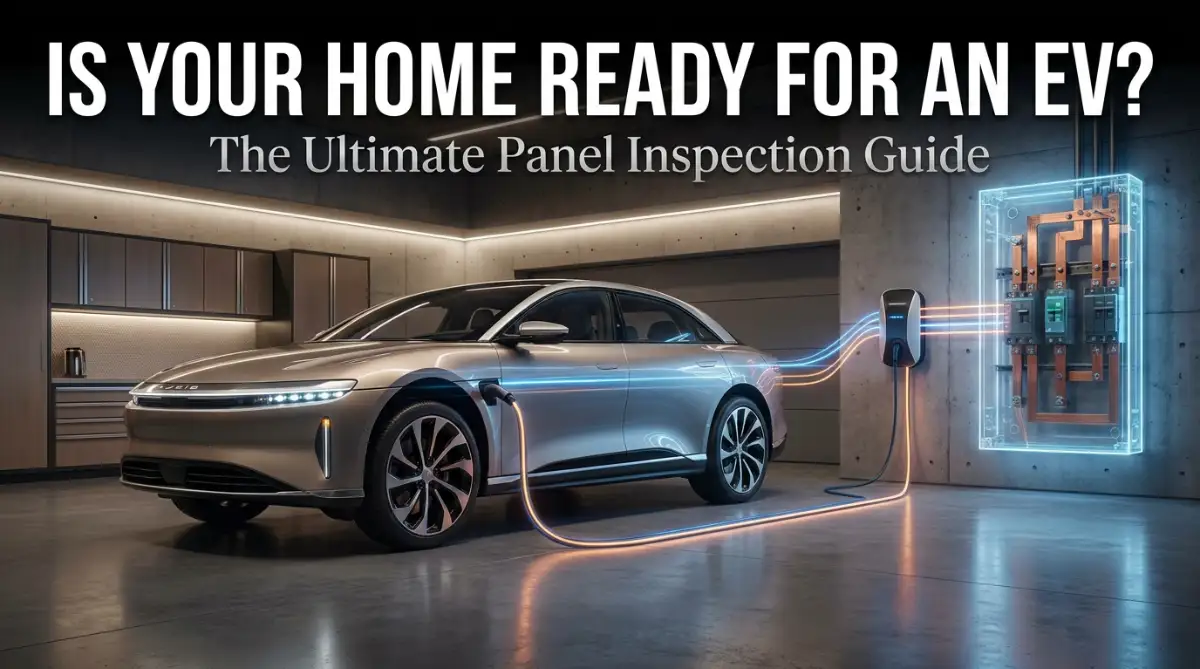
The Unexpected Shock of My First Home Charging Experience
Let's be real—bringing your first electric car home feels amazing right up until you try to plug it in. I thought I could just treat my new EV like a giant smartphone. Boy, was I wrong. If you are staring at a dusty, old breaker box wondering how you are going to charge your car without paying thousands for a massive upgrade, you are exactly where I was. Let me show you how to beat the system.
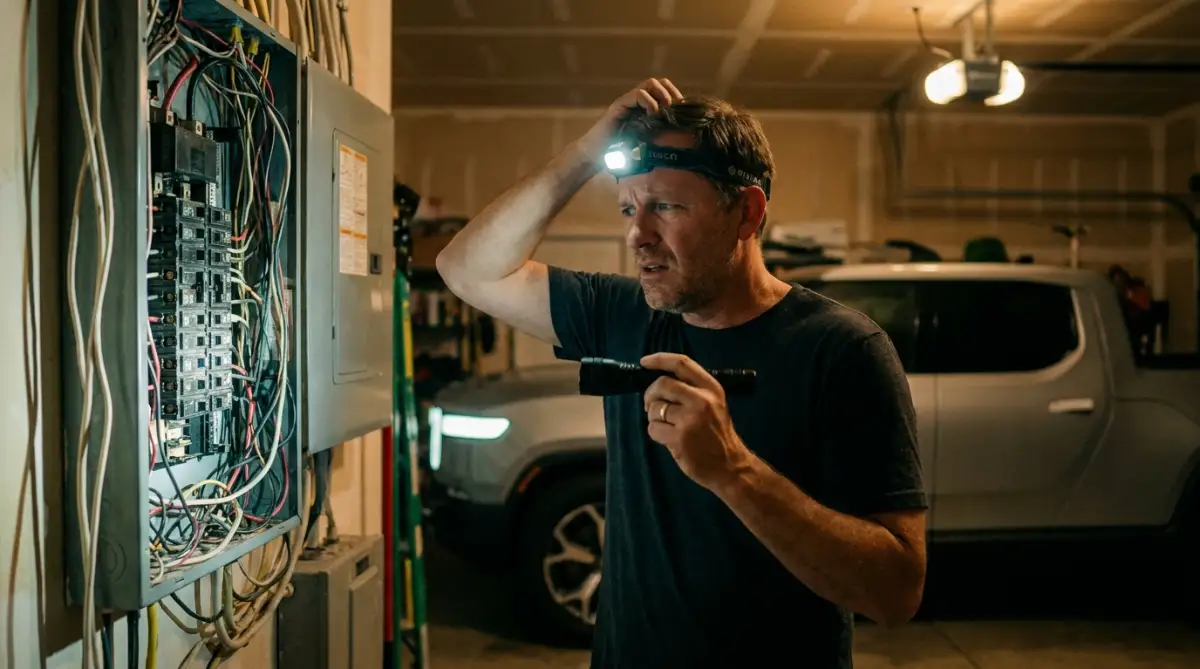
My heart sank a few days later when a local electrician came over, took one look at my dusty, gray breaker box, and just shook his head.
He flat out told me my current house setup could not handle the extra power needed for a Level 2 charger. I was completely crushed.
Suddenly, I found myself dealing with massive range anxiety on a daily basis. Instead of waking up to a fully charged battery, I was wasting hours sitting in random grocery store parking lots at night.
The financial shock of potentially spending thousands on a massive home rewiring project kept me awake at night. I felt incredibly frustrated because nobody at the dealership warned me about checking my home power capacity before handing over the keys.
Quick Takeaways: What You Need to Know Right Now
- Check your panel first: Look for the massive switch at the top of your breaker box. If it says 200, you are golden. If it says 100, you still have options.
- You don't always need a rewire: Smart load management devices let your car share a circuit with your dryer or AC, saving you thousands of dollars.
- Slow down: Most of us drive less than 40 miles a day. A lower-speed overnight charge handles this easily without burning out your house wiring.
- Permits matter: Never skip city inspections. Illegal wiring can completely void your home insurance if a fire starts.
Decoding Your Home Power Hub (No Math Degree Required)
You do not need to be a certified electrician to understand the basics of your own house. You just need to know where to look and what the numbers actually mean.
Checking your capacity is mostly about understanding how much electricity your home can safely bring in from the street at any given moment. Let us break down this confusing technical process into plain, simple English.
Finding Your Magic Number
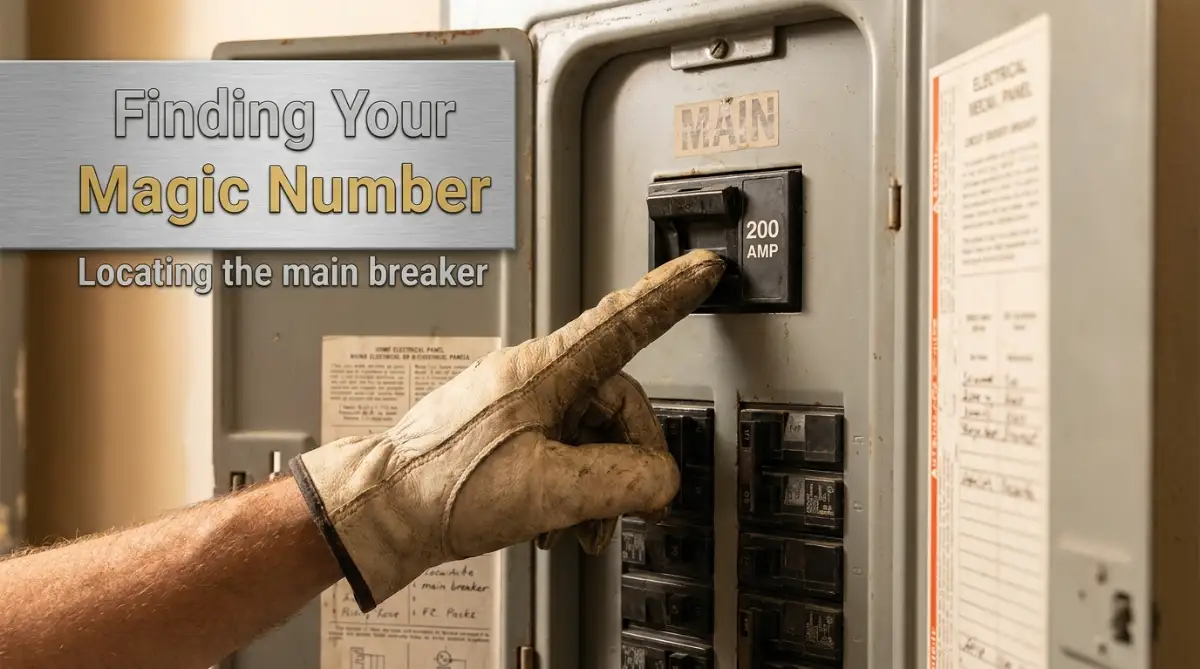
The very first thing you need to do is locate your main breaker. This is usually the largest switch located at the very top, bottom, or middle of your main breaker box.
Sometimes, this main switch is located outside near your electric meter. When you find it, look for a number stamped directly on the handle of the switch.
You will typically see numbers like 100, 150, or 200. This number represents your home's total amperage service.
Think of your home's electrical service like a giant water pipe connecting your house to the city water supply. Amperage is simply the width of that pipe.
A 100-amp service is like a standard garden hose. It gets the job done for basic living, but it struggles if you try to do too much at once.
A 200-amp service is like a massive fire hose. It can easily push enough power to run a heavy modern household while simultaneously filling up an electric car battery.
Here is a quick breakdown of what your panel size actually means for your daily life:
If you see a 200 stamped on that main switch, you can usually breathe a huge sigh of relief. You almost certainly have enough capacity to add a fast home charger.
If you see 100, the situation gets a little bit more complicated, but do not panic just yet. You still have plenty of highly effective options that do not involve emptying your bank account.
The Physical Space Puzzle
Knowing your total power capacity is only half the battle. You also need to look at the physical real estate inside your metal box.
Open the metal door and look at the rows of smaller switches. Are there any empty slots left, or is the box completely full of switches?
A standard Level 2 fast charger requires a dedicated 240-volt circuit. This means it needs a double-pole breaker, which physically takes up two full slots in your panel.
If every single space is currently occupied by other circuits, you have a physical space problem. However, a full box does not automatically mean you need a total system replacement.
I remember staring at my completely full breaker box, feeling totally defeated because there was zero room for a new switch. Then my electrician showed me tandem breakers, which basically squeeze two switches into one single slot, magically freeing up the space I needed!
Tandem breakers are an incredible, low-cost secret. They let you condense your existing circuits to make room for your new car equipment safely and legally.
The Heavy Hitter Appliances
Now we need to talk about what is actually running inside your house. This is called a home energy load calculation.
Electricity is a shared resource in your home. You have to imagine a freezing winter night where you are running multiple things at the same time.
Your electric heater is blasting on high. You are roasting a turkey in your electric oven. Your hot water tank is heating up, and your electric dryer is tossing a heavy load of wet towels.
These items are your heavy hitters. They consume massive amounts of power.
Now, imagine plugging in a giant electric vehicle battery on top of all that. If your total power draw exceeds your main breaker limit, the entire system shuts down to protect your wires from catching fire.
Your entire house instantly goes dark. This is exactly why you have to account for concurrent usage.
If your home relies mostly on gas appliances for heating, cooking, and drying clothes, you have a massive advantage. Gas homes use very little electricity, leaving a massive pool of unused power strictly for your car.
On the flip side, if everything in your house runs on electricity, your available capacity shrinks drastically.
To give you a better picture, here is a cheat sheet of the worst "heavy hitters" in a typical home. Notice how much power they steal from your available pool:
Myth vs Reality: The 200-Amp Lie
The Myth: You absolutely must upgrade to a 200-amp service if you want to charge a modern electric vehicle at home.
The Reality: This is completely false. Thousands of drivers successfully use a 100-amp service by charging late at night when the rest of the house is sleeping, or by installing smart sharing devices.
Do not let anyone pressure you into a massive rewiring job without exploring the alternatives first.
Smart Alternatives for Undersized Systems
If you find out your system is hovering around that 100-amp mark, you still have amazing choices. Technology has solved this problem brilliantly over the last few years.
This video perfectly explains how you can bypass expensive panel upgrades and still get incredible charging speeds at home. Check it out before you call a contractor!
One of the best solutions available today is a smart load management device. This brilliant little gadget physically connects to both your car charger and another heavy appliance, like your electric dryer.
It acts like a smart traffic cop for your electricity. When your dryer is running, the device automatically pauses the power going to your car.
The moment your laundry finishes, the device instantly sends the power back to your vehicle. You never have to flip a switch or monitor anything yourself.
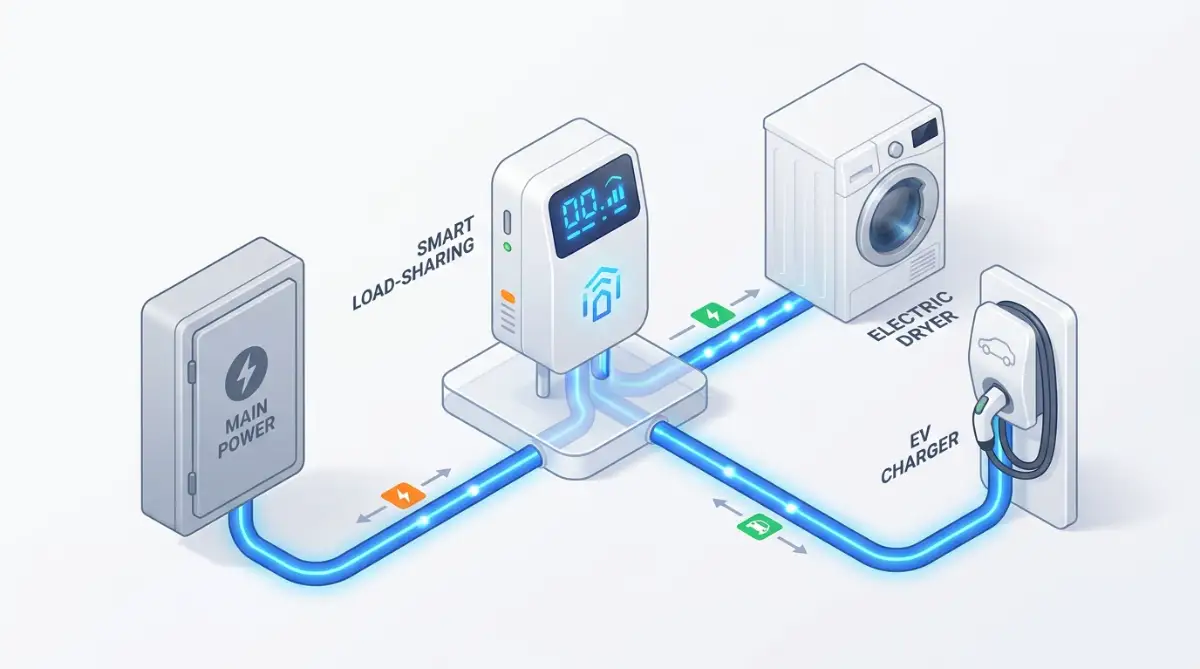
Everything happens automatically in the background while you sleep. You wake up with clean clothes and a fully charged battery, all without upgrading a single wire in your wall.
The Secret Power of Dialing It Down
Many new owners assume they need the absolute fastest home setup available on the market. They want a massive 60-amp circuit that can fill the battery in just a few hours.
Here is a massive reality check: you probably do not drive enough to actually need that much speed. Most daily commutes are under forty miles round trip.
You can easily set your equipment to charge at a much lower speed, like 20 or 30 amps. A lower amp circuit puts significantly less stress on your existing home infrastructure.
You will still easily recover your daily driving miles overnight. The car sits in your garage for ten to twelve hours anyway, so there is absolutely no rush.
Lowering your charging speed is the easiest way to make a smaller electrical system work beautifully. It saves you money on installation and keeps your home completely safe from overloading.
💰 My Quick Money-Saving Pro Tip:
Before you pay an electrician out of your own pocket, check your local laws! Many utility companies and local governments offer massive cash rebates or tax credits (like the Federal Form 8911 in the US) just for installing smart EV chargers. A quick web search for "EV charger rebates in my zip code" might literally save you hundreds of dollars tomorrow.
Knowing When to Call the Professionals
While you can easily check your capacity and count your empty slots, the actual wiring should always be left to a licensed professional.
Playing around with high-voltage electricity is incredibly dangerous. One wrong move can lead to a house fire or severe injury.
When you finally call an electrician for a quote, you will now be speaking their language. You can confidently tell them your main breaker size and what kind of large appliances you are currently running.
This saves them time and prevents dishonest contractors from upselling you on massive upgrades you simply do not need. Being an educated homeowner is your absolute best defense.
Beyond the Basics: Mastering Your Garage Energy Flow
You already know how to find your main breaker and check for open slots. Now, we need to talk about how to make your home energy setup work smarter, not harder.
Many new owners assume they have to tear down drywall and spend thousands of dollars to get a safe setup. In reality, you can use a few brilliant engineering tricks to stretch your current electrical capacity to the absolute maximum.
These are the exact same strategies that professional master electricians use in their own homes. By applying these smart management techniques, you can keep your lights on, your battery full, and your wallet perfectly intact.
The Magic of Load Shedding Devices
If your main box is maxed out, you do not always need a massive heavy-up from the utility company. Instead, you can install an automatic load management device right next to your existing box.
Think of a load shedding device as a tiny, very strict traffic cop for your electricity. It physically connects to a heavy appliance, like your central air conditioner, and your new car charger at the exact same time.
When your air conditioner kicks on to cool your house, this device instantly pauses the power going to your garage. The moment your house reaches the perfect temperature and the AC turns off, the device sends full power right back to your car.
Everything happens completely automatically in the background while you sleep or watch television. According to guidelines from the U.S. Department of Energy, smart load management can drastically reduce the need for heavy residential grid upgrades. You never have to flip a switch manually, and your main system never gets overwhelmed.
Understanding the 80% Continuous Load Rule
There is a massive difference between a toaster and a car charger. A toaster runs for two minutes, while a car pulls heavy power for six or eight hours straight.
This brings us to the most important safety standard in home wiring: the continuous load rule. Professional safety guidelines state that any device running for more than three hours can only use 80% of the circuit breaker’s maximum rating.
If you want to push 40 amps of power into your vehicle, you cannot just use a 40-amp switch. You are legally required to install a 50-amp switch and appropriately thick wiring to handle the heat.
Ignoring this mathematical rule is like forcing a marathon runner to sprint at full speed for twenty miles. Eventually, the system will overheat, the breaker will fail, and you could face a serious fire hazard inside your walls.
The Software Limit Secret
Here is a brilliant secret that most dealerships completely forget to mention. You can actually control how much power your car demands right from your phone screen.
Let us say your electrician installs a standard 30-amp circuit because that is the absolute most your older home can handle. You can easily open your vehicle's mobile app and set a strict limit, telling the car to never pull more than 24 amps.
This simple software adjustment completely protects your older wiring from getting too hot. It is a fantastic temporary workaround if you are planning to upgrade your house next summer but need to charge safely right now.
Before you finalize your setup, it is highly recommended to read this before installing your home wallbox charger to ensure your chosen hardware completely matches your software settings.
Adding a Secondary Command Center
Sometimes, your main panel has plenty of total capacity, but absolutely zero physical space left for new switches. Every single slot is crammed full of wires for your kitchen, bathrooms, and bedrooms.
Instead of replacing the entire metal box, a professional can easily install a much smaller sub-panel directly next to it. A sub-panel is simply an extension cord for your main box, adding a dozen new empty slots for a fraction of the cost.
The electrician will move a few minor circuits, like your hallway lights, over to the small sub-panel. This instantly frees up the large, double-pole space you need in the main box for your heavy-duty charging equipment.
Using a sub-panel is a highly efficient way to modernize an older house without starting entirely from scratch.
The Hidden Traps That Destroy New Setups
I have seen countless homeowners try to cut corners to save a few hundred dollars on their garage setup. Unfortunately, high-voltage electricity is completely invisible, totally silent, and incredibly unforgiving when you make a mistake.
When a standard light switch fails, it just sparks and pops. When a massive 240-volt charging circuit fails, it can easily melt metal and ignite the wooden framing inside your walls.
You have to respect the sheer volume of energy passing through your home every single night. Let us break down the most dangerous mistakes people make, so you can keep your property and your family entirely safe.
The Danger of Undersized Wiring
The absolute worst mistake you can make is mismatched wiring. Every specific breaker size requires a specific thickness of copper wire to carry the current safely.
Sometimes, a handyman will install a massive 50-amp switch but use thin wire meant for a 30-amp circuit just because it was cheaper at the hardware store. The thin wire acts exactly like the glowing red coil inside your kitchen toaster.
As the car pulls heavy power for hours, the thin wire gets incredibly hot. The plastic insulation around the wire slowly melts away into a sticky puddle, exposing raw, live electricity directly to your drywall.
According to data from the Electrical Safety Foundation, overloaded circuits remain a leading cause of devastating residential property damage. Always verify that your installer is using the exact wire gauge recommended by the equipment manufacturer.
Trusting Old Industrial Outlets
If you move into a home that already has a large, heavy-duty outlet in the garage, do not assume it is ready for your car. Previous owners often install these plugs for heavy welding machines or massive air compressors.
Those industrial machines operate very differently from modern smart vehicles. Many older garage outlets lack a dedicated neutral wire or proper grounding protection.
If you plug a highly sensitive modern car into an ungrounded outlet, a sudden power surge from the street could shoot directly into your vehicle. You could instantly fry the internal computers, leaving you with a totally dead car in your driveway.
You must also consider environmental factors if your main box or outlet is located outside. Understanding the safety tips for charging in the rain is highly important if your equipment is exposed to the open weather. Always have a certified pro test an old outlet with a multimeter before you ever plug your expensive car into it.
The Permit Skipping Nightmare
I completely understand the temptation to skip the local city permitting process. Getting a permit takes time, it costs extra money, and waiting for the city inspector is totally annoying.
However, doing unpermitted electrical work is basically playing Russian roulette with your financial future. Homeowner insurance companies are incredibly strict about building codes.
If a fire starts in your garage and the fire marshal discovers illegal, unpermitted modifications in your breaker box, your insurance provider can completely deny your claim. You could lose your entire house and receive absolutely zero compensation.
The hidden costs of auto insurance and home policies are deeply tied to following proper legal procedures. A passed city inspection proves your setup is safe and fully protects your legal right to file an insurance claim if a disaster ever strikes.
Misunderstanding Your True Daily Needs
So many new drivers fall into the trap of thinking they need a massive commercial-grade station in their home. They want their battery to fill up in two hours, completely ignoring the limitations of their house.
This usually leads to unnecessary panic and extremely expensive system overhauls. Let us look at the actual math of daily driving.
The average person drives less than forty miles a day for work and errands. A basic, low-power setup running at just 16 amps can easily replace those forty miles while you sleep peacefully in your bed.
Unless you are driving hundreds of miles every single day, forcing a massive 60-amp circuit into an older home is a total waste of money. Taking the time to master making sense of kilowatt-hours and range will quickly show you that slow, steady overnight charging is completely sufficient for a normal lifestyle.
Ignoring Other Power-Hungry Additions
When evaluating your panel, you cannot just look at your current situation. You have to think about what you might add to your home over the next few years.
Are you planning to install a new electric hot tub in the backyard? Are you thinking about upgrading your old gas furnace to a massive electric heat pump system?
If you use up every single ounce of your remaining electrical capacity for your car today, you will completely block yourself from adding new appliances tomorrow. It is always wise to leave a small buffer of empty capacity for future home improvements.
Learning exactly why your electric car keeps getting better through software updates shows how technology evolves, but your home wiring remains strictly physical. Plan your energy budget carefully so you never paint yourself into a corner.
Your Personal Blueprint for Charging Success
Taking a close look at your home’s electrical guts can feel pretty intimidating at first. However, you now have the exact knowledge you need to inspect your panel like a true professional.
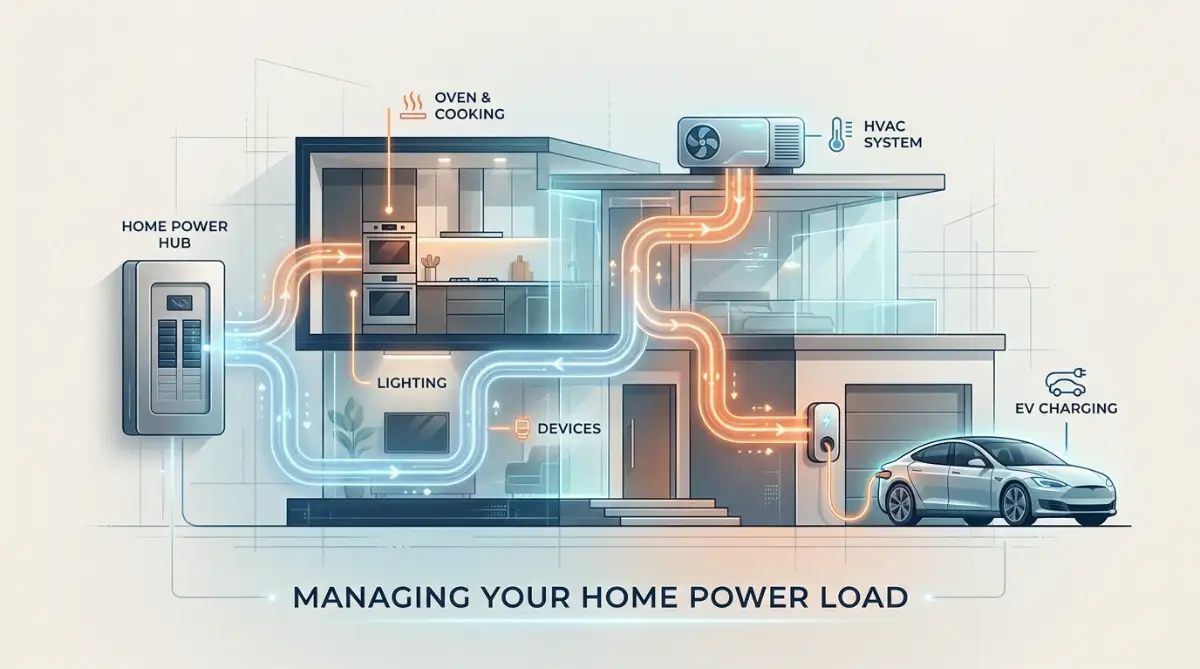
You know how to spot the main amperage switch, check for open slots, and recognize the massive benefits of smart load management devices. You also know exactly which dangerous shortcuts to avoid when talking to a local contractor.
Your house is essentially becoming a personal fueling station. It is an amazing transition that completely frees you from dirty gas stations and frustrating public charging lines.
By taking the time to understand your power limits, you are setting yourself up for years of smooth, effortless driving. You can simply come home, plug in your cable, and wake up to a full tank every single morning without a worry in the world.
If you are ever feeling unsure about the numbers stamped on your breakers, just take a few clear photos and show them to a licensed local expert. They can quickly confirm your capacity and help you design a setup that perfectly matches your home and your budget.
I remember standing in my dusty garage, totally overwhelmed by all the wires and switches inside my metal box. But the first time I woke up to a fully charged battery without ever leaving my driveway, every bit of that stress completely vanished. You have absolutely got this, so take that first step today and transform your home into the ultimate driving basecamp!
Frequently Asked Questions About Home Panel Upgrades
How much does it cost to upgrade an electrical panel for a car?
A complete panel replacement usually ranges from two thousand to four thousand dollars, depending on your location and the complexity of the wiring. However, many homes can completely avoid this cost by using smart splitters or simply scheduling their charging sessions during off-peak hours. Always get at least three quotes from different contractors before agreeing to a full replacement.
Can I safely charge my vehicle on an older 100-amp service?
Yes, it is entirely possible to use a 100-amp service safely. You simply need to limit the charging speed in your vehicle's software or install an automatic load-shedding device. The goal is to ensure your heavy household appliances and your car are never pulling maximum power at the exact same moment.
Does a home charging station increase my electricity bill a lot?
You will definitely see an increase in your home electric bill, but it is much cheaper than buying liquid fuel. To keep costs low, contact your utility company and ask if they offer special Time-of-Use rates. Charging your battery late at night can drastically reduce your monthly energy expenses.
Do I really need a city permit just to add one new breaker?
Yes, adding a new high-voltage 240-volt circuit legally requires a building permit in almost every municipality. Skipping this step can void your homeowner's insurance policy if an electrical fire occurs. A proper permit and inspection guarantee your setup meets strict national safety standards.
What should I do if my breaker keeps tripping while charging?
If your breaker trips frequently, stop using the charger immediately. This usually means the circuit is overheating, the breaker is failing, or the wire is too thin for the continuous load. Call a licensed professional to inspect the connections and properly diagnose the issue before attempting to use it again.