Why My Website Stayed Invisible (And the Hidden Metric I Ignored)
You check your website traffic, and the number is a big, fat zero. Again. You spent days writing that article, formatting it perfectly, and hitting publish, just to get completely ignored by the internet. I know that exact feeling because I spent my first year blogging totally invisible to search engines. It was not until I discovered a hidden "trust score" that everything finally clicked. Let me show you exactly what this invisible metric is, how top tools measure it, and how you can actually control it to get the traffic you deserve.
What You Will Learn Today (Quick Summary)
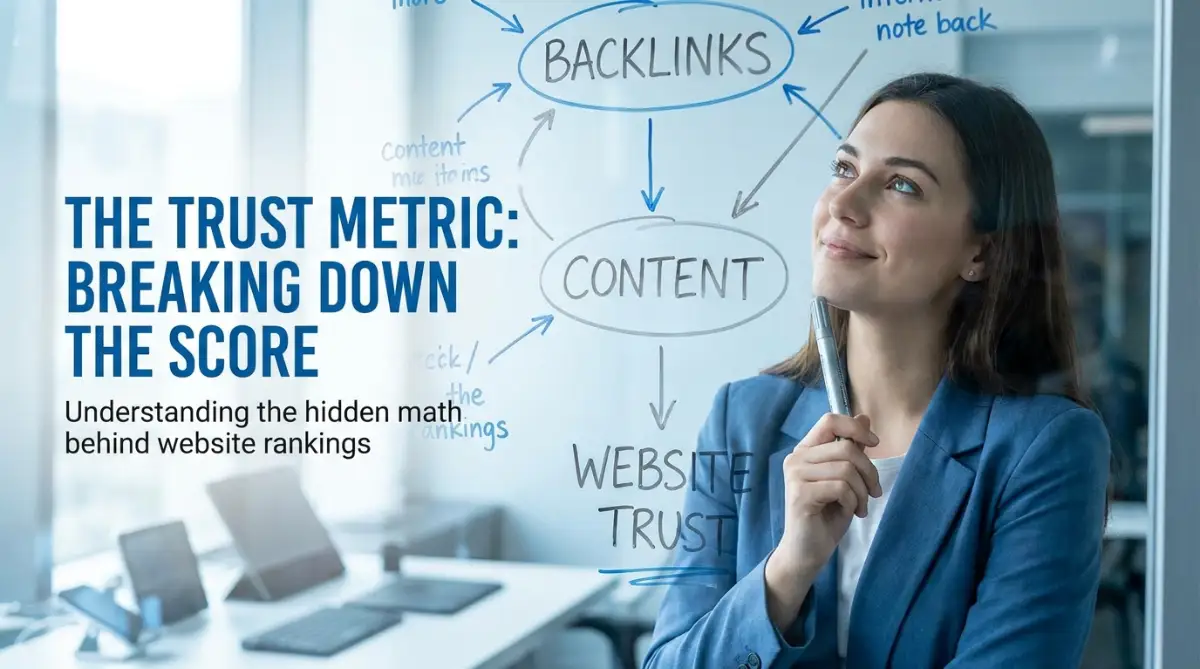
- The Trust Metric: How search engines use third-party links to judge if your website is trustworthy.
- The Math Behind It: Why getting one link from a massive university site beats getting fifty links from tiny blogs.
- Avoiding Penalties: How checking your spam score keeps your website safe from toxic links.
- Actionable Growth: My favorite, proven strategy to get high-quality links without begging people for them.
The Invisible Reputation: What This Score Actually Means
Let us strip away the complex technical jargon and look at this logically. Imagine you are moving to a brand new city and looking for a reliable doctor.
If one random stranger recommends a clinic, you might consider it. But if the local mayor, the police chief, and fifty other established doctors all recommend that same clinic, you will trust it instantly.
This is exactly how search engines operate when they decide which website to show first. They cannot read your mind, and they do not inherently know if your content is accurate.
Instead, they rely on the recommendations of other websites to judge your trustworthiness. When a highly respected website links to your blog, they are essentially giving you a massive vote of confidence.
Domain Authority is simply a number that attempts to measure this exact level of accumulated trust. It is a predictive score, usually ranging from one to one hundred, created by third-party software companies.
It is important to remember that Google does not actually use this specific score. The search giant has its own secret internal algorithms to determine trust and page rankings.
However, big analytics companies spent years reverse-engineering Google's behavior to create their own matching metrics. They built these scores so everyday website owners could have a visible, easy-to-understand number to track their progress.
A brand new website always starts with a score of one. It has no reputation, no friends, and no votes of confidence from the wider internet.
Major sites like Wikipedia, Apple, or massive news outlets sit comfortably at the very top with scores near one hundred. They have spent decades building trust, and millions of other sites link to their pages every single day.
When you understand this, the whole mystery of search engine rankings begins to make perfect sense. You stop wondering why a big brand outranked you and start focusing on how to build your own digital reputation.
Decoding the Math: How Analytics Platforms Calculate the Numbers
Every major SEO tool has its own unique name for this concept, but the underlying math is remarkably similar. You will often hear terms like Domain Rating, Authority Score, or simply DA.
To make things super simple, I put together a quick cheat sheet showing what the biggest SEO tools call their trust metrics.
These platforms use massive networks of automated bots called web crawlers. These bots travel across the internet 24 hours a day, reading pages and tracking every single link they find.
They build gigantic databases mapping out exactly who is linking to whom. Once they have this map, they run complex mathematical formulas to distribute "points" across the network.
The Power of Referring Domains
The absolute biggest factor these tools look at is the number of unique websites linking to you. These are called referring domains.
If one single website links to your article fifty times, it does not help you much. Analytics tools are smart enough to realize that fifty votes from one person is still just one person's opinion.
Instead, they want to see links coming from fifty totally different, independent websites. This shows a broad, natural agreement across the internet that your content is highly valuable.
The more unique referring domains you have, the higher your score will climb. But as you move up the ladder, the math becomes exponentially harder.
Jumping from a score of ten to twenty is relatively easy and might only take a few decent links. However, jumping from seventy to eighty requires an incredible amount of high-level endorsements.
Here is exactly why you need to pay attention to video guides.
Watch this brilliant breakdown to see exactly how these scores are calculated in real-time, and you will understand why some links are worth their weight in gold.
The Weight of the Linking Site
Not all links carry the same amount of mathematical power. This is where many beginners get completely confused and frustrated.
If a brand new blog with a score of one links to you, it passes very little value. It is like a toddler recommending a financial advisor; the intention is nice, but the endorsement lacks weight.
However, if a massive university website with a score of ninety links to you, the impact is explosive. That single link can push your own score up significantly in a matter of weeks.
Analytics tools calculate the passing of this power, often called "link juice," very carefully. A powerful website has a lot of trust to give, but that trust gets divided by the number of links on their page.
If a high-authority page links only to you, you get a massive chunk of their trust. If that same page links to you and five hundred other websites, the power is severely diluted.
Pro Tip for Faster Growth
I spent months begging for links from anyone who would listen, and it got me absolutely nowhere. My biggest breakthrough happened when I stopped asking for links and started creating original data charts that other bloggers naturally wanted to use in their own posts. If you give people a visual asset they need, they will gladly credit you with a powerful link without you ever having to ask.
Myth vs Reality: Breaking Down Common Misconceptions
There is so much terrible advice floating around the internet regarding website scores. Many people treat this metric as the ultimate goal of their entire business.
Myth: You must have a score of eighty to rank on the first page.
Reality: You can easily outrank massive websites if your specific page answers the user's question much better. A highly focused, perfectly formatted article on a small site often beats a generic article on a massive site.
Many website owners get obsessed with pushing their number higher by any means necessary. They start buying cheap links from shady forums just to trick the analytics tools.
While this might temporarily trick the third-party software, it is incredibly dangerous. Search engines are significantly smarter than basic analytics tools.
If search engines detect that you are trying to manipulate the system with fake links, they will heavily penalize your site. You could lose all your hard-earned traffic overnight.
Myth: Social media shares directly increase your domain score.
Reality: While going viral on Facebook brings great traffic, social media links usually have a "no-follow" tag attached to them. This means they do not pass mathematical trust points to your website.
Analytics tools strictly measure the permanent, structural links between actual websites. They look for genuine editorial endorsements placed inside the body of an article.
The Quality Check: Spam Scores and Link Profiles
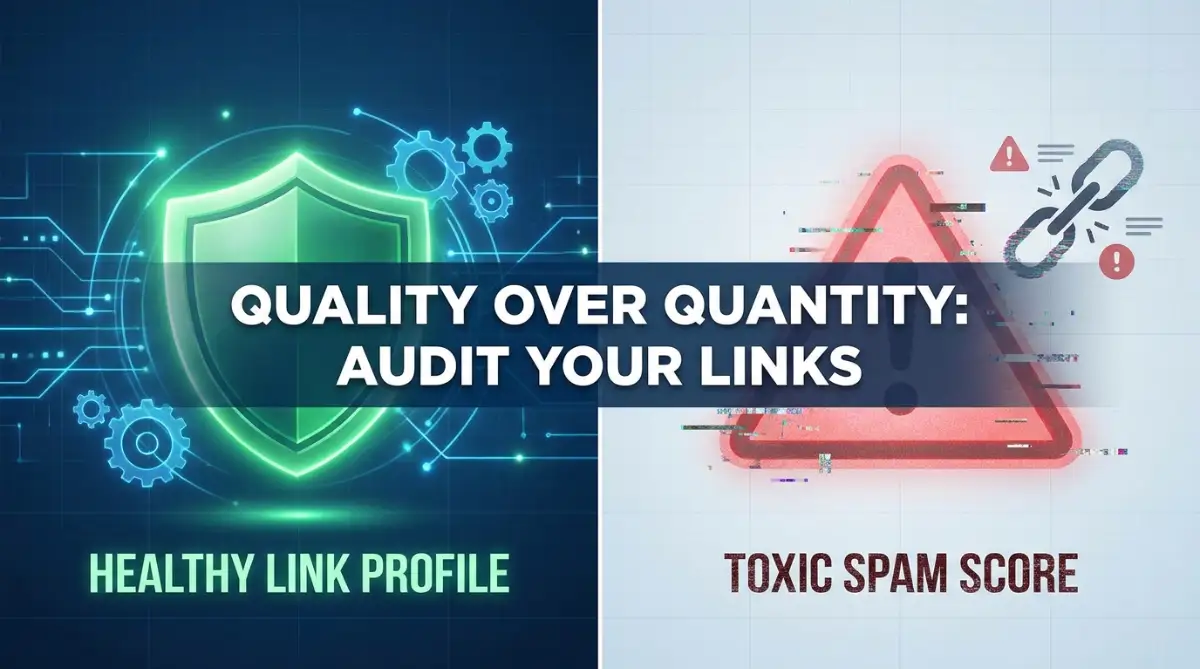
When measuring your reputation, tools do not just look at the good things. They also heavily analyze the bad neighborhoods of the internet.
If your website is constantly getting linked to by gambling sites, hacked blogs, or spam directories, it looks highly suspicious. Analytics platforms calculate a secondary metric often referred to as a spam score.
A high spam score acts like a warning sign for your entire domain. It tells you that your link profile is full of toxic connections that need to be cleaned up.
Sometimes, competitors will deliberately point bad links at your site to try and ruin your reputation. This is why regularly checking your analytics dashboard is so incredibly important for your digital safety.
Most premium SEO tools offer a feature to audit these bad links. You can then create a special file asking search engines to completely ignore those specific toxic connections.
Maintaining a clean, healthy link profile is just as important as acquiring new, powerful links. It shows both the analytics tools and the search engines that you run a legitimate, high-quality operation.
The Concept of Topical Relevance
Another massive factor these tools try to measure is how relevant a link actually is. The internet is categorized by topics, and trust flows best between related subjects.
Let us say you run a blog entirely dedicated to indoor gardening and house plants. You somehow manage to get a backlink from a massive website that sells car engine parts.
While the car website might have a huge trust score, the link makes absolutely no logical sense. Analytics tools are becoming smart enough to heavily discount these completely irrelevant links.
On the other hand, if a medium-sized botanical garden links to your house plant blog, the value is immense. The topics match perfectly, creating a highly relevant bridge of trust.
This is why you should always aim to build relationships with people in your exact industry. A relevant link from a competitor or a colleague is worth ten random links from unrelated industries.
When your link profile is filled with highly relevant connections, your overall authority in that specific topic skyrockets. Search engines will start seeing you as a leading expert in your particular niche.
This is the ultimate secret to generating consistent, passive traffic that never stops growing. You stop chasing arbitrary numbers and start building a genuinely respected brand.
By understanding exactly how these tools measure your site, you can stop guessing. You can finally create a clear, predictable strategy to grow your reputation, increase your traffic, and turn your website into a massive success.
Advanced Strategies to Skyrocket Your Digital Reputation
Now that you understand exactly how the system works behind the scenes, it is time to stop playing defense. Waiting around and hoping someone magically discovers your blog is a guaranteed way to fail.
You need to take active, calculated steps to prove to the internet that your content deserves the spotlight. Let us look at some professional tactics that actually move the needle without risking your business.
One of my absolute favorite methods is called the broken link strategy. The internet is constantly changing, and thousands of websites accidentally link to dead pages every single day.
Imagine a massive, highly respected university website has a resources page for their students. One of the links on that page points to a helpful article that no longer exists, giving their students a frustrating error message.
You can use basic tools to find these broken links across the internet in your specific industry. Once you find one, you simply write a highly polite email to the website owner letting them know their link is dead.
In that same friendly email, you suggest your own freshly updated, highly accurate article as a perfect replacement. You are essentially doing them a huge favor by cleaning up their website.
Because you helped them solve a problem, they are incredibly likely to reward you with a permanent, highly valuable backlink. It is a completely natural exchange of value that search engines absolutely love.
If you want to ensure your site is completely ready for these types of visitors, checking your overall site health is an absolute must. A beautiful, fast-loading website makes other people much more comfortable linking to you.
Another incredibly powerful tactic is becoming a guest on industry podcasts. Podcast hosts are always desperate for interesting guests to interview for their weekly shows.
When you appear on a podcast, you get to share your expertise with a brand new audience. More importantly, the host will almost always link to your website in their official show notes.
These podcast websites usually have a fantastic reputation, meaning their links carry a massive amount of weight. You get free marketing for your brand and a high-quality link all in one simple conversation.
The Power of Original Research
If you want people to link to you completely automatically, you need to give them data they cannot find anywhere else. Most people just repeat the same tired information they read on other blogs.
Instead of guessing, try running a small survey on social media or analyzing a unique set of data in your field. Create beautiful, easy-to-read charts and graphs that explain your findings clearly.
Other writers and journalists are always looking for fresh data to back up their own claims. When they use your custom chart in their article, they have to credit you as the original source.
This strategy requires a bit more effort upfront, but it pays off for years to come. You create the asset once, and it slowly collects high-quality endorsements on autopilot while you sleep.
Before you launch these big campaigns, it is incredibly smart to look at what is already working. Spending time analyzing how your rivals build their link networks gives you a perfect roadmap to follow.
If a specific website linked to your biggest competitor, there is a very high chance they will link to you as well. You simply need to reach out and show them why your content is even better.
Always remember to follow official search engine starter guidelines when structuring your new pages. A perfectly structured page ensures that every drop of trust you earn flows properly throughout your entire domain.
The Toxic Traps That Will Ruin Your Website Traffic
Building a great reputation takes serious patience, which is exactly why so many beginners look for dangerous shortcuts. I have seen incredibly talented writers destroy their entire business overnight simply because they fell for a bad scam.
When your traffic is completely stuck, it is incredibly tempting to visit sites like Fiverr and buy a package of "five thousand guaranteed backlinks." The sellers promise to shoot your website to the top of the search results for just a few dollars.
Please, whatever you do, never fall into this trap. These sellers use automated software to blast your link across completely abandoned, spam-filled websites.
These websites are full of fake profiles, malicious software, and illegal content. When analytics tools see your healthy blog suddenly associated with this dark corner of the internet, your spam score will instantly explode.
More importantly, modern search algorithms are incredibly smart and will spot this unnatural pattern immediately. They will hit your website with a severe manual penalty, completely erasing you from their search results.
Waking up to see your daily traffic drop from a thousand visitors directly to zero is a genuinely heartbreaking experience. Recovering from these severe penalties can take months of exhausting, highly technical cleanup work.
If you want to stay safe, it is highly recommended to set up an account and start monitoring your exact search performance regularly. This free dashboard will immediately alert you if search engines detect any malicious activity pointing toward your domain.
The Danger of Fake Anchor Text
Another massive mistake people make is trying to aggressively control the clickable text of their links. This clickable blue text is officially called anchor text.
Let us say you want to rank for the phrase "best cheap running shoes." Beginners will often beg other website owners to make sure their link says exactly those exact words.
If you look at how real people naturally link to things on the internet, they rarely use perfect keywords. They usually type things like "check out this cool guide," or "click here for more information," or simply use the brand name.
If every single link pointing to your website uses the exact same highly optimized keyword, it looks completely artificial. It tells the automated bots that you are actively trying to manipulate the system instead of earning endorsements naturally.
💡 Quick Expert Insight: Always remember that a totally natural link profile is a little bit messy. Real people make typos, use weird phrases, and link to random pages on your site. If your link profile looks too perfect and highly organized, it is usually a massive red flag for search engine bots.
My Personal Anchor Text Checklist for Safety:
- Do use: Brand names (like "DigitShopy").
- Do use: Natural phrases (like "check out this guide on website scoring").
- Do use: Bare URLs (like "www.yourwebsite.com").
- Don't use: Exact match keywords repeated heavily (like linking "best cheap running shoes" 50 times in a row).
Writing for Bots Instead of Humans
Sometimes, people get so obsessed with technical numbers and link building that they completely forget about their actual human readers. They write robotic, boring articles stuffed with keywords just hoping to please an algorithm.
You might successfully trick a search engine into showing your page for a few days. However, when real people click your link, get bored, and immediately leave, the search engine will quickly realize your page is terrible.
You need to focus on genuinely solving the reader's problem. Learning the skill of matching what the user actually wants to read is far more powerful than any technical trick in the book.
Additionally, you might be targeting phrases that simply have no real audience. Many beginners waste months misjudging how many people actually search for a topic, writing amazing guides that nobody is actually looking for.
Always balance your technical strategy with genuine human empathy. If your content naturally delights the person reading it, the links and the high scores will eventually follow.

Your Blueprint for Becoming an Industry Leader
Think of your website exactly like planting an oak tree in your backyard. You do not dig up the dirt every single morning to see if the roots have grown a few inches.
You simply water it, ensure it gets good sunlight, and trust the natural process of growth. Building a high-trust digital business works exactly the same way.
Focus entirely on becoming the absolute best resource in your specific, tiny corner of the internet. Do not try to write about everything; write about one specific topic better than anyone else alive.
If you are a beginner, stop trying to fight massive corporations for highly competitive phrases. Instead, start focusing on highly specific, low-competition phrases where you can easily prove your expertise.
As you win these smaller battles, your overall trust score will naturally begin to climb. The larger websites in your industry will slowly start noticing your high-quality work and natural link opportunities will appear.
Make it a daily habit to read trusted educational resources on search visibility to keep your skills incredibly sharp. The rules of the internet change constantly, and staying educated is your best defense against losing your hard-earned traffic.
Your reputation is the single most valuable asset your business will ever own. Protect it fiercely, build it naturally, and watch as the internet slowly opens its doors to your amazing content.
I know exactly how overwhelming it feels to stare at a brand new website with zero visitors and a reputation score of one. My biggest piece of advice is to simply stop looking at the numbers for the first six months and pour all your energy into helping just one reader solve one specific problem. When I finally stopped stressing over third-party scores and started genuinely connecting with my audience, the ranking success naturally followed.
Common Questions About Measuring Website Trust
How long does it actually take for my trust score to increase?
It is completely normal for a brand new website to stay at a score of one for several months. Search engines and analytics tools are highly cautious, meaning it usually takes three to six months of consistent link building to see any noticeable movement.
Is page authority different from my overall domain score?
Yes, they are two completely different measurements. Domain score predicts the ranking power of your entire website as a whole, while page authority specifically predicts how well one single article will perform.
Can a website with a low score still rank on page one of search results?
Absolutely, and it happens every single day across the internet. If your specific article answers a very specific question much better than a high-score website, search engines will gladly choose your better content.
Does Google actually care about this specific third-party number?
Google officially states that they do not use these exact third-party scores in their internal ranking algorithms. However, these tools are built to closely mimic Google's behavior, making them incredibly useful as an unofficial measuring stick for your progress.
How do I check my current reputation score for free without buying expensive software?
Most major analytics platforms offer a free version of their basic website checking tool on their homepage. You can simply type your main website address into their search bar to instantly see an estimate of your current profile strength.
Here are three highly reliable free checkers you can use right now:
- Ahrefs Free Website Authority Checker: Great for seeing your exact DR and finding out who is linking to you.
- Moz Free Domain Analysis: Perfect for checking your overall DA and identifying your top-ranking pages.
- Semrush Free Account: Allows you to do a limited number of daily domain checks to see your Authority Score and spam level.
Disclaimer: The information provided in this blog post is for educational and informational purposes only. Search engine algorithms change constantly, and third-party metrics are simply predictive estimates, not official guarantees of ranking success. Always focus on creating high-quality, user-focused content and avoid any aggressive manipulation tactics that violate official search engine guidelines.