The Hidden Cost of Blindly Chasing Competitor Links
Let's be honest about competitor link research. Most people think downloading a rival's entire backlink profile and mass-emailing every site on that list is a brilliant growth hack. The truth? It is actually a fast track to tanking your own Google rankings. You don't need thousands of shady URLs to win. You just need a safe, tested system to find the handful of links that actually push the needle forward, without exposing your site to toxic spam or sudden penalties.
What You Will Take Away From This Guide:
- Why copying a competitor’s exact backlink profile is actually a huge risk.
- How to use SEO tools as a "safety shield" so you never visit malware-infected sites directly.
- The exact filters you need to sort high-value links from auto-generated spam.
- A proven method to find "Link Gaps" and pitch better content without begging for links.
Cracking the Competitor Link Strategy Without Getting Burned
When you finally decide to peek behind the curtain of another website's success, you have to treat the process like handling sensitive material. You cannot just grab their data and start clicking on every weird URL you find in their list. Doing that puts your own digital security and your website's reputation at serious risk.
You need a clear, smart, and highly protective system to filter the gold from the garbage. Let us walk through exactly how you can tear down their strategy while keeping your own website perfectly safe and penalty-free.
Setting Up Your Protective SEO Shield
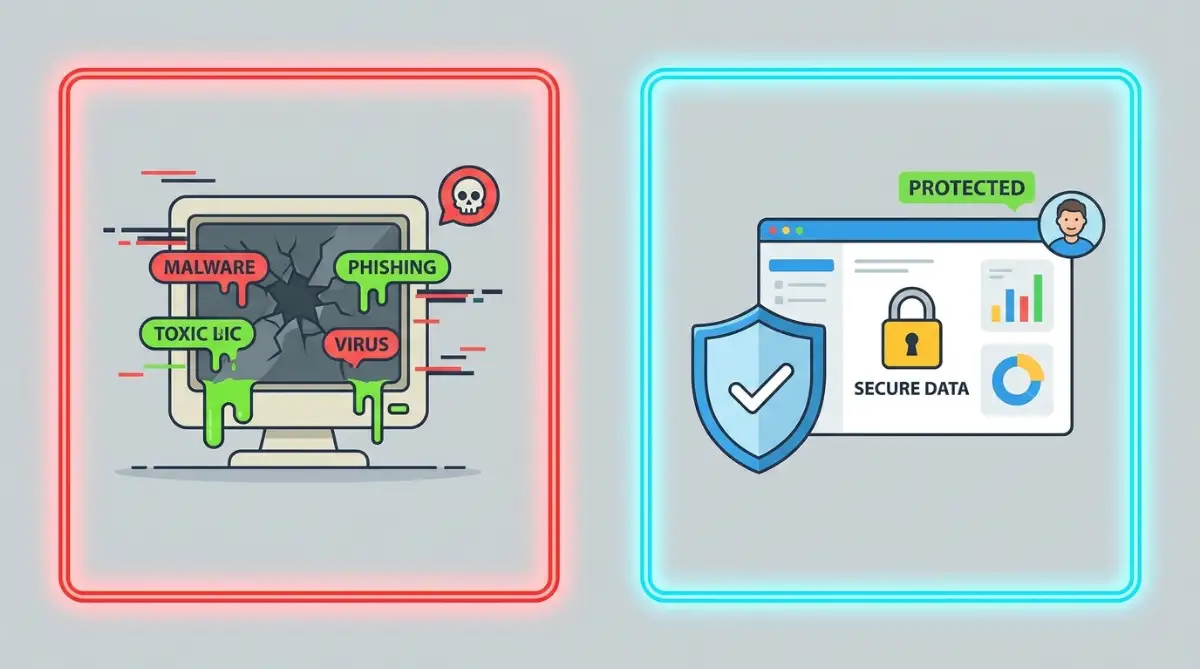
Before you even think about analyzing a competitor, you must understand the environment you are walking into. Many top-ranking sites have incredibly messy backlink profiles filled with hidden malware, aggressive redirects, and low-quality spam networks. If you start visiting these shady websites directly from your home network, you could accidentally expose your computer to malicious scripts.
Instead of visiting these links directly in your browser, you should always rely on reputable SEO tools to do the heavy lifting for you. Tools like Ahrefs, Semrush, or Moz act as a safe middleman between you and the dangerous corners of the internet. They crawl those questionable websites so you do not have to put your own browser at risk.
Pro Tip: I used to make the terrible mistake of clicking on competitor backlinks just to see what the referring pages looked like. I quickly learned to always use a private proxy or an isolated incognito window if I absolutely must verify a sketchy link manually. It saves you from aggressive tracking scripts and keeps your browsing habits completely anonymous.
Filtering the Noise from the Real Power Links
Every successful website has a mixture of amazing, highly authoritative links and a whole bunch of useless, auto-generated spam. Your goal is never to copy their entire profile, because search engines already know a lot of those links are garbage. You only want to identify the exact links that are actually pushing the needle and driving their organic rankings upward.
To do this safely, you need to apply very strict filters inside your chosen SEO software. Start by filtering out any backlinks from websites that have an incredibly low domain rating or authority score. If a website has zero traffic and a terrible trust score, you do not want to go anywhere near it.
Grab their attention with this bold truth: You can learn exactly how to configure these safety filters directly inside your SEO software by watching this step-by-step breakdown.
Next, look closely at the organic traffic of the website giving the backlink. A link from a site that actually gets real human visitors is worth a hundred links from dead, abandoned directories. By only focusing on referring domains with active traffic, you automatically protect yourself from useless link farms.
The Myth vs Reality of Reverse Engineering
People often get confused about how backlink profiles actually work in the real world. Let us break down some common misunderstandings so you can approach your research with a clear head.
Understanding these simple truths keeps you grounded. You will stop stressing over the sheer volume of links your competitor has and start focusing purely on the quality. It shifts your entire mindset from panic to complete control.
Decoding Their Anchor Text Patterns Naturally
Anchor text is the clickable word or phrase that connects one website to another. When you analyze your competitors backlink profiles safely, paying attention to these little words is incredibly helpful. It tells you exactly how other people are describing their website.
However, over-optimizing your own anchor text because you saw a competitor do it is a massive trap. If you notice that your competitor has exact-match keywords for 80% of their links, do not try to copy that dangerous behavior. Search engines are much smarter now and they heavily punish websites that try to manipulate their anchor text so aggressively.
Instead, look at the broad patterns they use for their most natural links. You will usually find a healthy mix of their brand name, plain URLs, and generic phrases like "click here" or "read this study". Use this data to plan a highly natural and diverse anchor text strategy for your own website.
To give you a real-world perspective, a highly natural backlink profile usually looks something like this:
- Branded Anchors (e.g., "DigitShopy"): 50% - 60%
- Naked URLs (e.g., "www.digitshopy.com"): 15% - 20%
- Generic Phrases (e.g., "read more here"): 10% - 15%
- Exact Match Keywords (e.g., "buy cheap shoes"): Under 5%
If you see a competitor with 40% exact match keywords, they are playing with fire. Let them burn, and keep your own ratios safe.
Identifying Dangerous Link Neighborhoods
Sometimes, you will discover that a top-ranking competitor is actually using highly manipulative tactics behind the scenes. They might be buying links from private blog networks (PBNs) or using automated software to blast comment sections. You have to be able to spot these bad neighborhoods from a mile away so you never accidentally join them.
Look out for massive spikes in their link growth over a very short period. If they suddenly gained ten thousand links in three days, that is unnatural and extremely risky. You do not want to replicate any strategy that relies on sudden, unnatural bursts of activity.
You should also look at the origin countries of their backlinks. If a local bakery in your town has thousands of links from foreign language websites that have nothing to do with food, that is a huge red flag. Keep your own link-building efforts strictly within neighborhoods that make logical sense for your specific topic.
Here is a quick cheat sheet I use to spot a bad link neighborhood before I even think about sending an outreach email:
Finding the Golden Link Gaps Safely
The absolute best part of doing this research is discovering the "Link Gap". This is simply a list of high-quality websites that are linking to several of your competitors, but not linking to you yet. These are the golden opportunities because these websites have already proven they are willing to link to content in your industry.
To find these safely, use the link intersection tool inside your SEO software. You just plug in three or four of your top competitors and let the software compare their profiles against yours. It will spit out a beautiful list of high-trust websites that are completely safe to target.
When you find these gaps, do not just send a lazy, copy-pasted email begging for a link. Study the exact page where your competitors got linked, and figure out how you can provide something significantly better. Maybe your competitor has an outdated guide, and you have a brand-new, highly detailed resource that the referring website would love to share instead.

Mapping Out Their Most Popular Pages
Another incredibly safe way to reverse-engineer a competitor is to see which of their specific pages attract the most links. This takes the focus away from the sketchy backlinks and puts the focus directly on content quality. You are looking for the exact topics that naturally act like magnets for other bloggers and journalists.
When you sort their pages by link volume, you might find that their original research studies or comprehensive checklists get the most attention. This is a massive lightbulb moment for your own content strategy. It proves exactly what type of content your shared audience actually cares about.
You can then take that proven concept and build something highly unique and far more valuable on your own website. You are not copying their words, and you are not stealing their shady links. You are simply taking a proven framework and upgrading it with your own personal experience and better data.
Documenting Your Findings Without the Clutter
Create specific columns for domain authority, organic traffic, and the specific reason why you think this link is valuable. If a link does not meet your minimum requirements for these columns, it gets deleted immediately. This ruthless organization prevents you from accidentally pursuing a toxic link two months down the line when you forget why you saved it.
Keeping a clean, organized workspace also helps reduce the overwhelming feeling that often comes with technical SEO tasks. You turn a massive, scary mountain of data into a small, highly actionable list of daily tasks. It makes the entire process feel manageable, safe, and actually quite fun.
The Long-Term Mindset for Safe Growth
By taking the time to carefully analyze your competitors backlink profiles safely, you are building an invisible armor around your website. You learn from their biggest wins while completely avoiding their toxic mistakes. You stay completely under the radar while steadily growing your authority and trust.
Stick to the simple, logical steps of filtering out the noise, avoiding direct visits to shady domains, and focusing purely on high-traffic referring pages. This patient, highly protective approach guarantees that your hard work actually pays off in the end. You get to enjoy the incredible feeling of watching your organic traffic climb, knowing that your foundation is absolutely rock solid.
Mastering the Advanced Tactics for a Bulletproof Profile
Once you understand the basic safety rules of looking at another website's link data, you are ready to dig much deeper. This is where the real magic happens for your own search engine rankings. You move past the beginner steps and start thinking like a true digital detective.
I want to share exactly how professionals pull the most valuable insights from their competitors without taking on any unnecessary risks. The secret lies in looking at the tiny details that most regular website owners completely ignore.
The Hidden Power of Outbound Link Ratios
When you find a website that links to your biggest competitor, you might get excited and immediately want a link from them too. But before you reach out, you need to check something called the outbound link ratio. This simply means looking at how many other websites that specific page is linking to.
If you find an article that links to your competitor, but it also links out to five hundred other random websites, that is a massive warning sign. Search engines treat pages with hundreds of outbound links as low-value directories or outright spam. You do not want your beautiful, hard-earned website mixed into a messy list of unrelated links.
Instead, you want to target pages that are highly selective about who they recommend. If an author only links to three or four highly trusted resources in an entire article, getting a spot on that page is incredibly valuable. This selective linking passes much more authority and keeps your own backlink profile looking perfectly natural.
Stepping Up Your Visual Asset Game
A huge part of winning high-quality links is offering something better than what your competitor currently has. Often, websites get linked simply because they have amazing custom graphics, charts, or helpful illustrations. If you want a publisher to replace your competitor's link with yours, your content needs to look visually stunning.
Many modern bloggers use artificial intelligence to create these custom graphics, which is a brilliant strategy. However, if your competitor gets links because of their highly professional visuals, you cannot show up with low-quality, distorted graphics. You must make sure your images look flawless before you pitch your content to anyone.
For instance, if you are generating custom blog banners, you absolutely must learn how to fix deformed AI hands and faces so your site maintains total professionalism. Webmasters will not link to a page that looks amateurish or weird. The more polished your visual assets are, the easier it is to steal those golden link opportunities safely.
Tracking Brand Mentions Instead of Just Links
One of the smartest ways to reverse-engineer success is to stop looking only at direct hyperlinks. Sometimes, the biggest websites on the internet will talk about your competitor but forget to actually link to them. These are called unlinked brand mentions, and they are an absolute goldmine.
You can set up custom alerts using various software tools to notify you whenever your competitor is mentioned online. When you see a high-authority news site talking about their product, you can join that exact conversation. You reach out to the journalist and offer your own unique perspective or a piece of fresh data.
Because the journalist is already writing about your specific industry, they are highly likely to respond to your email. This strategy is completely safe because you are building a real human relationship rather than begging for a sketchy backlink. It aligns perfectly with the official Google Search policies regarding spam, ensuring you stay completely on the right side of the rules.
The Psychology of Earning University Links
Educational websites and government portals are the holy grail of link building because they hold massive trust. When you peek at a top-ranking site, you will often find they have a handful of these incredibly powerful links. However, you cannot just buy your way onto a university resource page.
These institutions link out based purely on deep credibility and scientific accuracy. If you want to capture these exact same high-trust links, you have to publish content that acts like a real academic resource. You need to create deep, original research or comprehensive educational guides that students and teachers actually find useful.
For example, if your niche involves modern technology, you might write a massive, heavily researched guide on decoding generative AI that explains the core science behind the tools. When a university professor finds that your guide is the most accurate piece on the internet, they will naturally add it to their class syllabus. This gives you an unbreakable link that your competitors cannot easily copy.
The Hidden Traps That Can Destroy Your Website
We need to have a very serious conversation about the dark side of competitor research. It is far too easy to get blinded by the massive traffic numbers your rivals are pulling in. This desperation often pushes smart, hardworking people into making incredibly foolish decisions that ruin their entire business.
Let me walk you through the absolute worst mistakes I see happening every single day. Understanding these pitfalls will act as your final layer of armor against unexpected search engine penalties.
The Mass Export Disaster
The most common and devastating mistake happens right after someone buys their first SEO subscription. They type their biggest competitor into the search bar, see a list of fifty thousand backlinks, and hit the "Export to CSV" button. Then, they load that massive, unfiltered list into an automated email outreach software.
They blast out thousands of generic emails to every single website on that list, begging for a link insertion. This is the fastest way to completely destroy your brand reputation and get your domain marked as a spammer.
Your competitor's list is guaranteed to be filled with toxic scraper sites, hacked blogs, and aggressive malware domains. When you blindly contact these site owners, you are essentially asking to be included in the worst neighborhoods on the internet. You must manually filter and verify every single website before you ever send a single outreach email.
Obsessing Over "Dofollow" Metrics
There is a huge misconception in the SEO world that only one specific type of link actually matters. Many people filter their competitor's data to only show "Dofollow" links, completely ignoring everything else. They believe that if a link has a "Nofollow" tag, it is a complete waste of their precious time and energy.
This mindset leads to an incredibly unnatural backlink profile that search engines easily spot. A real, healthy website naturally collects a wide variety of different links from social media, news sites, and forums. According to the Mozilla Developer Network web standards, these different link tags exist to organize the web logically.
If your website only has aggressive, keyword-rich Dofollow links, an algorithm update will eventually flag your site for manipulation. You actually want a healthy mix of different link types to prove to search engines that your popularity is completely organic and genuine.
Falling for the Cheap Imitation Game
When people see their competitors getting featured on massive, authoritative blogs, they often feel intimidated. They realize they do not have the budget or the connections to get those exact same placements. So, they turn to cheap freelance marketplaces and buy inexpensive link packages that promise similar results.
These cheap services usually place your links on massive Private Blog Networks (PBNs) that exist solely to manipulate search rankings. These networks might look okay at a quick glance, but they have zero real human readers. It is a terrible strategy that always ends in tears when search engines eventually de-index the entire network.
If your visual branding looks terrible when you pitch these sites, they will reject you anyway. You need to make sure your brand assets look incredibly sharp. If you struggle with this, take the time to figure out why your AI images look blurry and how to fix them fast. High-quality sites only link to other high-quality sites. There are no cheap shortcuts to genuine authority.
Ignoring the Importance of Consistent Branding
Another massive mistake is earning a great link, but sending that traffic to a highly confusing or poorly designed landing page. You might successfully analyze a competitor, find a great gap, and convince a publisher to link to your article. But if your website looks completely different from your social media profiles, visitors will bounce immediately.
When people click a link from a trusted site to yours, they expect a seamless, professional experience. Building web credibility requires extreme consistency across every single page you publish. The Stanford Web Credibility Project clearly states that visual consistency is a major factor in how people judge your trustworthiness.
If you use generated characters or mascots on your blog, you have to master AI character consistency so your audience recognizes you instantly. If your branding is chaotic, that hard-earned backlink will not actually convert into loyal readers or customers.

Your Blueprint for Safe and Sustainable Traffic
You now possess a complete, highly strategic roadmap for dealing with competitor link data. You know exactly why blindly copying someone else is a recipe for disaster. You understand how to safely use professional tools to act as a barrier between your computer and the dangerous parts of the web.
This process is not about finding a magic bullet that will instantly double your traffic overnight. It is about patiently building a massive puzzle, one high-quality piece at a time. You are learning to read the story behind the data, figuring out what people genuinely care about in your specific industry.
Remember that every single link represents a real human being who decided your content was worth sharing. When you focus on providing immense value, rather than just tricking an algorithm, your website becomes practically bulletproof. You want your main project, whether it is a personal blog or a brand hub like DigitShopy, to be a beacon of quality in your niche.
Take a deep breath and start small. You do not need to analyze fifty competitors this week. Pick your single biggest rival, apply the strict safety filters we discussed, and look for just three or four golden opportunities. Write something incredible, make your visuals pop, and reach out with a genuine desire to help their audience.
My biggest breakthrough happened the day I stopped obsessing over link volume and started obsessing over link safety and quality. I want you to close this page feeling totally confident and ready to take back control of your search rankings. Your hard work absolutely deserves to be seen, and now you have the exact, safe method to make that happen.
The Most Pressing Questions About Link Audits
Q: How often should I check my competitors' backlink profiles?
A: You should realistically run a deep analysis on your top competitors about once every three months. Checking their data every single day will just drive you crazy and distract you from actually creating great content. A quarterly check gives you enough fresh data to spot new trends without feeling completely overwhelmed.
Q: Can I get penalized just for analyzing a competitor's site?
A: No, simply analyzing their data using a reputable SEO software tool is completely safe and will not harm your site. The danger only comes if you start directly visiting malware-infected sites on their list or if you start copying their spammy link-building tactics. The research phase is safe as long as you do not adopt their bad habits.
Q: What should I do if I find toxic links pointing to my own website?
A: If you discover highly suspicious or spammy links pointing to your site, do not panic immediately. Search engines are generally very good at ignoring obvious spam links these days. If the spam is incredibly aggressive and hurting your traffic, you can safely use the official Google Disavow tool to ask them to ignore those specific URLs.
Q: Why does my competitor outrank me even with fewer backlinks?
A: This happens when your competitor has significantly higher quality and more relevant links than you do. A single link from a highly trusted, deeply relevant industry blog is much more powerful than hundreds of random directory links. They might also have much better on-page user engagement, which heavily influences search engine rankings.
Q: Is it safe to contact a website that is already linking to my rival?
A: Yes, it is perfectly safe and actually a very smart strategy, provided you do it the right way. You must genuinely offer them a much better, more updated, or more visually appealing piece of content to link to instead. Never demand a link; always approach them by offering incredible value to their existing readers.
Disclaimer: The information provided in this article is for educational and informational purposes only. SEO practices and search engine algorithms change constantly. The strategies discussed do not guarantee specific rankings or financial results. Always adhere to Google's official Webmaster Guidelines and carefully review the terms of service for any third-party software you choose to use. Ensure your link-building practices comply with all relevant social media and search engine policies.