
The Hidden Burden: When Helping a Friend Becomes Your Biggest Nightmare
I never thought a simple signature could turn my life upside down. A while back, a close friend came to me with tears in their eyes, asking for a massive favor. They needed a new car to commute to their dream job, but their credit history was too weak to get approved.
Because I loved them and wanted to see them succeed, I agreed to put my name on their loan application. I honestly believed I was just acting as a character reference to help them out. Nobody warned me about the heavy legal chains I was wrapping around my own ankles.
A few months later, the phone calls started rolling in from aggressive collection agencies. My friend had lost their job, missed three payments, and suddenly, the bank was holding me entirely responsible. My stomach dropped as I realized my personal credit score was tanking fast.
This situation is happening to thousands of good-hearted people every single day. We naturally want to help our siblings, children, or friends when they face financial roadblocks. We sign the paperwork because we trust them, assuming they will handle their own payments.
Unfortunately, ordinary people are waking up to frozen bank accounts, ruined credit scores, and extreme mental anxiety. The stress of dealing with unexpected debt often destroys the very relationships we were trying to save. Marriages suffer, families stop talking, and the emotional toll becomes unbearable.
You might feel incredibly guilty for wanting to say no when someone asks you to back their loan. However, you must understand the massive risks involved before you pick up that pen.
What Exactly Does It Mean to Put Your Name on Someone Else's Debt?
When someone asks you to back their financial agreement, they are usually dealing with a lender who does not trust them. The bank or credit union looks at their income or past payment history and sees a high risk of default. They want a safety net, and that safety net is you.
By signing the document, you are legally promising to pay back the entire loan if the main borrower fails to do so. You are not just giving them a thumbs-up or acting as a simple reference. You are becoming a full legal partner in this specific financial obligation.
This means the lender views you as equally responsible for the borrowed money. If the primary person misses a single payment, that debt instantly becomes your problem.
The Difference Between a Co-signer and a Co-borrower
Many people get confused between these two distinct legal terms. Understanding the difference is incredibly important for your financial safety.
A co-borrower is someone who takes out a loan with another person and shares the benefits of that loan. For example, if you and your spouse buy a house together, you both live in it and share ownership. You are both equally responsible, but you also get to enjoy the asset.
On the other hand, a co-signer gets all of the legal responsibility without any of the actual benefits. If you back an auto loan for your cousin, they get to drive the car every single day. You do not own the car, you do not drive it, but you are still legally bound to pay for it if they stop making payments.
Why Lenders Demand a Second Signature
Banks are strictly in the business of making money and avoiding losses. They use complex algorithms to figure out if someone is likely to pay them back.
When a young student with zero credit history tries to get a private student loan, the bank sees a massive red flag. They demand a secondary person with a strong credit history and steady income to lower their risk.
By adding your good name to the application, the bank feels safe handing over the cash. They know that if the student fails, they have a reliable adult with a steady job they can legally chase for the money.
The Heavy Legal Responsibilities You Instantly Take On
Once the ink dries on that contract, a whole new set of legal rules applies to your life. You cannot simply call the bank and say you changed your mind.
The primary responsibility is absolute repayment. You are legally obligated to pay the principal amount, all accumulating interest, and any late fees.
If the primary borrower ignores the bills, the lender will not hesitate to come directly after you. They do not care about your personal agreement with your friend or family member.
The Debt Collection Target on Your Back
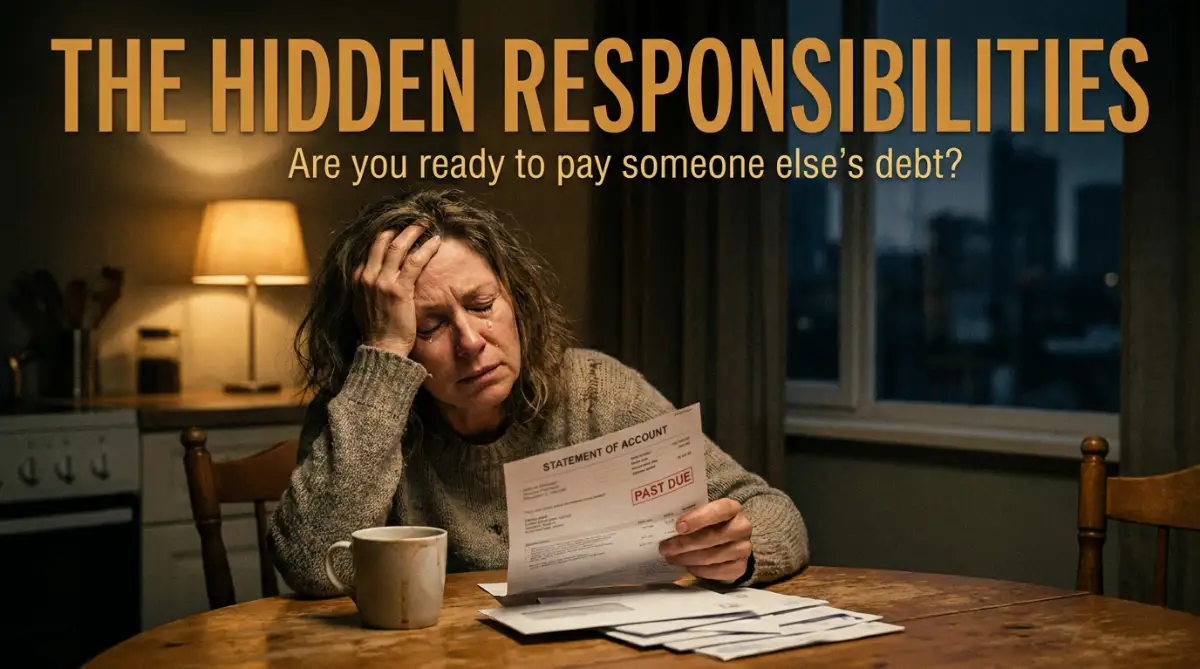
When an account goes into default, lenders often find it easier to collect from the person with the better financial standing. That person is usually you.
Collection agencies will start calling your personal phone number during dinner. They will send demanding letters to your home address, threatening legal action.
If you ignore them, they have the legal right to file a massive lawsuit against you. This is not an empty threat, it happens in courtrooms every day across the country.
The Power of Wage Garnishment
If the lender takes you to court and wins, the judge can issue a judgment against you. This gives the lender terrifying legal power over your personal finances.
They can legally force your employer to withhold a portion of your paycheck. This process, known as wage garnishment, means the debt money is taken out of your salary before you even receive it.
Imagine trying to pay your own rent and feed your family while a chunk of your hard-earned money goes toward a car you do not even own. This financial strain can quickly push your own household into serious hardship.
Here is a quick thought from my own journey:
Whenever I am asked for a massive favor now, I completely pause before giving an answer. I learned the hard way that putting my family's financial security at risk to look like a "good friend" is a terrible trade-off. Now, I always offer to help people build their own credit instead of lending them mine.
Watch this clear breakdown of how loan responsibilities really work in the banking system:
How Your Personal Credit Score Takes a Massive Hit
Your credit report is essentially your financial report card. When you sign on to back someone's loan, that entire debt load appears directly on your personal credit report.
Even if the primary borrower is making payments on time, your debt-to-income ratio increases significantly. This means when you go to apply for your own mortgage or credit card, the bank will see that you are already responsible for a large debt.
Because of this, you might get denied for a loan you desperately need for your own family. Your financial goals get put on hold because your credit profile is tied up in someone else's business.
The Nightmare of Late Payments
Your credit score is highly sensitive to payment history. If the person you are helping makes a payment just 30 days late, it gets reported directly to the major credit bureaus under your name.
A single late payment can drop an excellent credit score by up to 100 points almost instantly. You might not even know they missed a payment until you check your report or get denied for a new apartment lease.
This is why blind trust is incredibly dangerous when legal contracts are involved. You are essentially giving someone else a remote control to your financial reputation.
Myth vs Reality: Breaking Down the Misconceptions
People often believe things about legal loan documents that are simply not true. Let's look at the facts.
Protective Measures: If You Absolutely Must Sign
Sometimes, you might feel that you have no other choice but to help your child get through college. If you are going to take this massive risk, you must protect yourself like a professional.
First, never sign anything without getting full access to the online loan account. You need the login details so you can personally verify that payments are being made every single month.
Do not rely on the borrower simply telling you that everything is fine. People who are struggling with money often hide their problems out of shame until it is too late.
Set Up Automatic Payment Alerts
Take advantage of modern banking technology to keep yourself safe. Log into the lender's portal and set up text message alerts for any missed deadlines.
If a payment is late, you want to be notified on day one, not day thirty. This gives you a tiny window of opportunity to make the payment yourself before it destroys your credit score.
Yes, making the payment out of your own pocket hurts, but it is much cheaper than fixing a ruined financial reputation later.
Ask for a Co-signer Release Clause
Before you sign any paperwork, read the fine print carefully and look for a release clause. This is a special condition written into the contract by some modern lenders.
It states that after a certain number of consecutive on-time payments, you can apply to have your name removed from the loan. Usually, this requires the primary borrower to make 12 to 24 perfect payments.
If the contract does not have this clause, ask the lender to add it. If they refuse, you should seriously reconsider putting your name on the line.
Smart Alternatives to Taking Legal Responsibility
If you want to help a loved one but cannot risk your own financial future, there are safer ways to offer support. You do not have to abandon them completely.
Instead of backing a massive auto loan, consider helping them save up a larger down payment. A bigger down payment reduces the loan amount, which might help them get approved on their own.
You could also offer to pay for a few sessions with a certified financial planner. Sometimes people just need proper education on how to fix their broken credit history so they can become independent.
The Family Loan Agreement
If you have extra cash sitting in the bank, lending them the money directly might be less risky than dealing with a bank. However, you must treat this exactly like a business transaction.
Draft a real, written contract clearly stating the loan amount, the interest rate, and the exact repayment schedule. Both of you should sign it in front of a notary.
This sets clear boundaries and shows them you are taking the situation seriously. Just remember that lending money to family often changes the dynamic of the relationship permanently.
The Tax Implications Nobody Talks About
There is another hidden danger that surprises many helpful relatives. If the primary borrower defaults and the lender eventually decides to settle the debt for less than what is owed, the government gets involved.
The IRS often views forgiven debt as taxable income. This means if the bank forgives $10,000 of the loan, you might receive a tax form at the end of the year.
You could legally owe income tax on that forgiven amount, even though you never saw a single penny of the actual money. It is a harsh reality that adds deep financial injury to an already painful situation.
Dealing with Student Loans Specifically
Private student loans are completely different from federal student loans. Federal loans rarely require a secondary signature because they are backed by the government.
Private student loans are notorious for aggressively pursuing secondary signers when young graduates fail to find high-paying jobs. Furthermore, these specific types of loans are nearly impossible to wipe out, even if you file for bankruptcy.
If you are helping a child with college expenses, always exhaust every single federal grant and federal loan option first. Keep the private lending market as an absolute last resort to protect your retirement savings.
What Happens in the Event of a Divorce?
Life is wildly unpredictable. Sometimes spouses back loans for each other, assuming they will be together forever.
If a divorce happens, a family court judge might assign the physical asset, like a car, to your ex-partner. The judge might also order your ex-partner to make all the payments.
However, the bank does not care what the family court judge said. Your original contract is with the lender. If your ex-partner angrily stops paying, the bank will still legally ruin your credit and come after your money.
You must insist that the loan is completely refinanced into their sole name as part of the divorce settlement. Leaving your name on an ex-partner's debt is a ticking time bomb.
Managing the Emotional Fallout
Money problems are deeply emotional. When a loan goes bad, the feelings of betrayal and anger can be overwhelming.
It is incredibly difficult to sit across the dinner table from a relative who is actively ruining your financial life. You might feel a heavy mix of resentment and regret every time you look at them.
Clear communication is your best defense against this emotional disaster. Before anyone signs anything, sit down and have a very uncomfortable, brutally honest conversation about what happens if things go wrong.
Ask them directly: "How will you handle this if you lose your job next month?" If they get defensive or refuse to answer, that is your clear signal to walk away from the deal immediately.
Taking on someone else's legal obligations is not a casual favor. It is a massive financial commitment that ties your future directly to their daily habits. Always prioritize your own family's safety before you try to rescue someone else from their financial mistakes.
Smart Strategies to Protect Your Wealth If You Already Signed
If you already added your name to someone else’s legal paperwork, do not panic just yet. There are highly effective ways to manage this situation and protect your own financial future.
The biggest secret to surviving a shared debt obligation is treating it like your own personal business investment. You cannot simply sign the document and hope for the best.
Hope is never a solid financial strategy when thousands of dollars are on the line. You need to step up, take control, and monitor the situation actively.
Become a Co-Pilot on the Online Account
Never rely on the primary borrower to give you verbal updates about their payment status. People who are struggling with cash flow will often hide the truth because they feel embarrassed.
Instead, ask them to sit down with you and set up a shared login for the lender’s online portal. You need direct, unquestionable access to see every single transaction in real time.
By having your own access, you can verify exactly when a payment clears the bank. This puts you entirely in control of monitoring your own risk level.
Build a Secret Bailout Fund
This might sound frustrating, but it is one of the smartest things you can do for your peace of mind. Start putting a little bit of your own money aside every single month into a separate savings account.
If the person you helped suddenly loses their job, they will not be able to make the payment. Instead of watching your credit score burn down, you can use your secret bailout fund to cover the gap.
Yes, paying for their mistake hurts deeply. However, making a few temporary payments is much cheaper than dealing with aggressive debt collectors or court lawsuits.
Schedule Regular Financial Check-Ins
You need to normalize talking about money with the person you helped. Make it a friendly habit to grab a cup of coffee once a month and casually check in on their financial health.
You do not need to act like an angry boss demanding a report. Just ask them how their job is going and if they are feeling comfortable with their upcoming bills.
If you sense they are falling behind, you can help them brainstorm solutions before the actual due date arrives. This proactive approach saves relationships from turning completely toxic.
Master the Art of the Release Clause
As I mentioned earlier, some modern contracts include a release option. You need to track their payment progress like a hawk to take advantage of this rare loophole.
If the contract says you can apply for removal after 24 perfect payments, mark that exact date on your digital calendar right now. Do not wait for the bank to invite you to leave the agreement.
Banks almost never remind you about this option because they want to keep you on the hook. The exact day they hit that milestone, you need to call the lender and formally request your freedom. According to the Consumer Financial Protection Bureau, securing this release requires detailed paperwork, so be prepared to submit official forms immediately.
Guard Your Own Borrowing Power
When you back a loan, that entire debt balance appears on your personal record. This heavily affects how future lenders view your financial stability.
If you are planning to buy a house or finance a car for your own family, you must factor this shared debt into your math. Understanding how to calculate your debt-to-income ratio for loan approval is absolutely necessary before you walk into a bank.
If your ratio is too high because of your friend's car note, you might get rejected for your own mortgage. Always double-check your numbers so you do not get caught off guard by a sudden rejection letter.
Dangerous Traps That Ruin Good Intentions and Relationships
Trying to be a helpful hero often leads to devastating personal disasters if you are not careful. I have seen incredibly smart people make terrible mistakes simply because they trusted someone they loved.
The banking system does not care about your love, your friendship, or your good intentions. They only care about the binding legal contract you willingly signed.
If you want to survive this process without losing your money or your mind, you must actively avoid these common traps.
The "Set It and Forget It" Mentality
This is easily the most common and destructive mistake people make. They sign the paperwork at the dealership, give their friend a hug, and never think about the loan again.
They assume that if something goes wrong, the bank will politely send them a warning letter right away. This is completely false.
Lenders often wait until the account is severely past due before they start aggressively hunting you down. By the time you get that first angry phone call, your credit score is already ruined.
Ignoring the Mail and Hiding from Collectors
When things go bad and collection agencies start reaching out, many people freeze up out of pure fear. They block the phone numbers and throw the collection letters directly into the trash.
Ignoring a debt collector does not make them go away. It actually forces them to escalate the situation and file a formal lawsuit against you in a real courtroom. The Federal Trade Commission explicitly warns that ignoring these legal notices can result in automatic judgments against your personal assets.
If you receive a notice, you must open it immediately and face the problem head-on. Calling the lender to negotiate a temporary payment plan is always better than letting them drag you into court.
Misunderstanding the Type of Debt
Not all financial agreements carry the exact same level of risk. People often agree to back a loan without understanding the fundamental structure of the deal.
For example, backing an auto loan means there is a physical car the bank can repossess if things go terribly wrong. Repossession is awful, but it at least pays off a portion of the remaining debt.
However, if you are helping a friend get a personal loan, there is no physical asset to return. You must deeply understand the difference between a secured and unsecured loan before you ever put your signature on the line.
Believing Handshake Promises
When someone begs you for a massive financial favor, they will promise you the moon and the stars. They will swear on their life that they will never, ever miss a single payment.
They truly mean it at that moment, but life is highly unpredictable. People get sick, companies lay off workers, and unexpected medical bills destroy perfectly good budgets.
Never rely entirely on a verbal promise, no matter how much you love the person. You need a written backup plan for what happens when they inevitably face a hard time.
Forgetting to Update Your Contact Information
If you move to a new apartment or change your primary phone number, you usually remember to tell your own bank. Most people completely forget to update the lender who holds their shared debt.
This is a massive oversight that can cause severe damage. If the primary borrower stops paying, the lender will try to send a warning notice to your old, outdated address.
You will miss the warning entirely because the mail went to the wrong house. You might not find out about the default until you try to apply for a new credit card and get instantly rejected.
Assuming Divorce Erases the Contract
Couples frequently sign joint financial agreements when everything in the marriage is happy and stable. When a divorce happens, things get incredibly messy.
A family court judge might order your ex-spouse to pay off the shared minivan. Because the judge said so, you might assume you are completely off the hook.
The harsh reality is that family law judgments do not override existing banking contracts. If your ex-spouse angrily refuses to pay, the bank will still actively destroy your credit history.
Not Exploring Alternative Options First
People often jump straight to signing the paperwork because it feels like the fastest way to help. They do not take the time to figure out why the primary borrower was rejected in the first place.
Sometimes, the primary borrower just needs to fix a few simple errors on their credit report. Sometimes they just need to learn how to avoid common loan application mistakes so they can get approved entirely on their own.
Taking the time to educate them is a much better gift than lending them your financial reputation. You should always aim to empower them, not enable their bad habits.
Your Next Moves for Financial Peace of Mind
Navigating the complex world of shared legal obligations does not have to end in disaster. If you approach this situation with clear eyes and strict boundaries, you can protect yourself completely.
The main goal is to shift your mindset from being a passive helper to an active manager. You are a legal partner in this agreement, and you must act like one every single day.
A Quick Action Plan for Tomorrow Morning
If you are currently attached to someone else's debt, here is exactly what you need to do tomorrow morning. Do not wait for a crisis to happen before you take action.
- Log into the portal: Verify that the account is perfectly up to date and no late fees are hiding in the background.
- Set up text alerts: Make sure you receive an instant message on your phone if a payment is ever missed.
- Read the fine print: Dig out your original contract and actively search for that magical release clause.
- Check your credit: Pull your own personal credit report to ensure the shared debt is reporting accurately and positively.
Taking these tiny steps will instantly reduce your anxiety. You will no longer have to guess what is happening with the money because you will know for sure.
If you are just starting your research and trying to figure out the best ways to borrow money safely, take a moment to browse our helpful financial guides. The more you educate yourself, the safer your wallet will be.
Dealing with Rejection Constructively
Sometimes the absolute best thing you can do for a loved one is to simply say no. Saying no does not mean you do not love them.
It actually means you love them enough to protect your own household so you can be a strong safety net in other ways. If they get angry at your refusal, you can gently explain the common reasons banks say no to your loan request so they understand the logic behind your decision.
A temporary argument today is much better than a permanent family blowout over a repossessed car five years from now.
Understanding the Bigger Picture of Borrowing
Debt is a powerful tool when used correctly, but it is extremely dangerous when mishandled. When you sign for someone else, you are essentially handling live dynamite.
You must respect the legal system and the aggressive nature of modern banking. They do not bend the rules for anyone, and they certainly will not bend them for you just because you were trying to be a nice person.
Make sure you always understand the exact terms of any deal. Knowing exactly when to choose between fixed and variable rates or when to walk away entirely is what separates financially secure people from those who struggle.
Here is my honest takeaway from walking through this fire myself. I realized that my own financial stability is the greatest gift I can offer my family, and I will never compromise that again. Saying "no" was the hardest thing I ever learned to do, but it ultimately saved my credit score and my peace of mind.
Answers to Your Most Urgent Worries
Can I force the lender to remove my name from the loan?
No, you cannot force a lender to drop you from the agreement just because you changed your mind. You can only be removed if the contract has a specific release clause or if the primary borrower fully refinances the debt into their own name.
Will helping my child get a student loan stop me from buying a house?
Yes, it absolutely can stop your mortgage approval. The total amount of the student debt is added to your personal credit profile, which makes you look like a much higher risk to mortgage lenders.
What actually happens if the main borrower passes away unexpectedly?
This depends heavily on the specific lender and the fine print in your contract. With many private lenders, the entire remaining balance instantly becomes your legal responsibility to pay off alone.
Can my wages really be garnished if I am not the one who drove the car?
Yes, if the loan defaults and the lender takes you to court, a judge can legally order your employer to deduct money from your paycheck. The legal system views you as equally responsible, regardless of who actually used the item.
Does a co-signer get any ownership rights to the property?
No, you do not gain any legal ownership of the house or the car simply by adding your signature to the loan. You take on 100% of the financial risk but get absolutely zero legal rights to the physical asset.
Disclaimer: The information provided in this blog post is for educational and informational purposes only and does not constitute professional legal or financial advice. Always consult with a certified financial planner or a qualified attorney before signing any binding contracts or making major financial decisions.