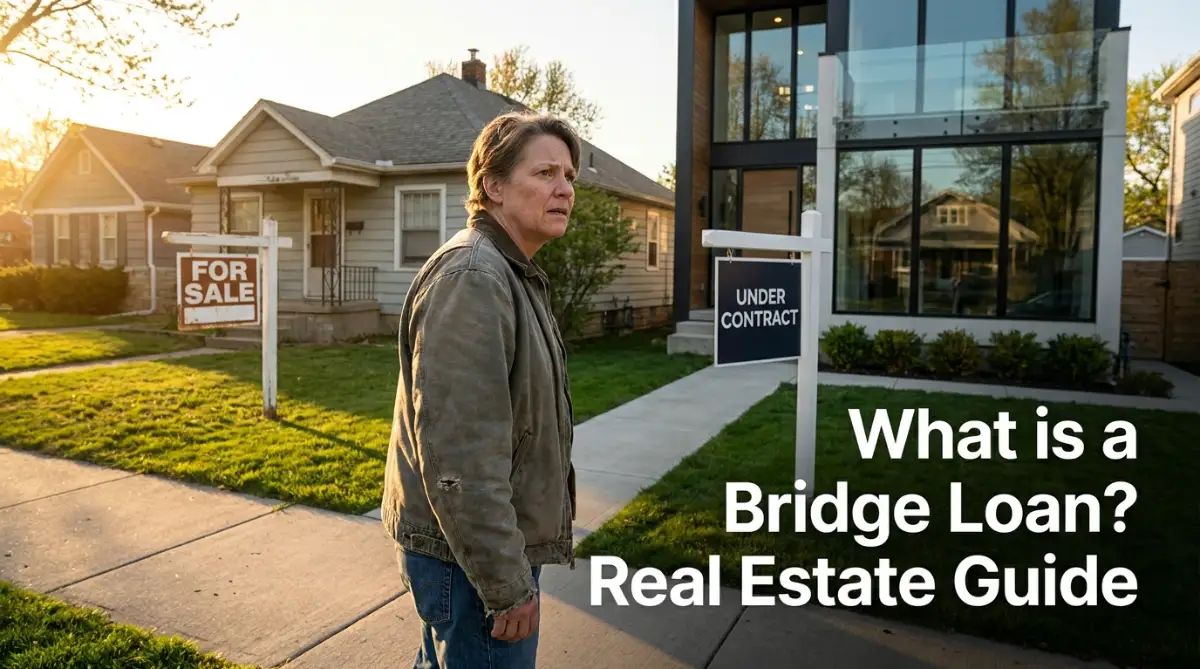
The Emotional Rollercoaster of Upgrading Your Home
Picture this: you just walked through the front door of your absolute dream home. The lighting is perfect, the backyard is exactly what your kids wanted, and you can already imagine your family living there. But then a harsh reality hits—all your cash is completely tied up in the house you currently own. If you wait around to sell your old place first, someone else with cash in hand is going to snatch up this new property by tomorrow morning. I know how badly this situation hurts, and I am going to show you exactly how to fix it without losing your mind.
This is a painfully common situation for so many regular home buyers today. You find a property that perfectly fits your needs, but your money is locked up in your current living space. The anxiety of trying to line up a purchase date with a selling date is enough to keep anyone awake at night.

Quick Action Plan: What You Will Learn Today
- How to instantly secure cash for a new home while your old house sits on the market.
- The exact situations where temporary gap funding gives you a massive advantage over other buyers.
- The hidden fees you must watch out for before you sign any bank documents.
- Smart alternative options you can try if a traditional short-term loan does not fit your budget.
Demystifying Short-Term Real Estate Financing
When you are trapped in this stressful housing gap, you need a financial tool designed specifically for this exact problem. This is where we look at a very specific type of funding designed to connect two separate property transactions smoothly. Simply put, it is a temporary loan that covers the down payment on your new home before the old one is sold.
You can think of it like trading in your old car at a dealership, but on a much larger scale. You know your old car has value, but you need the new car immediately to drive to work tomorrow. A lender essentially gives you an advance on the equity of your current house.
Once you finally sell the old property, you take those profits and completely pay off this temporary debt. This clears the slate and allows you to focus entirely on your new, permanent mortgage. These options typically last for six months to a year, giving you plenty of breathing room to find the right buyer for your old place.
How This Specific Funding Actually Operates Behind the Scenes
Understanding the actual mechanics of this process helps remove the fear of the unknown. When you apply, the lender will look closely at the equity you have built up in your current property. Equity is simply the current market value of your house minus whatever you still owe on your original mortgage.
Most traditional banks will allow you to borrow up to 80 percent of the combined value of both properties. They will bundle your current mortgage, the new mortgage, and the temporary funds into one single calculation. This ensures that the bank is protected while giving you the cash required to close the deal.
Interest rates for these temporary funds are generally higher than a standard 30-year mortgage. This happens because short-term lending carries a slightly higher risk for the bank. However, since you only hold the debt for a few months, the actual out-of-pocket interest paid is often quite manageable.
The Application and Approval Process
Getting approved for this type of funding is slightly different from getting your first home loan. Lenders want to be absolutely sure that you can handle the monthly payments if your old house takes longer to sell than expected. They will rigorously check your credit score, employment history, and debt-to-income ratio.
Pro Tip: I quickly learned that simply having equity in my old home was not an automatic pass for approval. My lender required a solid credit score and proof that I could comfortably manage my regular expenses alongside the new debt. Always double-check your debt-to-income ratio before applying so you do not get caught completely off guard.
You will usually need an appraisal on both your current home and the new property you want to buy. The bank needs official proof of what both houses are worth before they hand over any cash. This part of the process can take a couple of weeks, so it is highly recommended to start talking to lenders early.
A Realistic Timeline of Getting Approved:
To give you a clear idea of what to expect, here is how my own timeline played out:
- Day 1: Submitted all tax returns and bank statements to the lender.
- Day 5: The bank ordered appraisals for both my old house and the new property.
- Day 14: Appraisals came back confirming I had enough equity.
- Day 21: Final approval was granted, and the cash was ready for closing.
Watching financial concepts broken down visually can make all the difference when you are trying to grasp complex real estate terms. Check out this excellent breakdown that explains exactly how these short-term funds operate in everyday buying scenarios.
Key Situations When This Financing Makes Total Sense
Not every real estate transaction requires this level of financial maneuvering. However, there are specific situations where having access to immediate cash is not just helpful, it is completely necessary. Let us break down the most common scenarios where buyers use this strategy to win.
1. Making a Non-Contingent Offer in a Hot Market
In a highly competitive real estate market, sellers want a sure thing. If you submit an offer that says, "I will buy your house, but only if my current house sells first," sellers will often ignore you. They do not want to take on your problems.
By securing short-term gap funding, you can drop that contingency completely from your contract. You can confidently tell the seller that you have the money ready to go right now. This instantly makes your offer incredibly strong, almost like a cash buyer, and helps you beat out other families competing for the same home.
2. Securing a Property at a Public Auction
Real estate auctions move at lightning speed and require immediate action. If you win the bid on a foreclosed or auction property, you typically have to pay in full within 30 days or less. Traditional banks cannot process a standard mortgage that quickly.
Temporary gap funding gives you the speed required to close these fast deals. You can use the cash to secure the property, fix any major issues, and then refinance it into a normal, long-term mortgage later. This is a very common tactic for people looking to secure a great deal on a property that needs a little love.
3. Funding Major Renovations Before Moving In
Sometimes you find a great house in a perfect neighborhood, but the inside is completely outdated. You might want to completely remodel the kitchen or add a new bathroom before you pack your boxes and move your family inside. Doing major construction while living in a house is incredibly stressful and messy.
You can use the temporary cash to buy the new house and start the renovations immediately. Meanwhile, you continue living comfortably in your old home. Once the dust clears and the new house is perfectly ready, you move in and list your old property for sale.
4. Facing an Unexpected Job Relocation
Life does not always follow a neat, predictable schedule. You might get an amazing job offer in a totally different state that requires you to start working in just three weeks. You simply do not have the time to prep your current house, host open houses, and wait for a buyer.
This funding allows you to quickly buy a comfortable home in your new city so your family can settle in and kids can start school. You can then leave your old house empty and hire a trusted real estate agent to sell it for you while you focus on your new career. An empty house is often easier to show to potential buyers anyway.
Evaluating the Heavy Costs and Expected Fees
While this financial tool is incredibly powerful, it is certainly not free. You must understand exactly what you are paying for before you sign any paperwork. Just like a standard mortgage, you will have to pay closing costs, origination fees, and appraisal fees.
These fees can quickly add up to thousands of dollars, cutting into the final profit you make from selling your old house. Some lenders also charge a large upfront administration fee to process a short-term application. You must carefully calculate if securing the new dream home is worth these extra out-of-pocket expenses.
Many times, the stress relief of not having to move twice makes these fees feel like a bargain. Paying for a short-term rental, booking moving trucks twice, and renting a storage unit can easily cost just as much as the loan fees. You have to look at the big picture and decide what brings your family the most peace of mind.

Understanding the Built-In Risks and Pitfalls
Every financial decision carries some level of risk, and this strategy is no exception. The absolute biggest danger is that your old house simply does not sell as fast as you expected. If the real estate market suddenly slows down, you could be left holding two massive mortgages for several months.
This can put a severe strain on your monthly budget and eat through your family savings. To protect yourself, you should always have a solid backup plan in case the property sits empty. Some buyers decide to rent out their old home to cover the monthly payments until the market improves.
It is also highly recommended to price your old house aggressively from the very first day it hits the market. This is not the time to test ridiculously high prices just to see if someone bites. You want a fast, clean sale to quickly wipe out your temporary debt and move forward with your life.
Myth vs. Reality: Clearing Up Common Misconceptions
There is a lot of confusing information out there regarding how people buy and sell property. Let us clear up a few major misconceptions so you can make a smart, informed choice.
- The Big Myth: Only massive corporations or rich investors use these short-term strategies.
- The Reality Check: Regular middle-class families use these tools every single day. Teachers, nurses, and office workers rely on this exact strategy to comfortably upgrade their living situations without going crazy.
- The Big Myth: You need perfect, flawless credit to even be considered by a bank.
- The Reality Check: While a good credit history helps secure lower interest rates, lenders care much more about your home equity and your monthly income. If you have significant value tied up in your property, banks are usually willing to work with you.
How to Prepare Your Financial Profile Today
If you think this strategy might be the right path for your next move, you need to start preparing your finances immediately. Start by getting a highly accurate, professional estimate of what your current home is actually worth in today's market. Do not just rely on automated online calculators; invite a real estate agent over for a realistic valuation.
Next, sit down and map out your absolute maximum monthly budget. Calculate exactly what your payments would look like if you had to carry both properties for six full months. If that number makes you feel sick to your stomach, you might need to look at cheaper homes or wait until your savings account is a bit larger.
Finally, start gathering your tax returns, recent pay stubs, and bank statements. Lenders will ask for all of this paperwork upfront to verify your income. Having a neat, organized folder ready to go will make the entire application process incredibly smooth and fast.
Smart Alternatives You Should Explore First
Before committing to a gap loan, you should absolutely explore a few other popular options. One common alternative is a Home Equity Line of Credit, commonly known as a HELOC. If you set up a HELOC before you list your house for sale, you can pull cash out of your equity to use as a down payment.
A HELOC usually has much lower closing costs and better interest rates than a dedicated gap loan. However, you must establish the HELOC well before your house officially goes on the market. Most banks will automatically deny a new HELOC application if they see your property is already actively listed for sale.
Quick Comparison: Bridge Financing vs. HELOC
Sometimes seeing the facts side-by-side makes the choice much easier.
Another creative alternative is borrowing directly from your own retirement accounts, like a 401(k). Many plans allow you to take a short-term loan from yourself to purchase a primary residence. You will pay yourself back with interest once your old house finally sells, avoiding bank fees entirely.
Taking the time to fully understand these different paths empowers you to take control of your real estate journey. You never have to feel stuck or trapped in a home that no longer serves your family. With the right knowledge and a solid plan, you can smoothly transition into the next exciting chapter of your life.
Next-Level Strategies for Managing Short-Term Housing Debt
Securing the cash to buy your dream home is only the first part of the battle. Once you have the keys to your new property, the clock immediately starts ticking on your temporary financing. Your absolute biggest priority right now is getting your old property sold as fast as humanly possible.
You need to treat this temporary funding like a running taxi meter. Every single day your old house sits on the market, you are paying additional interest to the bank. This is why having a highly aggressive and well-thought-out selling strategy is absolutely required.
One of the smartest things you can do is hire an experienced real estate agent who knows your specific neighborhood perfectly. Do not just hire a friend or a family member as a favor. You need a hardcore professional who understands local market trends and knows exactly how to price a home for a quick sale.
Before listing the property, take a weekend to deeply clean and declutter every single room. Buyers need to walk in and immediately picture their own furniture in the space. If you leave personal family photos and crowded closets, potential buyers will quickly turn around and walk out the door.
The Golden Rule of Smart Pricing
Many homeowners get incredibly greedy when it comes time to put a price tag on their property. They look at the highest possible numbers in their area and expect someone to pay top dollar. When you are holding a short-term gap loan, this greedy strategy will backfire horribly.
You should actually price your old home slightly below the current market average. I know it hurts to potentially leave a few thousand dollars on the table. However, a slightly lower price often sparks a bidding war among eager buyers, which can actually drive the final price higher.
More importantly, a competitive price guarantees that your house will not sit empty for months. Paying six months of double mortgage payments will cost you way more money than simply lowering your initial asking price. You can check reliable resources from the National Association of Realtors to understand exactly how long homes are sitting on the market in your specific region.
Maintaining a Rock-Solid Financial Profile
While you are managing these two properties, you must protect your personal credit score like your life depends on it. Do not open any new credit cards to buy fresh furniture for your new living room. Any new debt can heavily impact your overall financial health and cause major headaches down the road.
You should also take the time to deeply understand how lenders view your entire financial picture. This means you need to know exactly how to calculate your debt-to-income ratio for loan approval before you sign anything. Keeping this ratio low ensures that you have plenty of breathing room if unexpected expenses pop up.
It is also incredibly smart to build a specialized emergency fund just for this transition period. Put aside enough cash to cover at least three months of double mortgage payments, just in case the market suddenly slows down. Having this safety net completely removes the daily panic and anxiety from your shoulders.
Pro-Level Secret: Negotiating Your Exit Strategy
Never accept the very first offer a bank hands to you without asking some serious questions. You have the total right to negotiate the specific terms of your temporary funding. Ask the lender if they are willing to waive the upfront origination fee if you promise to use them for your final, long-term mortgage.
You also need to read the fine print regarding early payoff penalties. Some shady lenders will actually charge you a massive fee if you sell your old house too fast and pay off the debt early. Always verify the rules with official resources like the Consumer Financial Protection Bureau to ensure you are getting a fair and legal deal.
By taking control of these details, you set yourself up for a massive financial win. You transition smoothly into your new home, sell your old property quickly, and completely wipe out the scary temporary debt. This leaves you perfectly positioned to enjoy your new space without carrying heavy financial baggage.
Heartbreaking Traps You Must Completely Avoid
Managing two massive property transactions at the exact same time is basically a high-wire balancing act. If you lose focus for even a second, things can go wrong very quickly. I have seen incredibly smart families make terrible mistakes simply because they let their emotions take over.
The most terrifying trap is completely ignoring the hidden holding costs of owning two large homes. Most people only calculate the double mortgage payments and forget about everything else. You will be responsible for two property tax bills, two home insurance policies, and two sets of utility bills.
Imagine paying hundreds of dollars every month to heat and cool an empty house just so the pipes do not freeze. You also have to pay someone to cut the grass and maintain the exterior so the home retains its curb appeal for buyers. These "small" extra bills drain your savings accounts much faster than you might expect.
The Danger of Over-Leveraging Your Family
Another massive mistake is buying a new home that pushes you right to the absolute edge of your monthly budget. People fall in love with a shiny new kitchen and completely ignore their actual financial limits. If you stretch your budget too thin, any small emergency will throw you into total panic mode.
What happens if the roof on your old house suddenly starts leaking while you are trying to sell it? You will need immediate cash to fix it, or potential buyers will run away fast. If you are deeply over-leveraged, you will not have the funds to handle these totally normal real estate surprises.
Many families end up getting rejected at the last minute because they failed to maintain their credit during the transition. If you are worried about this happening to you, take a moment to learn about the common reasons banks say no to your loan request. Knowing these exact red flags helps you stay completely clear of financial danger.

Refusing to Create a Backup Plan
Hope is a wonderful feeling, but it is a terrible financial strategy. You cannot simply cross your fingers and pray that your old house sells in exactly thirty days. The local housing market is unpredictable and changes constantly based on local economic factors.
If you do not have a solid Plan B, you are putting your entire family at massive risk. What exactly will you do if the house sits completely empty for six full months? If you are tracking local data through trusted hubs like the Federal Reserve Economic Data, you might notice signs of a market slowdown before it hits you.
A smart backup plan might involve finding a reliable long-term tenant to rent the old house. Renting it out covers the monthly mortgage and stops the bleeding from your savings account. While becoming a landlord might not be your dream job, it is way better than facing an awful foreclosure.
Ignoring the Details of Your Final Mortgage
People get so distracted by the shiny temporary funds that they completely ignore the terms of their new, permanent mortgage. You have to remember that this gap funding is just a brief stepping stone. The actual 30-year mortgage is the financial commitment you will live with for decades.
You must carefully evaluate your long-term options before you sign the final closing documents. Take the time to understand smart borrowing: how to choose between fixed and variable rates for your new property. Locking in the wrong type of interest rate on your permanent home will cost you thousands of dollars over the years.
Do not let a pushy loan officer rush you through the massive stack of closing paperwork. Take a deep breath, read every single page, and ask questions if a specific number looks strange. You are the boss of your own money, and you deserve complete transparency throughout this entire journey.

Your Blueprint for a Stress-Free Move
Making a major real estate leap does not have to be a terrifying, sleep-depriving experience. With the right amount of planning and a clear head, you can smoothly navigate the messy space between two homes. It all comes down to controlling the things you can control and preparing deeply for the unexpected bumps.
Start by having deeply honest conversations with your family about what you can actually afford. Do not let the pressure of a hot housing market force you into a rushed decision. Take your time, calculate your exact holding costs, and build that comfortable emergency safety net first.
If you feel completely overwhelmed by all the paperwork and bank requirements, step back and educate yourself. You can easily learn how to avoid common loan application mistakes and get approved fast by doing a little bit of online reading. Knowledge is the ultimate weapon against real estate anxiety and pushy salespeople.
When you finally get those new keys and watch your old house close successfully, the feeling of relief is incredible. You get to wake up in the home you always wanted without carrying the heavy burden of double debt. All the initial stress and careful planning will feel completely worth it.
I know firsthand how incredibly scary it feels to take on two massive mortgages at the exact same time, even for just a few months. But trust me, when you follow a smart plan and protect your emergency savings, you can pull this off beautifully. Take a deep breath, call a trusted financial advisor today, and take that exciting first step toward your new front door.
Honest Answers to Your Biggest Housing Questions
Is it actually hard to qualify for this type of short-term funding?
Getting approved mainly depends on the amount of equity you currently have in your old home. Lenders also look very closely at your credit score and your current monthly income to ensure you are a safe bet. If you have plenty of equity and a solid job history, the approval process is usually quite smooth.
How fast can I actually get the cash in my hands?
Because real estate deals move quickly, these specialized lenders try to work much faster than traditional banks. You can often get fully approved and have the funds ready in about two to three weeks. Having all your tax returns and pay stubs perfectly organized will greatly speed up this timeline.
What happens if my old property simply never sells?
This is the biggest fear for most homeowners, which is why pricing your house correctly from day one is so important. If it does not sell, you are still completely responsible for paying off the temporary debt when the term ends. Many people choose to rent out the old property or refinance it into an investment loan to avoid defaulting.
Can I use this strategy if I am buying commercial property?
Yes, there are completely separate short-term funding options designed specifically for commercial real estate investors. However, commercial terms, interest rates, and required down payments are vastly different from regular residential rules. You will need to speak with a specialized commercial broker to navigate those specific business requirements.
Should I just get a personal loan instead?
A personal loan is generally not large enough to cover the heavy down payment required for a new house. Also, personal funds usually have much higher interest rates because they are not backed by any physical property. If you want to understand more about how those work, you can check out exactly what is an unsecured loan and see why it rarely fits a massive real estate purchase.
Disclaimer: The information provided in this blog post is for educational and informational purposes only and does not constitute professional financial, legal, or real estate advice. Always consult with a certified financial advisor or a licensed mortgage professional before making any major financial decisions or signing loan agreements. Your personal financial situation is unique, and market conditions can change rapidly.