
The Silent Trap: My Journey Through Borrowing Blindly
I remember sitting at my kitchen table, staring blankly at a stack of loan documents, feeling a heavy weight on my chest. I had just signed up for what I thought was an amazing personal loan with a remarkably low interest rate. I genuinely believed I had scored the best deal possible for my family.
But when the first monthly statement arrived in the mail, my heart sank into my stomach. The amount I owed was significantly higher than the simple math I had done in my head. I felt completely betrayed, embarrassed, and entirely overwhelmed by the numbers in front of me.
It turned out I had completely ignored the extra origination fees, closing costs, and processing charges hidden deep inside the contract. I only looked at the basic interest rate, and I completely failed to check the actual Annual Percentage Rate. That one simple mistake ended up costing me hundreds of extra dollars that I desperately needed for groceries and daily expenses.
I felt like I was working incredibly hard every single day, only to hand over my hard-earned cash to a bank because of a totally avoidable error.
This is a quiet, frustrating reality for so many ordinary hardworking people today. We take out loans to cover emergencies, buy a reliable car, or finally purchase a safe home for our children. We are just trying to make life a little bit easier and more comfortable.
But instead of finding relief, we end up trapped in a cycle of endless payments that slowly drain our bank accounts. It feels like taking one step forward and three massive steps backward. The mental exhaustion of constantly worrying about money starts to ruin our sleep, our relationships, and our overall happiness.
When you do not know the true cost of your borrowing, financial anxiety becomes a permanent dark cloud hanging over your head. You might snap at your loved ones over small things because the underlying stress of debt is always boiling just beneath the surface. It is a lonely, terrifying feeling to realize you are paying way more than you should, simply because the financial jargon was too confusing to understand.
But I promise you, it does not have to be this way forever. Understanding exactly what you are signing up for is the first massive step toward taking back your power.
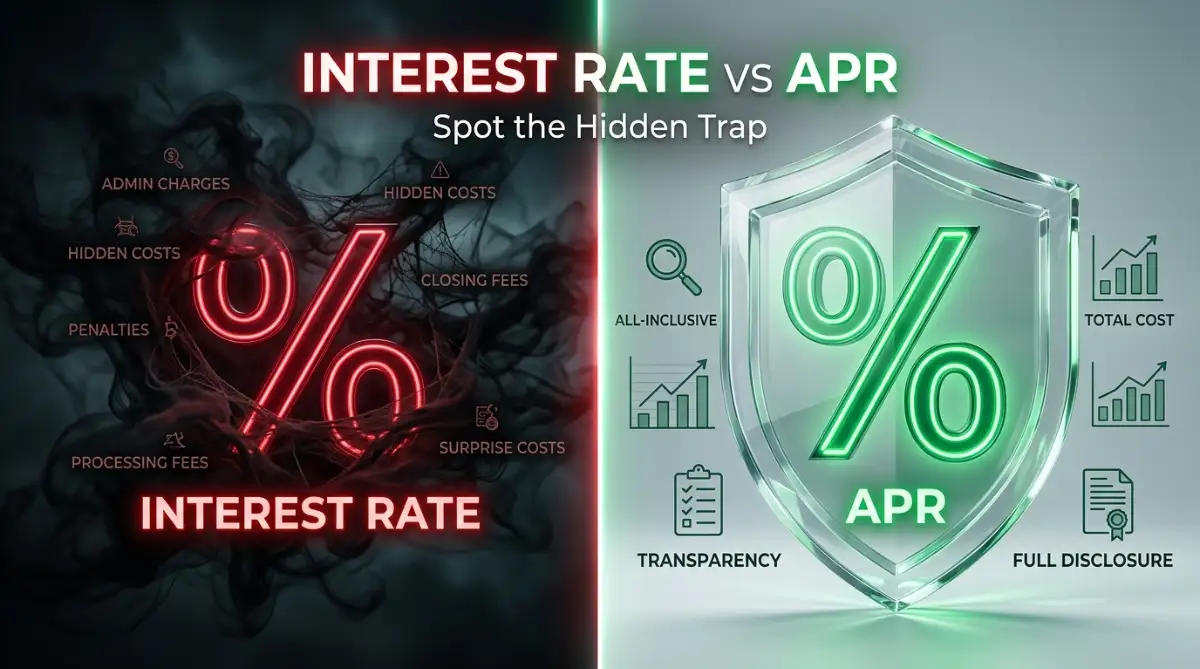
Pulling Back the Curtain: The Real Math Behind Borrowing
If you want to stop overpaying and start keeping more of your own money, you have to look beyond the big, flashy numbers that lenders advertise. Banks and financial institutions are incredibly smart at marketing. They will boldly highlight a super low interest rate to grab your attention instantly.
They want you to think borrowing money from them is cheap and effortless. But that low number is almost never the whole story.
Think of the advertised interest rate as the base price of a brand-new car. It looks great on the billboard as you drive past. But when you actually sit down to buy the vehicle, they suddenly add on delivery charges, taxes, registration fees, and premium upgrades.
By the time you get the final bill, the total is completely different from the price on the billboard. This is exactly how loans work.
The Annual Percentage Rate represents that final, out-the-door price of your loan. It takes that basic interest rate and aggressively rolls in all the hidden fees, broker charges, and mandatory insurance costs.
Comparing the APR instead of the basic interest rate is the only way to see the genuine, honest price of what you are buying.
When you only compare basic rates, you are essentially comparing apples to oranges. One lender might offer a 5% rate with huge hidden fees, while another offers a slightly higher 6% rate with absolutely zero fees. Without looking at the complete picture, you might choose the 5% offer and end up losing a lot of money over the life of the loan.
Breaking Down the Hidden Fees
Let us talk about what actually hides inside those loan agreements. When you are applying for funding, lenders often charge an "origination fee." This is simply a fee they charge just for processing your application and creating the loan.
Sometimes, this fee is a flat amount, but often it is a percentage of the total money you are borrowing. If you borrow ten thousand dollars and they charge a 5% origination fee, you instantly lose five hundred dollars right off the top.
Then there are processing fees, underwriting fees, and sometimes even mandatory document preparation fees. None of these extra costs are reflected in the simple interest rate.
If you do not check the APR, you are completely blind to these extra costs. You might think you are getting a massive bargain, but the lender is actually making a huge profit off these backend charges.
This is why comparing offers side by side is completely non-negotiable for smart borrowers. You have to force the lenders to show you their absolute final price.
"Want to know the secret to never getting tricked by a loan offer again? Watch this incredible breakdown before you sign any paperwork!"
The Real-Life Impact on Your Monthly Budget
To truly understand why this matters, let us imagine a highly realistic scenario that happens to people every single day. Imagine you are sitting at a car dealership, and you are ready to buy a reliable family vehicle.
The finance manager comes out with a huge smile and offers you two different loan options.
Option A gives you an interest rate of 4.5%.
Option B gives you an interest rate of 5.0%.
Naturally, your brain immediately tells you to pick Option A because it is clearly the smaller number. But let us look a little bit deeper at the paperwork.
Option A has heavy processing fees and administrative costs mixed in, bringing its actual APR to 6.2%.
Option B has absolutely no hidden fees at all, meaning its APR stays right at 5.0%.
If you blindly picked Option A based on the advertised rate, your monthly payments would be higher. Over the span of a five-year loan, you would end up paying hundreds of extra dollars for the exact same car.
That extra money could have been used for your weekly groceries, a nice family dinner out, or a deposit into your emergency savings account. Instead, it went straight into the pocket of the dealership.
Myth vs Reality: What Lenders Do Not Want You to Know
There is a lot of confusing noise out there when it comes to personal finance. Let us clear up some of the biggest misunderstandings right now.
Myth: The interest rate and the APR are exactly the same thing.
Reality: They are entirely different. The interest rate is just the cost of borrowing the principal amount, while the APR includes all the extra fees and charges associated with the loan.
Myth: A lower interest rate always guarantees a cheaper loan.
Reality: A loan with a low interest rate can actually be incredibly expensive if it is loaded with high upfront fees. You must check the final yearly percentage to know the truth.
Myth: Comparing rates will hurt my credit score permanently.
Reality: If you shop around for rates within a short time frame (usually a few weeks), credit bureaus treat it as a single inquiry. It is completely safe and highly recommended to shop around.
When you learn to separate financial myths from reality, you instantly become a much more confident and powerful consumer. Lenders can easily spot someone who does not understand how money works, and they will absolutely use that to their advantage.
But when you walk in armed with basic knowledge, you completely change the dynamic of the conversation.
A Simple Look at the Numbers
Sometimes, visualizing the numbers makes everything click into place. Let us look at a basic side-by-side comparison of how two identical loan amounts can behave completely differently.
Looking closely at this simple table, you can see the trap clearly. The tricky loan looks so much better at first glance with that nice 6.0% rate.
But once they subtract their heavy $500 fee, you are effectively paying a massive 8.4% just to borrow that money. The honest loan, despite having a scarier-looking interest rate at first, is actually the cheaper and safer option for your wallet.
My own personal Pro Tip here: I always keep a loan calculator app open on my phone whenever I am discussing financing with anyone. Before I agree to anything, I plug in their numbers, check the final yearly cost, and I immediately ask them to explain any gap I see between the basic rate and the final percentage.
Empowering Yourself Against Bad Debt
Nobody ever wakes up in the morning and actively decides they want to pay more money than necessary. We fall into these financial traps simply because we are rushed, stressed, or intimidated by the heavy paperwork.
The people sitting across the desk from you deal with these contracts every single day. For them, it is just routine business. But for you, this is your livelihood, your family's security, and your future peace of mind on the line.
Taking an extra ten minutes to stop, breathe, and ask for the specific APR can literally change the trajectory of your financial life. You are entirely within your rights to demand full transparency before signing your name on the dotted line.
If a lender ever tries to dodge your questions about the final percentage rate or tells you not to worry about the fees, consider that a massive red flag. A trustworthy financial institution will always be completely upfront about the total cost of borrowing.
They will gladly show you the math and help you understand exactly where every single dollar is going.
The Long-Term Reward of Smart Shopping
When you make a habit of comparing these final percentage rates, something amazing starts to happen to your financial health. You stop bleeding money through invisible fees.
Those extra twenty, thirty, or fifty dollars you save every single month start to pile up rapidly. You can use that saved cash to pay down the principal amount of your loan even faster.
Paying off debt early reduces your stress levels instantly. You sleep better at night knowing that you are entirely in control of your financial destiny. You stop feeling like a victim of the banking system and start feeling like a master of your own money.
Every time you choose a loan with a genuinely lower APR, you are actively choosing to pay yourself instead of paying a massive corporation. You are keeping your hard-earned money right where it belongs: in your own pocket, benefiting your own family.
It takes a little bit of patience to gather multiple quotes from different banks, online lenders, and credit unions. It might take a few extra phone calls or a little bit more reading. But the return on that tiny investment of time is absolutely massive.
You would not buy a television without checking the price at a few different stores first, right? You should treat borrowing thousands of dollars with the exact same level of careful consideration and respect. Your financial freedom depends entirely on your willingness to look past the marketing tricks and demand the honest mathematical truth.
Taking Full Control: Pro Strategies for Smart Borrowing
Now that you understand how lenders hide their actual costs, it is time to level up your financial skills. You do not have to be a Wall Street banker to outsmart the system. You just need a few advanced habits to keep your money safe.
The first step is learning exactly how to read a loan estimate document before you agree to anything. Lenders are legally required to provide a Truth in Lending disclosure that breaks down your actual costs. You should always scan this paper specifically for the final annual percentage rate box.
If you want to read more about how these mandatory disclosures protect you, the Consumer Financial Protection Bureau (CFPB) explains these federal lending rules in plain English. Knowing your federal rights automatically gives you massive leverage during negotiations.
You can also use this knowledge to negotiate better terms directly with the bank manager. Most people assume that loan terms are completely fixed and impossible to change. However, if you have good credit, you can often ask them to waive processing fees or origination charges entirely.
When they remove those extra fees, your actual annual percentage rate drops significantly. If they refuse to budge on the fees, you can calmly walk away and take your business to a competitor.
Building a Bulletproof Financial Habit
Protecting your wallet is not just a one-time event; it is a lifelong habit. To maintain these great financial results, you should set a personal rule to never sign financial paperwork on the very first day. Give yourself at least twenty-four hours to sleep on the offer and review the numbers at home.
During this waiting period, you can easily evaluate your current debt burden to ensure you can actually afford the new payments. Taking a step back removes the emotional pressure of a fast-talking salesperson. You can sit at your kitchen table, drink a cup of coffee, and look at the math with a clear head.
Another highly effective strategy is to always run your own math using an independent online calculator. Do not just blindly trust the numbers the loan officer scribbles on a piece of scrap paper for you. Lenders sometimes make "honest mistakes" in their calculations that conveniently work in their favor.
By taking charge of the math, you guarantee that nobody can easily pull the wool over your eyes.
The Hidden Pitfalls: Mistakes That Will Drain Your Savings
Even when people know they should compare offers, they still fall into some incredibly dangerous financial traps. One of the most common mistakes is focusing entirely on the monthly payment amount instead of the total cost of the debt. Lenders love to stretch a loan out over seven or eight years just to make the monthly payment look tiny.
But when you stretch a loan out that long, your actual annual percentage rate compounds heavily against you. You end up paying thousands of extra dollars in interest, even if the monthly bill feels manageable. The Federal Trade Commission frequently warns consumers about this exact extended-term financing trap.
Another massive mistake is applying for too many loans randomly without understanding what lenders want. Every time you submit a hard application, your credit score takes a small, temporary hit. If you do this repeatedly out of desperation, you will eventually face automatic rejections.
Instead of guessing, you should learn why banks reject applications before you ever submit your paperwork. This protects your credit profile and keeps your options open for the best possible rates.
The Danger of Ignoring the Fine Print
Let us talk about the emotional side of borrowing money. When you are facing a medical emergency or trying to fix a broken car, panic often takes over. In these highly stressful moments, people tend to grab the very first pile of cash offered to them.
They completely ignore the fine print because they just want the immediate pain to stop. Unfortunately, taking an expensive loan during a crisis only creates a much bigger disaster down the road.
I have seen hardworking families get entirely crushed by predatory lenders who prey on this exact kind of panic. They hide massive penalties in the contract, meaning you get punished if you try to pay the money back early. You must learn how to dodge common application errors to protect yourself from these aggressive lending tactics.
Taking a deep breath and spending just thirty minutes comparing offers can literally save your family from years of financial misery.
Why Variable Rates Can Destroy Your Budget
Another terrible mistake is misunderstanding how the market can suddenly change your loan terms. Many buyers get lured in by a super low introductory offer that suddenly skyrockets after six months. If you do not pay attention, that cheap starter rate will aggressively transform into an unaffordable nightmare.
Before you agree to any dynamic terms, you really need to understand how to pick the safest rate type for your specific lifestyle. If your budget is already tight, a sudden jump in your monthly bill could push you right into bankruptcy.
You should always ask the lender what the absolute maximum legal rate could be on your specific contract. If that maximum number scares you, do not sign the paperwork under any circumstances. You deserve the peace of mind that comes with a predictable, steady monthly bill.
Your Action Plan for Financial Freedom
You now have a completely different perspective on how the borrowing game actually works. You understand that the biggest, boldest numbers on a bank advertisement are rarely the honest truth. By always digging deeper for the actual annual percentage rate, you instantly transform from a target into an educated consumer.
The banking industry relies heavily on our confusion and impatience to generate their massive profits. But you no longer have to participate in a system that is rigged against your hard-earned money.
Every single time you demand transparency, you are keeping food on your own table and building a stronger future for your family. If you want to keep expanding your knowledge and find more helpful tools, you can always explore more of our personal finance resources at your own pace.
Education is truly the ultimate shield against bad debt and hidden financial traps. When you know better, you borrow better, and your entire life becomes so much less stressful.
The Next Steps You Should Take Today
Start by reviewing any current debt agreements you already have sitting in your filing cabinet. Look closely at the paperwork to see if you are currently paying a much higher percentage than you originally thought. If you spot hidden fees on an old contract, you can start planning a smart strategy to refinance it immediately.
If you are thinking about borrowing money soon, make a firm commitment to gather at least three different quotes. Put them side by side on your kitchen table, ignore the flashy marketing, and compare only the true, final numbers. You have the total power to dictate who gets your business based on who treats you with complete honesty.
If you are dealing with alternative borrowing options, make sure you understand how unsecured funds behave before you put your signature on anything. Different financial products have different sets of hidden rules, and your job is to uncover them all.
I know how incredibly overwhelming this money stuff can feel when you are trying to balance work, family, and daily survival. My biggest realization was that asking simple questions about fees isn't rude; it is exactly how smart people protect their families. I promise that if you just take five extra minutes to double-check that final yearly percentage, you will save yourself a lifetime of totally unnecessary stress.

Real Answers to Your Biggest Borrowing Questions
Why is the APR always higher than the advertised interest rate?
The advertised interest rate only covers the raw cost of borrowing the main principal amount. The actual annual percentage rate bundles that base cost with all the extra mandatory fees, processing charges, and origination costs. Because it includes these added expenses, it will almost always show a higher, more accurate number.
Does checking my rates at multiple banks hurt my credit score?
If you shop around for quotes within a focused time frame, usually between fourteen and forty-five days, it will not hurt your score. Credit bureaus are smart enough to recognize that you are simply rate shopping for a single purchase. They bundle all those inquiries into one single event, which keeps your credit profile perfectly safe.
Can my annual percentage rate change after I sign the final paperwork?
It entirely depends on the specific type of contract you choose to sign. If you sign an agreement with a fixed rate, your percentage will stay exactly the same for the entire life of the debt. If you sign a variable agreement, your percentage will fluctuate based on overall economic market trends, which can be quite risky.
What exactly is considered a "good" percentage rate for personal borrowing?
A "good" number depends heavily on your current credit score, your steady income, and general national economic conditions. Generally, a rate below the current national average is considered a massive win for your wallet. To get the best possible numbers, you need a strong history of paying your bills on time.
How can I easily find the hidden fees in my financial agreement?
You should completely ignore the colorful marketing brochures and ask directly for the official Truth in Lending disclosure document. This mandatory legal paper has a specific box that clearly lists all prepaid finance charges and origination fees. If a loan officer ever hesitates to show you this exact document, you should immediately walk out the door.
Financial Disclaimer: The information provided in this article is strictly for educational and informational purposes only and does not constitute professional financial, legal, or tax advice. Every individual's financial situation is entirely unique. We highly recommend consulting with a certified financial planner or professional advisor before making any major financial decisions, signing legal contracts, or taking on new debt.
THANK YOU