
The Hidden Trauma of a Low Credit Score
Did you know that over 30% of adults get turned down for personal loans every single year? You walk into a bank with your paperwork ready, feeling confident, only to get hit with a cold rejection letter because of a simple three-digit number on their screen. I know exactly how frustrating it is when the system holds you back from your goals. But here is the good news: beating the banks at their own game is actually much easier than they want you to believe, and I am going to show you exactly how to do it.
Handling the Initial Shock (What to Do First)
When the bank says no, it is completely normal to feel a sudden rush of panic. But before you let this frustration push you into making bad choices, it helps to take a deep breath and step back. Here are a few immediate things you should do after facing a sudden loan denial:
- Pause and Review Your Report: Do not immediately apply for another loan somewhere else. Each new hard inquiry temporarily lowers your credit score further, creating a vicious cycle of automatic rejections.
- Beware of Predatory Offers: When mainstream institutions close their doors, scammers often wait in the shadows with "guaranteed approval" traps. Desperation can make you an easy target, so knowing how to spot fake online lenders before you borrow is absolutely essential to protect your remaining assets.
- Address the Root Cause: Always request an adverse action notice from your lender to understand exactly why you were denied. Use this information to begin aggressively paying down existing balances and fixing errors on your credit report.
Ultimately, a loan rejection is not a permanent dead end. It is merely a loud wake-up call to reassess your current money habits. By focusing on rebuilding your credit profile and exploring smarter borrowing strategies, you can begin the rewarding process of transitioning from debt to financial freedom easily. What feels like a painful denial today can actually become the powerful stepping stone you need for absolute financial stability tomorrow.
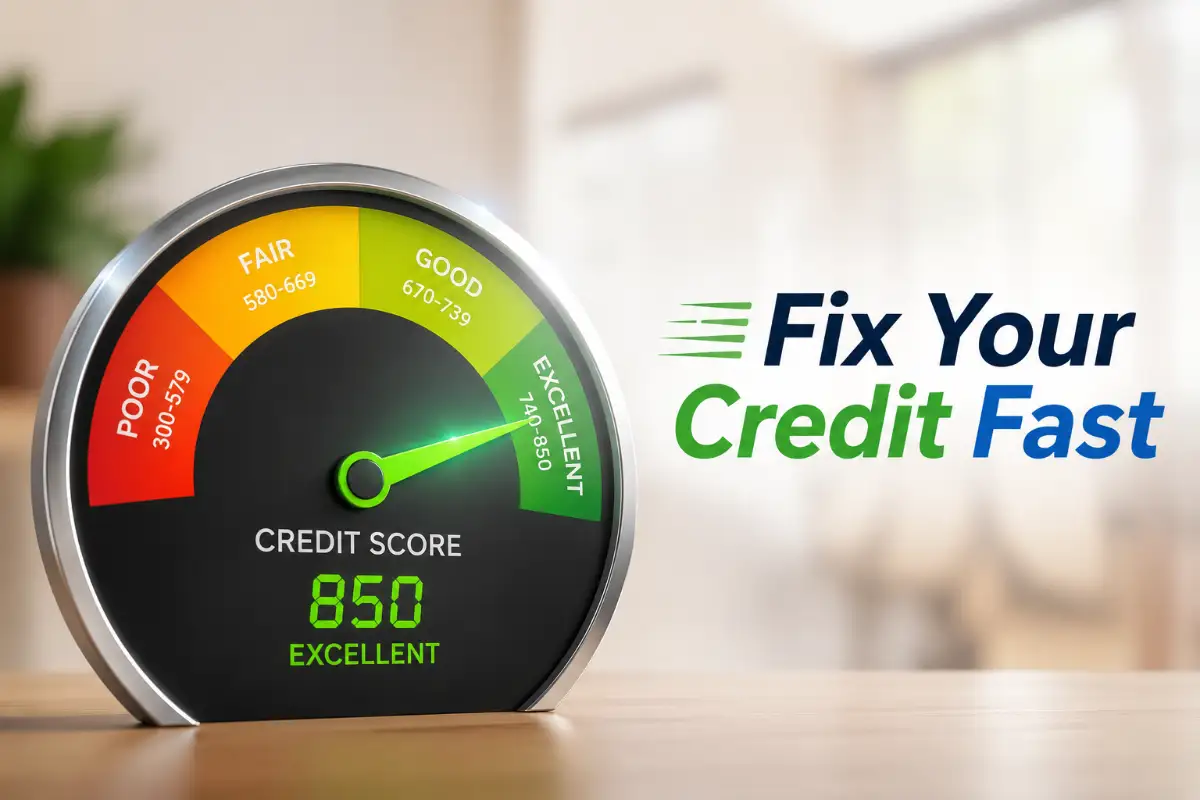
Here is a quick breakdown of how lenders actually view your number when you apply for a loan:
Your Quick Action Plan
- Stop applying for new loans immediately to prevent hard inquiries from dropping your score.
- Print out your reports and use a red pen to find and dispute hidden data errors.
- Ask your current bank for a limit increase to instantly fix your credit utilization ratio.
- Set up auto-pay on your phone right now so you never get hit with a 30-day late mark again.
Why Finding the Right Solution Feels Impossible
People desperately search for ways to fix their credit. However, they usually run into a wall of confusion and bad advice.
Here is exactly why people fail to find the right path and suffer more because of misleading information:
- Quick-fix scams: Many companies promise to erase bad credit overnight. People pay heavy fees only to realize these claims are completely fake.
- Outdated forum advice: The internet is full of old, inaccurate tips. Following this advice often leads to hard inquiries that actually drop your score further.
- Overwhelming financial jargon: Banks use complex terms like "credit utilization" and "derogatory marks." Regular people get lost trying to translate these banking terms into plain English.
- Fear of checking scores: A massive myth says checking your own score lowers it. Because of this false information, people stay completely blind to their real financial standing.
The Emotional Toll on Your Daily Life
A bad credit history does much more than block your loan applications. It slowly eats away at your mental peace and daily confidence.
Let us look at how this financial hurdle impacts your everyday reality:
- Constant financial anxiety: Waking up every day worrying about unexpected expenses. You know you have no safety net because banks will not approve you.
- Strained family relationships: Money troubles are a leading cause of stress at home. Hiding a low score from a partner creates a heavy burden of guilt.
- Loss of personal confidence: Being labeled "high risk" makes you feel like a failure. It drains your ambition to start a business or buy a home.
- Settling for unfair terms: Desperation forces you to accept predatory loans with incredibly high interest rates. This traps you in an endless cycle of debt.
But here is the good news. That number is entirely within your control. You do not need a degree in finance to master it.
You just need a clear, actionable plan that cuts through the noise. By understanding the real rules of the game, you can completely turn your situation around.
How to Build a Bank-Winning Credit Profile
Building a strong financial profile is a lot like taking care of your physical health. You cannot just eat one healthy meal and expect to run a marathon the next day.
It takes consistent, targeted habits. Before you even think about submitting that personal loan application, you must get your financial house in perfect order.
Let me walk you through the most powerful, tested methods to push your score into the excellent range. We will focus only on strategies that actually work.
Step 1: Hunt Down and Destroy Hidden Errors
You would be shocked to know how many people have mistakes on their financial records. These invisible errors are quietly dragging down your numbers right now.

Think of your credit report as a school report card. Imagine getting a failing grade in a class you never even attended.
That is exactly what happens when bureaus mix up your files with someone else who has a similar name.
Before you do anything else, you must pull a fresh copy of your file. You do not need to pay for sketchy services to do this; you can legally get your official documents for free through the government-backed hub at AnnualCreditReport.com.
Real-Life Scenario: The Shared Name Trap
Let us look at a real-life example. Meet David. David applied for a personal loan to renovate his kitchen. He always paid his bills on time, so he felt highly confident.
To his absolute shock, the bank rejected him. When he finally looked at his report, he saw a massive unpaid debt.
It turned out, the debt belonged to another David living in a different city. Because of a simple data entry error, our David's score dropped by 80 points.
Actionable Steps to Take Today
You need to become your own financial detective. Sit down with a cup of coffee and read every single line of your report.
Look out for incorrect addresses, accounts you do not recognize, or late payments that you actually paid on time. If you find a mistake, you must dispute it immediately.
Write a formal letter to the reporting agency and attach copies of your actual payment history. If you feel confused about what to say, the Federal Trade Commission (FTC) provides a completely free guide that walks you through exactly how to format your dispute safely. Legally, they must investigate and remove the error within a specific timeframe if they cannot prove it.
Pro Tip: Do not just check one bureau. The three major agencies often have completely different information. You must clean up all of them to ensure a smooth loan application process.
Step 2: Master the Art of Credit Utilization
If there is one magic lever you can pull to see rapid improvements, it is your credit utilization ratio. This single factor holds massive weight in calculating your final number.
Myth vs. Fact: The Zero Balance Rule
- The Myth: You need to keep your credit cards at exactly $0 all the time to get a perfect score.
- The Fact: Banks actually like seeing a tiny bit of activity (around 1% to 3%) on your statement because it proves you actively use and manage your accounts. I personally like to leave just $10 or $20 on my card right before the billing cycle closes, and then I pay it off entirely the next day.
In simple terms, this ratio is the amount of money you owe compared to the amount of money you have available to borrow.
Banks get extremely nervous when they see you maxing out your available limits. It makes you look desperate for cash.
The "Pizza Slice" Analogy

Think about it this way. Imagine you have a whole pizza with ten slices. The pizza represents your total credit limit.
If you eat two or three slices, the bank thinks you are responsible. You have a big appetite, but you know how to control yourself.
However, if you eat nine out of the ten slices, the bank panics. They assume you are starving and out of control.
They will definitely not give you another pizza (a personal loan) because they fear you will consume it all and never pay them back.
How to Optimize Your Ratio Instantly
I used to think the only way to fix my score was to pay off every cent of my debt at once, which felt impossible on my budget. My big realization came when I discovered I could just ask for a credit limit increase instead. It felt like a "cheat code" that boosted my score in weeks without me having to find extra cash I didn't have.
Your goal is to keep your utilization well below 30%. If you can keep it under 10%, you will see the best possible results.
If your current limit is $10,000 across all cards, you should never carry a balance higher than $3,000.
But what if your balance is already too high? You have two highly effective options.
First, you can aggressively pay down the balance before the billing cycle ends. Second, you can call your bank and ask for a limit increase.
If they raise your limit to $20,000, and your debt stays at $3,000, your ratio instantly drops to 15%.
This strategy can significantly bump up your score in just a few weeks.
Myth vs. Reality: The Balance Game
The Common Myth: You need to carry a small balance from month to month to show activity and build a good history.
The Absolute Reality: This is completely false. Carrying a balance only costs you extra money in interest charges.
To get the highest score possible, you should pay off your statement balance in full every single month. Activity matters, but carrying debt does not.
Step 3: Build an Unbreakable Payment History
Nothing tells a bank more about your character than your payment history. It is the absolute biggest slice of the pie when calculating your score.
Lenders want to see a long, boring, and highly predictable track record of you paying your bills exactly on time.
Even a single payment that is 30 days late can cause a massive drop in your score. The higher your current score is, the harder it will fall when you miss a deadline.
The Snowball Effect of Late Payments
When life gets busy, it is easy to forget a due date. Maybe you were traveling, or maybe the email bill went to your spam folder.
But the banking system does not care about your excuses. A 30-day late mark stays on your record for years.
If you hit 60 or 90 days late, lenders view you as a severe risk. Your chances of getting a personal loan with a decent interest rate will disappear almost instantly.
Comparison Table: Impact of Late Payments
Late Payment Type Score Impact Recovery Time Lender Trust Level30 Days Late Significant Drop Months to recover Moderately Damaged 60 Days Late Severe Drop Over a year Highly Suspicious 90+ Days Late Devastating Drop Multiple years Zero Trust (Rejection)
Bulletproof Your Payment Strategy
To protect yourself from human error, you must automate your financial life. Log into your banking app right now and set up automatic minimum payments for every single bill.
If you prefer hands-on control, set multiple alarms on your phone three days before any bill is due.
If you accidentally miss a payment by a few days, do not panic just yet. Call the provider immediately, apologize, and pay the balance over the phone.
Often, if you pay before the 30-day mark, they will not report the negative event to the major bureaus. Maintaining a polite, friendly tone with customer service can literally save your financial profile.
Your payment history is essentially your financial reputation. Guard it with everything you have. By establishing a rock-solid routine, you prove to future lenders that you are a highly reliable borrower.
Pro-Level Secrets for Maximum Financial Trust
Before you move on, I want you to watch this video. It clearly breaks down exactly what kind of interest rates you can expect based on your current credit score. Seeing these numbers visually helped me set a realistic goal for my own credit journey, and it will show you exactly why every point on your score is worth real money in your pocket.
Now that we have covered the basics, it is time to move beyond standard advice. Most average borrowers stop at paying their bills on time.
If you want the absolute best interest rates, you need to think exactly like a bank underwriter. Underwriters look for specific patterns that show exceptional financial maturity.
These advanced strategies might seem small, but they carry massive weight in the lending world.
Let us look at how you can manipulate the system legally and safely to build an unbeatable profile.
The Hidden Power of the Piggyback Strategy
This is one of the most effective, least understood secrets in personal finance. You can actually borrow someone else's good financial reputation.
It is called becoming an authorized user on another person's account. This strategy works exceptionally well if you have a family member with a flawless payment history.
Here is how the magic happens. Your parent or spouse adds your name to their oldest, most pristine credit card.
You do not even need to carry the physical card or spend their money. Just by having your name attached to that specific account, their perfect payment history suddenly appears on your report.
Banks see this long history of responsible management and immediately boost your internal rating. However, this is a double-edged sword that requires extreme caution.
If the primary account holder misses a payment or maxes out the card, that negative data also transfers to your report. You must only try this with someone who is intensely disciplined with their money.
Quick Checklist: Surviving the Piggyback Strategy
- Do: Pick a family member who pays their balance in full every single month.
- Do: Make sure the specific card they add you to is at least 5 years old.
- Don't: Actually carry the physical card in your wallet (cut it up if they mail it to you).
- Don't: Use this method if the primary cardholder uses more than 10% of their limit.
Protecting Your Financial Roots
Many people make a very logical, yet highly destructive assumption about old debt. They believe that once they pay off a card they no longer use, they should close the account immediately.
This sounds like smart financial housekeeping, right? In reality, it is one of the worst things you can do before applying for a personal loan.
Your financial profile is like a giant, growing tree. Your oldest open accounts are the deep roots that prove your long-term stability.
According to financial experts at Experian's educational portal, the length of your history makes up a significant portion of your total score. When you close your oldest card, you chop off those deep roots.
Suddenly, your average account age drops from ten years to just two years. Banks look at this new shortened history and see you as a completely new, untested borrower.
Instead of closing old cards, put a small recurring subscription on them, like a streaming service. Set it to auto-pay every month and toss the physical card in a safe drawer. This keeps the rich history active and working in your favor.
If you need more advanced strategies for rapid growth, consider reading this comprehensive guide on accelerating your credit score growth.
Creating a Balanced Borrowing Diet
Lenders love to see variety in your financial behavior. They want proof that you can handle different types of obligations at the same time.
Think of this like a balanced nutritional diet. If you only eat protein, you are missing out on other essential nutrients.
In the banking world, there are two main types of borrowing: revolving and installment. Credit cards are revolving, meaning the balance goes up and down. Personal loans or car payments are installments, meaning you pay a fixed amount every single month.
If you only have credit cards, banks worry you cannot handle fixed monthly commitments. If you only have a car loan, they worry you cannot manage open-ended spending limits.
Having a healthy mix of both proves you are a highly adaptable borrower.

Silent Financial Traps That Trigger Automatic Rejections
Even the smartest people fall into hidden traps when they get desperate for funding. The banking system is designed with tripwires that automatically reject applications if you make the wrong move.
Understanding what not to do is just as important as knowing the right steps. Let us break down the absolute worst mistakes you can make in the weeks leading up to your application.
The Desperation Signal (Hard Inquiries)
When you apply for new financing, the bank pulls your official report to check your background. This is known in the industry as a hard inquiry.
A single hard inquiry drops your score by a few points, which is completely normal. The trap happens when you panic and apply at multiple banks in a single week.
Let us say you get rejected by Bank A. Out of frustration, you immediately apply online at Bank B, Bank C, and Bank D.
Every single one of those applications triggers a new hard inquiry. To the automated lending software, this pattern screams absolute desperation.
The system assumes you are on the verge of financial collapse and desperately begging anyone for cash. As a result, your score tanks rapidly, and every subsequent bank automatically denies you.
Instead of randomly applying, you should focus on building a structured personal budget from scratch to manage your current cash flow while you wait for your profile to recover.
The Co-Signing Nightmare
We all want to help our friends and family when they are in trouble. If a close friend asks you to co-sign a car loan because their rating is too low, your heart might say yes.
Your financial brain must absolutely say no. Co-signing is not just a character reference.
When you sign that paper, you are legally taking on 100% of that debt. If your friend pays late, that late mark goes directly onto your personal report.
Real-Life Scenario: Mark's Big Mistake
Consider a man named Mark. Mark had an excellent profile and planned to apply for a home renovation LOAN.
His younger cousin begged him to co-sign an auto lease. Mark agreed, thinking his cousin was responsible.
Three months later, the cousin lost his job and missed two payments without telling Mark. When Mark went to the bank for his renovation loan, he was humiliated by an instant rejection.
His perfect score had plummeted by 90 points because of someone else's mistake. Never risk your own financial future for another person's temporary convenience.
Ignoring Small Medical or Utility Bills
Many borrowers obsess over their major credit cards but completely ignore smaller bills. You might throw away a notice for a small unpaid medical fee or a final electric bill from an old apartment.
You might think a small amount like $50 does not matter to a major lending institution. This is a massive miscalculation.
When those small bills go unpaid, they get sold to collection agencies. A collection account is like a massive red flag on your permanent record.
Even a $20 collection mark can destroy your chances of securing a low-interest personal loan. According to insights from Forbes Advisor on lending criteria, underwriters view unresolved collections as a sign of deep financial irresponsibility.
You must call these agencies, negotiate a "pay-for-delete" agreement, and get those marks erased from your history entirely.
Maxing Out Cards Before Applying
Sometimes people need a personal loan specifically to pay off high credit card debt. This is a very common and smart strategy known as debt consolidation.
However, there is a major timing mistake people make here. They continue to use their maxed-out cards right up until the day they apply for the loan.
When the bank pulls your data, they see an extremely high utilization ratio. As we discussed earlier, high utilization terrifies lenders.
If you plan to consolidate, you must stop using those credit cards at least two months before you apply for the new loan. Switch entirely to a debit card or cash for your daily expenses.
This gives the system time to recognize that your balances are no longer climbing. It shows you have stopped the bleeding and are ready for a structured repayment plan.
Your Personal Action Plan for Tomorrow Morning
You now possess the exact knowledge that banking insiders use to evaluate applications. The anxiety of walking into a bank branch should be completely gone by now.
You are no longer guessing what the computer system wants from you. You have a clear, scientific roadmap to making yourself the perfect candidate for borrowing.
But knowledge alone will not change your three-digit number. You have to take aggressive, consistent action starting immediately.
Here is exactly what you need to do when you wake up tomorrow morning:
- Pull all three reports: Do not rely on free tracking apps alone. Get the official documents from the major bureaus and print them out on paper.
- Grab a red pen: Go through every single printed page and circle anything that looks unfamiliar or incorrect.
- Draft dispute letters: If you found errors, write physical letters to the bureaus demanding they fix the mistakes.
- Automate your life: Open your banking app and set every single minimum payment to auto-pay. Protect your history from human forgetfulness.
- Request a limit increase: Call your current card providers and politely ask for a higher limit to instantly lower your utilization ratio.
Common Questions People Ask About Fixing Their Numbers
How fast can my score actually go up?
If you pay down a highly maxed-out credit card or successfully dispute a huge error today, you might see a big jump within 30 to 45 days. However, building a long, trustworthy history naturally takes a minimum of six months to a year of solid habits.
Will checking my own progress hurt my chances of getting a loan?
No, absolutely not. Looking at your own file triggers what we call a "soft inquiry," and this does not affect your profile at all. You can look at your own numbers every single day if you want to!
Can I just hire a repair company to fix this for me?
You can, but honestly, I highly suggest doing it yourself. Most repair companies just send basic dispute letters that you can easily write for free on a Sunday afternoon. Save your cash and use it to pay off your actual debt instead.
What happens if I just ignore a small medical bill?
I have seen people lose out on great home loan rates because of a forgotten $40 bill. If it goes to collections, it acts like a massive red flag to banks for up to seven years. Always negotiate and pay off small collections if you can.
A Word from the Expert
Do not let past rejections define your financial future. The system is designed to be highly reactive to new, positive behaviors.
Every single month you pay on time, your profile grows stronger and more resilient. It might take a few billing cycles for the numbers to update, so practice aggressive patience.
Keep your balances low, protect your old accounts, and never apply for things you do not absolutely need. When you finally hit that target number, the banks will stop rejecting you.
Instead, they will actively compete for your business, offering you the lowest rates available. Take a deep breath, trust the process, and take control of your financial destiny today.
Rebuilding my credit was not a fast sprint; it was a slow walk that eventually led me to total financial freedom. If I could go from being rejected for a tiny loan to having banks compete for my business, I know you can do it too. Please, take one small step from this list today, and I promise your future self will be so glad you didn't give up.
Disclaimer: The information provided in this blog post is for educational and informational purposes only and does not constitute professional financial advice. Credit scores and lending requirements vary widely based on individual circumstances and specific banking institutions. Always consult with a certified financial advisor or credit counselor before making major financial decisions or applying for new credit.
***THANK YOU FOR READING PATIENTLY***