The Hidden Anxiety Behind Your First Digital Wallet
Ever stared at your screen waiting for money to show up, sweating a little more with each passing minute? We have all been there. Setting up your first digital wallet should not feel like throwing cash into a black hole. Let me show you how to lock down your digital money without the tech headaches or confusing jargon.
We hear stories every single day about people waking up to empty accounts. They make simple errors that could have easily been avoided with just a little bit of guidance. This constant fear of making a wrong move keeps many smart people away from exploring digital assets.
The reality is that traditional banking has always held our hands. If you forget a password, you simply click a button and reset it. In the world of decentralized finance, you are your own bank, and that comes with a massive level of responsibility.
Before You Read Further, Here Is What You Will Learn:
- Paper Over Pixels: Why your recovery words should never touch a phone camera or cloud storage.
- The $2 Test Rule: My personal habit for making sure funds never get lost on the wrong network.
- Cleaning Open Doors: How to safely disconnect your wallet from websites you no longer use.
- Ignoring Free Money: The real truth behind random tokens appearing in your balance.
Escaping the Digital Black Hole: Real Solutions
If you are ready to take control of your financial security, you need to understand exactly where beginners stumble. The good news is that these errors are easily preventable once you know what to look for. Let us explore the most practical ways to protect your digital wealth right from day one.
Treating Your Recovery Phrase Like a Regular Password
This is arguably the most dangerous error a beginner can make. When you create a new account, the app will give you a list of 12 or 24 random words. This is your recovery phrase, often called a seed phrase.
Most people treat these words like a standard social media password. They take a screenshot on their phone, save it in their digital notes, or email it to themselves. Do not ever do this under any circumstances.
Why taking a screenshot is a terrible idea
Your smartphone is constantly connected to the internet and backing up data to cloud servers. If someone hacks your email or cloud storage, they automatically get full access to your funds. The moment those words touch an internet-connected device, your security is compromised.
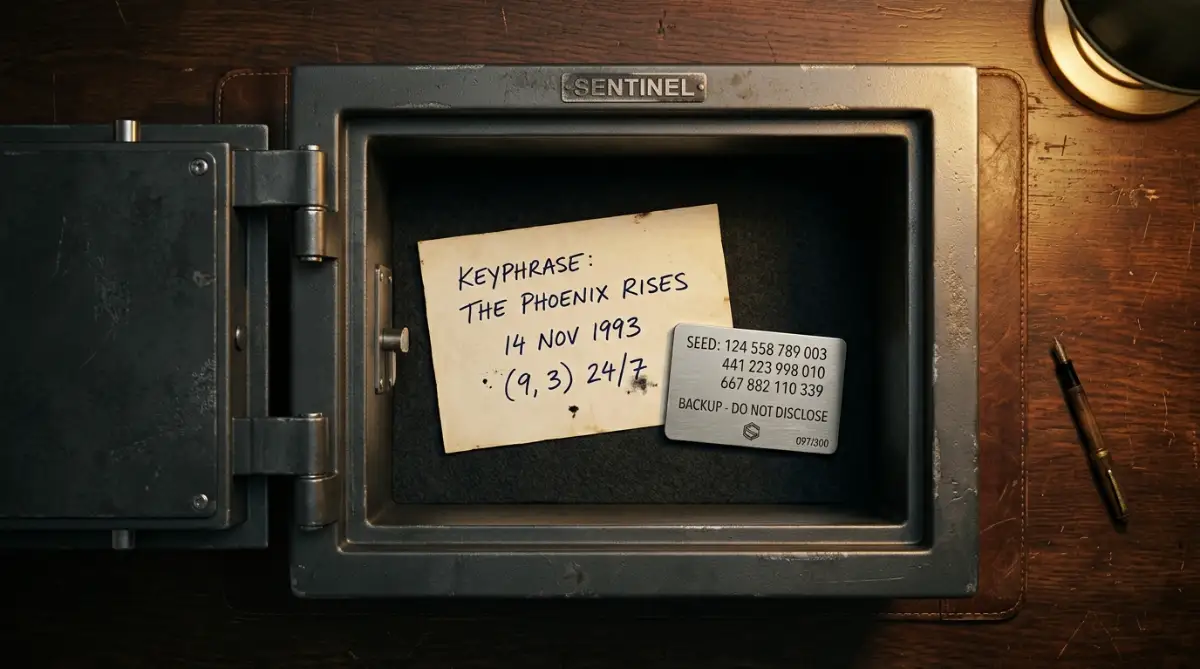
Think of your recovery phrase as the physical master key to a vault holding all your wealth. You would never take a photo of your vault key and text it to a friend. You must write these words down on a physical piece of paper with a pen.
Keep that piece of paper in a fireproof safe or a hidden lockbox. Many experts even stamp their words onto metal plates to protect against fire and water damage. The rule is simple: keep it entirely offline.
Blindly Trusting Copy and Paste
We copy and paste text every single day without thinking twice about it. When you are transferring digital funds, this casual habit can completely destroy your portfolio. Hackers have developed malicious software specifically designed to target your clipboard.
The Clipboard Hijacking Threat
Imagine you copy a receiving address from your exchange to send money to your private account. A hidden virus on your computer quietly replaces that address with the hacker's address the moment you hit paste. If you do not verify the text, you will send your funds directly to a scammer.
Always check the first four and the last four characters of the address before confirming any transaction. Make this a permanent habit every single time you move money. It only takes two extra seconds, but it can save you from a complete financial disaster.
Pro Tip: I learned this lesson the hard way after almost losing a significant amount of money to a simple typo. Now, whenever I paste an address, I literally read the last few digits out loud to myself just to be absolutely sure. My friends think I look a little crazy whispering to my computer, but I have never lost a transaction since!
Skipping the $2 Test Transaction
When you finally set up your new account, the excitement takes over. You want to move your entire portfolio off the exchange and into your private custody immediately. Sending a large sum of money on your very first try is incredibly risky.
The logic behind sending a tiny amount first
Blockchain transactions are permanent and cannot be reversed by customer service. If you make a mistake, there is no manager to call for a refund. This is why you must always send a tiny test amount first.
Send the equivalent of two or three dollars and wait for it to arrive safely. Once you see the funds appear in your balance, you know the path is clear and correct. Only then should you send the rest of your holding.
Yes, this means you will pay network fees twice. Think of that small extra fee as cheap insurance for your peace of mind. It is much better to lose two dollars on a mistake than your entire life savings.
Choosing the Wrong Network Highway
This specific issue causes more lost funds than almost anything else. Modern digital assets often exist on multiple different networks. For example, you might try to send a stable coin, but the exchange asks you which network you want to use.
You will see options with confusing acronyms like ERC-20, TRC-20, or BEP-20. To make things worse, some networks charge much lower fees than others. Beginners often just click the cheapest option without checking if their receiving app actually supports that specific network.
Avoid getting lost in transit
Think of different networks like different train lines. If your destination is on the red line, taking the blue line just because the ticket is cheaper will get you completely lost. Your funds will simply disappear into the void.
Quick Network Cheat Sheet for Beginners:
My golden rule: If I am unsure, I test it with $2 first!
Always ensure that the sending network exactly matches the receiving network. If your app says it only accepts Ethereum-based tokens, you must select that specific network on the exchange.
Before You Make Your First Transfer, Watch This Essential Safety Breakdown!
Understanding network types can be a bit overwhelming, so seeing a visual demonstration makes it much easier to grasp. Check out this quick visual guide to guarantee your funds never end up on the wrong blockchain.
Falling for Fake Customer Support Traps
The decentralized world does not have an official help desk. If you run into a technical issue, your first instinct is probably to search for a support number on Google or ask for help on social media platforms like Twitter. Scammers know this, and they are waiting for you.
How scammers fake authority
They create fake accounts that look exactly like the official support teams of popular software. They will send you a friendly message offering to help fix your problem. Eventually, they will ask you to "verify" your wallet by clicking a link or typing in your recovery words.
No legitimate company will ever ask for your recovery words. The developers of the software do not need your words to fix a bug in the app. If anyone asks for your secret phrase, they are a scammer trying to steal from you.
If you need genuine technical help, always go directly to the official website of the software provider. Bookmark the real website so you never accidentally click on a fake search engine ad. Trust absolutely no one who sends you a direct message offering unsolicited technical support.
Misunderstanding Smart Contract Approvals
Once you get comfortable with your new setup, you might want to start interacting with decentralized applications. These platforms require you to "connect" your account and sign digital permissions. This is where many users accidentally give away the keys to the kingdom.
The danger of blind signing
When you click "approve" on a decentralized website, you are often giving that specific program permission to spend your tokens. Most beginners just click approve without reading the fine print, treating it like a standard terms of service agreement. If the website turns out to be malicious, that approval allows them to drain your entire balance.
Always read exactly what permission you are granting. Many modern apps allow you to set a spending limit. Instead of giving a website unlimited access to your tokens, you can restrict it to only the exact amount you want to spend today.
Regularly check your active approvals and revoke connections to websites you no longer use. There are many trusted tools available that help you scan your address and cancel old permissions. Treating your digital permissions like regular house cleaning keeps your assets highly secure.
Storing Everything in a Hot Environment
There are generally two ways to store your digital wealth. A "hot" setup remains connected to the internet through your phone or web browser. A "cold" setup uses a physical hardware device that stays entirely offline.
Why convenience is the enemy of security
Hot storage is incredibly convenient for daily trading and small purchases. However, because it lives on an internet-connected device, it is vulnerable to malware, spyware, and hacking attempts. Keeping your life savings in a browser extension is like walking through a crowded market with a hundred thousand dollars in your back pocket.
For long-term holding, you absolutely need a physical hardware device. These devices generate your secret keys offline, meaning hackers cannot reach them even if your computer is infected with a virus.
Use your phone app like a physical leather wallet that you take to the store with a little bit of spending cash. Use a hardware device like a steel bank vault buried deep underground for your real wealth. Separating your daily funds from your long-term savings is a strategy used by every successful investor.
💡 Quick Reality Check:
Think of your phone app like your leather pocket wallet—you only carry enough cash in it for coffee or lunch. Think of your hardware device like a heavy steel safe bolted to the floor. Keep the big money offline.
Myth vs Reality: The "Un-hackable" Illusion
Myth: "If I use a hardware device, my funds are 100% immune to being stolen."
Reality: A hardware device only protects your keys from being stolen over the internet. If you voluntarily type your secret words into a fake website, or physically hand your backup paper to someone, the hardware device cannot save you. Security is a combination of good tools and smart human behavior.
Forgetting About Estate Planning and Legacy
We all want our digital wealth to benefit our families in the future. Unfortunately, the extreme security measures we take to keep hackers out often keep our loved ones out as well. If something unexpected happens to you, how will your family access your assets?
Many people hide their recovery words so well that they take their wealth to the grave. Your spouse or children might not even know what a digital wallet is, let alone how to recover one using a hidden piece of paper.
You need a solid legacy plan. Write down clear, simple instructions on how to access the funds, but keep these instructions separate from the actual recovery words. You might want to involve a trusted family lawyer or use secure multi signature setups to ensure a smooth transition of wealth.
Protecting your investments is a continuous journey of learning and adapting. You do not need to be a computer genius to keep your funds safe. By understanding these simple concepts and taking things slowly, you can easily avoid the painful traps that catch so many beginners every single day. Take a deep breath, double-check your work, and enjoy the true freedom of being your own bank.
Taking Your Digital Security to the Next Level
Once you understand the basic traps, it is time to build a real fortress around your digital wealth. Setting up your account correctly the first time is great, but maintaining that security requires a few smart habits. You do not need to be a coding genius to protect your money effectively.
Most successful investors follow a very specific set of rules to keep their minds at peace. They treat their digital assets with the same respect they would give to a physical stack of gold bars. Let us explore exactly how you can adopt these professional habits into your daily routine.
The Power of Separation and Cold Storage
One of the smartest moves you can make is to physically separate your long-term savings from your daily spending money. Think of your mobile phone app like your leather pocketbook. You only keep enough cash in there to buy coffee or pay for lunch.
For the big numbers, you need a completely offline solution. This is where physical hardware devices become your best friend. If you want to dive deeper into how these physical devices work, reading through a complete cold wallet guide is a fantastic next step.
These tiny devices look like USB thumb drives, but they hold the actual cryptographic keys to your wealth securely offline. Even if you plug this device into a computer infected with malware, the hackers still cannot steal your funds. It acts as an impenetrable digital vault.
Regularly Cleaning Up Your Digital Permissions
Every time you connect your account to a new website to swap tokens or buy a digital collectible, you leave a door open. These open doors are called "token approvals" or smart contract permissions. Over time, these open doors pile up and create a massive security risk.
Make it a habit to check your active permissions at least once a month. There are several trusted community tools that scan your address and show you exactly which websites still have access to your money. Revoke any permissions for websites you are no longer actively using.
Treat this process like cleaning out your garage. A cluttered digital environment is exactly what scammers hope for. By keeping your permissions restricted, you significantly reduce the chances of a rogue website draining your funds in the middle of the night.
Mastering the Art of Verifiable Information
Let us be totally honest—social media is full of people offering terrible money advice. Relying on a random influencer to keep your money safe is just asking for trouble. Instead, build a habit of double-checking things through official sources. If you want to know how a network handles security, read their actual website, not just a random YouTube comment. The smartest thing I ever did was learning to verify every piece of information before clicking "confirm."
If you really want to know how secure a network is, skip the hyped-up influencer videos. Go straight to the source. Read the official guides or trusted security standard websites. It might sound a bit boring at first, but taking ten minutes to read the actual rules will save you massive headaches later on.
Do not rely entirely on third-party YouTube videos when you can read the official documentation of the network you are using. The safest investors are the ones who verify every piece of information before they click any buttons. Taking the time to study understanding blockchain technology properly will save you countless headaches down the road.

The Most Painful Traps That Drain Accounts
Even with the best tools in the world, human emotion is often our biggest weakness. I have seen incredibly smart people lose thousands of dollars simply because they panicked or got greedy. These are the psychological traps that completely destroy portfolios.
We often think hackers are brilliant masterminds typing furiously on green screens. The truth is much simpler. Most scammers just use basic psychology to make you hand over your keys willingly.
The Fake Airdrop and "Free Money" Illusion
This specific scam catches thousands of beginners off guard every single month. You open your app one morning and see a random token worth thousands of dollars sitting in your balance. You have no idea where it came from, but your heart starts racing with excitement.
🚨 Fact-Check: The "Surprise Token" Drop
- The Myth: You got lucky and a random project sent you $5,000 worth of new tokens as a reward.
- The Reality: Scammers drop these fake tokens into thousands of wallets. They hold zero real value. The moment you connect your account to their site to "sell" them, their code drains your actual money. If you do not recognize the token, treat it like spam email—just ignore it completely.
So, if you see a surprise token show up, do not rush to Google it. Scammers build very professional-looking websites just waiting for you to connect your account to "claim" them. The moment you click approve, they wipe out your actual funds. That free money is just bait on a hook.
If free money suddenly appears in your account out of nowhere, completely ignore it. Do not try to sell it, do not try to move it, and definitely do not visit the website associated with it. Just leave it alone and it cannot hurt you.
Panic Clicking During Network Congestion
Imagine you are trying to send funds to an exchange to sell an asset during a market crash. The network gets completely overloaded, and your transaction just sits there as "pending" for hours. Your anxiety spikes, and you start clicking the "speed up" or "resend" buttons repeatedly.
This is a terrible mistake. Every time you try to push a new transaction through without properly canceling the old one, you create a massive traffic jam. You also end up paying ridiculous network fees for every single attempt.
Instead of panicking, you need to understand that the blockchain is just processing things slowly. You simply have to wait in line like everyone else. Learning patience is just as important as mastering crypto markets when you want to build long-term wealth.

The Phishing Link Epidemic
Phishing is one of the oldest tricks in the book, yet it remains incredibly effective. You might receive an urgent email claiming your account is about to be locked due to suspicious activity. The email includes a big red button telling you to verify your identity immediately.
That button leads to a perfect clone of your favorite wallet provider's website. The page will ask you to type in your 12-word recovery phrase to prove who you are. The second you hit submit, your funds are gone forever.
To protect yourself against these deceptive tactics, you should familiarize yourself with official resources like the CISA phishing guidelines to recognize how these attacks are structured. Always remember that legitimate providers never, ever need your secret words for customer support.
Treating Digital Finance Like a Casino
Many people approach decentralized networks hoping to get rich overnight. They jump from one risky token to another without doing any real research. This impatient mindset is exactly what leads to sloppy security practices and massive losses.
Managing your digital wealth requires the same level of serious planning as your real-world education and career. Just like matching your college major with your dream job requires careful thought and strategy, securing your financial future requires deliberate patience.
Stop rushing your transactions. Before you confirm any transfer, physically take your hand off the mouse. Take a deep breath, read the receiving address one more time, and only then proceed with the action.
Your Blueprint for Stress-Free Asset Management
We have covered a lot of ground today, but you do not need to memorize everything at once. The beauty of digital finance is that you can take things at your own completely comfortable pace. You are in the driver's seat, and you hold all the control.
Building a secure setup is not about living in constant fear of hackers. It is about establishing simple, unbreakable habits that make you mathematically secure. Once you have these basics down, you can explore the digital economy with complete confidence.
Your Action Plan for Tomorrow
To make sure you actually benefit from this guide, I want you to take three specific actions this week. Do not put this off until next month. Treat your financial security as your top priority right now.
First, physically locate the piece of paper holding your recovery phrase and ensure it is safe from water and fire. Second, send a tiny two-dollar test transaction to a friend just to practice the copy-paste verification method. Finally, explore trusted educational platforms like DigitShopy to continue expanding your knowledge safely.
A Personal Word from My Experience
I know exactly how intimidating all these strange terms and networks can feel at the beginning. My biggest breakthrough happened the day I stopped rushing and started treating my digital security like a slow, careful chess game. I promise you, the peace of mind you get from knowing your assets are truly locked down is worth every single minute of effort you put in today!
Common Questions About Securing Your Digital Assets
Q: What happens if I completely lose my physical recovery phrase?
If you lose your written words, you are on a ticking clock. As long as you still have access to the app on your phone or computer, you must immediately transfer all your funds to a brand new account with a new phrase. If your phone breaks and your paper is gone, your money is permanently lost.
Q: Do I really need to buy an expensive hardware device right away?
Not necessarily. If you are only playing around with twenty or fifty dollars, a standard mobile app is perfectly fine for learning the ropes. However, once your portfolio grows to an amount that would make you cry if you lost it, getting a physical hardware device becomes an absolute necessity.
Q: Can my account be hacked if I just tell someone my public receiving address?
No, your public receiving address is completely safe to share with anyone. Think of it like your regular bank account number. People can use it to send you money, but they absolutely cannot use it to take money out of your account.
Q: Should I take a photo of my secret words if I keep my phone offline?
Please do not do this. Even if your phone is temporarily offline, it will eventually connect to a network for updates or cloud backups. The moment that photo syncs to a cloud server, your funds become vulnerable to anyone who hacks your email password.
Q: How often should I log in to check my digital balances?
Checking your balances too often usually leads to emotional trading and unnecessary anxiety. It is perfectly healthy to only check your offline storage once every few months just to ensure firmware updates are handled. The less you mess with your main savings, the safer they remain.
Disclaimer: The information provided in this article is for educational and informational purposes only and should not be construed as financial or investment advice. Always conduct your own thorough research and consider consulting with a certified financial professional before making any investment decisions. Cryptocurrencies are highly volatile, and you are solely responsible for the security of your own digital assets.
THANK YOU