
The Silent Frustration of Finding Your Digital Home
Stuck trying to find the perfect blog name? I get it. You type in a brilliant idea, hit search, and—bam—it is already taken. It is enough to make you slam your laptop shut before you even write a single word. You are definitely not the only one fighting this battle. But do not throw in the towel just yet. Let's figure out how to grab a name that actually sounds good, fits your vibe, and gets you up and running today.
You finally decide to start that blog you have been dreaming about for months. You sit down with a hot cup of coffee, open a domain registrar website, and type in your perfect idea.
"Sorry, this domain is already taken."

You try another one. Taken. You add a number at the end. Taken. Suddenly, that initial burst of creative energy turns into a massive wall of frustration. You stare at the blinking cursor, wondering if every good website name on the internet is already owned by someone else.
This is the exact moment where so many passionate creators simply give up. Your domain name is your digital home address. When you cannot find a good one, it feels like you are locked out of your own future.
Quick Takeaways: Skip the Stress
- Keep it simple: If people cannot spell your blog name after hearing it once, pick something else.
- Think ahead: Do not box yourself in. Pick a name that lets you write about new topics later.
- Check the past: Always look up a domain's history before buying so you don't inherit a spam penalty.
- Watch the legal side: Do a fast trademark search to keep the lawyers away.
Why You Keep Hitting a Wall (And Getting Bad Advice)
People often stay stuck in this frustrating loop for weeks. The main reason? They are drowning in a sea of confusing, outdated, and frankly terrible advice. Let us look at why so many aspiring bloggers fail at this first step:
- The "Exact Match" Trap: People are falsely told they must include exact search terms in their URL, leading to spammy-looking names like best-healthy-recipes-for-moms.com.
- Trusting the Wrong Tools: Many rely on basic search bars that suggest overpriced premium names, making them believe starting a blog costs thousands of dollars.
- The "Trend" Obsession: Following short-lived internet naming trends means your blog sounds horribly outdated just a few months later.
- Ignoring Brandability: Creators often focus so much on keywords that they forget to pick a name that sounds like a real, trustworthy business.
The Heavy Cost of Overthinking Your Brand
This is not just about a website address. The inability to pick a name slowly eats away at your mental peace. It creates a heavy psychological barrier that stops your progress completely.
- Decision Fatigue: Spending hours every night checking name availability drains the energy you should be using to actually write your content.
- Imposter Syndrome: When you settle for a clunky, confusing domain, you feel embarrassed to share it with friends, family, or social media followers.
- Loss of Momentum: That exciting spark of inspiration dies out when you spend three weeks arguing with yourself over a single word.
- Fear of Commitment: You worry that picking the wrong name now will destroy your chances of success forever.
Take a deep breath. You are not alone in this struggle. Today, we are going to fix this problem together.
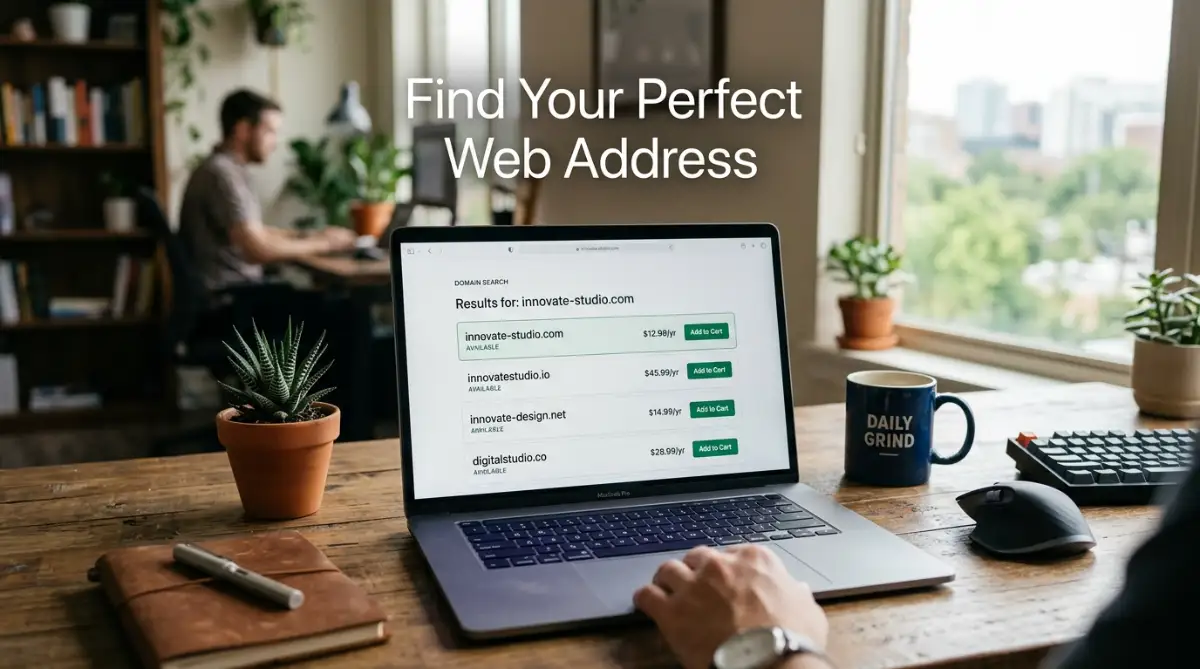
The Blueprint for Naming Your Personal Blog
Think of your website URL as the front door to your digital house. If the door is hidden, confusing, or hard to unlock, nobody will come inside.
To build a memorable personal brand, you need a name that sticks in the minds of your readers instantly. You do not need to spend thousands of dollars to buy a premium name. You just need a smart, logical approach.
Let us break down exactly how you can find a unique, professional, and available name right now.
Step 1: The 'Radio Test' Strategy
Imagine you are being interviewed on a highly popular podcast. The host asks you, "Where can our listeners find your amazing content?"
You say your website name out loud. Can the listeners open their phones and type it perfectly without you spelling it out? If the answer is no, your domain fails the Radio Test.
This is the most important rule of choosing a memorable domain name. Your URL must be incredibly easy to say, hear, and type.
Not sure if your name passes the test? Watch this short video to see exactly how to pick a domain that sticks in people's minds, then keep reading to learn how to protect your brand!
Real-Life Scenario:
Imagine a blogger named Alex. Alex loves baking, so he chooses the name Alexs-Sweet-Treatz.com.
When Alex says this on a podcast, the listeners get confused. Do they type the hyphen? Is "Treatz" spelled with an S or a Z? By the time they figure it out, they have already given up.
Instead, if Alex simply chose AlexBakes.com, the audience would find him in seconds. Keep it short, simple, and verbally clear. Avoid hyphens, avoid numbers, and avoid words with multiple complex spellings (like 'through' vs 'thru').
I once bought a domain name with two hyphens because the original version was taken, and it was a huge mistake. Every time I told a friend my website name, I had to spend a minute explaining exactly where the dashes went. My best advice from that mess is this: if you cannot say your URL out loud clearly in three seconds, keep looking.
Step 2: Future-Proofing Your Digital Identity
One of the biggest mistakes I see new bloggers make is boxing themselves into a tiny, specific corner. They pick a name that limits their future growth.
When you start your personal blog, you might want to write exclusively about living in a tiny house. So, you buy TinyHouseLivingDaily.com.
But what happens two years from now? What if you move into a regular home? What if you want to start writing about personal finance, travel, or minimalist lifestyle habits? Your domain name suddenly makes zero sense.
How to Stay Flexible:
You need a name that can grow alongside you. The smartest strategy for a personal blog is often just using your own name.
If your name is Sarah Jenkins, owning SarahJenkins.com gives you the ultimate freedom. Today you can write about food. Tomorrow you can write about technology. The brand is simply you.
If your actual name is taken, or it is too hard to spell, try adding simple modifier words.
- HelloSarah.com
- SarahWrites.com
- TheSarahProject.com
These names are highly brandable, professional, and they give you a wide open road to change your blog topics whenever you want.
Step 3: Mastering the Extension Game
The letters at the very end of your website address are called the Top Level Domain (TLD) or simply the "extension."
For years, people believed that if you did not have a dot-com, your website was completely worthless. That used to be true. However, the internet has changed massively.
Instead of giving you a boring chart, here is my honest, real-world take on modern domain extensions:
- The King (.com): If you can get it, buy it. People trust it without thinking twice.
- The Best Backup (.co): I love this one. It looks sleek, modern, and tech startups use it all the time.
- The Personal Touch (.me or .blog): These are perfectly fine for personal portfolios or hobby writing, but they can sometimes feel a bit less "business-ready."
- The Spam Magnets (.biz or .info): Do yourself a favor and skip these. They almost always look like junk mail to a normal reader.
Let's bust a quick myth:
So many beginners think Google will only rank a dot-com on the first page. That is a complete lie. Search engines care about the quality of your writing, not the letters at the end of your link. A highly helpful dot-co blog will crush a terrible dot-com any day of the week.
While dot-com is still the gold standard for human memory, do not panic if yours is taken. If you find the absolute perfect name but the dot-com is gone, grabbing the dot-co is a highly professional and modern alternative.
Watch Out for the "First Year" Trap
Domain registrars love to hook you with a cheap price, but the renewal fee can be a nasty surprise. Here is a quick reality check before you buy:
Step 4: The 'Social Harmony' Check
Before you pull out your credit card and buy that perfect URL, you must do a Social Harmony check.
Your personal blog does not exist in a vacuum. You will eventually want an Instagram page, a Pinterest board, a Twitter account, and a Facebook page to share your writing.
The Consistency Rule:
If your website is TheCreativeMind.com, but your Twitter handle is @CreativeMind99 and your Instagram is @OfficialCreativeMindBlog, your personal brand looks messy.
You want your readers to find you easily everywhere. Before you buy the URL, use a free username checking tool. These tools scan dozens of social media platforms at once to see if your exact name is available across the board.
If the exact social media handles are taken, do not panic. You can use standard prefixes across all platforms to keep things neat .
For example, you could use @ReadCreativeMind or @CreativeMindBlog uniformly on every single social platform. The key is total consistency.
Step 5: Avoiding Legal Nightmares
Imagine spending a full year writing amazing content. You finally start getting thousands of visitors. You apply for AdSense, and you are finally making money.
Then, you check your email and find a "Cease and Desist" letter from an angry lawyer.
This happens more often than you think. Sometimes, the URL you just bought actually contains a legally trademarked word owned by a massive corporation. Just because a domain is available to purchase does not mean you have the legal right to use it as a business name.
How to Protect Yourself:
You do not need to hire a lawyer to do a basic check. It is actually very simple .
If you live in the US, go to the USPTO (United States Patent and Trademark Office) website and use their free search database. Type in your proposed blog name. If you live elsewhere, check your local government trademark database, or the global WIPO database.
Look for active trademarks in the "media," "publishing," or "education" categories. If another blog or magazine is already operating under a similar registered name, back away immediately.
It is always better to spend an extra hour brainstorming a new name today than to face a massive legal headache twelve months from now.
Embrace the Brainstorming Process
Do not force the perfect name to appear magically in five minutes. Grab a physical pen and a piece of paper. Go sit in a park or a quiet coffee shop.
Write down words related to your passion, your style, and your personality. Mix them together. Read them out loud. Ask a trusted friend to spell them back to you .
Your perfect personal blog domain is out there waiting for you. By using the Radio Test, securing your social handles, and future-proofing your topics, you are already lightyears ahead of most beginner bloggers. You are building a rock-solid foundation for a beautiful digital home.
Next-Level Branding: Secrets of the Top Creators
Now that you understand the basic rules of naming your digital home, we need to look at what the top one percent of successful writers do differently. Picking an available web address is easy, but making it highly profitable requires a bit of strategic thinking.
You want a brand that readers instantly trust. Building this trust starts the exact second they see your URL in a Google search result. If your name looks spammy, they will scroll right past you without thinking twice.
Let us explore some highly practical, advanced strategies to ensure your new blog stands out as a premium brand.
The Psychology of Short Syllables
Human brains are naturally lazy when it comes to processing new information. We remember short, punchy sounds much better than long, complicated phrases.
Think about some of the most popular websites on the internet today. They almost always consist of two or three simple syllables. Words like Google, Twitter, Apple, and Facebook are incredibly easy for our brains to store and recall.
When you brainstorm your personal brand, count the syllables. If your proposed name is TheIncredibleAdventuresOfMarketing.com, you are forcing your reader to remember twelve different syllables. That is entirely too much work for a casual visitor.
Try to keep your entire URL under four syllables whenever possible. A shorter name naturally feels more authoritative and confident to the reader.
The Used Car Analogy: Checking Domain History
Many beginners think that when a web address shows up as "available," it means nobody has ever used it before. This is a massive misunderstanding.
Domains expire every single day. Someone might have owned your dream URL a few years ago, built a terrible spam website on it, and then let it expire. If you buy that exact name today, you are also inheriting all of its bad history .
Buying a web address without checking its past is exactly like buying a used car without checking the engine. It might look shiny on the outside, but it could completely break down when you try to drive it.
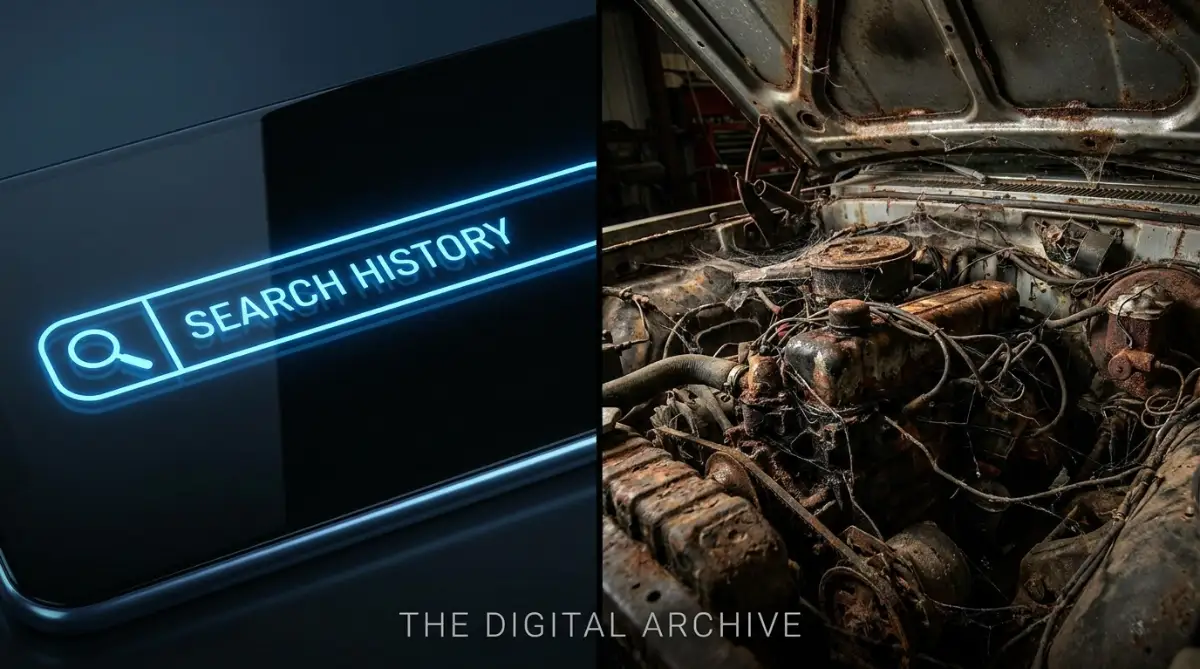
Before you buy anything, you must run a background check. You can easily do this by visiting free tools like The Internet Archive to see what the website looked like in the past.
If you see that the URL was previously used to sell sketchy pills or post stolen content, do not buy it. Search engines have long memories, and they will likely hide your new blog because of the previous owner's bad behavior.
Quick Q&A: Fixing a Bad Domain History
What if I already bought a domain with a spammy past?
Do not panic right away. Set up your site, connect it to Google Search Console, and submit a "Reconsideration Request." Tell Google you are the new owner. If the history is only mildly bad, they will usually clear the slate for you. But if it was heavily blacklisted for illegal stuff, cut your losses and buy a fresh name.
Visual Symmetry in Your Web Address
We often say our domain names out loud to see how they sound. However, we rarely write them down in all lowercase letters to see how they look visually.
This is a step you simply cannot skip. When people type your address into a browser, there are no spaces and no capital letters. The letters all smash together into one long string.
Sometimes, two perfectly innocent words combine to create a hidden, embarrassing word right in the middle. For example, a website named "IT Scrap" becomes itscrap.com, which looks highly unprofessional.
Write your ideas down on a piece of blank paper in all lowercase letters. Stare at them closely. Ask yourself if the letters flow smoothly or if they look messy and confusing.
Just as you might spend hours mastering AI image generation to build stunning visuals for your articles, you must apply that same level of creative attention to how your URL looks in print. Visual branding matters deeply.

Silent Naming Disasters You Must Avoid
Even smart, educated people fall into common traps when setting up their online presence. The internet is full of bad advice, and following it can cost you time, money, and your reputation.
We need to discuss the real-world pitfalls that ruin personal brands before they even launch. These are not just tiny errors; these are fundamental mistakes that can destroy your motivation.
Here are the specific scenarios you must watch out for as you finalize your decision.
The Hidden Fee Registrar Trap
You finally find a great name, and a hosting company offers to sell it to you for just 99 cents. You feel like you just won the lottery.
Fast forward twelve months. You get a renewal bill in your email, and they are suddenly charging you sixty dollars just to keep your own name. Because you did not read the fine print, you are now locked into an overpriced contract.
Reading a registrar agreement can feel exactly like understanding complex policies and hidden limits in your personal paperwork. It is confusing by design.
Always check the regular renewal price before you accept a massive discount on the first year. Stick to highly reputable registrars that offer transparent, flat-fee pricing every single year.
The Trademark Lawsuit Waiting to Happen
I mentioned legal issues briefly before, but we need to look at how innocent mistakes trigger massive legal threats.
Let us say you love Apple computers, so you name your tech blog TheAppleReviewer.com. You think it is harmless fan content. A massive corporate legal team sees it differently.
Using a registered trademark in your URL, even if you are just writing a personal diary, is incredibly dangerous. Companies are legally required to actively defend their trademarks, which means they will send you a takedown notice immediately.
To stay completely safe, always run your ideas through a free government database like the United States Patent and Trademark Office. A simple five-minute search can save you from losing all your hard work overnight.
The "Clever" Spelling Disaster
Sometimes, creators get highly frustrated when their real name is taken. To solve the problem, they start replacing letters with numbers or using weird slang spellings.
Replacing an 'S' with a 'Z' or using the number '4' instead of the word 'for' is a terrible strategy. When you try to tell people your address in normal conversation, you have to spend five minutes explaining the joke.
According to various business strategy experts, a confusing brand name directly reduces customer trust and lowers your overall market value. People trust things that look familiar and professional.
If your exact name is taken, simply add a professional modifier word like "blog," "writes," or "online." Never compromise on spelling just to secure a specific word.
The Local Limitation Trap
If you live in London, you might be tempted to buy a specific country extension like a dot-uk. Or you might put the word 'London' directly into your URL.
This works great if you are a local plumber. However, a personal blog is meant to be read by the entire world.
When a reader in Canada sees a highly localized domain name, they automatically assume the content is not meant for them. You accidentally cut off a massive portion of your potential global audience.
Unless you are exclusively writing about local events in a specific town, keep your branding completely location-independent. Give your ideas the space to reach a global audience naturally.
Your Step-by-Step Blueprint to Launch Today
However, all this knowledge is completely useless if you do not take action. You cannot edit a blank page, and you cannot build a successful website if you refuse to pick a name.
It is time to stop overthinking and start building. I have put together a highly actionable checklist to help you secure your perfect digital home within the next 48 hours.
Step 1: The Brain Dump Session
Grab a notebook and write down twenty different words related to your core topic, your personality, and your actual name. Do not judge these words yet; just get them out of your head and onto the paper.
Mix and match these words to create ten unique combinations. Keeping your creative process clean and organized is exactly like maintaining a simple science-backed morning routine—it greatly reduces your daily stress.
Step 2: The Ruthless Elimination
Take your top ten combinations and run them through our safety filters. Cross out anything that contains more than four syllables.
Cross out anything that uses hyphens, numbers, or strange spellings. Finally, cross out any names that fail the visual symmetry test when written in lowercase letters. You should now have a clean list of three to four extremely strong contenders.
Step 3: The Availability Check
Take your final list to a reputable, transparent domain registrar. Search for your names to see what is currently available.
If the dot-com is gone, strongly consider a dot-co or dot-me extension. Check the social media handles simultaneously. Once you find a winner that passes the trademark check, buy it immediately.
Do not wait for a week to think about it. Great names disappear every single hour.
A Final Word on Your New Digital Journey
I want you to remember something very important. Your domain name is just the starting line; it is not the actual race.
People will not fall in love with your website because of the letters in your URL. They will fall in love with your writing, your unique perspective, and the highly helpful solutions you provide them.
The best domain in the world cannot save a poorly written blog. Conversely, an average domain can become legendary if the content behind it is consistently amazing.
Pick a name that feels safe, professional, and clean. Then, put all of your energy into creating amazing things for your new audience.
You have a unique voice that the world desperately needs to hear. Secure your address today, set up your platform, and start sharing your knowledge with the people waiting for it.
Looking back, I realized that my blog grew because of my stories and help, not just a fancy web address. Don't let the fear of picking the "wrong" name stop you from sharing your voice with the world. Pick a name that feels good enough, hit that buy button, and start your journey today—you have something great to share!
Disclaimer: This article is strictly for informational and educational purposes only. Always consult with a licensed legal professional before making decisions regarding trademark law or intellectual property rights. We are not responsible for any financial or legal actions taken based on the information provided in this guide.