Why Getting a Work-From-Home Job Feels Impossible Right Now
You sent out 50 applications this week. You tweaked every cover letter. And what did you get? Total silence. Or worse, another generic "unfortunately, we moved forward with another candidate" email. Finding a remote job feels like a rigged game right now, but the truth is, you are probably just making a few invisible mistakes that instantly kick your resume into the digital trash. Let's fix that today.
You might be feeling this exact same frustration right now. Everyday people are fighting tooth and nail to secure a reliable online income, only to meet a wall of silence. You spend hours tweaking your cover letter and filling out long forms. Yet, all you get in return is a generic automated email saying they chose another candidate.
Is the system rigged against ordinary people? Why do some individuals land high-paying online gigs effortlessly while others send out hundreds of resumes with zero luck? The truth is, most hard-working people are unknowingly trapping themselves. They are making tiny, invisible errors in their approach that instantly disqualify them.
Let us look at a quick real-life scenario to understand this better. Imagine a highly skilled graphic designer named Sarah. She applies to fifty remote companies in one month using the same resume she used for her local office jobs. She gets zero calls. Sarah is not a bad designer, but her application completely failed to speak the specific language of remote employers.
Your Remote Job Cheat Sheet:
- Stop clicking "Easy Apply" on job boards—it is a trap that buries your resume under thousands of others.
- Strip all the fancy graphics and weird fonts off your resume so the hiring software can actually read it.
- Prove you can work alone by highlighting tools like Slack, Trello, and Zoom in your application.
- Create a "Proof of Work" portfolio (like a mock project) to show them your skills instead of just asking for a chance.
The Hidden Rules of Getting Hired Online Today
To fix this exhausting problem, we need to completely change how we view the online job market. Applying for a position on the internet is very different from walking into a local business and handing over a paper resume. We are going to explore some highly practical steps you can take right now to turn those rejections into job offers.
Stop Playing the "Easy Apply" Lottery
One of the biggest traps on the internet is the tempting little button that says "Easy Apply." You see a great job posting, click the button, and boom, your application is sent. It feels incredibly productive to send out forty applications before lunch. But this strategy is actually destroying your chances of getting hired.
When a job is easy to apply for, thousands of other people are doing the exact same thing. Hiring managers are suddenly buried under a mountain of low-effort applications. They do not have the time to read through five thousand resumes. Instead, they use software to filter out anyone who did not take the time to customize their application.
Why Your Resume Fails the Invisible Robot Test
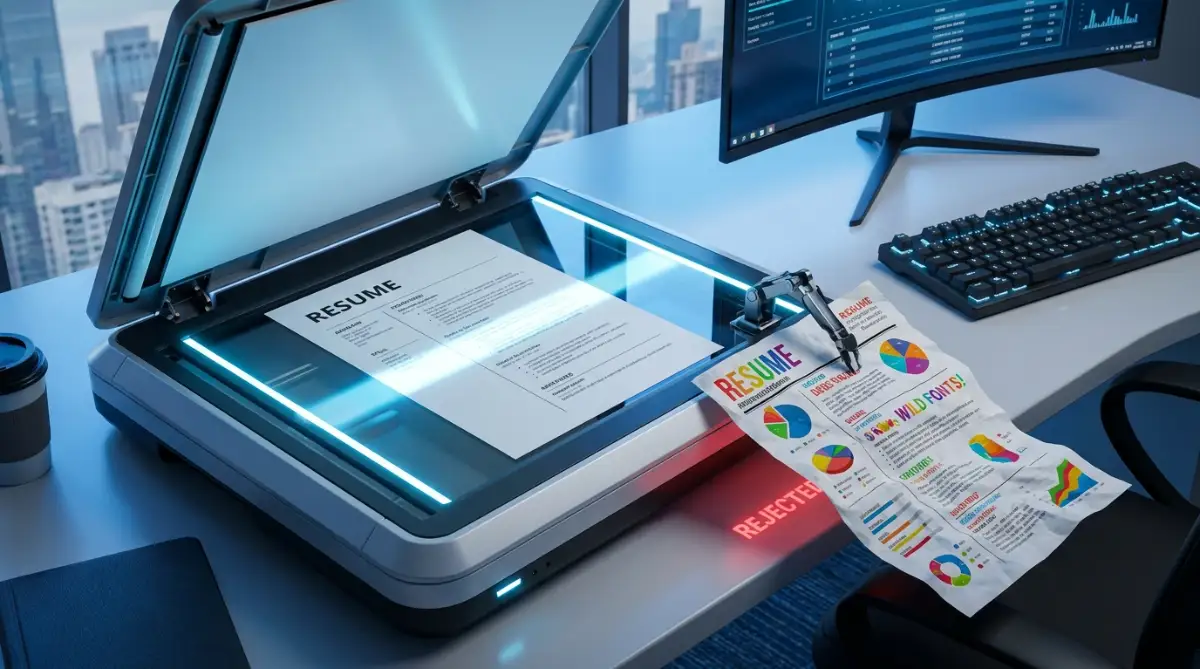
Almost every modern company uses an Applicant Tracking System, also known as an ATS. This software acts like a robot bouncer at the door of the company. If your resume does not have the exact keywords the robot is looking for, a human being will never even see your name. You get an automatic rejection email while the hiring manager sleeps.
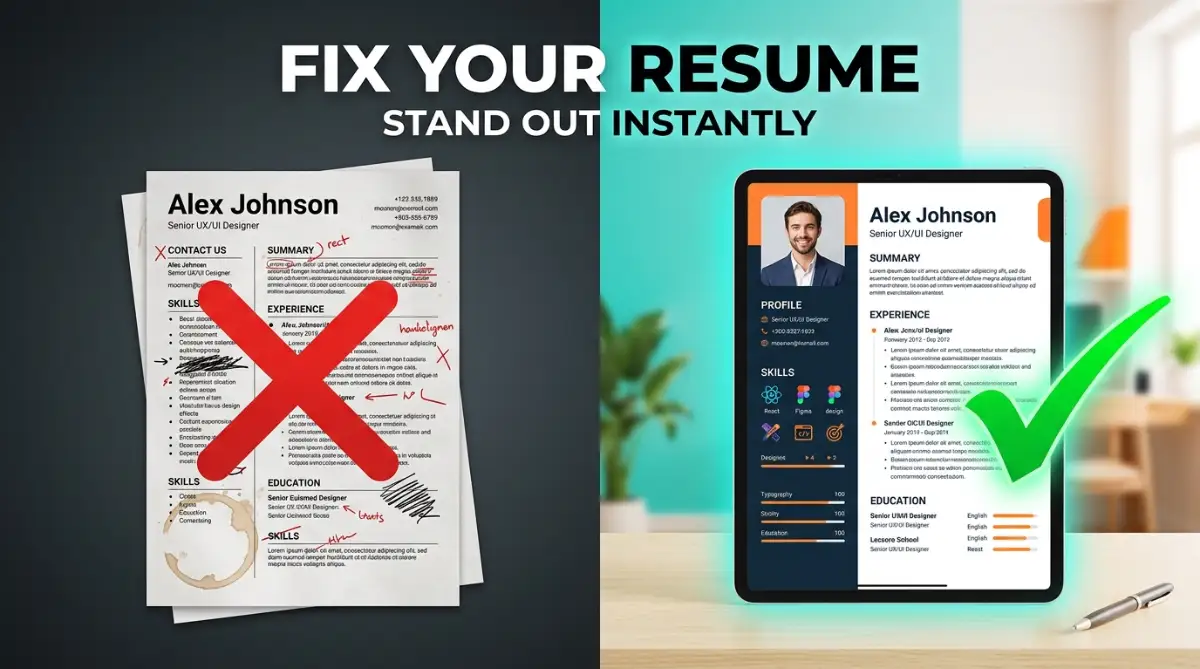
Many people make the mistake of using fancy graphics, unusual fonts, and complex columns on their resumes. They think making it look pretty will help them stand out. However, the ATS robot cannot read complex graphics or weird layouts. It gets confused, scrambles your information, and instantly throws your application in the digital trash.
A Simple Fix for ATS Success
You need to strip away the complex designs and focus entirely on plain text and clear formatting. Use standard headings like "Work Experience" and "Education" so the software knows exactly where to look. Read the job description carefully and pick out the specific words they use. If they ask for a "Customer Support Specialist," do not call yourself a "Client Happiness Guru" on your resume.
Quick ATS Fix: How to Format Your Job Titles
| What You Wrote (Fails the Robot Test) | What The Robot Actually Wants |
| :--- | :--- |
| Code Ninja | Junior Front-End Developer |
| Client Success Wizard | Customer Service Representative |
| Content Storyteller | SEO Content Writer |
| Data Rock Star | Data Analyst |
Myth vs. Reality in Remote Hiring
- The Myth: Remote companies only care about your technical skills and past experience.
- The Reality: Remote companies care deeply about your ability to manage yourself without a boss looking over your shoulder.
This brings us to another massive error people make. They completely forget to highlight their remote-specific skills. Working from your living room requires a completely different mindset than working in an office building. Employers are terrified of hiring someone who will disappear for hours or fail to communicate effectively online.
Highlighting Your Ability to Work Alone
You must prove to the employer that you are a highly organized self-starter. Have you ever managed a project by yourself? Have you used tools like Slack, Zoom, Trello, or Asana? These are not just random software programs. They are the essential tools of the online working world.
If you have experience working with teams across different time zones, put that front and center. Show them that you know how to write clear, detailed emails that prevent confusion. In an office, you can just tap someone on the shoulder to ask a quick question. On the internet, clear writing is your most valuable asset.
My personal realization completely changed my job hunt forever. I used to write long, boring paragraphs describing my daily tasks at my old jobs. I suddenly realized that no recruiter has the time to read a novel about my past. I switched to using short, punchy bullet points that focused entirely on the results I achieved, and my interview requests tripled overnight.
The Power of Asynchronous Communication
You will often hear the term "asynchronous communication" in the online job world. This simply means communicating without expecting an instant reply. Because teams are spread all over the globe, someone might send you a message while you are sleeping. You need to show employers that you understand this concept perfectly.
Instead of saying "great communication skills" on your application, be highly specific. Write something like, "Skilled at detailed asynchronous communication to keep global projects moving smoothly." This specific language signals to the hiring manager that you truly understand their daily workflow. You instantly look like an insider rather than a confused beginner.
Stop Writing Generic Cover Letters
Most job seekers treat the cover letter as an annoying chore. They copy and paste a template from the internet, change the company name, and hit send. Hiring managers can spot a copied template from a mile away. It tells them that you do not actually care about their specific company.
Here is exactly why this matters and how to completely fix your application strategy today. Check out this incredibly helpful video that breaks down the psychology of a remote hiring manager.
A strong cover letter should not just repeat what is already on your resume. It should tell a short, engaging story about why you connect with the company's specific mission. Take five minutes to look at the company website. Find out what their main goal or product is, and mention it in your very first sentence.
For example, if you are applying to a health and wellness app, do not just say you want a job. Say something like, "As someone whose life was changed by daily meditation, I deeply connect with your mission to bring mental wellness to the masses." This makes you memorable. It shows you actually did your homework and genuinely want to be there.
Your Digital Footprint is Working Against You
When you apply for a normal job, the boss might casually look you up on social media. When you apply for a remote job, the internet is all they have. Your digital footprint is basically your entire identity. If a recruiter searches your name and finds highly unprofessional content, you will be rejected immediately.
Even worse is having no professional digital presence at all. If you are applying to work on the internet, you need to exist on the internet. Your LinkedIn profile should be fully updated, complete with a clear, friendly profile picture. It should match the dates and facts listed on the resume you submitted.
Make sure your profile clearly states that you are open to remote work. Ask former colleagues or clients to leave a short recommendation on your profile. These digital reviews act as powerful social proof. They tell a nervous hiring manager that other people trust you to do good work from a distance.
The Danger of Looking Desperate
When you have been searching for a long time, desperation can slowly creep into your communication. You might start sending multiple follow-up emails asking why they have not responded. You might write things like, "I really need this job to pay my bills." While this is a very real human struggle, it makes employers extremely uncomfortable.
Companies want to hire people who bring value and solutions to their business. They do not want to hire someone out of pity. Always keep your communication highly professional, confident, and focused on how you can help them succeed. If they ghost you, send one polite follow-up email after a week, and then move on.
Failing to Prepare Your Physical Environment

Let us say your resume works, your cover letter is great, and you finally score a video interview. This is where so many talented people drop the ball completely. They treat a video call like a casual chat with a friend. They sit on a messy bed, use terrible lighting, and have loud background noises echoing in the microphone.
Your video background is your new professional office. If your background is a disaster, the employer will assume your work habits are a disaster too. You do not need a fancy studio to impress them. You just need a blank wall, a quiet room, and a window facing you to light up your face.
Test your internet connection, your microphone, and your camera an hour before the call starts. Technical difficulties happen to everyone, but being completely unprepared shows a lack of respect for the interviewer's time. Looking directly into the camera lens, rather than at the screen, makes the interviewer feel like you are making real eye contact with them.
Mastering the Hidden Remote Job Market
If you want to truly stand out from the thousands of other applicants, you need to stop doing what everyone else is doing. Following the traditional path of sending a standard resume and waiting by the phone simply does not work anymore. You must start thinking like an online entrepreneur who is pitching their services to a high-value client.
This mindset shift completely changes how you approach your daily job hunt. When you view yourself as a valuable asset rather than a desperate applicant, your confidence naturally shines through your emails. Employers can easily sense this quiet confidence, and it makes them deeply curious about what you bring to the table. Let us explore some advanced strategies that top earners use to secure incredible remote positions.
Build a "Proof of Work" Portfolio
Most people try to tell employers how good they are by listing adjectives on a piece of paper. Instead of telling them, you need to actually show them your skills in real time. Creating a "Proof of Work" portfolio is the single best way to prove you can handle the job without needing hand-holding.
For example, if you are applying for a social media manager position, do not just send a resume. Create a mock one-month content calendar specifically tailored for their brand. If you want a job writing articles, you can easily get paid to write without experience by publishing your own samples on free platforms. When you send an employer actual work you did just for them, you immediately bypass the entire traditional hiring line.
The Secret Power of Niche Slack Communities
Many of the best online jobs are never actually posted on public job boards. They are shared quietly inside private communities and professional networking groups. Finding these hidden communities is like discovering a secret backdoor to your dream career.
Start looking for free Slack or Discord groups related to your specific industry. Introduce yourself politely, answer questions from other members, and become a helpful presence. When a founder or manager inside that group needs to hire someone, they will naturally think of the helpful person they see chatting every day.
My Top 3 Secret Places to Find Hidden Remote Jobs:
- Remotive Slack Community: A massive group where actual startup founders hang out.
- Superpath: The absolute best Slack group if you are looking for content, SEO, or marketing roles.
- Tech Ladies: A brilliant community (with an exclusive job board) specifically for women in tech.
Mastering the Art of the Video Pitch
Text-based cover letters are often boring and lack human emotion. If you want to make a massive impression, try sending a short video pitch using a tool like Loom. Keep it under two minutes and speak directly to the founder or hiring manager.
In this short video, introduce yourself, mention something specific you love about their company, and explain one problem you can solve for them. According to research on remote communication trends by Harvard Business Review, video messages create immediate trust and showcase your personality. It proves you have a good camera setup, clear communication skills, and the bravery to do something totally different.
Treat Your Application Like a Sales Pitch
Every time you send an email to a company, you are essentially selling your own time and skills. You need to understand exactly how their business makes money so you can explain how you will help them make more. Having a basic grasp of online sales, or understanding the business model of their specific industry, gives you a massive advantage.
If a company sells software, mention how your organizational skills will help their support team respond to customers faster. Always tie your daily tasks back to their main goal of growing the business. This shows a level of maturity that most average applicants completely lack.
Creating Your Own Digital Real Estate
Having your own personal website acts as your permanent digital headquarters. It does not need to be complicated or expensive at all. A simple one-page site with your photo, your best projects, and a way to contact you is incredibly effective.
If you want to go a step further, creating helpful videos about your industry is amazing for building authority. You can easily follow a step-by-step guide to start sharing your knowledge online. When an employer searches your name and finds a professional website or helpful content, they instantly view you as a top-tier expert.

The Fatal Errors Destroying Your Remote Career Dreams
While it is highly important to know what to do, it is equally important to know what completely destroys your chances. Many smart, capable people unknowingly self-sabotage their applications every single day. They make small but deadly errors that instantly throw them into the rejection pile.
The worst part is that these mistakes often stem from good intentions. You might think you are showing enthusiasm, but the employer sees it as a massive red flag. Let us walk through the most common traps people fall into so you can protect your peace of mind and your future income.
The "Mass Applying" Burnout Trap
We touched on this briefly before, but the emotional damage of mass applying cannot be overstated. When you use the "spray and pray" method of sending out fifty generic resumes a day, you are guaranteeing rejection. Each rejection email chips away at your self-esteem until you feel completely worthless.
This approach also makes your applications incredibly sloppy. You forget to change the company name in your cover letter, or you attach the wrong file entirely. Taking the time to send three highly personalized applications a week will yield much better results than sending one hundred generic ones. Always prioritize total quality over meaningless quantity.
Failing the Time Zone Test
Remote work means you could be collaborating with people in London, Tokyo, and New York all on the same day. Employers need to know you are hyper-aware of these time differences. A classic mistake is suggesting an interview time without specifying your time zone.
If you just say, "Let us meet at 2 PM," the recruiter has to waste an email asking which time zone you mean. This instantly tells them you are not used to working globally. Always use specific terms like "2 PM Eastern Standard Time" in every single piece of correspondence.
Giving Off the "Vacation Vibe"
Working from home offers amazing freedom, but it is still a serious professional commitment. Many applicants accidentally give the impression that they just want a remote job to travel the world and relax on a beach. Never mention your desire to work from a hammock in your cover letter.
Companies want reliable adults who will sit down and get the heavy lifting done. If they feel like you view their job as a side hobby to fund your travels, they will run away fast. Focus entirely on the professional value you bring to their team, not the personal lifestyle perks you want to enjoy.
Completely Ignoring Company Culture
Every online company has a unique culture and set of values. Some teams are highly formal and use strict reporting methods, while others communicate entirely through funny memes in Slack. A major pitfall is communicating in a way that totally clashes with their daily vibe.
Take a close look at their website and social media pages before you reach out. Do they use lots of emojis and casual language? If so, match that friendly energy in your cover letter. A comprehensive study on workplace culture by Gallup shows that hiring managers subconsciously favor candidates who sound like they already belong to the team.
Overlooking Basic Technical Requirements
You would be amazed at how many people apply for remote technical support roles without knowing basic computer troubleshooting. If a job asks for experience with Google Workspace, do not just assume you can figure it out later. Employers test these skills during the interview process, and freezing up looks terrible.
Take a weekend to watch free tutorials on the software programs they mention in the job description. Being able to confidently say you are familiar with their specific tech stack removes a massive layer of doubt for the employer. Always stay updated by exploring the latest digital resources related to your specific field.
Sounding Desperate in Follow-Up Emails
Waiting for an answer after a great interview is pure torture. The silence can make your mind race with anxiety, leading you to send multiple follow-up emails. "Checking in again," or "Just wondering if you made a decision," sounds incredibly needy and unprofessional.
Remember that hiring takes a long time, and the recruiter is likely juggling a dozen other tasks. Send one polite, concise follow-up email exactly one week after your interview. If you still do not hear back, accept the loss gracefully and move your energy to the next great opportunity.
Your Roadmap to Getting Hired This Month
Landing a remote job does not require a magic spell or secret connections. It simply requires a very intentional, highly customized approach to every single application. You now have the exact playbook needed to bypass the automated filters and connect directly with human decision-makers.
Start by cleaning up your digital presence today. Remove any unprofessional public posts and update your professional profiles to clearly state your remote skills. Next, stop using the easy apply buttons completely. Make a list of ten dream companies and study their websites deeply before you ever send an email.
Start building your small "Proof of Work" projects for those specific companies. When you reach out, lead with the value you bring and the specific problems you can solve for them. Show them your clear communication skills, your organized home office setup, and your deep understanding of asynchronous teamwork.
I know exactly how draining this process feels because I was stuck in that same endless loop of rejection for months. But the moment I stopped sending generic resumes and started treating my applications like highly targeted personal pitches, everything changed. You have the skills and the drive to make this happen; now you just need to apply this focused strategy and watch the interview requests roll in.
Answers to Your Most Pressing Remote Work Questions
Do I need special software skills to work from home?
You do not need to be a coding genius, but you must master basic remote collaboration tools. Being highly comfortable with communication apps like Slack, project management boards like Trello, and video software like Zoom is expected. If you can navigate these basic programs smoothly, you are already ahead of many applicants.
How do I know if an online job is a scam?
Always trust your gut feeling when a job offer seems way too good to be true. Legitimate companies will never ask you to pay for your own background check or buy expensive equipment from their specific vendor. If communication happens entirely through text messages or they refuse to get on a video call, block them immediately.
Can I get a remote job with no prior experience?
Yes, you absolutely can find remote work without previous experience if you focus on entry-level positions like virtual assistance or basic customer support. You must prove your reliability by creating a strong portfolio of sample work. Highlight your ability to learn quickly and manage your own daily schedule without supervision.
What is the best way to follow up after a virtual interview?
The best approach is to send a short, polite email within twenty-four hours thanking them for their time. Mention one specific, interesting topic you discussed during the call to show you were actively listening. After that, wait patiently for their promised timeline without sending any more messages.
Are remote jobs highly competitive right now?
They are definitely more competitive because you are competing with talented people from all over the world, not just your local town. However, a massive portion of those applicants send terrible, low-effort resumes. If you customize your pitch and follow the detailed steps in this guide, you easily rise to the top ten percent of candidates.
Disclaimer: This article is for informational and educational purposes only. The strategies discussed do not guarantee job placement or financial success. Always conduct your own thorough research before applying for online positions or sharing your personal information with prospective employers.
THANK YOU