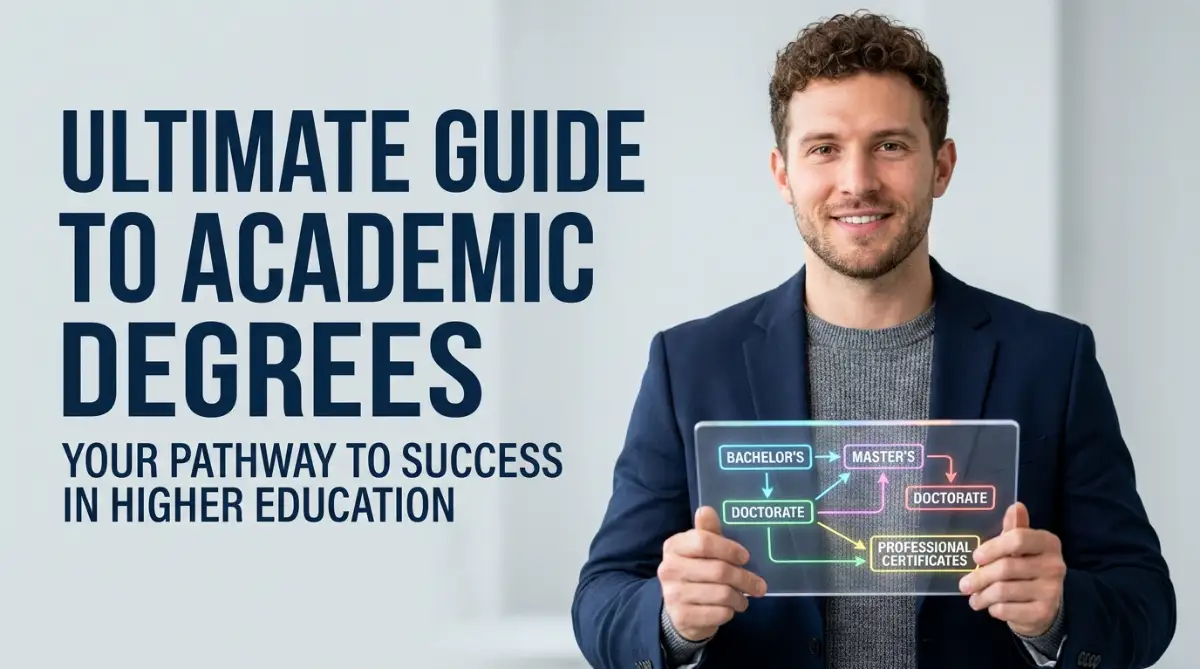
The Heavy Burden of College Choices: Are You Feeling Lost?
You are sitting there staring at a shiny college acceptance letter, but instead of celebrating, you are doing the math. Does taking on a mountain of student loans right out of high school actually make sense anymore? I used to think a traditional four-year university was the only way to succeed, until I saw friends drowning in loans before they even got their first job. Let's talk about a smarter, faster way to build your career without completely emptying your bank account.
Choosing the right educational path can feel like walking through a dense fog with a heavy backpack. You finish high school, or perhaps you decide it is time for a career change, and suddenly everyone is expecting you to have your entire life figured out. Society pushes a single narrative: go to a giant state university, spend four years studying, and figure out the bill later.
But what if you are not ready for that kind of massive commitment? Many smart, capable people find themselves paralyzed by the thought of borrowing huge sums of money just to get started.
You want a good career, but the idea of being trapped in debt before you even get your first paycheck is terrifying.
Why finding the right educational path feels so impossible:
- The Traditional College Myth: Most of us are taught that a four-year university is the only path to a respectable career. This outdated advice completely ignores modern job market realities.
- Fear of Hidden Costs: When you look at university brochures, they rarely highlight the real cost of living, textbooks, and hidden fees. This lack of transparency leaves families guessing and stressing.
- Information Overload: A simple web search about college options will drown you in conflicting advice. Counselors often push expensive universities simply because it looks good for their high school rankings.
- The Pressure of Time: You feel a ticking clock to make a decision immediately. Rushing this choice often leads to picking the wrong major, dropping out, or wasting thousands of dollars.
How this pressure quietly destroys your peace of mind:
- Sleepless Nights: You lie awake worrying about your future, calculating tuition costs in your head, and wondering if you will ever be able to buy a house or travel.
- The Comparison Game: Scrolling through social media, you see friends moving into fancy university dorms. You secretly feel inadequate, even though you know going into debt is a bad idea.
- Analysis Paralysis: The fear of making the wrong choice causes you to make no choice at all. You end up stuck in a dead-end job, feeling like your true potential is wasting away.
- Loss of Confidence: When everyone around you seems to have a clear plan, your self-esteem takes a massive hit. You start doubting your intelligence and your ability to succeed in life.
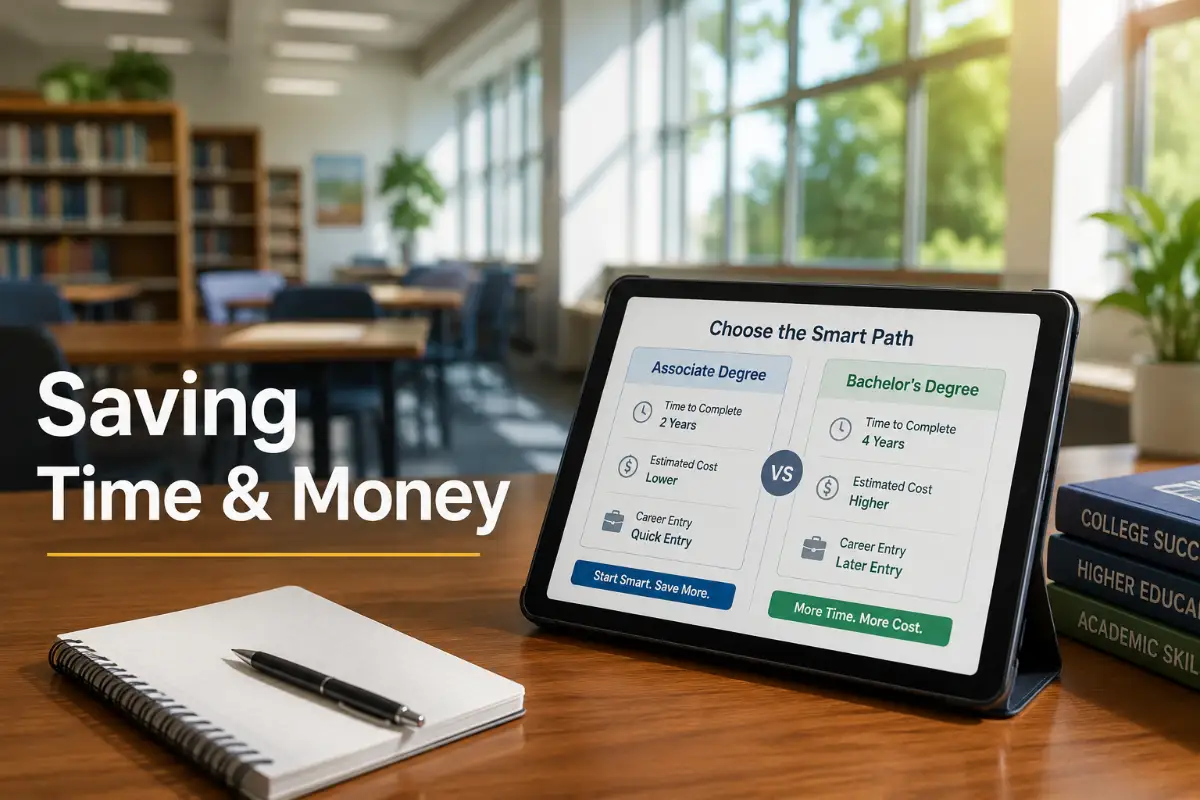
Before You Read Further, Here is Your Quick Survival Guide:
I know you are busy, so if you are just skimming, here are the core ideas you need to take away from this post:
- Skip the Debt Trap: Two-year programs get you ready for high-paying jobs in tech and healthcare fast, without the heavy loans hanging over your head.
- The 2+2 Masterplan: You can pay dirt-cheap prices at a community college, transfer the credits, and still get that fancy university bachelor's degree at the very end.
- Skills Win The Day: Today's bosses care about what you can actually do and your hands-on experience, not just the brand name on your diploma.
- Quick Wins Keep You Going: Shorter degrees mean you finish faster, feel good about yourself, and start earning a real paycheck sooner.
Let's Look At Your Real Options (Without The Fluff
Let me take a wild guess. You are reading this because you want a better life, but you want to make a smart, logical choice. You do not want to spend the next decade paying off educational debt.
This is exactly where an associate degree becomes your secret weapon. It is one of the most misunderstood educational paths available today. Many people think it is just a "lesser" version of a university education. That could not be further from the truth.
Step 1: Understanding the DNA of an Associate Degree
Think of an associate degree as the strong foundation of a house. You cannot build a massive mansion without a solid concrete base. An associate degree provides that exact base for your career or your future education.
Typically, an associate degree is an undergraduate program that takes about two years to complete if you study full-time. These programs are mostly offered at community colleges, technical schools, and some traditional universities. Unlike a bachelor's program that forces you to take dozens of unrelated elective classes, these two-year programs are highly focused.
Quick Reality Check: The Cost Difference
Sometimes you just need to see the numbers side-by-side to get the full picture. Here is what you are actually paying for a year of learning:
- Public Two-Year College: ~$3,800 per year (Stay at home, work part-time, zero debt).
- Public Four-Year University: ~$10,900 per year (Plus dorm costs, meal plans, and hidden fees).
- Private Four-Year University: ~$39,400 per year (Hello, massive student loans).
- The math speaks for itself. Why pay triple for the exact same freshman English class?
You generally need around 60 college credits to graduate. Half of these credits will be general education, like basic math and English. The other half will focus entirely on your specific major or career choice.
Myth vs. Reality: The Two-Year College Stigma
The Myth: Getting a two-year degree means you could not get accepted into a "real" university.
The Reality: Choosing a two-year program is a calculated financial and strategic decision. Many high achievers intentionally choose this route to save money and enter the workforce faster.
Let me share a real-life scenario. Imagine two friends, Alex and Ben. Alex goes straight to a private four-year university to study computer science. Ben goes to a local community college for an associate degree in web development.
Two years later, Alex is halfway done with his studies and owes thousands in loans. Ben graduates, lands a junior developer job, and starts earning a full-time salary. Ben can now pay for the rest of his education out of pocket, completely debt-free.
Step 2: The 2+2 Transfer System Explained
One of the smartest ways to use this educational path is something called the "2+2 transfer method." This is a highly practical strategy that millions of students use to beat the expensive education system.
Here is how it works in plain English. You spend your first two years at a local community college earning your associate degree. You pay community college tuition prices, which are deeply discounted compared to universities.
Once you graduate, you transfer those 60 credits directly to a major four-year university. You then complete your final two years there. When you walk across the stage at graduation, your final bachelor's diploma looks exactly the same as the students who spent all four years there.
Expert Insight on Transferring Credits
Always talk to an academic advisor before you register for your first class. You want to make sure your specific community college has an Articulation Agreement with your target university. This agreement is a legal contract guaranteeing that the university will accept your credits without any hassle.
Why is this step so important? Because if you take the wrong classes, your credits might not transfer. You want every single dollar and hour of studying to count toward your final goal.
I actually learned this lesson the hard way when I lost an entire semester of credits just because I trusted a random online forum instead of an actual advisor. My biggest piece of advice is to always get your transfer plan in writing from both schools before you pay a single dime. That one simple piece of paper is your golden ticket to graduating on time and keeping your bank account safe.
Step 3: Identifying If This Is The Right Choice For You
Not everyone needs a master's degree or even a bachelor's degree to find happiness and financial security. You need to look deeply at your own goals, your budget, and your learning style.
An associate program is highly practical for specific types of people. Let us look at a few common profiles to see if you fit into one of these categories.
The Budget-Conscious Learner:
If the idea of owing thousands of dollars makes you physically sick, a two-year college is your safest bet. You can often pay for classes out of pocket by working a part-time job. Many students even live at home during this time, completely eliminating expensive dorm room fees.
The Undecided Explorer:
At 18 years old, very few people actually know what they want to do for the rest of their lives. If you are unsure of your career path, paying top dollar at a major university is a terrible idea. A community college allows you to explore different subjects, like business, healthcare, or technology, without draining your bank account.
The Adult Career Switcher:
Maybe you have been working in retail or food service for five years, and you are exhausted. You want a professional office job or a healthcare career, but you cannot afford to quit working for four years. Two-year programs offer incredibly flexible schedules. You can take evening or online classes while keeping your day job.

Stop Believing These College Lies (Myth vs. Fact)
I hear the same rumors over and over again. Let's clear the air right now before we move forward:
- Myth: You will only make minimum wage with a 2-year degree.
- Fact: Many tech and medical associate degree jobs start at $50k to $70k a year right out of the gate.
- Myth: Community college classes are easier and hold no real value.
- Fact: The core math and science classes follow the exact same curriculum as a big university. You are just paying a fraction of the price for them.
Step 4: Exploring High-Paying Associate Degree Careers
There is a massive misconception that you cannot make good money without a four-year university diploma. The modern job market simply does not operate like that anymore. Employers care about your specific skills, your work ethic, and your ability to solve problems.
There are entire industries desperate for skilled workers who only require two years of training. These are not minimum-wage jobs. These are highly respected, well-paying careers with excellent benefits and room for growth.
Real-Life Career Examples You Can Start Quickly
Healthcare Heroes:
Think about becoming a Dental Hygienist or a Registered Nurse (RN). Both of these fields often only require a two-year nursing or dental program to get started.
You can enter the medical field, earn a fantastic living, and help people every single day. The demand for healthcare workers is massive, meaning you will have incredible job security.
Technology Professionals:
You do not need to spend four years in a classroom to learn how to code or manage computer networks. An associate degree in Information Technology (IT) or Cybersecurity can get you an entry-level help desk or junior analyst position.
Once you are in the door, tech companies care far more about your actual performance than your educational background.
Legal and Business Support:
If you love research and organizing information, becoming a Paralegal is an amazing choice. Paralegals help lawyers prepare for trials and draft important documents.
A two-year program gets you into a professional law firm environment quickly. From there, you can build a highly lucrative career based entirely on your experience.
Step 5: The Psychological Benefits of Shorter Goals
We need to talk about human psychology for a moment. Committing to a four-year journey can feel like staring up at a huge, impossible mountain. It is very easy to lose motivation when the finish line is so far away.
An associate degree is incredibly powerful because it cuts that timeline in half. You get to experience the feeling of graduation and accomplishment much sooner. This creates a massive boost in your personal confidence.
When you break your massive life goals into smaller, two-year chunks, everything feels more manageable. You study hard, earn your first diploma, and then you get to pause and evaluate. You can ask yourself, "Do I want to keep studying, or do I want to start working?"
Taking Your Associate Degree to the Next Level: Insider Strategies
Now that you understand the basic mechanics of a two-year program, we need to talk about maximizing its value. Simply showing up to class and passing your exams is no longer enough to guarantee a great career. You need a strategic plan to squeeze every ounce of value out of your education.
Most students treat community college like a waiting room for the rest of their lives. They go to class, pack up their bags, and drive straight home. If you adopt this mindset, you are leaving huge opportunities on the table.
Let us explore some highly practical strategies that top-performing students use to get ahead. These are the secrets that academic advisors rarely have time to explain in detail.
Treat Every Class Like a Corporate Networking Event
Your professors at two-year institutions are often working professionals in their respective fields. Unlike giant universities where classes have three hundred students, your classes will likely have twenty or thirty people. This gives you a massive advantage.
You have direct access to experts who have deep connections in the local job market. Introduce yourself to your instructors on the very first day. Ask them intelligent questions about their career path and ask for their advice on your own goals.
Real-Life Scenario:
Consider a student named Mark who was studying graphic design. Instead of just turning in his homework, he asked his professor for extra feedback during office hours. When a local marketing agency called the professor looking for a junior designer, Mark was the very first person recommended for the job.
Secure Internships Before You Graduate
Do not wait until you have a diploma in your hand to start looking for professional experience. Employers care about what you can actually do in the real world. A degree gets your resume looked at, but hands-on experience gets you hired.
Insider Tip: The "Reverse Search" Trick
Do not guess what employers want. Go on LinkedIn right now and search for the exact job title you want in two years (like "Junior Cybersecurity Analyst" or "Dental Assistant"). Look at the profiles of people hired in the last six months. You will notice a pattern: most of them list specific certifications or software skills rather than a fancy university name. Spend your time at community college getting those exact certifications.
According to resources like the Bureau of Labor Statistics, gaining early work experience significantly increases your starting salary. Many two-year colleges have dedicated career centers that partner with local businesses. Walk into that office during your first semester and ask about paid internships in your field.
If you cannot find a formal internship, offer to do small freelance projects for local businesses. This builds your portfolio and proves your work ethic to future employers.

The Financial Balancing Act of Student Life
One of the biggest benefits of this educational path is avoiding massive student debt. However, you still need to manage your daily living expenses, textbooks, and transportation costs. This is the perfect time to build a strong financial foundation.
Many young adults make the mistake of taking out private loans for living expenses just because they are offered. Instead, learn how to manage a basic budget using a part-time income.
If you need to borrow money or use credit cards for emergencies, make sure you understand how it affects your future.
Learning the exact steps to improving your credit score fast will save you thousands of dollars in interest rates later in life. A strong credit history makes it much easier to rent an apartment or buy a reliable car after graduation.
Navigating Student Health and Personal Wellbeing
Big universities usually have massive medical centers on campus for their students. Community colleges often operate entirely differently, leaving students responsible for their own medical care. Ignoring your physical and mental health while studying is a recipe for complete burnout.
If you are no longer covered by your family insurance, you need to find an affordable medical plan immediately. Medical emergencies can completely derail your educational goals if you are hit with unexpected bills. Take a weekend to thoroughly research your options and master your health policy so you know exactly what is covered.
When you feel physically healthy and financially secure, your brain can fully focus on learning complex new subjects.

Costly Missteps: What Most Students Get Wrong
Before we look at the specific traps that trip up so many smart students, watch this quick video below to see real stories of people who made these exact college mistakes. It is going to save you a ton of money and headaches, so check it out and then keep reading to protect your own journey!
Even though an associate degree is a highly efficient path, there are still hidden traps along the way. Many smart people make completely avoidable errors that cost them extra time and money. We need to identify these pitfalls so you can walk confidently in the other direction.
Instead of a boring list of rules, let us look at the exact scenarios where students typically fail. Understanding these traps will keep you perfectly on track for graduation.
The "Any Credit Will Do" Trap
This is perhaps the most dangerous mistake a transfer student can make. Just because you earned a passing grade in a class does not mean a major university will accept it. Many students waste an entire semester taking fun elective courses that hold zero transfer value.
Do This: Sit down with a transfer counselor and create a legally binding "transfer map."
Not That: Never register for classes blindly just because they fit nicely into your Tuesday morning schedule.
Always verify your courses through official channels like the Federal Student Aid guidelines or your specific state's education portal. Every credit you take should serve a specific purpose for your final goal.
Ignoring Your Digital Security on Campus
College students are prime targets for identity theft and financial scams. You will be logging into public campus computers, using shared Wi-Fi networks in the library, and handling sensitive financial aid documents online. Too many students use the same simple password for their student portal and their bank accounts.
If a hacker gains access to your student email, they can redirect your financial aid refunds or steal your personal identity. Treat your educational accounts with the highest level of security possible. Taking basic steps to keep your digital assets safe is absolutely mandatory in modern education.
Always use two-factor authentication for your school accounts and avoid checking your bank balance on public library computers.
Skipping the Core Requirements Early On
Some students try to take all their exciting major-specific classes during their first year. They leave the difficult math and science requirements for their very last semester. This is a massive strategic error that causes enormous stress.
If you happen to fail that difficult math class in your final month, your graduation will be delayed. This delay can cause you to miss out on job offers or university transfer deadlines. Get your hardest, most intimidating classes out of the way immediately.
Completing the difficult subjects first gives you a massive confidence boost. It makes the rest of your degree feel like a smooth downhill ride.
Rapid Fire Questions From Real Students
When making a big life choice, it is normal to have lingering doubts in the back of your mind. Let us clear up some of the most common worries people have before enrolling in a two-year program.
Q: Will employers throw away my resume if I went to a community college?
A: Honestly, no. Most hiring managers do not care about the prestige of your school anymore. They care if you can do the job and solve their problems. Big companies are hiring based on your actual skills, not your school's brand name.
Q: What if I change my mind about my major later?
A: You definitely can! That is the beauty of doing your basic English and math classes first. Those early credits easily move over to almost any new major you pick, so you are not wasting time or money if you change your mind down the road.
Q: Will I miss out on making friends and having the "college experience"?
A: Forget what you see in the movies. Two-year schools have great clubs, study groups, and campus events. You can absolutely make wonderful, lifelong friends without paying $15,000 a year to sleep in a cramped, noisy dorm room.
Your Personal Blueprint for Educational Success
We have covered a lot of ground today. You now understand exactly how these two-year programs function and why they are incredibly valuable. More importantly, you know exactly how to avoid the common traps that slow other people down.
Knowledge is completely useless unless you attach it to immediate physical action. You do not need to have your entire ten-year career plan figured out by tomorrow morning. You simply need to take the first logical step forward.
Your Quick Weekend Checklist:
I want you to treat this like a fun weekend project. Here is exactly what you should do next:
- Friday Night: Grab a coffee, open your browser, and find two community colleges within a 30-minute drive from your house.
- Saturday Morning: Skim through their program lists. Write down two jobs that actually sound fun to you.
- Monday Morning: Call their admissions office. Just ask for a quick 10-minute chat with an advisor to see what local companies hire their grads.
You have the power to completely transform your financial future and your career trajectory. Choosing an associate degree is a clear sign that you are thinking strategically about your life. You are choosing practical skills and financial freedom over outdated societal expectations.
Take a deep breath, pick up the phone, and schedule that first advising appointment. Your future self will be incredibly thankful that you made such a smart, calculated decision today.
Looking back now, choosing a smarter, cheaper college route was the best financial decision I ever made for myself. You do not have to follow the crowded, expensive path just because everyone else is doing it. Trust your gut, make that phone call today, and start building a future you are genuinely excited to wake up to.
A Quick Note From Me to You:
I write about this stuff because I have seen too many smart people put their lives on hold just because of money stress. I am not a guy sitting in an ivory tower; I am just someone who figured out the hard way that you do not need to buy into the overpriced college hype to build an amazing life. Take a breath, trust your gut, and go make it happen!
Disclaimer: The information provided in this article is for educational and informational purposes only. It does not constitute formal financial, legal, or professional academic advising. Always consult with a certified academic counselor and a financial aid professional before making any binding decisions regarding your education or student loans.
***THANK YOU***