
The Hidden Frustration Behind Unpredictable Skin Breakouts (And How to Find Your True Skin Type)
Did you know the average person wastes over $400 a year on skincare products that actually make their face worse? I spent most of my twenties buying whatever serum was trending on social media, only to end up with painful red bumps and zero answers. Stop throwing your money away on wild guesses. Today, I am going to walk you through exactly how I finally figured out what my face actually needs, using free tests you can do right in your own bathroom. No heavy science, just simple steps that work.
Quick Takeaways From This Guide:
- Doing a simple 60-minute "Bare Face Test" at home is way more accurate than taking random online quizzes.
- You can map out your oily zones physically using basic tissue paper from your kitchen.
- If your daily moisturizer suddenly stings, your protective barrier is likely broken, not just naturally dry.
- Changing your serums every week causes hidden inflammation and stops your face from healing.
The Heavy Price of Skincare Misinformation
Why do so many of us struggle to find a routine that actually works? The internet is flooded with beauty advice, but a lot of it is doing more harm than good.
Here is exactly why relying on random internet trends is destroying your skin barrier:
- Copying Influencer Routines: We often buy products just because a popular creator said it worked for them. However, their genetic makeup and environmental factors are completely different from yours.
- Trusting Trendy Packaging: Skincare companies use beautiful colors and bold claims to sell products. You end up buying a "glow serum" that is packed with harsh acids your specific skin cannot handle.
- The Trap of Self-Diagnosing: Many people think they have acne-prone skin when they actually have severely dehydrated skin. Treating dehydration with strong acne chemicals only causes more severe breakouts.
- Ignoring Changing Seasons: Your face reacts differently in winter compared to summer. Sticking to one rigid routine all the time often leads to unexpected irritation.
Myth vs. Reality in Skincare
The Myth: If my face feels oily, I must use strong cleansers to strip the oil away completely.
The Reality: Stripping your natural oils damages your protective barrier. This actually forces your pores to create even more oil to defend itself.
The Myth: Drinking a lot of water will instantly cure my dry, flaky patches.
The Reality: While water is important for overall health, dry skin lacks oil (lipids), not just water. You need topical ingredients to lock the moisture inside.
Now that we understand the basics, I want to share the most effective ways to read your skin's unique language. You can do these tests today, right in your own bedroom or bathroom.
One big mistake I made for a long time was trying to judge my skin right after a hot shower or a long workout. My face always looked shiny because of the sweat, so I bought harsh "oily skin" products that actually burned my face. Trust me, waiting for that full hour in a quiet, cool room is the only way to see what your skin is really doing.
Step 1: The Bare Face Observation Method
This is the absolute most accurate baseline test you can perform. Dermatologists highly recommend this method because it removes all external variables. In fact, the American Academy of Dermatology constantly emphasizes going back to a basic, gentle routine to truly understand what your face needs.
We are going to reset your skin to its most natural state. To do this, you need a gentle, foaming cleanser that does not contain any active acids (like Salicylic or Glycolic acid).
How to Execute the Bare Face Test:
First, wash your face gently using lukewarm water. Hot water will melt away your essential lipids, while freezing cold water will shock your system. Pat your face completely dry with a clean, soft towel.
Now, do absolutely nothing. Do not apply any toners, serums, or moisturizers. Set a timer for exactly 60 minutes.
During this hour, your skin is going to return to its natural resting state. It will start functioning entirely on its own without the help of your daily products. Once the hour is up, step into a room with bright, natural lighting and look closely in a mirror.
Decoding Your Bare Face Results:
- If your skin feels completely comfortable: You don't see any excess shine, and you don't feel any tightness when you smile. Congratulations, you likely have Normal Skin.
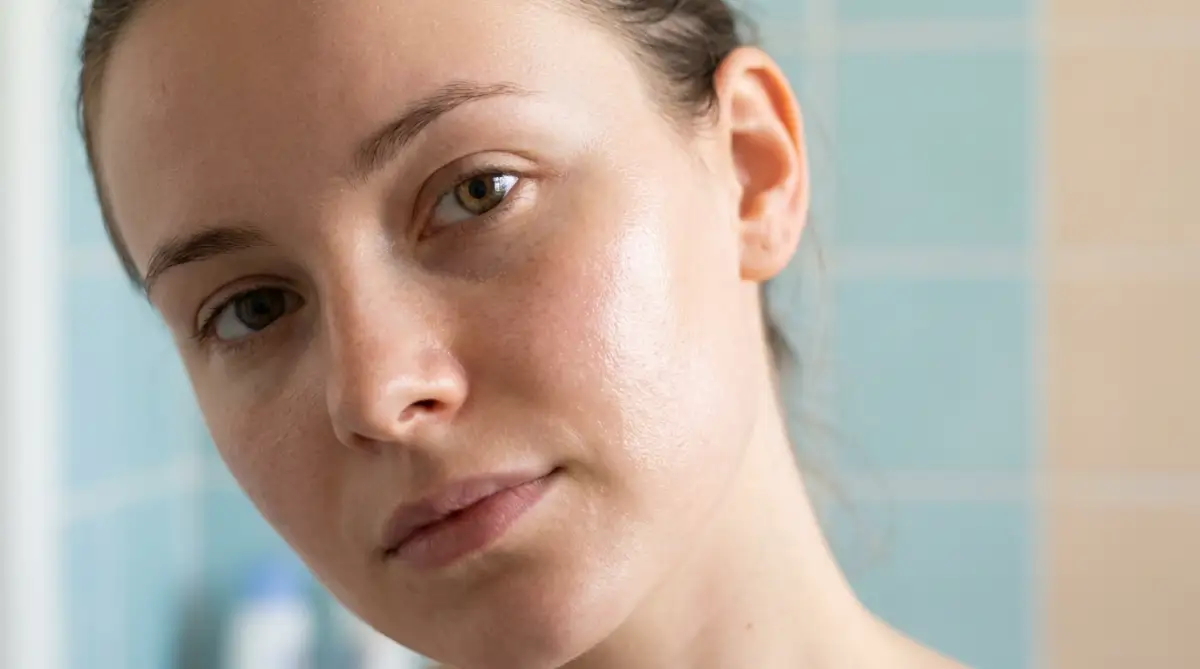
- If you look like a glazed donut: Your entire face, including your cheeks, nose, and forehead, looks incredibly shiny and feels slick to the touch. This is a clear indicator of Oily Skin.
- If your face feels like a tight mask: Smiling feels uncomfortable, and you might notice small white flakes around your nose or eyebrows. This strongly points to Dry Skin.
- If you see a mix of both: Your nose and forehead (the T-zone) are glowing with oil, but your cheeks feel tight and look matte. This is the classic signature of Combination Skin.
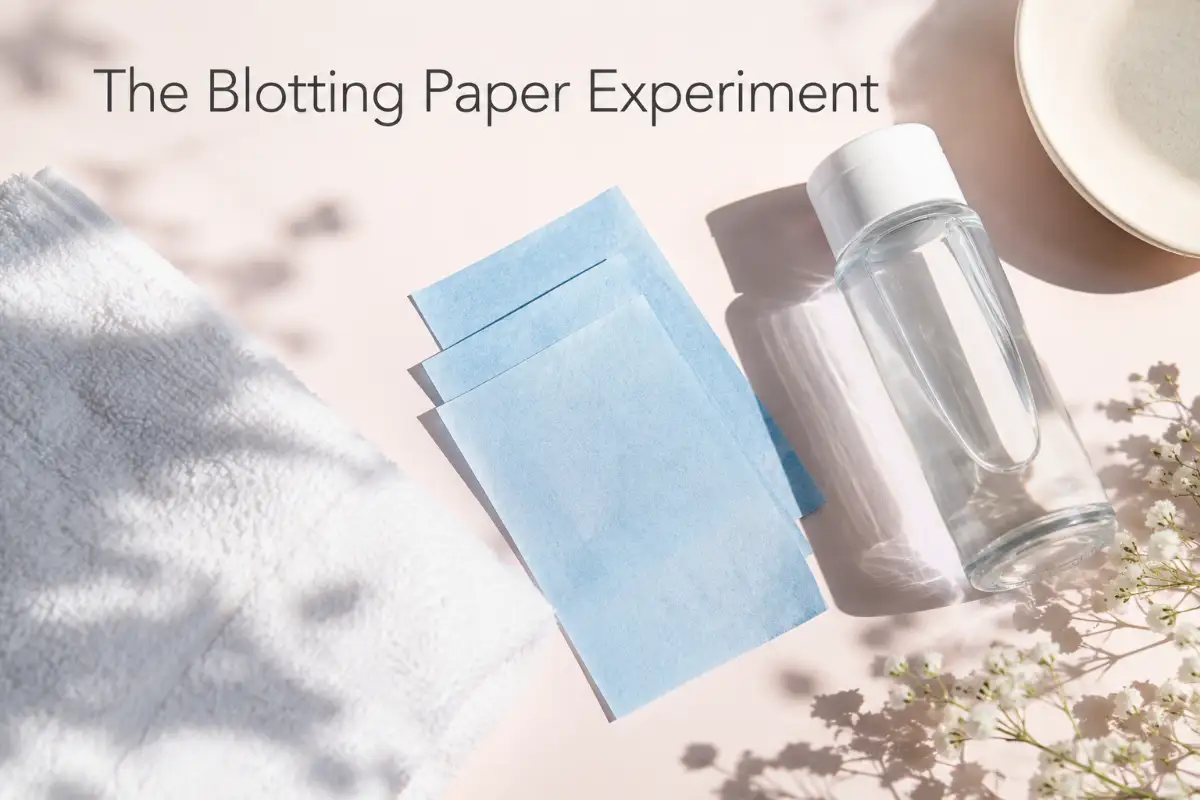
Step 2: The Blotting Paper Experiment
If you are a visual learner, watch this short clip to see exactly how to use blotting papers without making common mistakes. Seeing the oil patterns in real-time will help you feel much more confident in your results!
Sometimes, simply looking in the mirror is not enough. The lighting in our bathrooms can play tricks on our eyes, making normal sweat look like heavy oil production.
This is where the blotting paper experiment comes into play. It provides a physical, undeniable map of your oil glands.
You will need a pack of standard oil-blotting sheets. If you do not have any at home, you can easily use a single ply of a soft tissue paper or a napkin.
Setting Up the Blotting Test:
Just like the first method, start by washing your face with a gentle cleanser. Pat it dry and wait for about 45 to 60 minutes. Again, do not apply any products.
Take a blotting sheet and gently press it against different areas of your face. Do not wipe or drag the paper; just press it firmly and lift it away.
Use a different sheet (or a different corner of the tissue) for your forehead, nose, chin, and both cheeks. Now, hold those sheets up to a bright light. The light will reveal exactly how much oil was absorbed.
Analyzing Your Blotting Paper Evidence:
Let's break this down into a super simple quick-check table so you know exactly what you are looking at:
Expert Pro Tip:
Always perform this test in a climate-controlled room. If you do this in a hot, humid bathroom right after a shower, you will mistake normal sweat for excessive sebum. Keep the environment as neutral as possible.
Step 3: Assessing Your Protective Barrier (The Wash Test)
Finding out if you are oily or dry is only half the battle. You also need to determine the overall health of your moisture barrier.
Your skin has an invisible brick wall on the surface. The skin cells are the bricks, and your natural oils are the mortar holding them together. When this wall breaks down, your face becomes highly reactive to almost everything .
Many people confuse a broken barrier with having naturally sensitive skin. Let's find out which one you actually have.
How to Test Your Barrier Health:
When you wash your face during your normal evening routine, pay close attention to how your skin feels in the first three minutes. Do not wait a full hour like the previous tests.
Observe the immediate physical sensations. Does water alone make your face turn slightly red? When you apply a basic moisturizer, does it sting or burn for a few seconds?
If you answer yes to these questions, your protective barrier is highly compromised.
Understanding Sensitivity vs. Damage:
If your face turns red and angry after using completely basic, gentle products, you are likely dealing with a damaged barrier. This happens when you over-exfoliate or use physical scrubs too often.
However, if you only break out in rashes when exposed to specific fragrances or essential oils, you likely have genetically Sensitive Skin.
People with true sensitive skin need to act like detectives. You must start reading product labels and keeping a diary of what ingredients trigger a bad reaction. Once you identify the culprit, avoiding it will change your life completely.
Quick Q&A: "But wait, what if my skin changes during the week?"
I get this question all the time from my readers. Yes, your skin absolutely shifts! A common reason is what you eat. I noticed a massive spike in my oil production right after a weekend of eating heavy, sugary junk food. Your diet, sleep schedule, and even your stress levels will make your face act up. If you suddenly see extra shine, don't panic and throw away your whole routine—just give it a few days to balance out.
You no longer have to rely on guesswork or expensive marketing campaigns. You now have scientific, personalized data about your own biology.
Beyond the Basics: Reading Your Skin’s Subtle Clues
Now that you know the baseline tests, we need to look at the advanced signals your body sends out every single day.
The blotting paper and bare face methods give you a fantastic starting point. However, your face is constantly interacting with the environment.
To completely master your daily routine, you need to observe how your face behaves in real-life situations. Let's look at a few professional observation techniques you can start using right now.
The Mid-Day Office Assessment
Think about a standard workday. You do your morning routine, travel to your workplace, and sit at your desk for several hours. By 2 PM, your face is going to tell you exactly what it naturally craves.
Most modern offices use heavy air conditioning. This artificial air pulls moisture directly out of your environment. If you want to keep things simple and effective, I highly recommend checking out a science-backed minimalist skincare guide to start your morning right.

How to read the 2 PM signs:
- The Makeup Melt: If your foundation has completely separated or slid off your nose by lunchtime, your oil glands are highly active. This confirms you have naturally oily skin.
- The Desert Crack: If your makeup looks incredibly powdery, settles tightly into your fine lines, or feels tight when you laugh with coworkers, you are dealing with dry skin.
- The Shiny Forehead: If your nose and forehead reflect the office lights, but your cheeks feel completely normal or slightly tight, you have classic combination skin.
The Pore Size Magnifying Glass
Your genetics play a massive role in how your surface texture looks and behaves. Getting up close and personal with your bathroom mirror will reveal a lot about your natural lipid production.
According to trusted medical resources like the Mayo Clinic, protecting your skin and understanding its basic biology is the foundation of healthy aging. Examining your pore size in the mirror is a great, free way to start understanding your personal genetics. You can learn more about general skin health from American Academy of Dermatology recommendations.
Here is exactly what your pores are trying to tell you:
- Highly Visible Pores: If you can easily see your pores on your nose, cheeks, and forehead, your glands are designed to push out a lot of oil. Larger pores are completely natural for oily profiles.
- Nearly Invisible Pores: If your surface looks tight and you struggle to see any pores even when very close to the mirror, your face produces very little natural oil. This is the main characteristic of a dry profile.
- Visible T-Zone Only: If you clearly see pores on your nose and the center of your forehead, but your cheeks look completely smooth, your glands are unevenly distributed. This means you fall into the combination category.
The Hormonal Timing Strategy
This is a massive secret that many people completely ignore. If you are a woman, your biological cycle completely changes your oil production throughout the month.
Testing your face the week before your period will almost always give you a false result. During this time, your body produces excess sebum, leading to temporary oiliness and unexpected breakouts.
The Best Time to Test:
You should only perform your baseline tests during the week immediately after your cycle ends. This is when your hormones are most balanced, and your face returns to its true, natural state.
Do's and Don'ts for Accurate Results
To make sure you get the most accurate reading possible, keep this quick checklist in mind:
- Do drink your normal amount of water the day before you test. Drastic changes in your water intake will skew the results.
- Do test in a room with a completely neutral temperature. Avoid hot bathrooms right after a steamy shower.
- Don't use any chemical exfoliants or scrubbing tools for at least three days before your test. These remove your natural barrier and cause temporary sensitivity.
- Don't touch your face with dirty hands while waiting for the one-hour timer to finish. You will transfer outside oils onto your cheeks.

The Most Dangerous Skincare Traps You Keep Falling Into
Even with the right knowledge, it is incredibly easy to make mistakes that ruin your progress. When we get desperate for clear skin, we tend to make rushed decisions.
I want to walk you through the most common traps people fall into. Avoiding these specific mistakes will save you hundreds of dollars and prevent months of unnecessary frustration.
Trap 1: Chasing the Squeaky Clean Feeling
This is arguably the most damaging habit in the beauty world. Many people think that if their face feels tight and "squeaky" after washing, it means they are perfectly clean.
Why this is dangerous:
That tight feeling is actually your skin screaming for help. You have completely stripped away your acid mantle, which is your body's natural defense against bacteria.
When you strip your natural oils with harsh cleansers, your body panics. It instantly triggers your glands to overproduce oil to fix the damage. You end up looking greasier than before, creating a never-ending cycle of washing and breaking out.
Always use a gentle, hydrating cleanser. Your face should feel soft and comfortable after washing, never tight or stretched.
Trap 2: Confusing Dehydrated Skin with Dry Skin
This mistake is the reason why millions of people buy the wrong moisturizers every single day. Dryness and dehydration are two completely different problems.
Dry skin is a genetic skin type. It simply means your body does not produce enough natural oil (lipids). You are born with this.
Dehydrated skin is a temporary condition. It means your skin cells lack actual water. Anyone can have dehydrated skin, even someone who produces massive amounts of oil.
If you want a deeper medical understanding, you can read about the difference between dry and dehydrated skin from medical experts.
If your face feels incredibly oily but still looks dull, tight, and shows fine lines, you are likely dehydrated. Using heavy oils will only clog your pores. Instead, you need water-based hydrating serums containing ingredients like Hyaluronic Acid to bind water back into your cells.
Trap 3: The Trendy Product Hopping Habit
We all love the feeling of buying a brand-new serum or cream. Social media constantly tells us that the next miracle cure is just one purchase away .
The painful reality of product hopping:
Your skin cells take approximately 28 days to complete a full turnover cycle. If you change your routine every single week, your face never gets a chance to adapt.
This constant switching confuses your cells and triggers massive inflammation. You will never know which product is actually helping and which one is causing those painful red bumps.
When you start a new, simple routine, you must commit to it for at least four to six weeks. Patience is the only true miracle ingredient in any routine.
Real-Life Q&A: Why Product Hopping Fails
Q: I tried a new face wash for three days and broke out even more. Should I throw it away?
A: Not necessarily! Your skin takes about 28 days to create new cells. Unless your face is burning, red, or itching (which usually means your barrier is broken), getting a few bumps in the first week is often just your face clearing out trapped dirt. I always force myself to stick to a simple cleanser for a full month before I decide if it actually works for me.
My Personal 3-Day Patch Test Rule
Whenever you do buy something new, never slather it all over your face on day one. I learned this the hard way! Try this simple trick instead:
- Day 1: Put a tiny drop behind your ear. Wait 24 hours.
- Day 2: Put a small dab on your jawline. Wait another 24 hours.
- Day 3: If you don't see any red bumps or feel any itching, it is finally safe to use on your whole face.
Trap 4: Ignoring the Climate Factor
Many people figure out their correct profile in the middle of July and stubbornly stick to that exact same routine in late December.
Your environment directly dictates how much hydration you need. When winter arrives, the cold air and indoor heating systems completely drain the moisture from your face.
Even if you naturally produce a lot of oil, you might need a slightly thicker moisturizer during the freezing months. If you notice a change in the seasons, you must be willing to adjust your daily habits slightly to maintain a healthy balance.
If you want to master this skill completely without spending money on expensive dermatologist visits, take a look at how to identify your exact skin type at home using completely free methods.
Trap 5: Over-Exfoliating for a Quicker Glow
When you see dull, flaky patches, the immediate reaction is to scrub them away. Physical scrubs and strong chemical peeling acids are sold everywhere.
The hidden damage of scrubbing:
While exfoliating once or twice a week is fantastic for removing dead cells, doing it every day destroys your protective barrier. You are essentially scratching away healthy, living cells.
This leads to chronic redness, severe sensitivity, and micro-tears on your surface where bacteria can easily hide. If your face stings when you apply a basic moisturizer, stop exfoliating immediately and focus entirely on healing.
Your Personalized Action Plan for Tomorrow
You now possess more practical knowledge about your face than most people will ever learn. You no longer have to stand in the skincare aisle feeling overwhelmed and confused.
By understanding your natural biology, you have taken full control of your personal health. You know how to read the subtle signs, and you know exactly which dangerous traps to avoid.
It is time to put this knowledge into practice. I want you to feel confident, glowing, and incredibly comfortable in your own skin.
Your 24-Hour Checklist
Let's make this incredibly simple. Here is exactly what I want you to do over the next 24 hours:
Tonight:
Wash your face with your gentlest cleanser. Do not use any harsh scrubs or strong acne treatments. Apply your basic moisturizer and go to sleep. We want your face to calm down and rest.
Tomorrow Morning:
Wake up and perform the Bare Face Observation Method. Wash with lukewarm water, pat dry, and set your timer for exactly one hour.
Tomorrow Afternoon:
Observe your face under bright natural lighting. Pay attention to how it feels when you smile. Grab a piece of tissue and press it against your forehead and cheeks to see what your oil glands are doing.
A Final Message of Encouragement
Healing and balancing your complexion is not a race. It is a very personal, ongoing journey of self-care and self-respect.
Do not get discouraged if you experience a random breakout next week. Stress, weather changes, and hormones will always play a role in how you look.
The difference now is that you actually understand why it is happening. You can listen to what your body needs and respond with kindness, rather than punishing it with harsh chemicals.
Start your testing tomorrow morning. Keep your routine incredibly simple, stay patient with your progress, and watch as your natural, healthy glow finally reveals itself to the world.
I used to hide from every camera because of my skin, but taking the time to actually learn my type changed how I feel every single day. You deserve to feel happy and relaxed when you look in the mirror. Grab your timer and start your first test today—you will be so glad you finally stopped the guesswork and started listening to your body.
Medical Disclaimer: The information provided in this article is for educational and informational purposes only. It does not constitute medical advice. Always consult with a board-certified dermatologist or healthcare professional before starting any new skincare regimen, especially if you suffer from severe acne, rosacea, or chronic skin conditions.
***THANK YOU***